
English ivy in water roots quickly from stem cuttings and can live in a vase as a trailing display for months or longer with fresh water and very light feeding. Cut 4–6 inch tips with a few nodes, strip the lower leaves, set the bare nodes in water in bright indirect light, and change the water weekly. One important US caveat: English ivy (Hedera helix) is considered invasive in many states, so keep it indoors and never dump cuttings outside.
Key takeaway: English ivy in water is easy to root and attractive indoors, but it is toxic to pets and invasive outdoors in much of the US.
| Factor | Target |
|---|---|
| Cutting | 4–6 inch tip, 2–4 nodes, lower leaves removed |
| Rooting time | Often 2–4 weeks in a cool-to-warm bright room |
| Light | Bright, indirect; tolerates medium light |
| Temperature | Prefers cooler rooms, roughly 55–75°F |
| Water change | Weekly |
| Pets | Toxic to cats, dogs, and horses (ASPCA) |
| Outdoors | Invasive in many US regions; do not plant out |

Why English Ivy in Water Roots So Easily

English ivy climbs by aerial rootlets along its stems. Those nodes are primed to make roots, so a cutting placed in water usually responds fast. Unlike many tropical houseplants, ivy actually prefers cooler indoor temperatures, which makes it a good winter project in a bright, cool room.
How to Propagate English Ivy in Water
- Choose healthy, non-flowering tips. Juvenile, lobed growth roots more readily than mature, flowering shoots.
- Cut 4–6 inches with clean scissors, just below a node.
- Strip the bottom leaves so 2–3 bare nodes sit underwater.
- Place in a clean glass with room-temperature water.
- Put it in bright indirect light.
- Change the water weekly and wait for roots 1–2 inches long.
Our cuttings and cloning guide covers the general method in more detail.
Keeping English Ivy in Water Long-Term
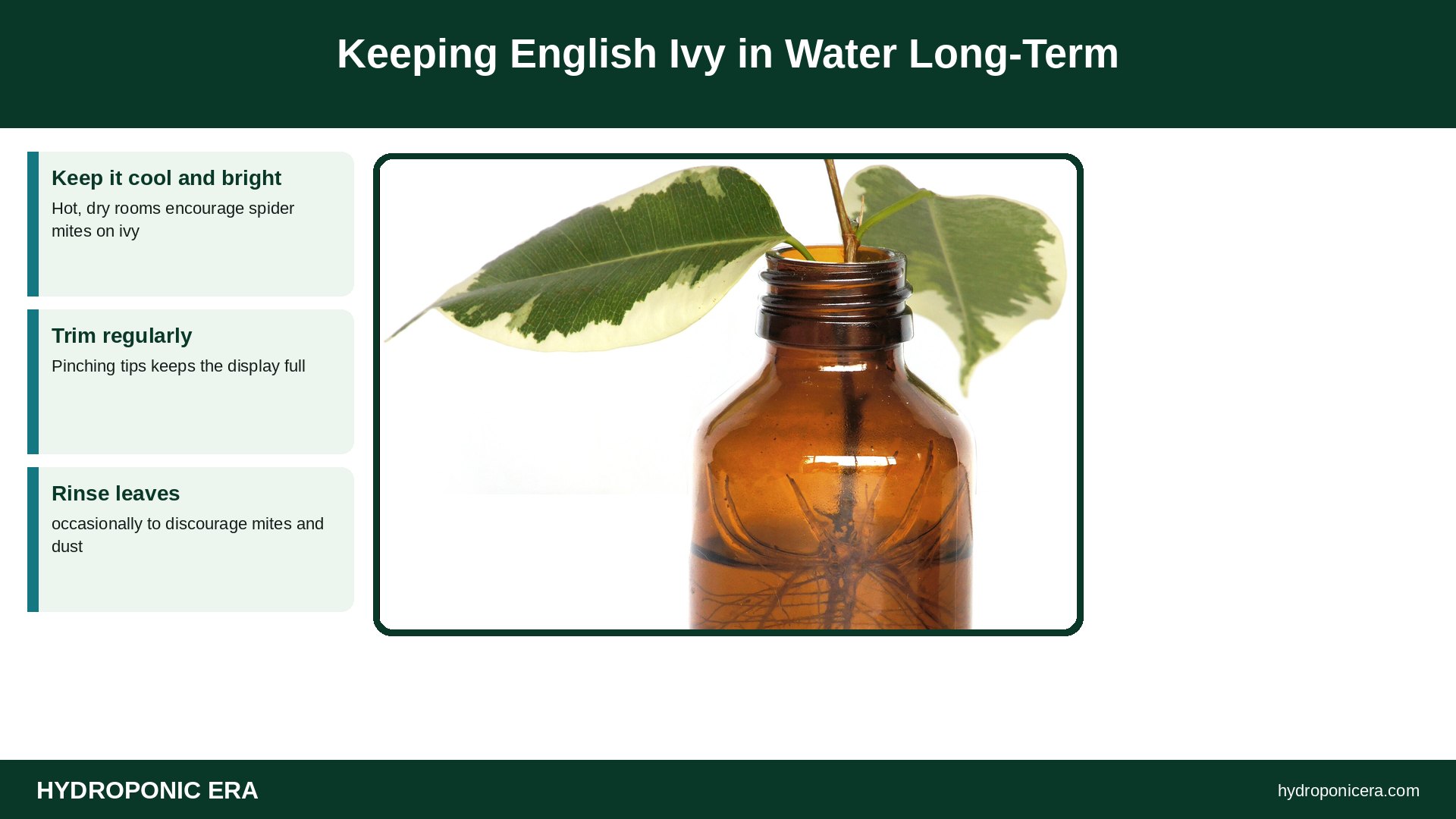
A rooted cutting will eventually need nutrients. Add a complete liquid fertilizer at about a quarter of the houseplant label rate once roots are established, and replace the water every one to two weeks. A small hydroponic nutrient dose works too; see our beginner nutrient guide.
- Keep it cool and bright. Hot, dry rooms encourage spider mites on ivy.
- Trim regularly. Pinching tips keeps the display full.
- Rinse leaves occasionally to discourage mites and dust.
Pests and Problems
Indoor ivy is well known for spider mites, especially in warm, dry winter air. Fine stippling on leaves and faint webbing are the early signs. Our spider mites guide explains control options that are safe indoors.
| Symptom | Likely cause | Fix |
|---|---|---|
| Fine yellow speckles, webbing | Spider mites | Rinse leaves, raise humidity, isolate plant |
| Brown, crispy leaves | Hot dry air or salt buildup | Cooler spot, fresh water, dilute feeding |
| Rotting stems at waterline | Leaves submerged or stale water | Strip lower leaves, change water weekly |
| Leggy growth, small leaves | Low light | Brighter indirect light |
| Variegation fading | Too little light | Move closer to a bright window |
English Ivy Is Invasive Outdoors

The USDA Forest Service and many state agencies list English ivy as an invasive plant that smothers native groundcover and climbs trees. Several Pacific Northwest and Mid-Atlantic jurisdictions actively remove it. If you root English ivy in water, treat it as a strictly indoor plant:
- Never plant leftover cuttings outside.
- Bag trimmings in household trash rather than composting them in an open pile.
- Check your state’s invasive list before buying ivy for outdoor use.
Common Mistakes With English Ivy in Water
- Using mature, flowering shoots that root slowly.
- Leaving leaves underwater.
- Placing it in hot, dry rooms where mites thrive.
- Never feeding after rooting.
- Dumping old plants outdoors.
Weekly Checklist for English Ivy in Water
- Refresh water weekly and rinse the glass.
- Check undersides of leaves for mites, stippling, or webbing.
- Trim leggy stems and root the tips in a second glass.
- Remove yellow or crispy leaves.
- Keep the vase away from heat vents.
Variables That Change Results
| Variable | Effect on English ivy in water | Adjustment |
|---|---|---|
| Warm, dry winter air | Higher spider mite risk, crispy leaves | Cooler room, more humidity, leaf rinses |
| Variegated cultivars | Slower rooting, need brighter light | Brighter spot, extra patience |
| Juvenile vs mature growth | Juvenile lobed shoots root fastest | Cut from young, trailing stems |
| Container size | Many cuttings foul small jars | Use a wider container |
| Light level | Low light gives sparse, leggy vines | Bright indirect light |
Because English ivy in water stays compact and trails nicely, it works well on shelves and in kitchens. Just remember the two US-specific cautions: keep it away from pets, and never let cuttings escape outdoors. If you want a similar trailing look with fewer worries, pothos or heartleaf philodendron are good alternatives, though both are also toxic to pets.
A water-grown ivy display can also be paired with a small LED in a dim room. See our light schedule guide for timer settings.
Moving Rooted Ivy to Soil or Semi-Hydro
Once roots are 1–2 inches long, you can keep the cutting in water or move it. In soil, use a light potting mix and keep it evenly moist for the first couple of weeks while water roots adapt. In semi-hydro, set the rooted cutting into clay pebbles with a low reservoir. Either way, expect a short pause before new growth starts. Our transplant shock guide explains what is normal.
Using Rooted Ivy Indoors Safely
English ivy is listed as toxic to cats and dogs by the ASPCA, so place jars and trailing vines out of reach of pets and small children. Wash hands after trimming, since the sap can irritate sensitive skin. When you dispose of trimmings, put them in household trash rather than compost or yard waste, which keeps fragments from rooting outdoors. Following these habits lets you enjoy English ivy in water as a decorative indoor plant without contributing to its spread.
FAQs: English Ivy in Water
Can English ivy grow in water permanently?
Yes. English ivy in water can live long-term with fresh water, dilute feeding, and bright indirect light.
How long does English ivy take to root in water?
Often two to four weeks. Juvenile growth roots fastest.
Is English ivy toxic to pets?
Yes. The ASPCA lists English ivy as toxic to dogs, cats, and horses.
Is English ivy illegal to plant?
Rules vary by state and city. It is widely listed as invasive, and some areas restrict its sale. Keep it indoors and check local rules.
Related HydroponicEra Guides
Sources
- ASPCA — English Ivy toxicity
- NC State Extension Plant Toolbox — Hedera helix
- USDA Forest Service — Fire Effects Information System: Hedera helix
- Photo credits (Wikimedia Commons, edited with titles): Blad van klimop (Hedera helix) 02 by Dominicus Johannes Bergsma (CC BY-SA 3.0); Ficus cuttings with roots in a bottle, White background by Biusch (CC BY-SA 3.0); (MHNT) Hedera helix – immature inflorescences by Didier Descouens (CC BY-SA 4.0)