
Home is part of practical HydroponicEra guidance for readers who want clear, useful next steps.
Grow More with Hydroponics
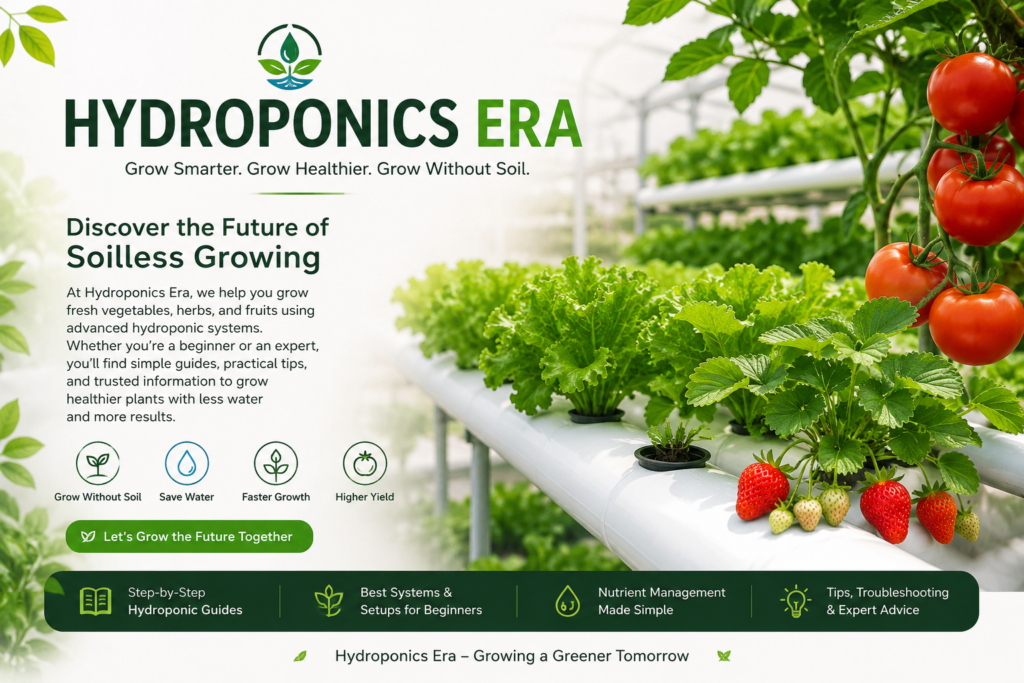
Welcome to Hydroponic Era, a calm beginner site for growing vegetables, herbs, and fruit without soil. Start with a simple system, keep pH and water steady, then add lights if the room is dim.
Start here
- Hydroponic garden for beginners
- Indoor hydroponic garden
- Hydroponic tower garden
- Aeroponics for beginners
Water, pH, and light
- How to control pH in hydroponics
- How often to change hydroponic water
- Best grow lights for hydroponics
Crops to grow first
- Grow lettuce hydroponically
- Grow mint hydroponically
- Grow peppers hydroponically
- Grow microgreens hydroponically
Fix common problems
Browse all guides on the blog, or jump to Hydroponic Garden and Growing Individual Plants.
For general horticulture background, see University of Minnesota Extension.
Choosing a First System
A first system should match the space, time, and attention a grower can offer. A small deep-water culture container can teach the basics of water level, oxygen, light, and harvest timing. A simple nutrient-film channel can support leafy crops when the pump, slope, and backup plan are understood. Media-based buckets offer more root-zone volume but require careful drainage and leak checks. The best choice is the one that can be observed regularly and cleaned without stress.
What to Learn First
Start by learning how roots receive water, oxygen, and dissolved nutrients. Measure pH and electrical conductivity with reliable tools, record the readings, and make one adjustment at a time. Sudden changes make it difficult to tell whether a plant improved because of light, temperature, water quality, or feed strength. Consistent observation beats chasing a perfect number from a chart that does not match the crop or environment.
Lighting, airflow, and temperature matter as much as the reservoir. Place lights at a sensible distance, watch for heat on the newest leaves, and keep air moving gently around the canopy. A stable room helps plants use water predictably. When the room is warm, roots may need more oxygen and the grower may need to check the reservoir more often. These simple habits prevent many avoidable setbacks.
Simple Growing Routine
Use a short weekly routine: inspect roots and leaves, check the water level, measure pH and EC, look for leaks, wipe dust from equipment, and record what changed. Harvest leafy greens a little at a time so the plant can keep producing. Remove damaged leaves promptly, keep tools clean, and label different varieties. A written record turns a confusing problem into a sequence that can be reviewed and improved.
Hydroponics is practical because it makes the root environment visible and adjustable, not because it removes every variable. Beginners can make steady progress by choosing forgiving crops, avoiding crowded equipment, and learning from small trials. Grow more slowly when conditions are unclear, protect electrical connections from water, and read product labels before mixing nutrients or cleaning solutions.
Home growers can use this overview as a calm starting point. A home routine built on small checks is easier to maintain than a complicated setup.
A home grower can keep a home system predictable by writing down measurements, changes, and harvest notes. This small habit makes the next decision easier.