Can you grow pumpkins hydroponically ? Technically yes, but pumpkins are one of the crops that struggle in home hydroponics. Vines sprawl for feet, plants need strong sun-level light and warm conditions, and female flowers must be pollinated. Epcot’s greenhouse grows pumpkins hydroponically, but that’s a professionally run commercial greenhouse. At home, your best odds are a miniature variety in a Dutch bucket or large drip-fed container, in a greenhouse or sunny outdoor spot, with hand pollination.
Yes, you can grow sunflowers hydroponically . A 2023 study in Ornamental Horticulture grew cut sunflowers in an NFT system with commercial-quality results, using EC 1.8–2.2 mS/cm and pH 5.5–6.5. For home growers, the easiest options are sunflower microgreens on a tray, or pollenless cut-flower varieties in Dutch buckets or deep media with very strong light. Single-stem cut-flower types reach harvest in about 50–95 days depending on cultivar, and stems often run 2 to 4 feet tall.
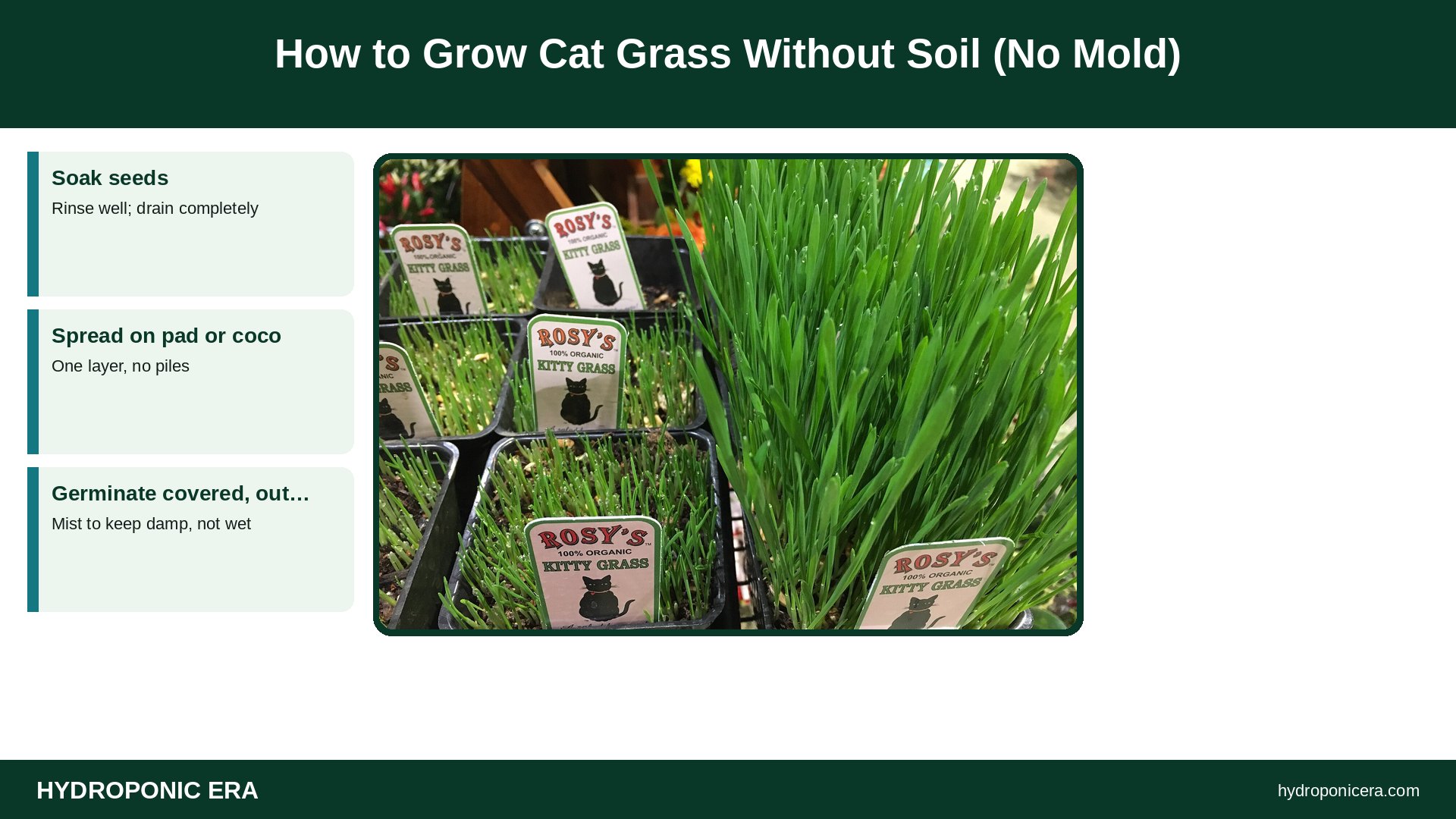
Here’s how to grow cat grass without soil: soak oat, wheat, barley or rye seeds, spread them in a single layer on a damp soilless pad or coco coir in a draining tray, keep them moist but never waterlogged, and give them bright light once they sprout. Sprouts appear in about 3–7 days, and grass is ready in 10–14 days at about 4 inches tall. Most mold comes from too much water and poor airflow. Offer it in moderation, and ask your vet if your cat has health issues.
Here’s how to grow duckweed indoors: float a starter culture on dechlorinated water in a shallow, still container, add a very dilute nutrient solution, give it bright light, and harvest a portion every few days so it never covers more than the surface can support. Duckweed can double in as little as 3 days under ideal conditions. Grow it only in closed containers, never release it into ponds or streams, and use only clean, controlled cultures for feed or food.
Hydroponic grapes are experimental, not a proven home crop. The most advanced work comes from Australia’s CSIRO, where researchers grew dwarf table-grape “microvines” in coco coir bags under LED light and harvested first fruit 145 days after transplanting. Microvines have mostly been research plants. Regular grapevines are large, long-lived woody vines that usually need winter chilling, so at home the realistic approach is a container vine in soilless media on drip, grown outdoors or in a greenhouse. Treat any attempt as a trial, with no yield guarantees.
A hydroponic lemon tree is possible: grow a dwarf lemon, usually a Meyer, in a large container of well-drained soilless media such as coco and perlite, fed by drip or careful hand watering with a dilute, complete nutrient. It needs at least 6 hours of direct sun (8–12 is better), 65–75°F days and protection below 32°F. Before you buy or move a tree, know the law: citrus quarantines in states such as Florida, California, Texas and Arizona restrict moving citrus plants. Buy from a licensed local nursery and never ship or carry citrus across state lines without checking.
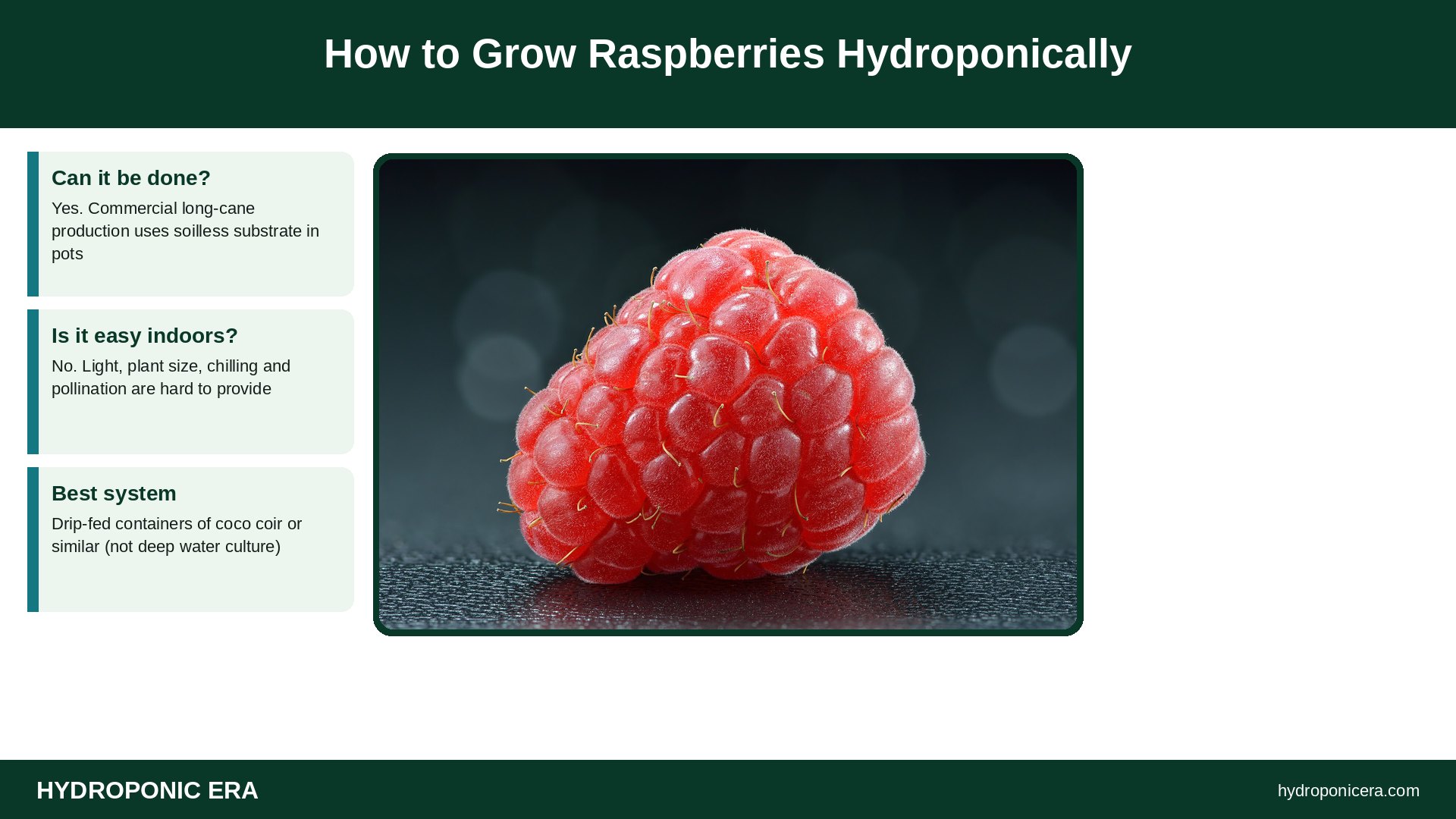
You can grow raspberries hydroponically , but it’s a long-term project, not a quick countertop crop. Raspberries have a perennial root system with biennial canes, they want full sun and good drainage, and many types need winter chilling to fruit. Commercial growers succeed with “long-cane” plants in coco coir or bark-filled pots under high tunnels, fed by drip. At home, the most realistic route is a compact or everbearing variety in a large container of soilless mix on drain-to-waste drip, outdoors or in a greenhouse.
Here’s how to store hydroponic lettuce : leave the roots on, set the head in a closed container or bag, and refrigerate it at 32–40°F with high humidity. Don’t wash it until just before eating. Stored this way, most leaf lettuce stays crisp for about two to three weeks. Closed packaging matters more than the roots.
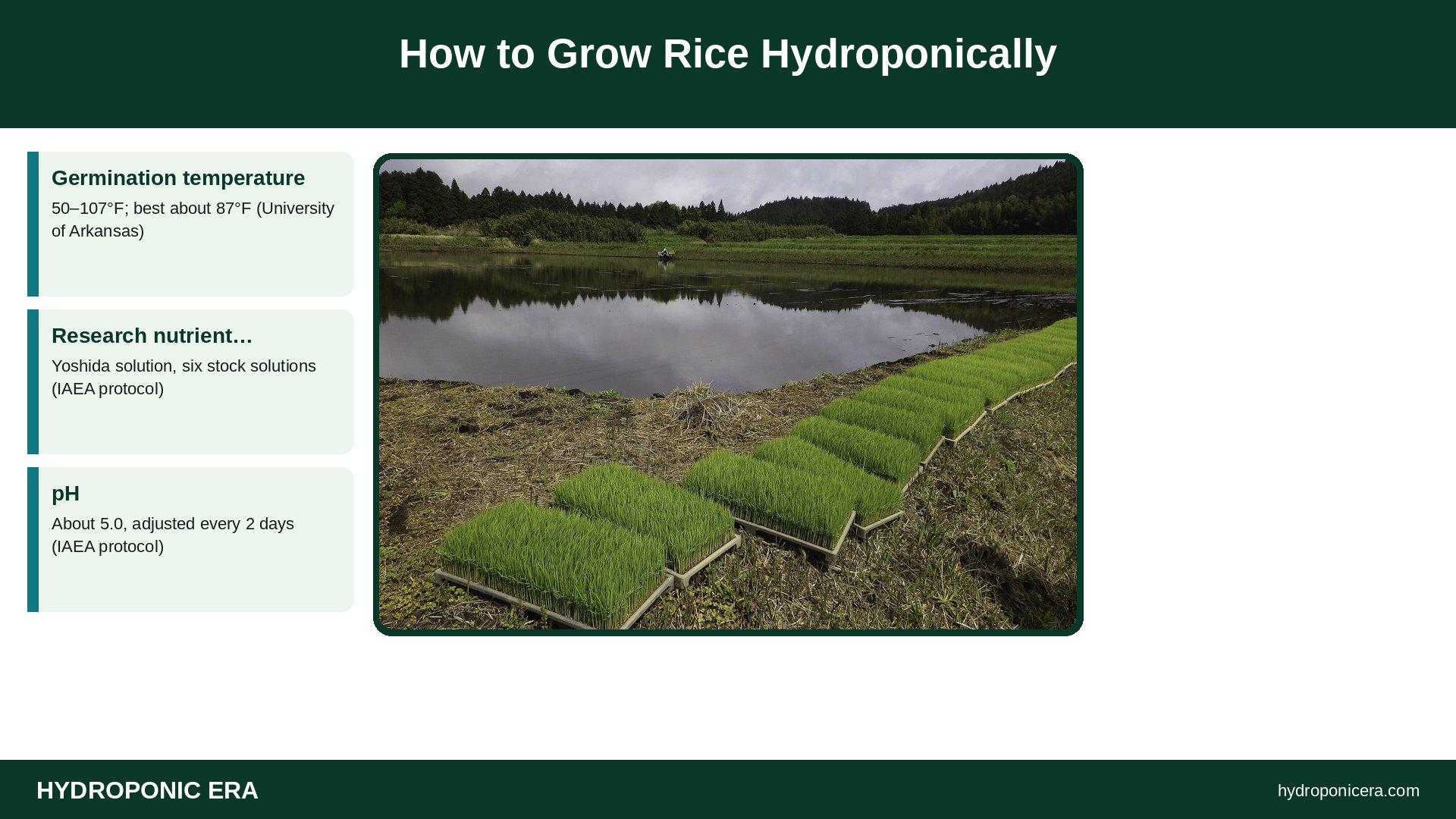
Here’s how to grow rice hydroponically : germinate seed on mesh over water in the dark, switch to a half-strength nutrient solution after a few days, then grow plants in a dark-walled tank with full-strength solution at about pH 5.0, warm temperatures and very bright light. Expect 105–145 days to grain. It’s doable at home but challenging.
Here’s how to grow wheatgrass without soil: soak hard red winter wheat seeds for about 12 hours, rinse until tiny roots show, spread them densely on a damp soilless pad or mix, and keep them warm (70–75°F) and out of direct sun for a few days. Then move them to bright light. Harvest in about 7–10 days.