
Springtails in hydroponics are usually a moisture signal, not a crop emergency. These tiny, jumping hexapods (about 1/16 to 1/8 inch long) feed mostly on fungi, algae and decaying organic matter. University extension specialists say they rarely harm established plants, though large numbers can nibble tender seedlings. If you see them, dry out wet surfaces, clean up algae and old roots, and they usually fade within days.
| Question | Short answer | Source |
|---|---|---|
| Size | About 1/16 to 1/8 inch; jump using a tail-like furcula | UConn IPM |
| What they eat | Decaying matter, fungi, molds and algae | UC IPM |
| Do they bite people or pets? | No, and they don’t spread disease | UC IPM |
| Do they hurt plants? | Rarely; occasional damage to young seedlings and greens | UConn, Utah State |
| Best fix | Reduce standing moisture and organic debris | Clemson HGIC |
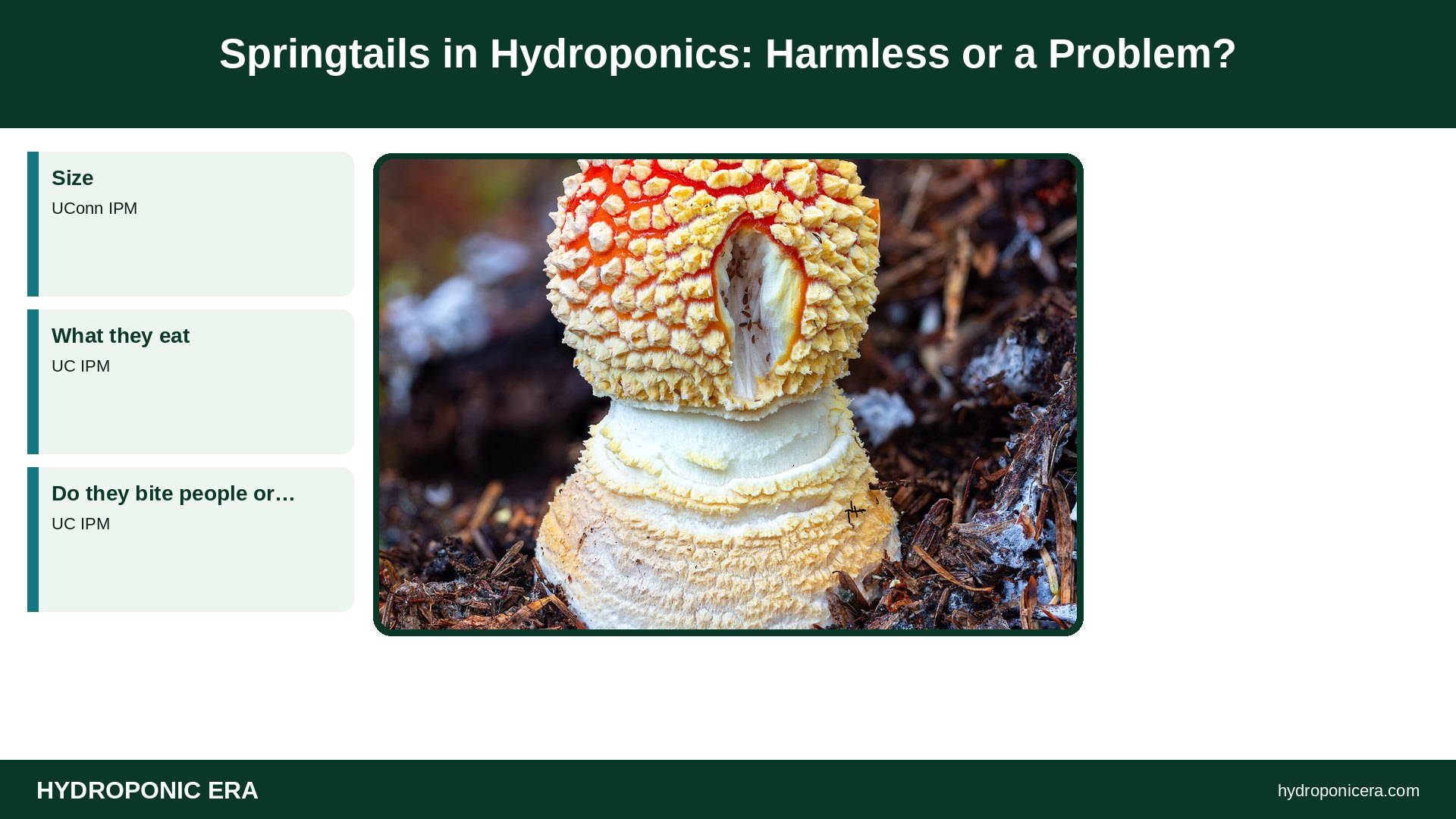
What Springtails in Hydroponics Look Like

Springtails are small, soft-bodied and wingless. Most are white, gray or dark, and many look like specks until they suddenly flick into the air. That jump comes from the furcula, a forked appendage folded under the body that snaps down like a spring. UConn’s greenhouse IPM program describes them as 1/16 to 1/8 inch long and notes they thrive where organic matter and moisture are high.
In a home system you’ll usually find springtails in hydroponics setups on wet rockwool, coco, peat plugs, the inside of a dome, around net pots, or floating on standing water in a tray. Under a magnifier they look like tiny elongated or round bugs with short antennae. They don’t fly, which is the quickest way to tell them from fungus gnats and shore flies.
Are Springtails in Hydroponics Harmful?
Mostly no. The University of California’s IPM program says springtails don’t bite people or pets, don’t spread disease, and feed on decaying matter, fungi, molds and algae. It adds that their continued presence indoors is a sign of a moisture problem. Clemson’s Home & Garden Information Center agrees that chemical control is rarely necessary.
There are exceptions worth knowing:
- Tender seedlings. UConn notes the garden springtail can occasionally damage tender seedlings in greenhouses.
- Young greens in moist boxes. Utah State University’s vegetable guide lists springtails as a pest of young leafy greens grown in moist conditions, with spinach and beets among the most damaged.
- Very high numbers. A population explosion means food and water are abundant, which also favors root rot organisms.
So treat springtails in hydroponics as an indicator. The bugs themselves are minor; the wet, algae-rich conditions behind them can cause bigger problems.
Why Springtails Show Up in Hydroponic Systems
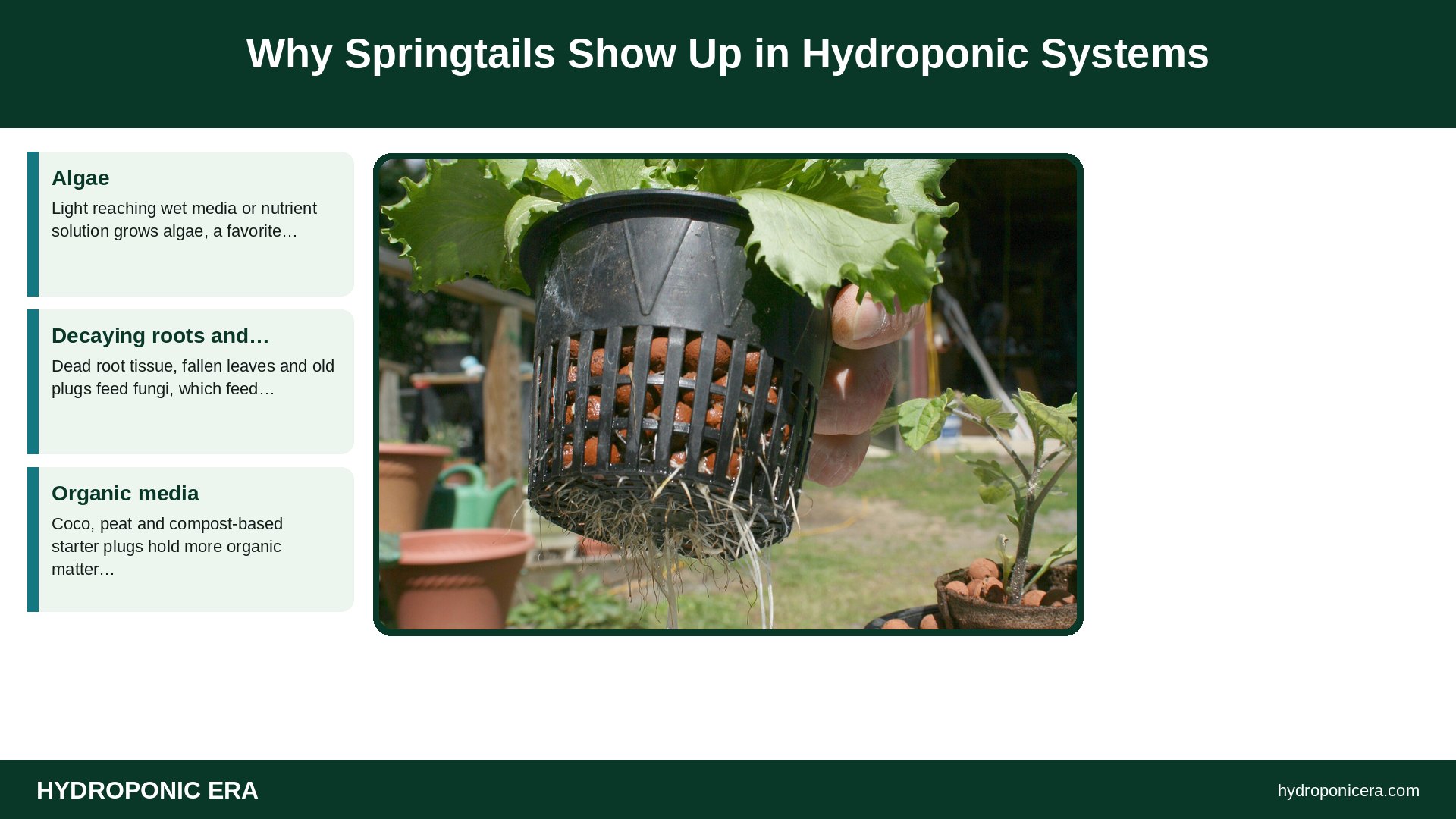
Springtails in hydroponics need constant moisture and something to eat. Hydroponic setups often provide both:
- Algae. Light reaching wet media or nutrient solution grows algae, a favorite food. See our algae in hydroponic reservoirs guide.
- Decaying roots and debris. Dead root tissue, fallen leaves and old plugs feed fungi, which feed springtails.
- Organic media. Coco, peat and compost-based starter plugs hold more organic matter than clay pebbles or rockwool.
- Constantly wet surfaces. Overwatering, drippy emitters and puddles in trays keep the top layer saturated.
UConn notes springtail eggs hatch in about 10 days, so a wet spot can build a visible population in a few weeks.
How to Get Rid of Springtails in Hydroponics: 6 Steps

- Let surfaces dry. Clemson says reducing moisture often clears springtails within a few days. Let the top of plugs and media dry between waterings and empty standing water from trays.
- Block light. Cover exposed media and seal reservoir openings to starve algae. Our reservoir lid light-proofing guide shows simple fixes.
- Remove debris. Pull dead leaves, old roots and spent plugs. Trim decaying roots if you find them.
- Clean the system between crops. Scrub and sanitize trays, channels and lids. Follow our cleaning and sterilizing guide.
- Use biological help in greenhouses. UConn lists the predatory mite Stratiolaelaps scimitus; Utah State also mentions rove beetles and predatory mites as natural enemies.
- Skip routine sprays. UC IPM says pesticides “should not be necessary.” If a product is ever used, it must be labeled for that site and crop, and the label directions are the law.
Springtails vs Fungus Gnats vs Shore Flies
People often lump all small critters together. Here’s how springtails in hydroponics differ from the two common flying pests:
| Trait | Springtails | Fungus gnats | Shore flies |
|---|---|---|---|
| Wings | None; they jump | Yes; weak fliers | Yes; strong fliers |
| Where you see them | On wet media and water surfaces | Around media, near the base of plants | On algae, trays and leaves |
| Larval damage to roots | Not applicable (no larval stage like flies) | Yes, larvae can feed on roots | Larvae eat algae |
| Main fix | Dry out and clean | Dry out, BTI, sticky traps | Algae control |
For the flying pests, see our fungus gnats in hydroponics guide and the companion shore flies vs fungus gnats guide. Yellow sticky cards catch fliers but rarely catch springtails; our sticky trap placement guide covers monitoring.
Springtails in Hydroponics by System Type
Where springtails appear depends on your setup. In deep water culture and Kratky jars, look at the wet collar of media inside the net pot and any algae film near the lid. In ebb and flow trays, check the tray floor after the drain cycle. In drip systems, check under dripping emitters and at the base of slabs. In NFT, watch channel ends where water pools.
Seed-starting areas are the most common hotspot for springtails in hydroponics because domes trap humidity and plugs stay wet. Prop domes open once seedlings emerge and use bottom watering. Our damping-off guide covers the same moisture habits, which protect against seedling disease too.
When to Worry About Springtails in Hydroponics

Take a closer look if you see chewed cotyledons or pitted young leaves with springtails present, if numbers keep rising after you dry things out, or if roots are brown and slimy. In that last case the springtails are likely feeding on decay, and the real problem is root health. Check our Pythium root rot guide.
For most growers, springtails in hydroponics are a harmless nuisance that disappears once surfaces dry and algae is gone.
FAQs: Springtails in Hydroponics
Are springtails in hydroponics bad for my plants?
Usually not. They mostly eat fungi, algae and decaying matter. Large numbers can damage very young seedlings and tender greens.
Can springtails live in clay pebbles or a reservoir?
They can float on water and live on any wet surface with algae or debris. Clean, dry-topped, light-proofed systems give them little to eat.
Should I use hydrogen peroxide on springtails?
Extension sources focus on drying, sanitation and biological control rather than drenches. Fix moisture and algae first. Any pesticide must be labeled for your crop and site.
Do springtails mean my system is dirty?
They mean it’s wet and has food for them, often algae or decaying roots. That’s worth fixing even if the springtails themselves are harmless.
Related HydroponicEra Guides
- Fungus gnats in hydroponics
- Shore flies vs fungus gnats
- Algae in hydroponic reservoirs
- Hydroponic pests: aphids and mites
Sources
- UConn Greenhouse IPM — Springtails in the Greenhouse
- University of California IPM — Springtails Pest Notes
- Utah State University Extension — Springtails (Leafy Greens)
- Clemson Home & Garden Information Center — Springtails
- Photo credits (Wikimedia Commons, edited with titles): Springtails eating Amanita muscaria – Ecola State Park by Casey Helton (CC BY-SA 4.0); Folsomia candida (16407612393) by AJC1 from UK (CC BY-SA 2.0); 2009-03-30 Lettuce roots by Ildar Sagdejev (Specious) (CC BY-SA 4.0); Spathiphyllum wallisii hydroponically grown by Kephalian (CC BY-SA 4.0)