Epcot hydroponics is real. At The Land pavilion in Epcot’s World Nature area, Walt Disney World’s Living with the Land boat ride passes working greenhouses where crops grow in hydroponic and other soilless systems, and the paid Behind the Seeds walking tour takes you inside. A peer-reviewed paper describes about 0.4 hectare (roughly 1 acre) of intensive growing area there, using a wide variety of hydroponic techniques and biological pest control.
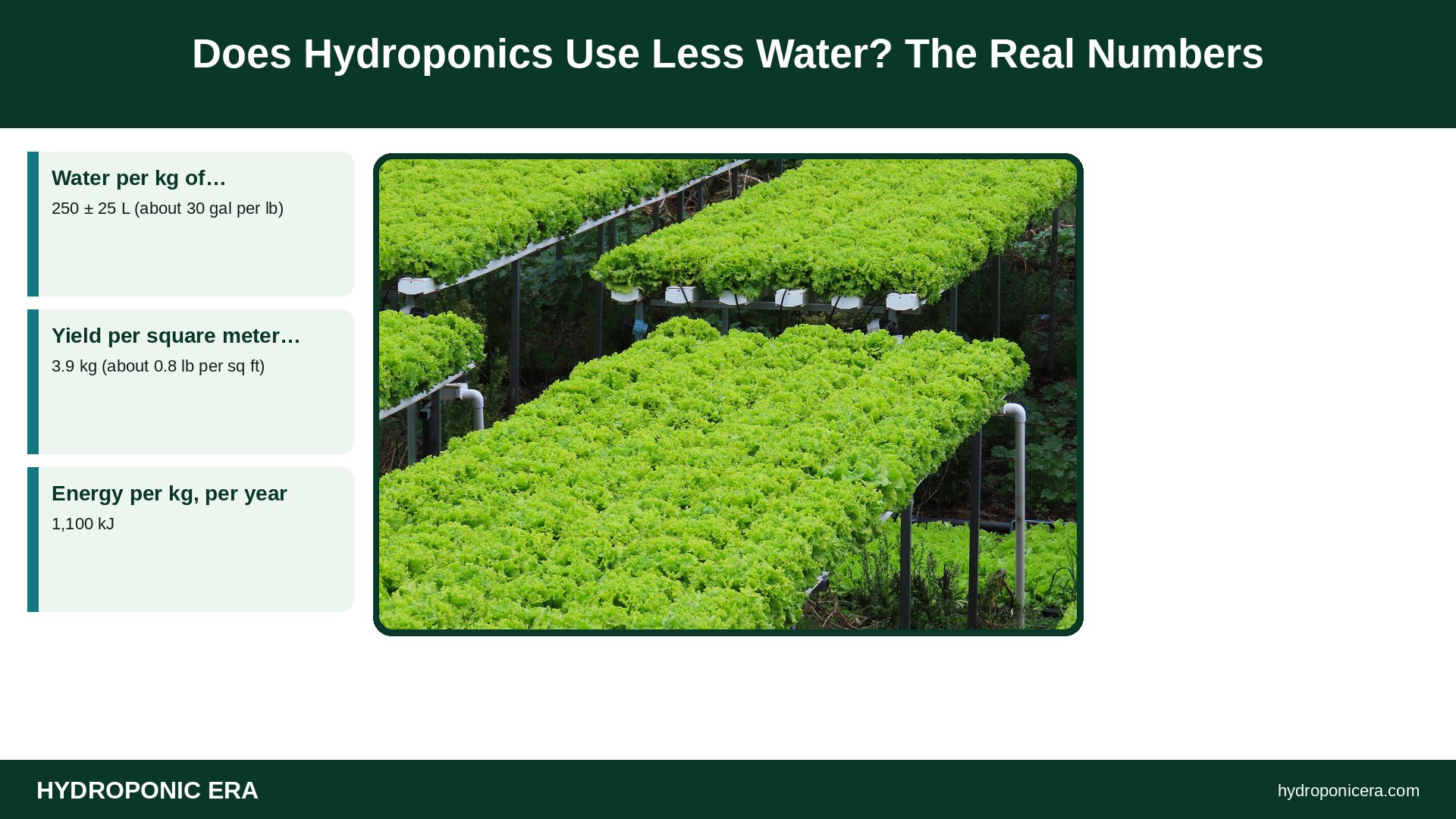
Does hydroponics use less water? Yes, per pound of food, a well-run recirculating system usually does. The best-known US comparison, a 2015 study of lettuce in Yuma, Arizona, modeled about 20 liters of water per kilogram for greenhouse hydroponics versus about 250 liters per kilogram for field lettuce. That’s roughly 13 times less water per unit of harvest. The catch is energy: the same study estimated hydroponic lettuce needed about 82 times more energy per kilogram.
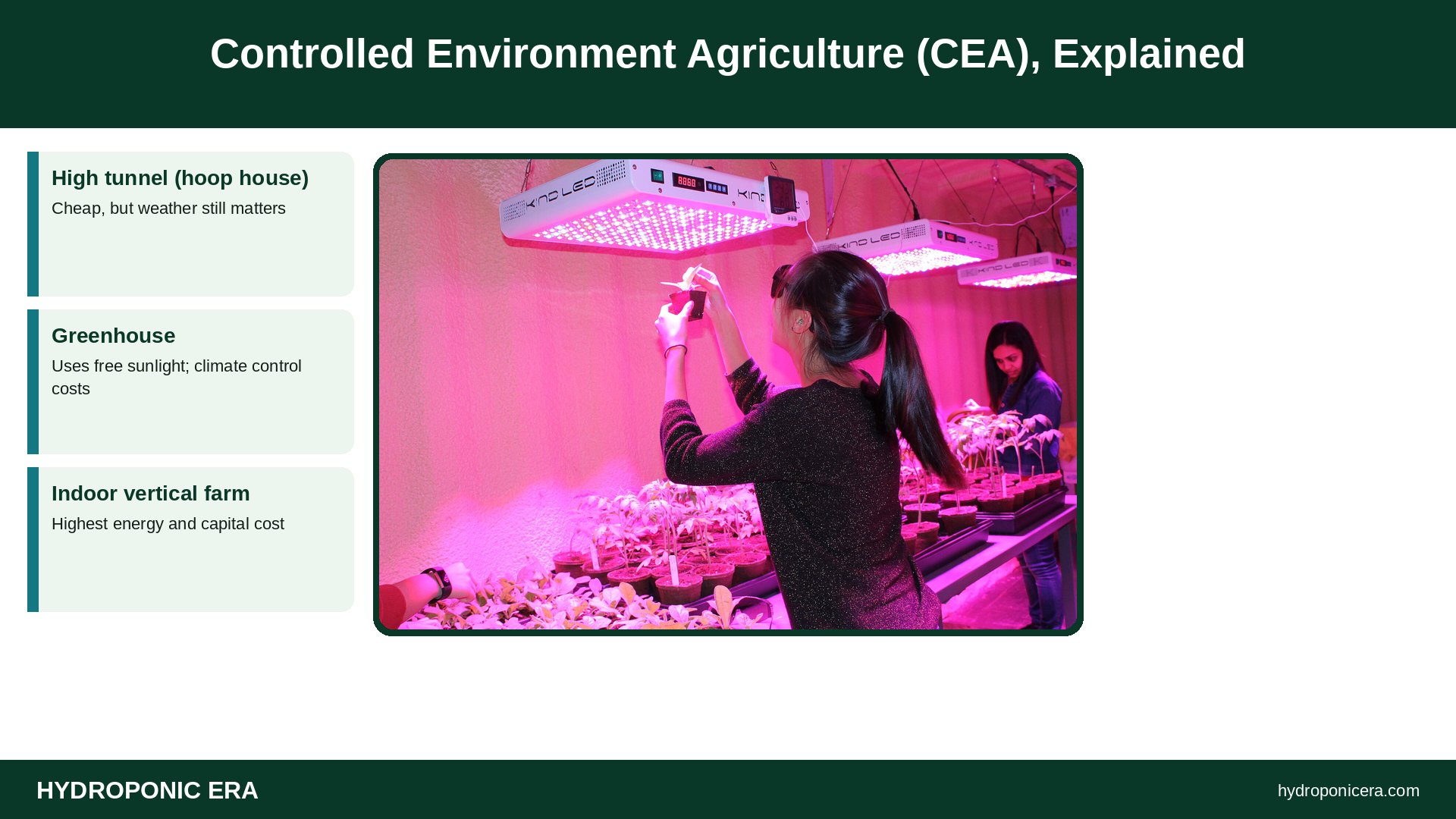
Controlled environment agriculture (CEA) means growing crops inside a structure where people can control some or all of the growing conditions: light, temperature, humidity, carbon dioxide, water and nutrients. Greenhouses, high tunnels, indoor vertical farms, container farms and growth chambers are all forms of it. Hydroponics is a root-zone method often used inside CEA, but the two aren’t the same thing; some CEA crops still grow in soil.
Rooftop farming means growing food on a building’s roof, either in soil beds laid over a green-roof system or in a rooftop greenhouse, which is often hydroponic. In the US, Brooklyn Grange farms soil on three New York City rooftops, while Gotham Greens grows leafy greens hydroponically in rooftop greenhouses in New York and Chicago. Every project starts with the same step: a licensed structural engineer must confirm the roof can carry the load.
The best vegetables to grow indoors in winter are fast, low-light, cool-tolerant crops: microgreens, pea shoots, loose-leaf lettuce, arugula, spinach, Asian greens, baby kale, Swiss chard, scallions, radishes and hardy herbs like parsley and chives. A sunny south window helps, but in most US homes you’ll get far better results with a simple LED grow light on a 14- to 16-hour timer.
Raspberry Pi hydroponics monitoring is a weekend project: the Pi can’t read analog sensors directly, so pair it with an ADS1115 converter for pH and TDS probes, add a waterproof DS18B20 for water temperature, calibrate with buffer solutions, and log readings with Python. Keep every signal at 3.3 V or less, and treat cheap sensors as trend tools.
In AeroGarden vs Click and Grow , the core difference is watering. AeroGarden is true hydroponics: a pump moves water and liquid plant food over the roots. Click & Grow uses passive wicks and pre-fed pods, with no pump and no feeding. Choose AeroGarden for faster growth and more control. Choose Click & Grow for the simplest, quietest care.
In Gardyn vs Lettuce Grow , Gardyn is an indoor-only smart garden that grows 30 plants from seed cubes in 2 sq ft, with cameras and an optional membership. Lettuce Grow’s Farmstand is a taller tower that ships live seedlings and works indoors or out. Pick Gardyn for tech and small spaces; pick Lettuce Grow for fast starts and patios.
Is AeroGarden out of business? No. AeroGarden announced in October 2024 that it would close on January 1, 2025, then relaunched under ScottsMiracle-Gro in spring 2025. As of October 8, 2026, aerogarden.com is live and selling, though it’s running a “last chance clearance” while it prepares a “next chapter.” Your garden still works.
DIY AeroGarden seed pods are easy: reuse the plastic grow baskets, fit a fresh grow sponge, sow several of your own seeds, label the top, and germinate under the dome with the lights at their lowest setting. Thin to one seedling once true leaves appear. It saves money, but seeds you supply aren’t covered by AeroGarden’s germination guarantee.