raft foam board — DWC Raft Foam Board: Safe Materials and Hole Spacing

The best raft foam board for deep water culture is rigid polystyrene about 1–2 inches thick, either extruded (XPS) or expanded (EPS) bead board, cut to fit the tank with a small gap at the edges and drilled with holes sized for your net pots. For lettuce, space holes about 6–8 inches apart; for herbs, 4–6 inches; for baby greens, 2–3 inches. Commercial growers use purpose-made polystyrene rafts, while home growers often use insulation board, which works but should be food-contact or unfaced, rinsed well and kept out of direct heat.
lechuza pon — LECHUZA PON: What It Is and Alternatives

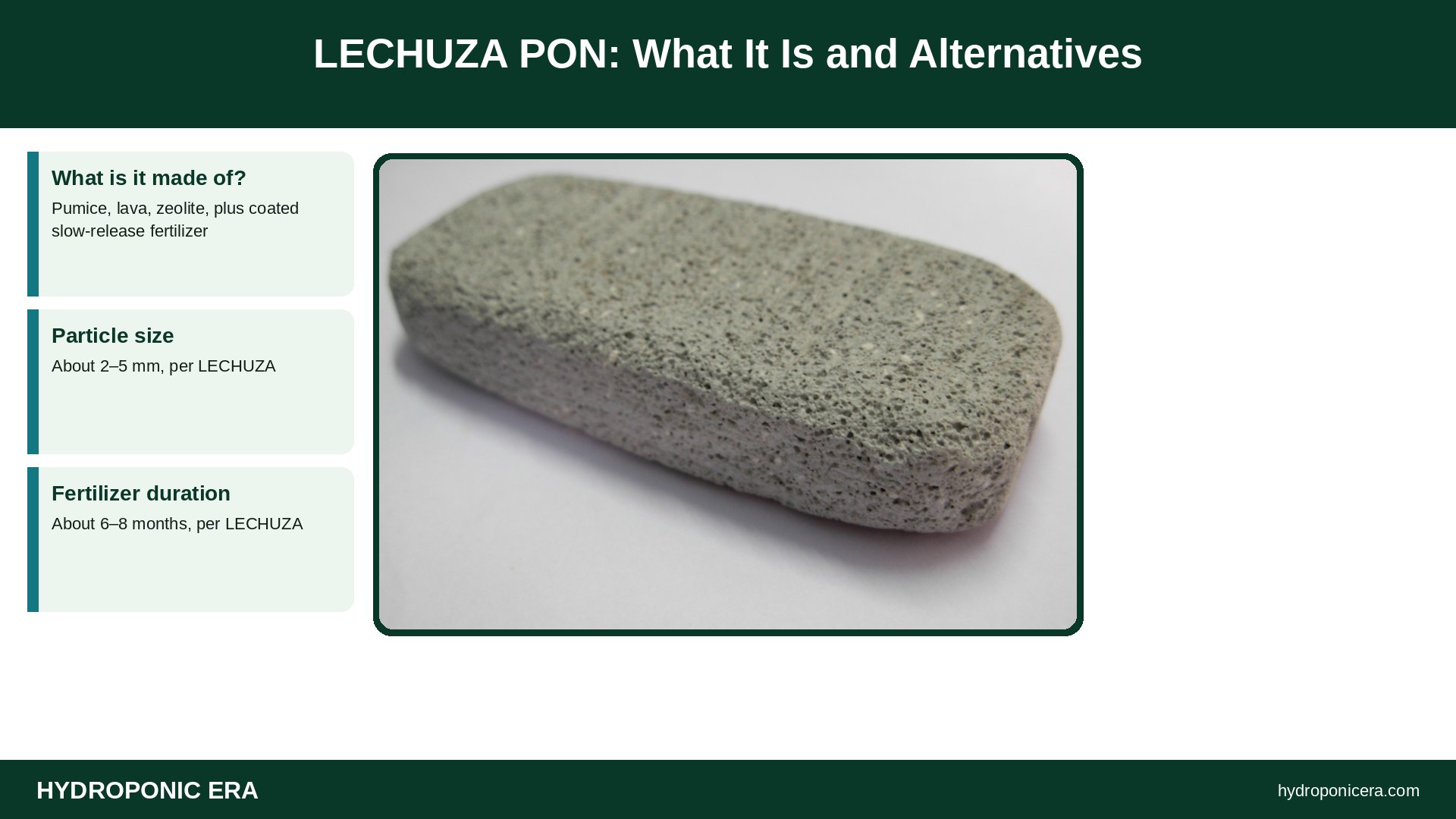
LECHUZA PON is a mineral, soil-free plant substrate made by the German planter brand LECHUZA. According to the manufacturer, it consists of pumice, lava, and zeolite with a coated slow-release fertilizer that feeds plants for roughly 6–8 months. It’s designed for LECHUZA self-watering planters but works in ordinary pots too. Popular alternatives include fertilizer-free LECHUZA BASICPON, pon-style mixes from other brands, DIY pumice-lava-zeolite blends, and LECA (clay pebbles) for semi-hydroponics.

nft flow rate — NFT Flow Rate and Slope: Numbers That Work

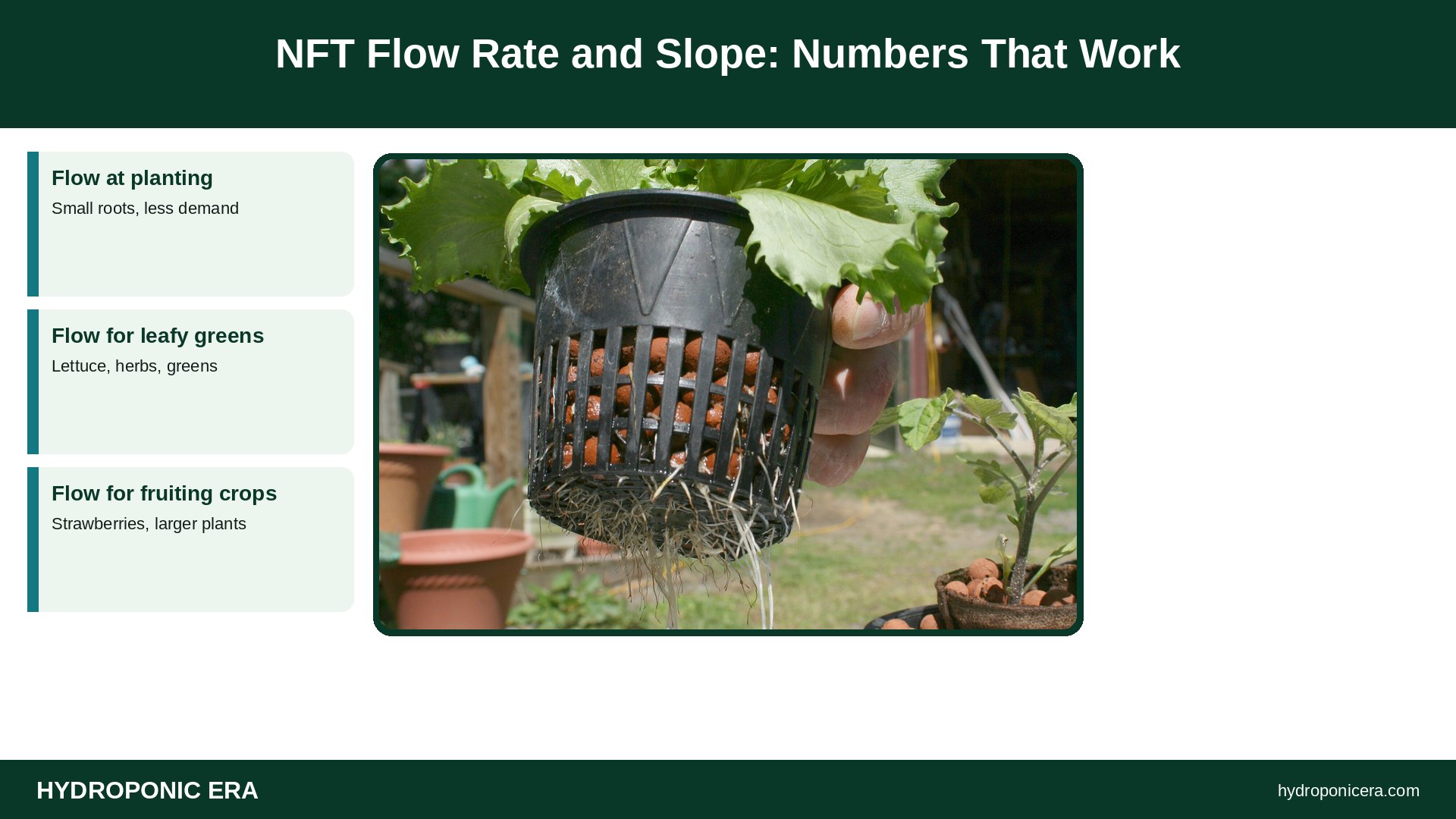
A good NFT flow rate for most home and greenhouse channels is about 0.5–1 liter per minute (roughly 8–16 gallons per hour) per channel, with the lower end for seedlings and lettuce and up to about 2 liters per minute (32 GPH) as a practical maximum for large fruiting crops. Pair that NFT flow rate with a channel slope of about 1:30 to 1:40 (2.5–3.3%) so the solution forms a thin film that never ponds, and keep channels under roughly 40 feet long.

a frame hydroponics — A-Frame Hydroponics: NFT Design and Plans

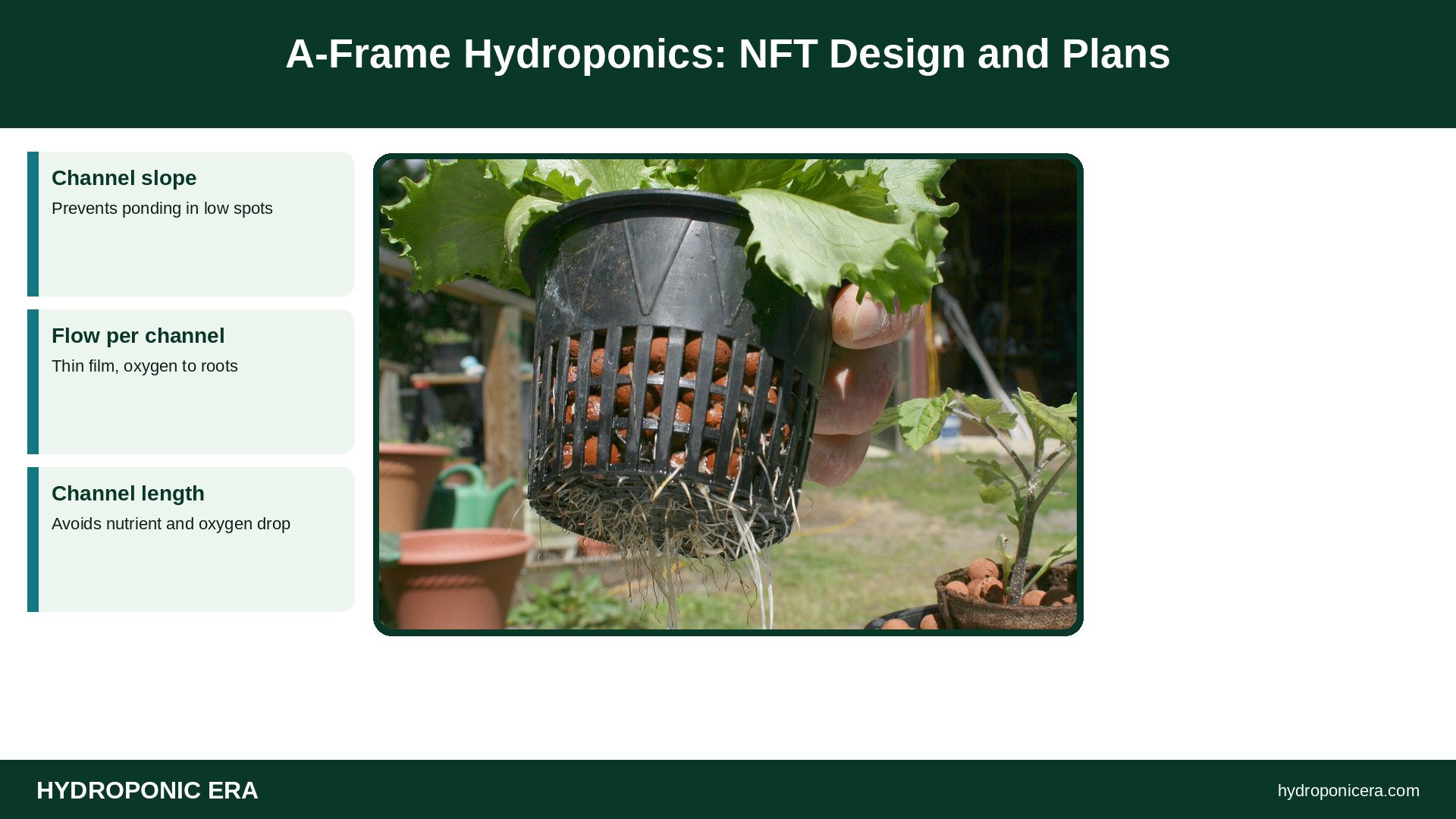
A frame hydroponics is a space-saving form of NFT (nutrient film technique) where sloped channels are mounted on two leaning sides of a triangle-shaped frame, like a tent. A pump lifts nutrient solution to the top of each channel, a thin film runs down past the roots, and the solution drains back to a reservoir below. A frame hydroponics roughly doubles the plants you can grow per square foot of floor compared with a flat NFT table, and it works best for lettuce, leafy greens, herbs and strawberries in a greenhouse or outdoors with good sun on both faces.

hydroponic strawberry tower — Hydroponic Strawberry Tower Guide

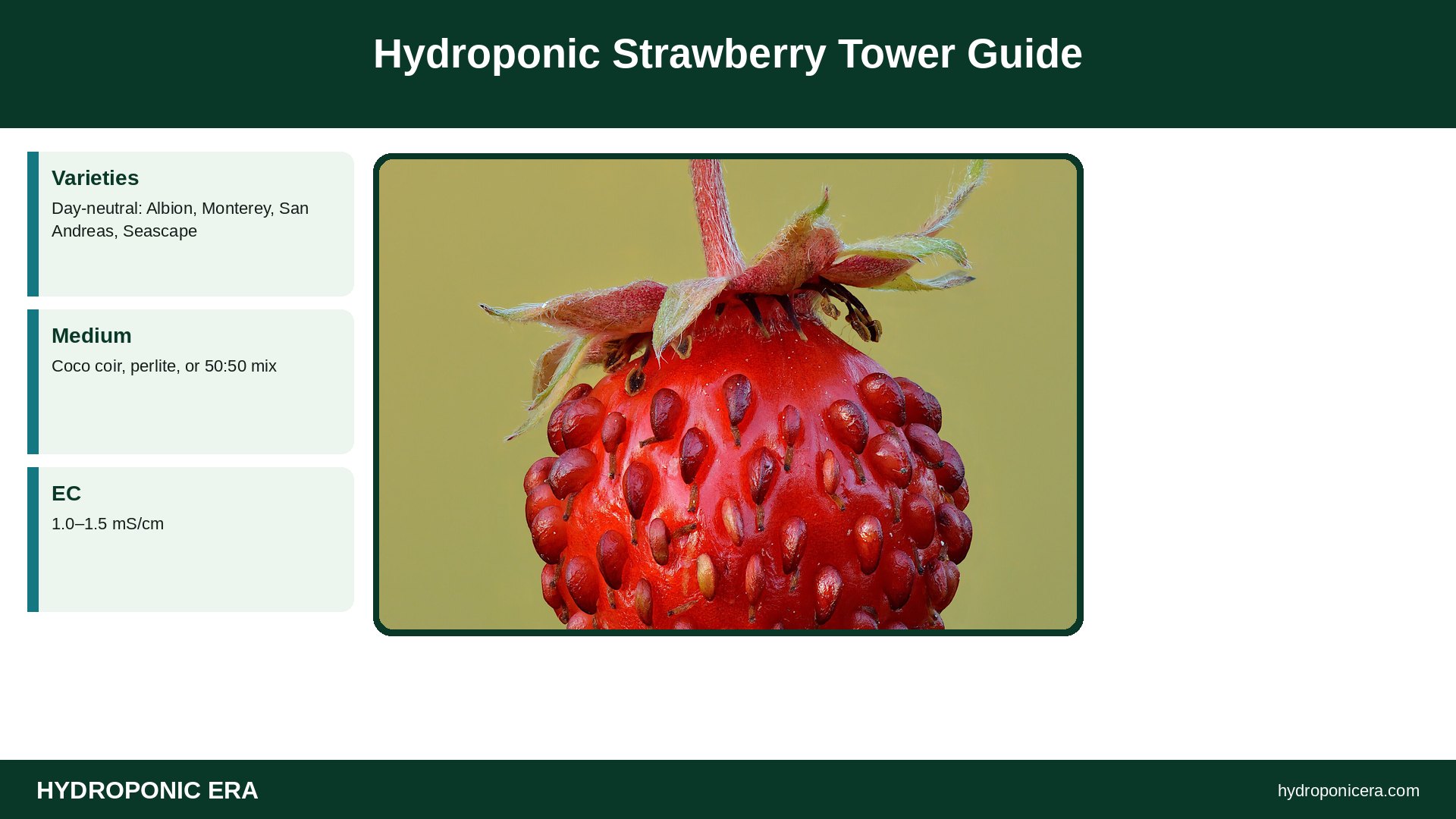
A hydroponic strawberry tower grows 20–50 plants in stacked pockets around a vertical column, with a pump lifting nutrient solution to the top so it trickles down past the roots and drains back to a reservoir. Use day-neutral varieties such as ‘Albion’ or ‘Monterey’, a light, free-draining medium like coco coir, perlite, or a coco-perlite mix in each pocket, and feed at EC 1.0–1.5 mS/cm and pH 5.5–6.2. Run the pump on a timer, give the tower strong light from all sides, and keep each plant’s crown above the medium.

aerogarden — AeroGarden Harvest vs Bounty: Model Comparison

In the AeroGarden Harvest vs Bounty comparison, the big differences are grow height, pod count, and light power. The Harvest family grows 6 pods with about 12 inches of grow height (18 inches on the Harvest XL), which suits herbs and lettuce. The Bounty family grows 9 pods with up to 24 inches of grow height and a stronger light, so it can handle cherry tomatoes, peppers, and bigger herb gardens. Choose Harvest for a compact herb garden; choose Bounty if you want fruiting plants or more variety.

microgreen grow mats — Microgreen Grow Mats: Hemp, Coco, Jute and Felt

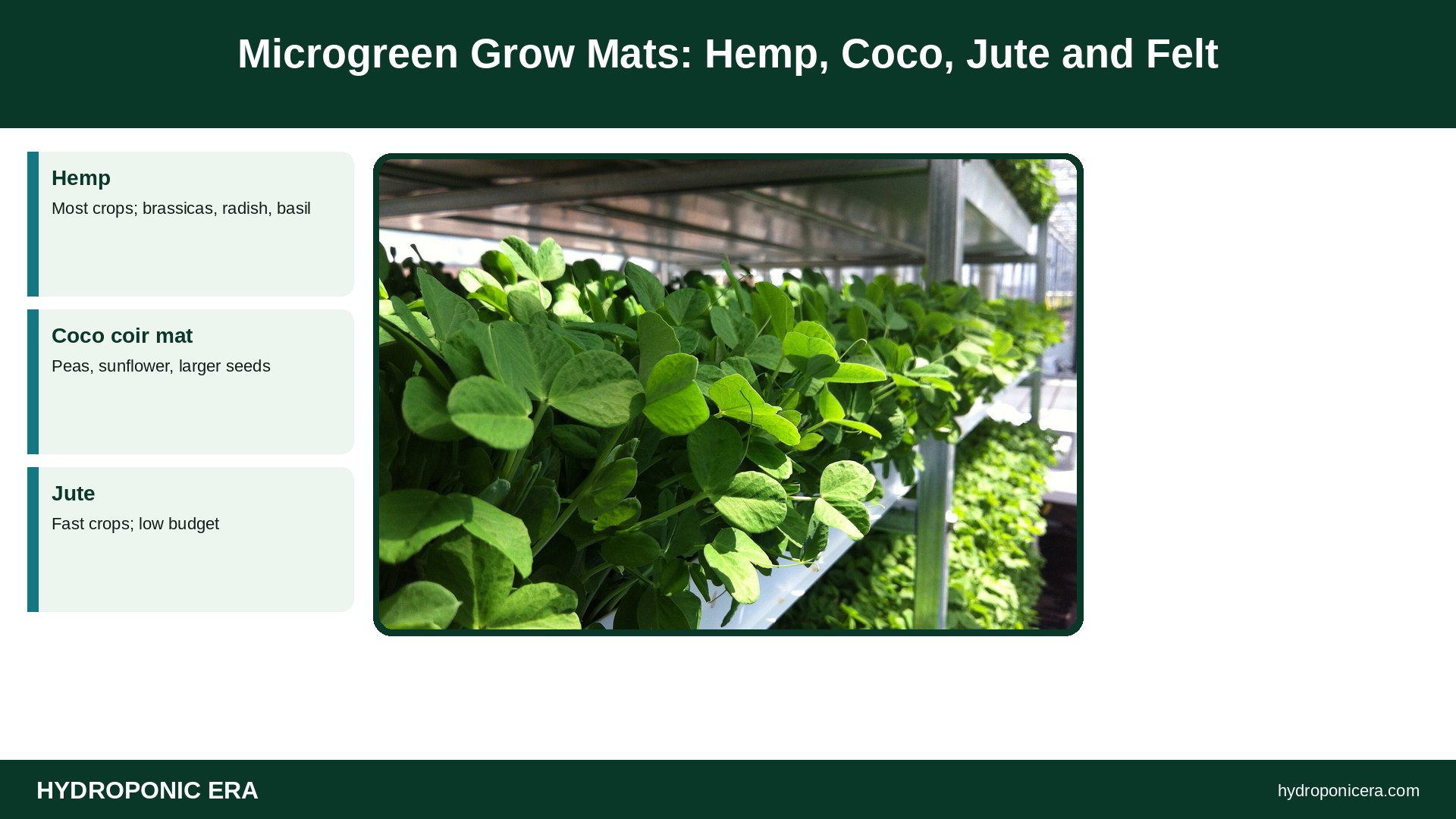
Microgreen grow mats are thin, soil-free pads that hold water and give roots something to grip in a hydroponic tray. The main types are hemp, coco coir, jute, felt (synthetic fiber), and biostrate-style blends. For most home growers, hemp mats are the best all-round choice: they hold moisture well, are compostable, and work for nearly every crop. Coco mats suit larger seeds like peas and sunflowers, jute is cheap but dries quickly, and reusable felt pads save money but need careful cleaning.

gardyn — Rise Gardens vs Gardyn: Which Indoor System Fits You?

Rise Gardens vs Gardyn comes down to layout, capacity, and how you like to grow. Gardyn Home 4 is a vertical column that grows 30 plants in about 2 square feet using proprietary yCube pods, with cameras, sensors, and an AI assistant. Rise Gardens’ full-size Rise Garden 3 is a horizontal, furniture-style unit with 1–3 levels (16 plants per level to start, expandable) that accepts any seeds in net cups. Gardyn suits small spaces and hands-off growers; Rise suits families and tinkerers who want more capacity and seed freedom.

shelving — Hydroponic Shelving Systems: Wire Rack Builds for Home

A hydroponic shelving system is a rack, usually a steel wire shelving unit, fitted with grow lights under each shelf and a small hydroponic setup on each level. A standard 48 × 18 inch wire rack with three or four tiers can hold several Kratky tubs, an ebb and flow tray, or short NFT channels, turning a few square feet of floor into a productive vertical garden for lettuce, herbs, microgreens, and seedlings. The keys are weight capacity, shelf spacing, light coverage, and keeping water away from electrical connections.

mason jar hydroponics — Mason Jar Hydroponics: Kratky Herbs and Lettuce in a Jar

Mason jar hydroponics is the simplest way to grow herbs or a single lettuce head without a pump: fill a quart or half-gallon jar with nutrient solution, set a 2- or 3-inch net pot in the mouth so the roots touch the liquid, and block light from the glass. This is the Kratky (non-circulating) method developed at the University of Hawaii. As the plant drinks, the water level drops and an air gap forms, so roots get oxygen without an air stone. A quart jar grows one basil, mint, or leaf lettuce plant to harvest with one or two top-ups.