Are mollies good for aquaponics? Yes, for small indoor tank systems. Mollies aquaponics setups pair hardy, algae-grazing livebearers with herbs or houseplants grown on tank water. Mollies tolerate a wide range of conditions and breed quickly, so the main jobs are keeping water warm, stable and fresh, and controlling numbers before fry overload the system.
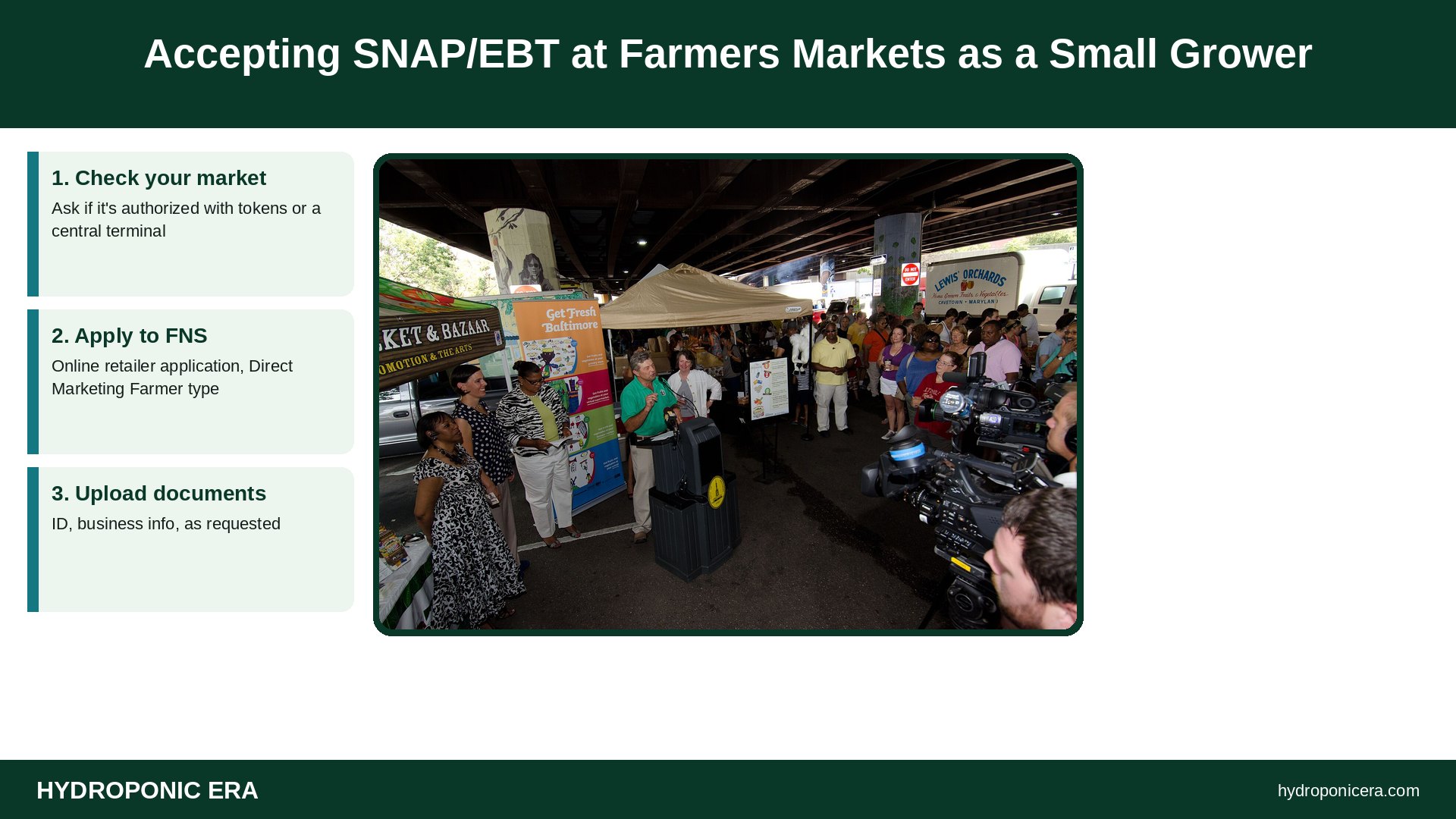
To accept SNAP EBT at a farmers market as a small grower, you either apply to USDA’s Food and Nutrition Service (FNS) yourself as a Direct Marketing Farmer, or sell at a market that is already SNAP-authorized and uses a central token or card system. Individual farmers apply online through the FNS retailer application, choosing the Direct Marketing Farmer (farm stand) store type. Once authorized, you need a way to process EBT cards, such as a free mobile app or a wireless device, and programs like MarketLink have helped eligible farmers and markets get equipment. Many markets also offer incentive programs, funded in part by USDA’s GusNIP grants, that double SNAP dollars for fruits and vegetables.
Can plants clean a turtle tank? Partly. In turtle aquaponics, plant roots take up nitrate from turtle waste, which helps slow buildup, but turtles are messy and still need strong filtration and water changes. Because turtle tank water can carry Salmonella, grow ornamental plants rather than food crops, and wash your hands after every contact.
What is barrel aquaponics? Barrel aquaponics is a low-cost system built from food-grade plastic drums. Usually one 55-gallon (208 L) barrel holds fish and one or two barrels, cut in half lengthwise, become gravel or clay grow beds. A small pump moves tank water to the beds, and it drains back to the fish. It suits beginners on a budget.
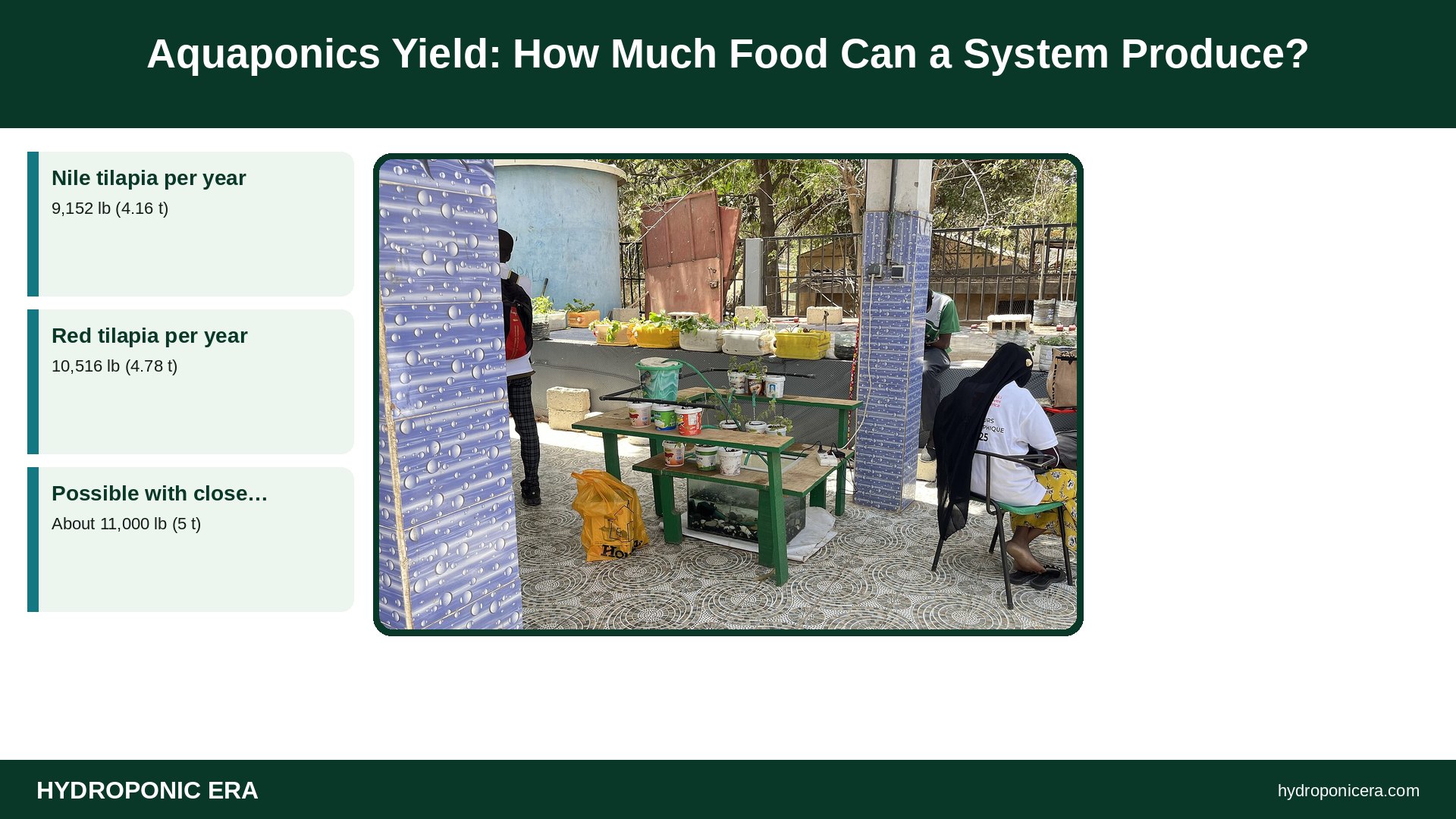
How much food can aquaponics produce? Aquaponics yield depends on how much fish feed goes in each day, because feed drives the nutrients plants use. The well-studied UVI commercial system produced over 9,000 lb (4 t) of tilapia a year plus vegetables. Home systems yield far less, but leafy greens and herbs give the most food per square foot.
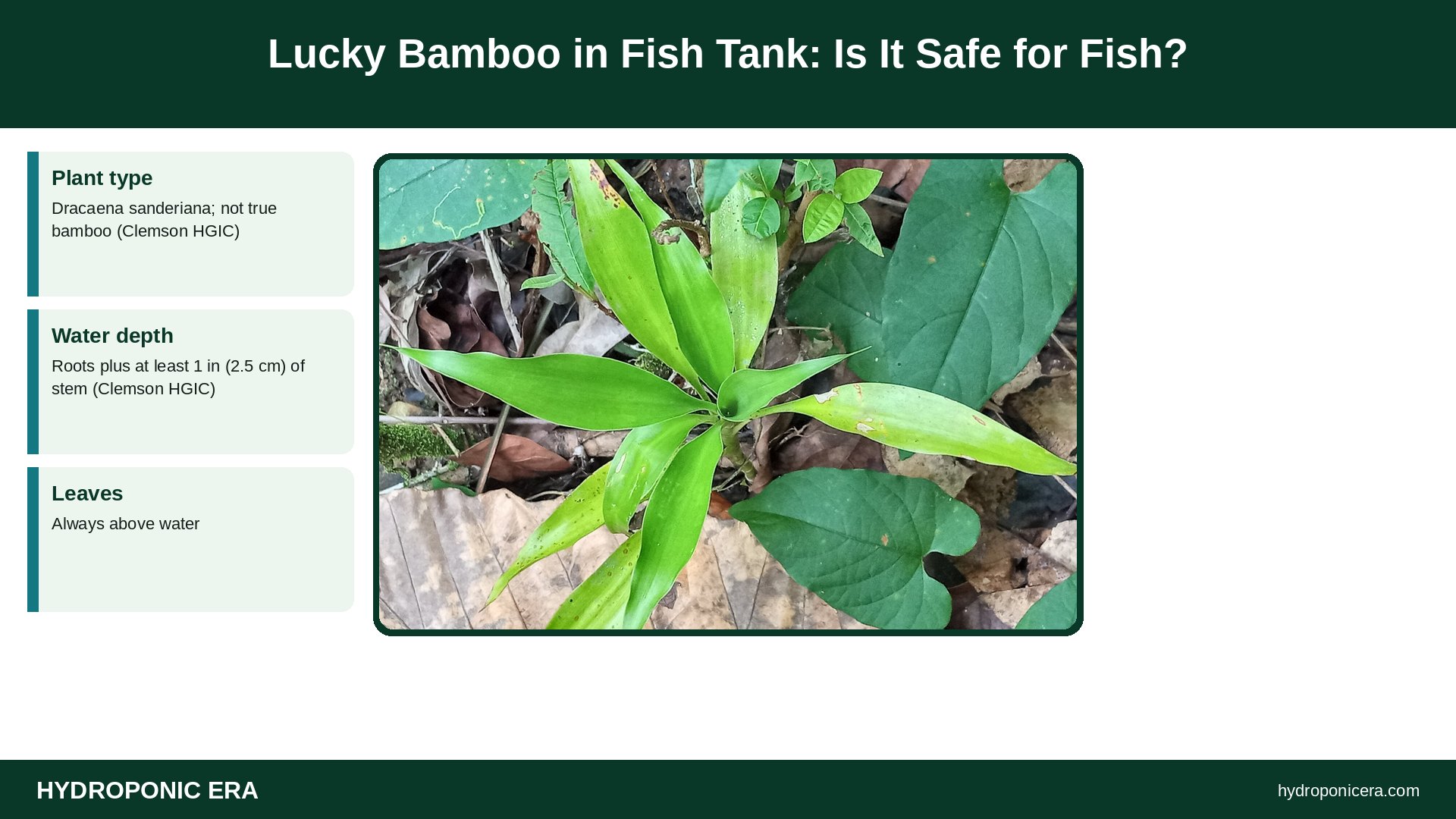
Is lucky bamboo in fish tank setups safe for fish? It is generally safe when only the roots and lower stem sit in the water and the leaves stay above it. Lucky bamboo is a Dracaena, not an aquatic plant, so submerged leaves rot and foul the water. Rinse new stalks and keep pest sprays away.
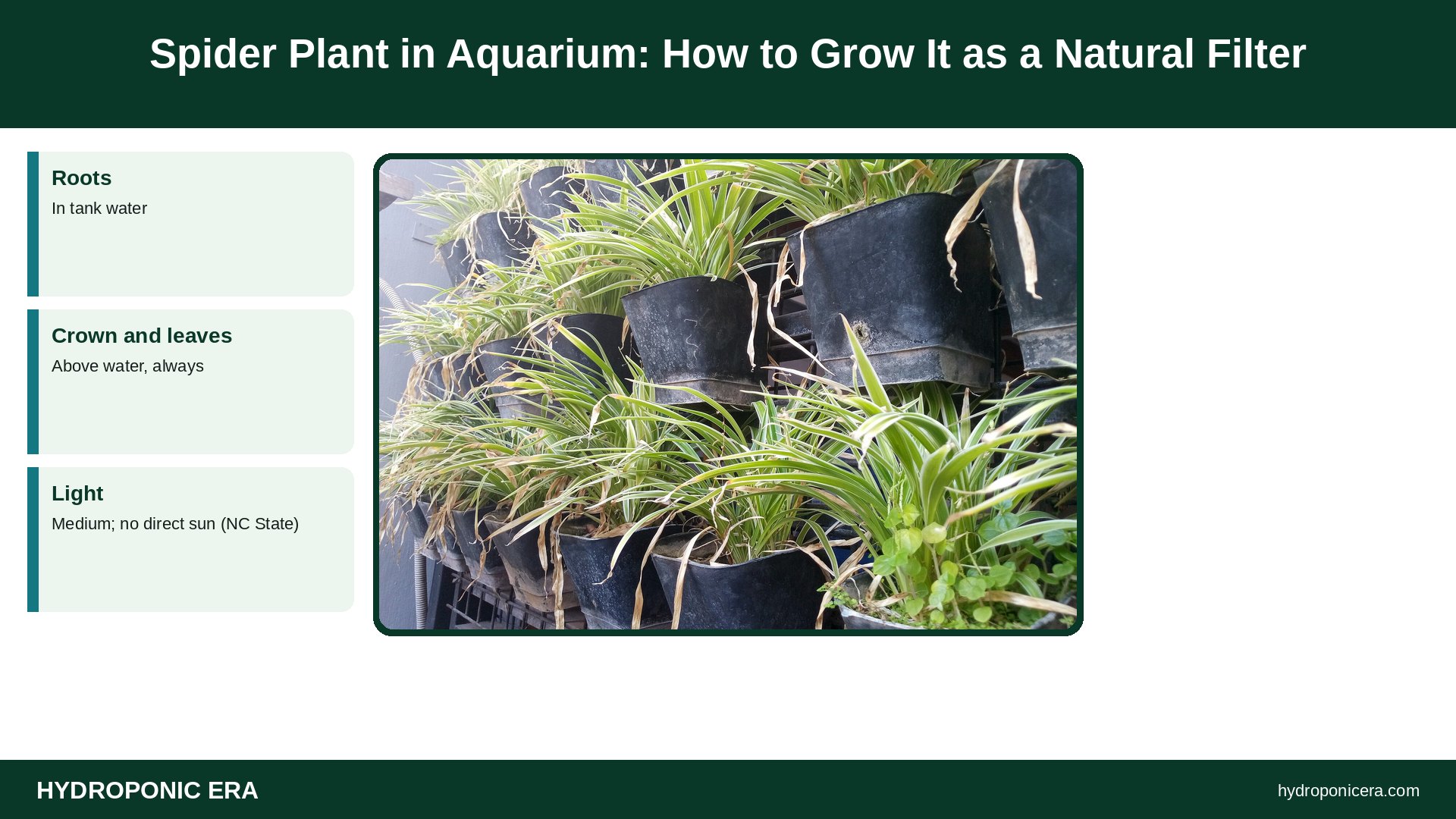
Can you grow a spider plant in aquarium water? Yes, if only the roots sit in the water and the crown and leaves stay above it. A spider plant in aquarium setups pulls nitrate from fish waste as it grows, acting as a small natural filter. Never fully submerge it; it is a land houseplant and will rot underwater.
Do you need an aquaponics UV sterilizer? Most small home systems do not need one. An aquaponics UV sterilizer treats water passing through it, killing free-floating algae and some pathogens, but it cannot stop disease that spreads inside a tank. It helps most with green water, frequent new fish, or several tanks sharing water. Good husbandry comes first.
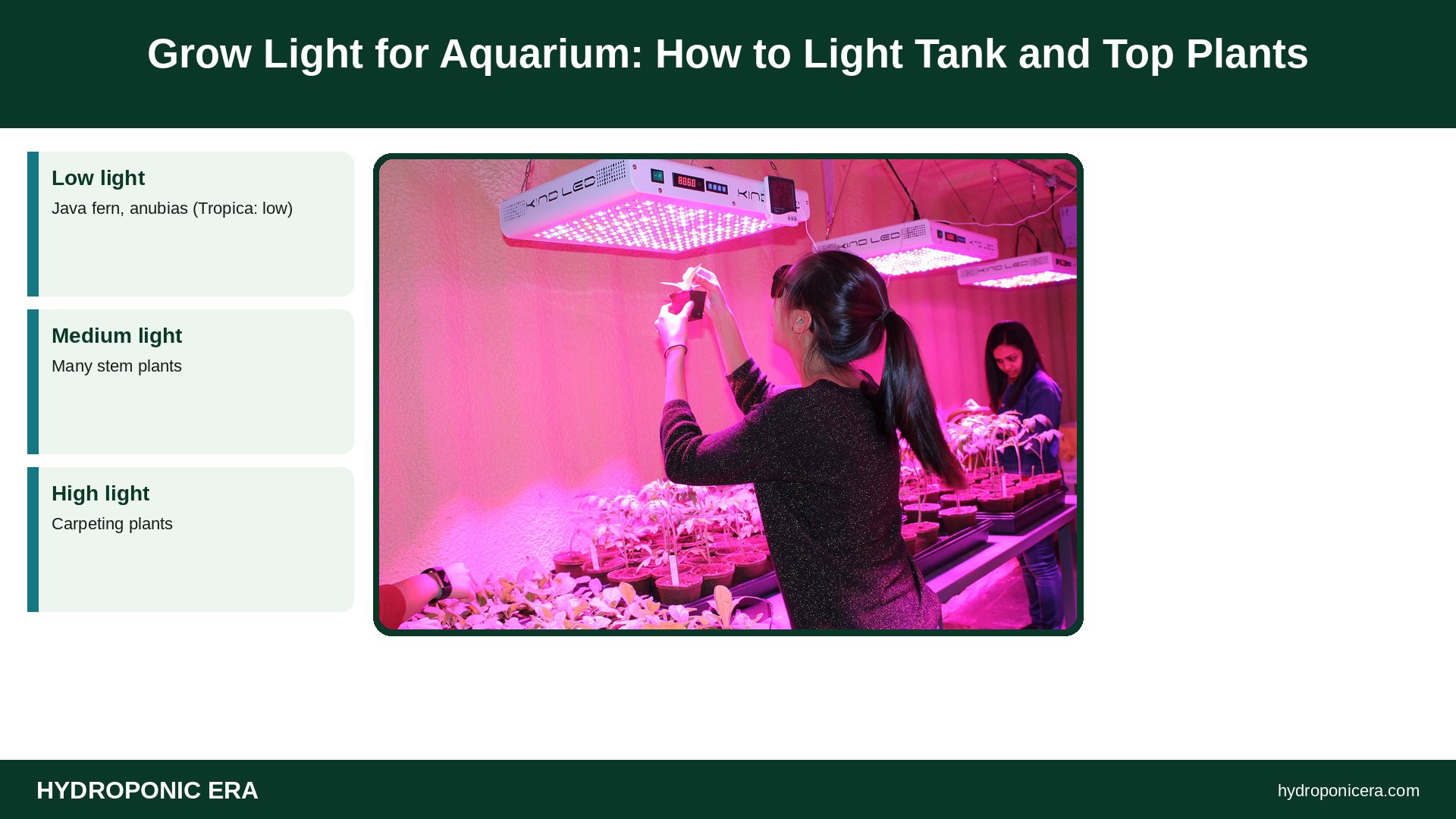
What is the best grow light for aquarium plants? The best grow light for aquarium setups is a full-spectrum LED sized to your plants’ needs and run on a timer. Low-light plants such as java fern and anubias need only a basic fixture, while carpeting plants need brighter light. Top plants growing above the rim need their own light.
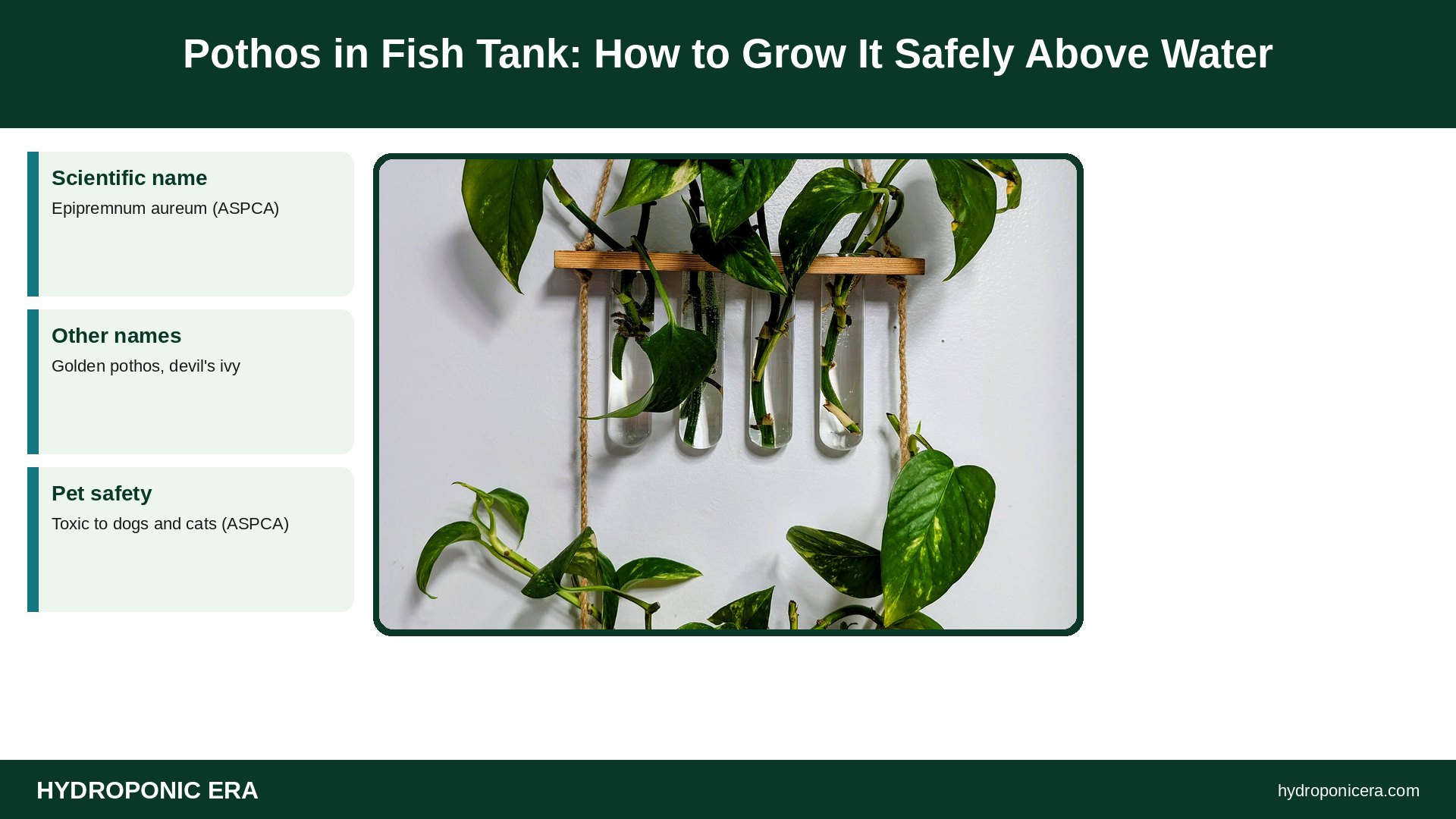
Can you grow pothos in fish tank water? Yes. Pothos in fish tank water thrives when only the roots hang below the surface and the leaves stay above it. The roots take up nitrate from fish waste, and the vine trails out of the tank. Use clean, pesticide-free cuttings, and keep the plant away from cats and dogs.