
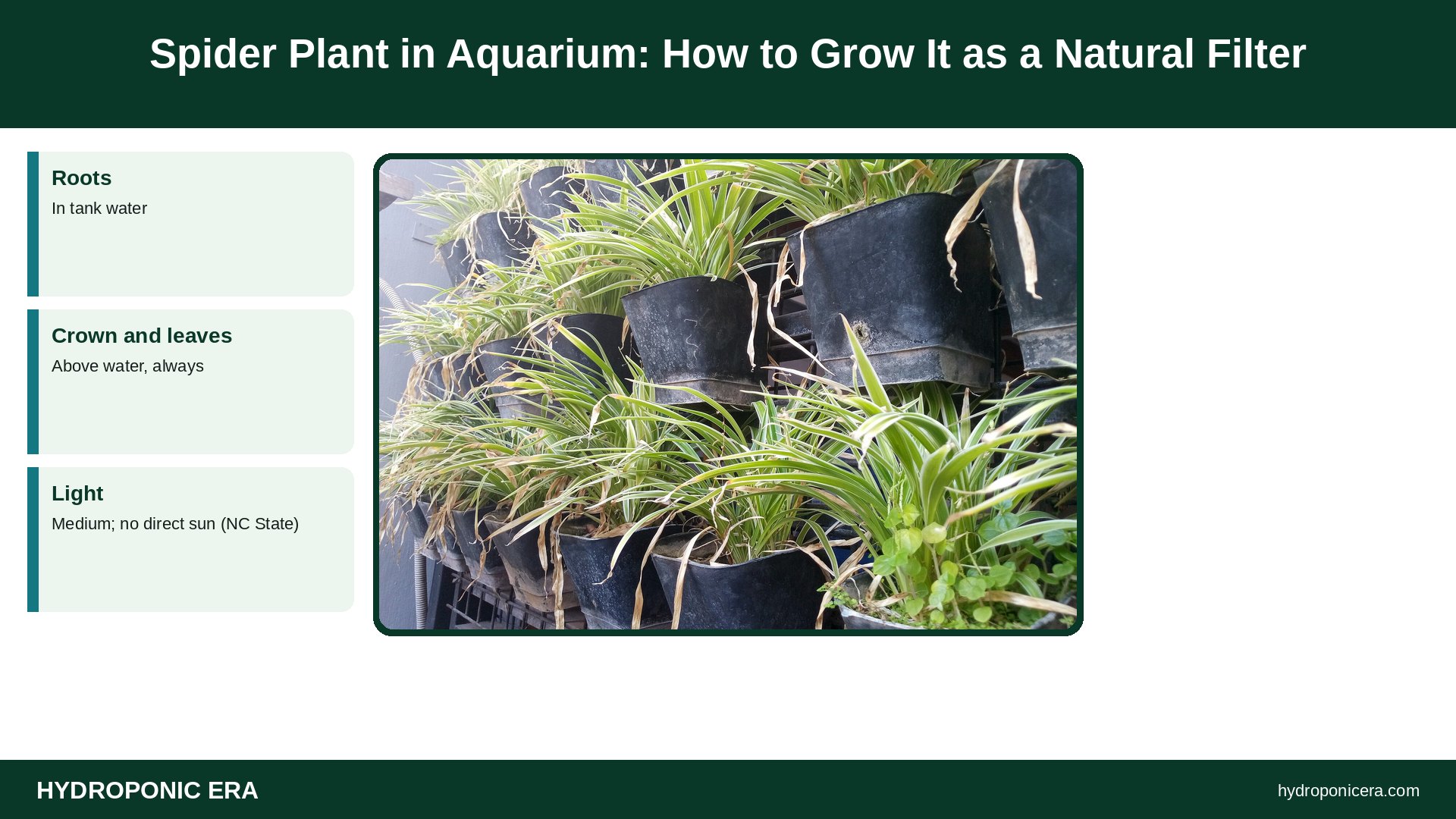
Can you grow a spider plant in aquarium water? Yes, if only the roots sit in the water and the crown and leaves stay above it. A spider plant in aquarium setups pulls nitrate from fish waste as it grows, acting as a small natural filter. Never fully submerge it; it is a land houseplant and will rot underwater.
Key takeaway: Start with a rooted plantlet, hold the crown above the waterline, give medium light, and keep up normal water changes.
| Need | Detail |
|---|---|
| Roots | In tank water |
| Crown and leaves | Above water, always |
| Light | Medium; no direct sun (NC State) |
| Temperature | Above 45°F (7°C) (NC State) |
| Pet safety | Non-toxic to dogs and cats (ASPCA) |
| Best start | Plantlet with root nubs |
Is a Spider Plant in Aquarium Water Safe for Fish?
A spider plant in aquarium water is generally a low-risk choice when you rinse the plant well and keep soil out of the tank. The ASPCA lists spider plant as non-toxic to dogs and cats, which also matters if pets reach the tank. Remove any yellow or rotting roots so decay does not foul the water.
Before adding any houseplant, wash off all potting mix and check for pests. Our aquarium water caution guide covers risks.
How Does a Spider Plant in Aquarium Setups Filter Water?
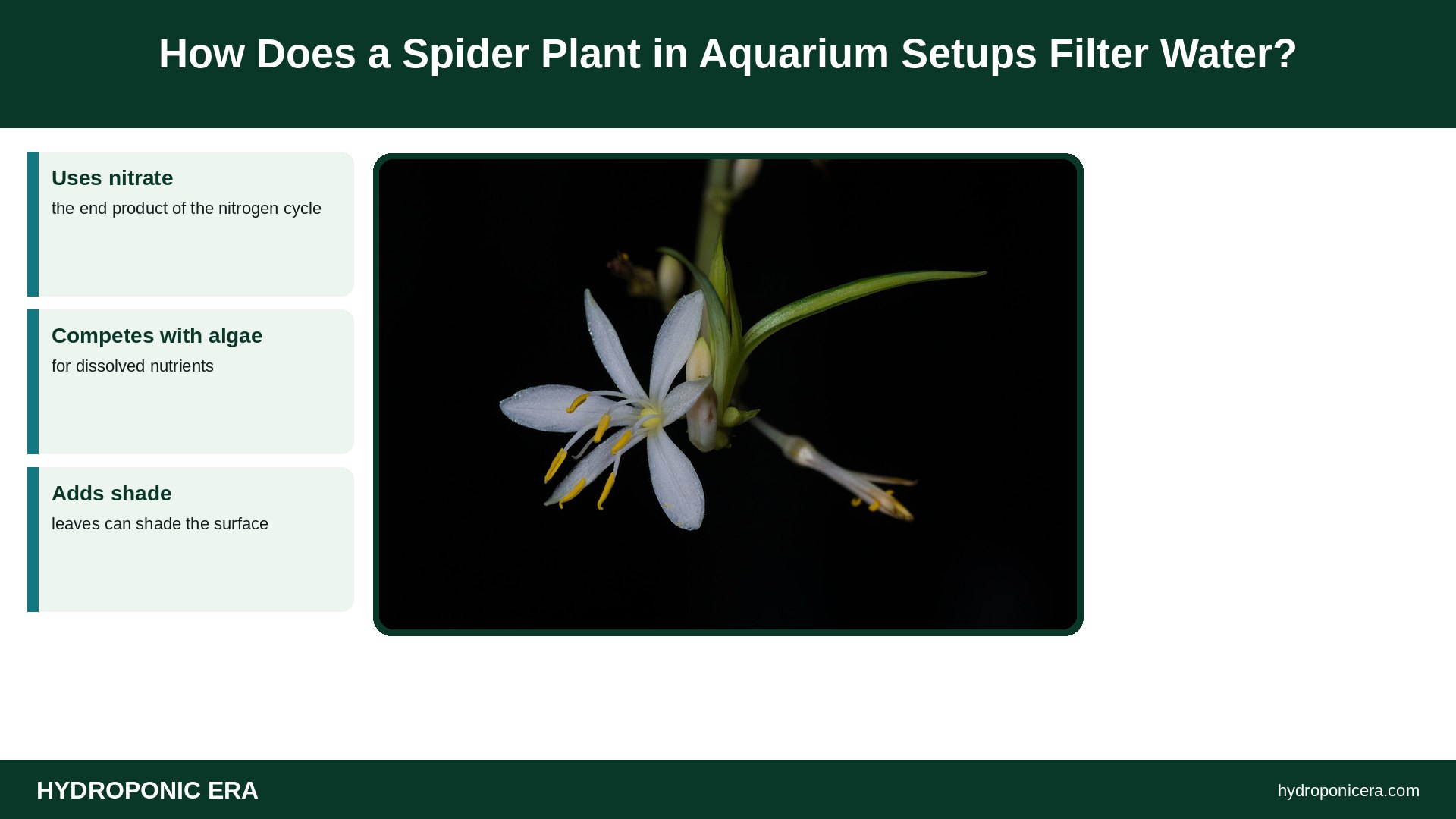
A spider plant in aquarium setups takes up nitrate and other nutrients made as fish waste breaks down, using them to grow leaves and plantlets. This helps slow nitrate buildup and can compete with algae for nutrients. It does not replace a filter, beneficial bacteria or regular water changes.
- Uses nitrate: the end product of the nitrogen cycle.
- Competes with algae: for dissolved nutrients.
- Adds shade: leaves can shade the surface.
- Not a filter: keep your filter running.
How Do You Set Up a Spider Plant in Aquarium Tanks?
Set up a spider plant in aquarium tanks by placing a rooted plantlet in a hang-on planter, cup or lid hole so the roots dangle in the water and the crown sits above it. A small net cup with clay pebbles holds it upright well. Add one plant at a time and watch the roots for a few weeks.
- Choose a plantlet with root nubs or short roots.
- Rinse the roots to remove all soil.
- Use a holder: hang-on planter, net cup or suction-cup basket.
- Fill around it with rinsed clay pebbles.
- Set the height so only roots touch water.
- Place in medium light away from direct sun.
- Check weekly for rot, pests and root growth.
How Do You Root a Plantlet First?
Root a plantlet first by snipping a baby plant from a runner and resting its base in a glass of dechlorinated water for a week or two. NC State notes spider plant propagates easily by plantlets or division. Once roots reach about 1 to 2 inches (2.5 to 5 cm), move it to the tank holder.
- Pick a firm plantlet with small root bumps.
- Keep only the base wet, not the leaves.
- Change the glass water every few days.
- Move it to the tank once roots look white and firm.
Rooting outside the tank lets you spot rot before it reaches fish. It also lets you check for pests such as aphids or fungus gnats. Starting a spider plant in aquarium holders this way gives it the best chance to settle in quickly.
Why Must the Crown Stay Above Water?
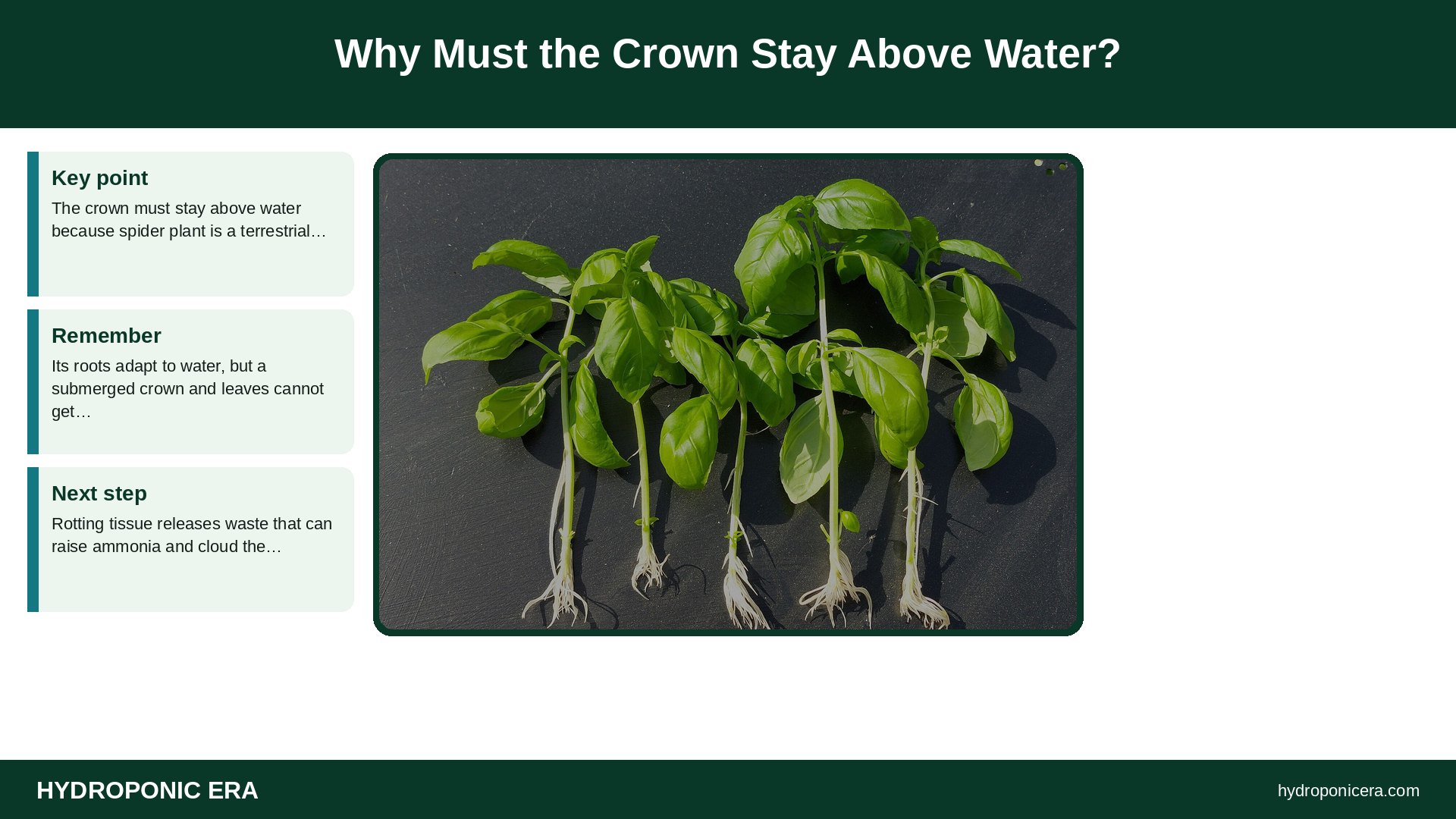
The crown must stay above water because spider plant is a terrestrial houseplant, not an aquatic plant. Its roots adapt to water, but a submerged crown and leaves cannot get air and will rot. Rotting tissue releases waste that can raise ammonia and cloud the tank, which harms fish.
If the water level drops through evaporation, raise the holder or top up so roots stay wet. Learn more in our guide to spider plant in water.
What Light Does a Spider Plant in Aquarium Lids Need?
A spider plant in aquarium lids or rims needs medium light. NC State Extension says spider plant prefers medium light, tolerates deep shade and is intolerant of direct sunlight. A bright room or the spill light from a tank fixture is often enough. Avoid putting tanks in direct sun, which also feeds algae.
NC State also notes plantlets form when the plant gets short days, under 12 hours of light, for at least three weeks.
Is Tank Water Better Than Tap Water for Spider Plants?
Dechlorinated tank water can suit spider plants well. NC State warns that chlorine and fluoride in tap water can cause leaf tip burn. Aquarium water is usually conditioned to remove chlorine before it goes in, though fluoride is not removed. See our chlorine and chloramine guide.
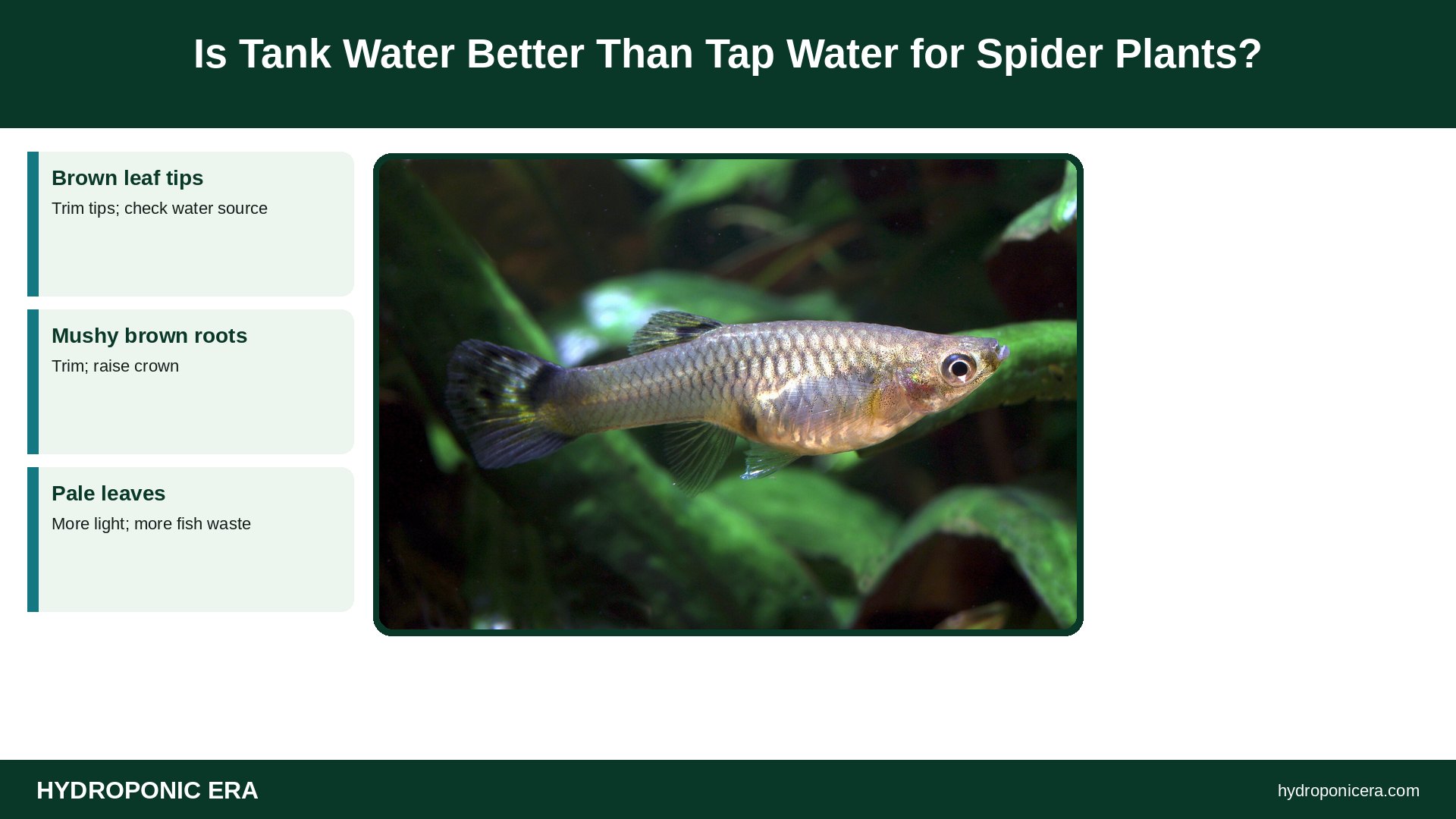
| Problem | Likely cause | Fix |
|---|---|---|
| Brown leaf tips | Fluoride, low humidity | Trim tips; check water source |
| Mushy brown roots | Rot or crown too low | Trim; raise crown |
| Pale leaves | Low nutrients or light | More light; more fish waste |
| No plantlets | Long days, overfeeding | Shorter days |
Which Tanks Suit a Spider Plant in Aquarium Use?
Spider plants suit open-top tanks or tanks with a lid cutout, since leaves need room above the water. Tanks with steady fish stocks give a steady nutrient supply. Small fish such as guppies and tetras work well. Larger fish that dig or jump may knock roots loose, so secure the holder.
How Do You Care for a Spider Plant in Aquarium Water Long Term?
Trim dead roots and leaves, keep the crown dry, and keep up partial water changes. NC State advises keeping it above 45°F (7°C) and not over-fertilizing. In a fish tank, fish waste is usually its only feed, so do not add plant fertilizer that could harm fish.
When the plant gets large, split it or root its plantlets in a new holder. Spider plants are also on our list of plants that grow in water.
FAQ About Spider Plants in Aquariums
Can it be fully submerged?
No; it will rot. Keep leaves and crown above water.
Is it toxic to fish?
It is non-toxic to dogs and cats (ASPCA); keep it clean and rot-free.
Does it lower nitrate?
It uses some nitrate as it grows, but water changes still matter.
Can it grow in a betta tank?
Yes, with roots in water and leaves above.
How fast do roots grow?
Healthy plantlets usually add visible roots within weeks.
Sources
- NC State Extension — Chlorophytum comosum (spider plant)
- ASPCA — Spider Plant
- Photo credits (Wikimedia Commons, edited with titles): Spider Plant (Chlorophytum Comosum) by S.samsamyang (CC BY 4.0); Chlorophytum comosum flos by Adrian Tync (CC BY 4.0); Basilikum (Ocimum basilicum) Stecklinge — Josef Schlaghecken by Schlaghecken Josef (CC BY-SA 4.0); Guppy Poecilia reticulata by Holger Krisp (CC BY 3.0)