
Spider plant in water is one of the simplest ways to grow a houseplant without soil. Snip a baby plantlet (a “pup” or “spiderette”), set its base in a small glass of water, and roots usually appear within a couple of weeks. A spider plant in water can keep growing for a long time if you change the water regularly and add a very dilute fertilizer, and the ASPCA lists spider plants as non-toxic to cats and dogs, which makes them a favorite for pet households.
Key takeaway: Pups root easily in water. Long-term growth needs fresh water, light feeding, and protection from fluoride and salt buildup that brown the tips.
| Factor | Target |
|---|---|
| What to root | Plantlets with small root nubs at the base |
| Water depth | Just cover the base and nubs; keep leaves dry |
| Rooting time | Often 1–3 weeks in a warm, bright room |
| Light | Bright, indirect |
| Temperature | About 60–80°F |
| Water change | Weekly while rooting; every 1–2 weeks after |
| Pets | Non-toxic to cats and dogs (ASPCA) |

Why Spider Plants Root So Easily in Water

Spider plants (Chlorophytum comosum) send out long stems with plantlets at the tips. In nature, these babies touch the ground and root. Most plantlets already carry little root bumps, so they are halfway to independence before you cut them. Put that base in water and the roots grow quickly.
The mother plant also has thick, fleshy roots that store water. That storage helps spider plants tolerate a bit of neglect, but it also means they can be prone to rot if kept in stagnant, warm water.
How to Grow a Spider Plant in Water, Step by Step
- Choose a plantlet with several leaves and visible root nubs.
- Cut it from the runner with clean scissors, or leave it attached and dip it into a glass next to the mother plant until it roots.
- Use a narrow glass so the leaves rest on the rim and the base sits just in the water.
- Add room-temperature water only up to the base.
- Place in bright indirect light, away from hot direct sun.
- Change water weekly. Rinse the glass to remove slime.
- Start dilute feeding once roots are about 2 inches long.
Feeding a Spider Plant in Water Long-Term
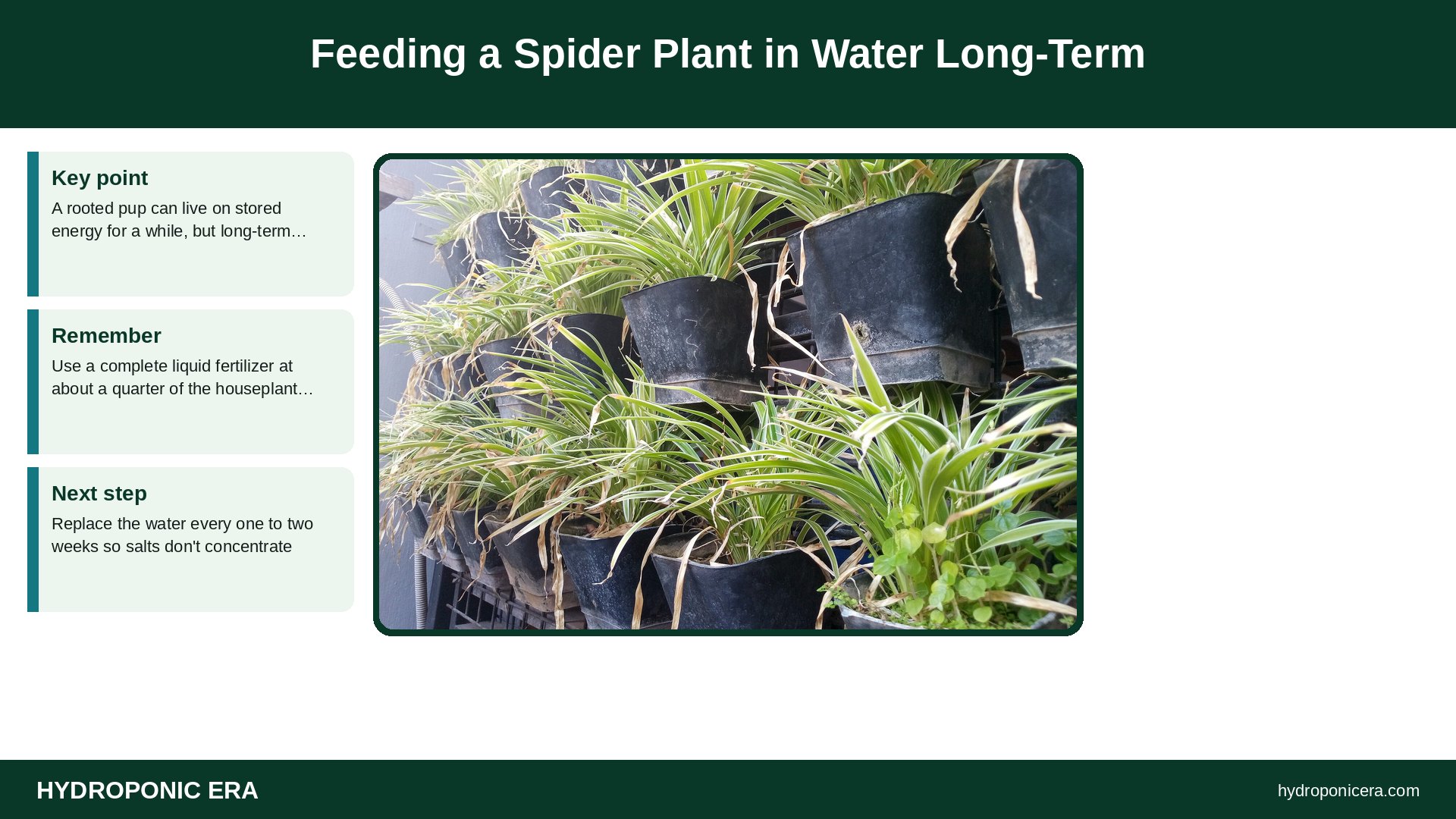
A rooted pup can live on stored energy for a while, but long-term growth needs nutrients. Use a complete liquid fertilizer at about a quarter of the houseplant label rate, or a hydroponic nutrient at low strength. Replace the water every one to two weeks so salts don’t concentrate.
Spider plants are known for brown leaf tips. Extension sources commonly connect this to fluoride, salt buildup, or dry air. If tips brown even with careful feeding, switch to filtered, rain, or distilled water. Our article on fluoride in water for plants explains the link, and our chlorine and chloramine guide covers municipal water treatment.
Light, Temperature, and Container Tips
- Bright indirect light gives the best variegation. Very low light fades stripes.
- Avoid direct afternoon sun through glass, which scorches leaves and heats water.
- Use opaque or tinted containers for long-term displays to limit algae.
- Size up as roots fill the glass. Crowded roots in a small volume foul water faster.
Want a more structured setup? A small passive system works well. See our Kratky method guide for a no-pump approach.
Spider Plant in Water Problems and Fixes

| Symptom | Likely cause | Fix |
|---|---|---|
| Brown leaf tips | Fluoride, salt buildup, low humidity | Change water type, refresh water, trim tips with clean scissors |
| No roots after 3 weeks | Cold room, low light, or pup without nubs | Move somewhere warmer and brighter; try another pup |
| Mushy base | Leaves or crown submerged | Lower the water to just the base |
| Pale, washed-out leaves | Low nutrients or low light | Dilute feeding, brighter spot |
| Cloudy, smelly water | Decaying roots or leaves | Rinse roots, clean container, fresh water |
Should You Move It to Soil?

You don’t have to. A spider plant in water can stay that way. If you want a bigger hanging plant with lots of babies, potting it into soil or a semi-hydro medium usually gives faster growth. Expect a short adjustment period after moving water roots into soil; our transplant shock guide shows what is normal.
Common Mistakes
- Submerging leaves. They rot and spoil the water.
- Never feeding. Growth stalls after the stored energy is used.
- Full-strength fertilizer. Causes brown tips and root burn.
- Only topping off. Concentrates salts and fluoride.
- Ignoring slime. Rinse the container at each change.
Weekly Checklist for a Spider Plant in Water
- Look at root color. Spider plant roots are thick and white; brown, mushy sections need trimming.
- Check the base. It should sit at or just above the waterline.
- Refresh water every one to two weeks with room-temperature water.
- Trim brown tips at an angle with clean scissors if they bother you.
- Remove spent runners or root their babies in new glasses.
Variables That Affect a Spider Plant in Water
| Variable | Effect | Adjustment |
|---|---|---|
| Variegated vs green types | Variegated types need more light | Move closer to a bright window |
| Container size | Thick roots fill small glasses fast | Size up every few months |
| Water source | Fluoride and salts brown tips | Filtered, rain, or distilled water |
| Season | Slower winter growth | Feed less in winter |
A spider plant in water also makes a great project for kids, because roots appear quickly and are easy to see. Our hydroponics with kids guide has more ideas. Since the ASPCA lists spider plants as non-toxic to cats and dogs, a spider plant in water is one of the safer choices for a home with pets, though cats that chew leaves may still have mild stomach upset.
Want several plants? Root a whole row of pups in small jars on a windowsill. Within a month or two you’ll have enough rooted spider plant in water starters to share with friends.
FAQs: Spider Plant in Water
Can a spider plant live in water forever?
It can live long-term with fresh water and dilute feeding, though it usually grows faster in soil.
How long does it take a spider plant baby to root in water?
Often one to three weeks in a warm, bright room. Pups with existing root nubs root fastest.
Are spider plants safe for cats?
The ASPCA lists spider plants as non-toxic to cats and dogs. Cats may still chew the leaves, which can cause mild stomach upset.
Why are the tips turning brown?
Usually fluoride or salt buildup from tap water or fertilizer. Switch water type and refresh more often.
Related HydroponicEra Guides
Sources
- ASPCA — Spider Plant (non-toxic)
- NC State Extension Plant Toolbox — Chlorophytum comosum
- Photo credits (Wikimedia Commons, edited with titles): Spider Plant (Chlorophytum Comosum) by S.samsamyang (CC BY 4.0); Chlorophytum comosum flos by Adrian Tync (CC BY 4.0)