
Lucky bamboo care in water comes down to five things: keep the stalks in a few inches of clean water, change that water every week or two, give bright indirect light, keep the room between about 65°F and 90°F, and feed very lightly. Lucky bamboo is not bamboo at all. It is Dracaena sanderiana, a tropical plant that roots easily in water, which is why it is sold in vases, pebbles, and braided arrangements across the US.
Key takeaway: Most lucky bamboo problems come from tap water chemicals, too much sun, too much fertilizer, or water that is never changed.
| Factor | Lucky bamboo care target |
|---|---|
| Water depth | About 1–3 inches, covering the roots |
| Water change | Every 7–14 days |
| Water type | Filtered, rain, or distilled water if tap water causes brown tips |
| Light | Bright, indirect; no harsh direct sun |
| Temperature | About 65–90°F |
| Fertilizer | A drop or two of very dilute liquid fertilizer every month or two, or a product made for lucky bamboo |
| Pets | Dracaena species are listed as toxic to cats and dogs (ASPCA) |

What Lucky Bamboo Actually Is

Lucky bamboo is Dracaena sanderiana, a relative of the corn plant and other dracaenas. Growers root cane cuttings in water and train them into spirals, towers, and braids. Because it is a dracaena, it handles water culture well, but it shares a dracaena weakness: leaf tips can brown when exposed to fluoride and salts.
That distinction matters because people sometimes apply bamboo advice (lots of sun, heavy feeding) to a plant that wants shade-tolerant houseplant care.
Lucky Bamboo Care in Water: Step by Step
- Clean the container and pebbles every few water changes to remove algae and slime.
- Use the right water. If your tips turn brown, switch to filtered, rain, or distilled water. Our guide on fluoride in water for plants explains why dracaenas react.
- Keep the level steady. Roots should stay covered. Don’t fill the vase to the top of the stalks.
- Change the water every week or two. Fresh water keeps oxygen up and odors down.
- Place in bright, indirect light. Direct sun scorches leaves and turns them pale.
- Feed sparingly. A tiny dose of diluted fertilizer every month or two is plenty.
Light and Temperature for Lucky Bamboo

Lucky bamboo tolerates lower light than most plants, which is why it thrives on office desks. Very dim light slows growth and leads to stretched, pale stalks, though. Bright indirect light gives the best color. Avoid placing it next to heat vents, air conditioners, or cold windows in winter. Most indoor rooms in the US stay in a comfortable range, but a windowsill in January can drop well below 60°F at night.
Fertilizer: Less Is More
Good lucky bamboo care uses fertilizer the way a cook uses salt. Too much quickly causes yellowing and brown tips because water culture has no soil buffer. Use one of these:
- A fertilizer labeled for lucky bamboo, at the label dose.
- A general liquid houseplant fertilizer diluted to a small fraction of the label rate.
- A hydroponic nutrient at very low strength, if you already have one. Our beginner nutrient guide explains diluting.
Always replace the water rather than adding more fertilizer on top of old solution.
Yellow Stalks, Brown Tips, and Other Problems

| Symptom | Likely cause | Fix |
|---|---|---|
| Brown leaf tips | Fluoride, chlorine, or salt buildup; low humidity | Switch water type, change water more often |
| Yellow leaves | Too much sun or too much fertilizer | Move out of direct sun, stop feeding, fresh water |
| Yellow stalk from the bottom | Rot in that stalk | Remove the affected stalk so it doesn’t spread |
| Bad smell, slimy roots | Stale water, decaying roots | Clean container, trim roots, weekly water changes |
| Green film on glass or pebbles | Algae from light | Scrub, rinse pebbles, use an opaque vase |
| Stretched, pale growth | Too little light | Move to brighter indirect light |
A yellow stalk generally does not turn green again. Healthy leaves can be cut from the top of a dying stalk and rooted in water as a new plant.
Trimming and Propagating Lucky Bamboo
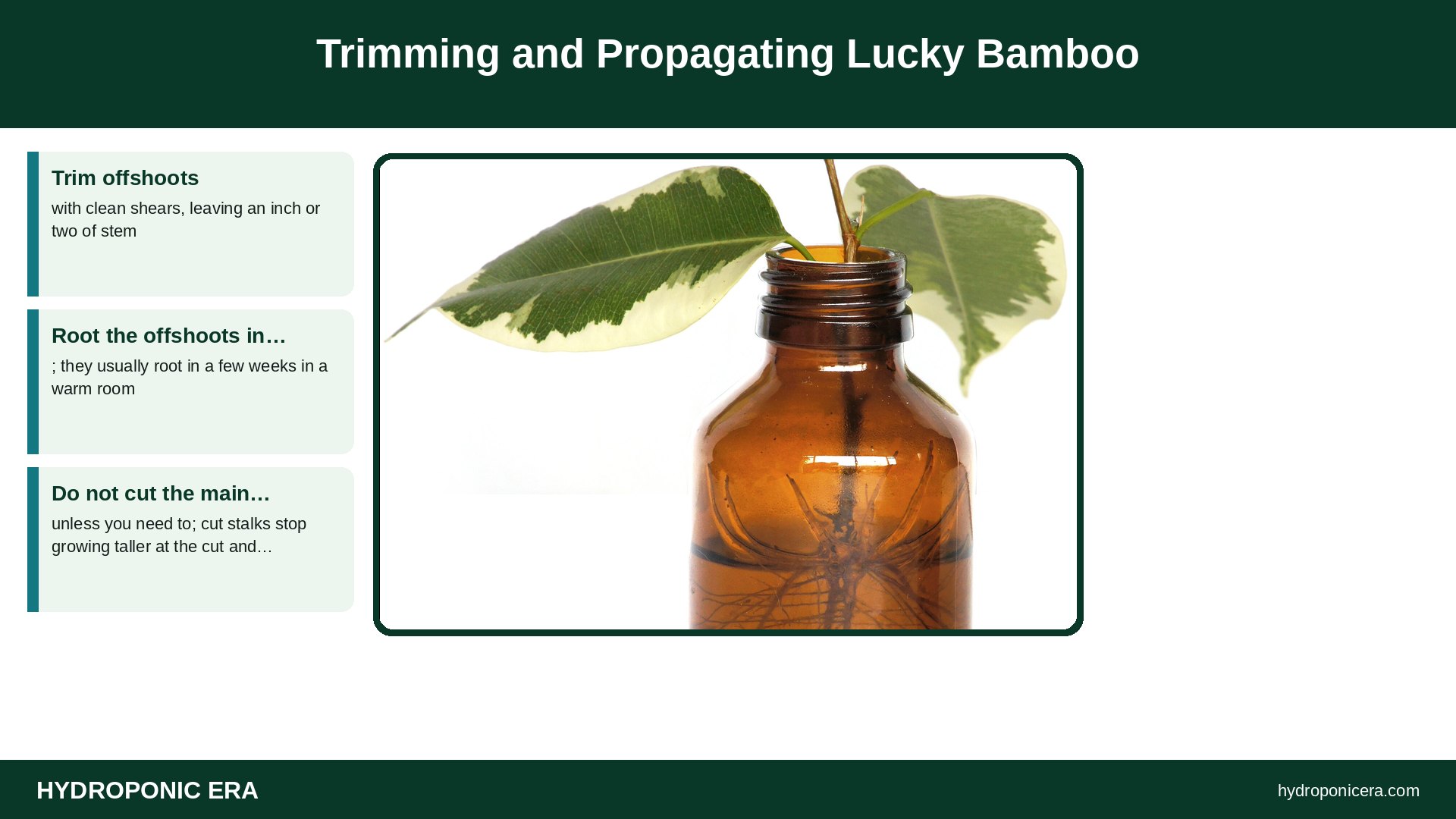
- Trim offshoots with clean shears, leaving an inch or two of stem.
- Root the offshoots in water; they usually root in a few weeks in a warm room.
- Do not cut the main stalk unless you need to; cut stalks stop growing taller at the cut and send out new shoots.
- Keep twist ties loose on braided or spiral arrangements so they don’t girdle stalks.
The same rooting principles apply to other cuttings. See our hydroponic cuttings and cloning guide.
A Simple Monthly Lucky Bamboo Care Routine
Most lucky bamboo care happens in a few minutes. Here’s a routine that fits a busy schedule.
- Week 1: full water change, rinse pebbles, wipe the vase.
- Week 2: check water level and top up with the same water type.
- Week 3: full water change; inspect each stalk for yellowing from the base.
- Week 4: top up; feed a tiny dose if it’s the growing season and the plant looks pale.
Lucky bamboo care in water stays simple when you stick to a schedule. Set a phone reminder and you won’t forget.
Variables That Change Lucky Bamboo Care
| Variable | What changes | Adjustment |
|---|---|---|
| Hard tap water | White crust on pebbles, brown tips | Switch to filtered or distilled water |
| Fluoridated water | Tip burn on dracaenas | Use rain or distilled water |
| Bright sunny window | Pale or scorched leaves, algae | Move back from the glass |
| Dim office | Slow, stretched growth | Add a desk LED on a timer |
| Braided arrangement | Ties can girdle stalks over time | Loosen or replace ties yearly |
Lucky Bamboo Care in Soil vs Water
Water culture keeps lucky bamboo clean and decorative. Soil can produce more vigorous growth over time, but it introduces watering decisions and fungus gnats. If your plant lives in water now, there’s no need to move it. Good lucky bamboo care in water can keep an arrangement going for years.
Lucky bamboo care is also a good introduction to water culture. The same principles, clean water, oxygen, light, and dilute nutrients, apply to pothos and many other plants that grow in water.
FAQs: Lucky Bamboo Care
How often should I change lucky bamboo water?
Every one to two weeks for most homes, or sooner if the water looks cloudy or smells.
Why are my lucky bamboo tips turning brown?
The most common cause is tap water chemistry, especially fluoride and dissolved salts. Try filtered, rain, or distilled water.
Can lucky bamboo grow in soil?
Yes. It can be moved to a well-drained potting mix, but it should not be switched back and forth often.
Is lucky bamboo toxic to cats?
The ASPCA lists dracaena species as toxic to cats and dogs. Keep arrangements out of reach of pets.
Related HydroponicEra Guides
Sources
- NC State Extension Plant Toolbox — Dracaena sanderiana
- ASPCA — Dracaena toxicity
- Photo credits (Wikimedia Commons, edited with titles): Dracaena sanderiana 132158060 by Beah Vega (CC BY 4.0); Dracaena fragrans (Leaves) by Filo gèn’ (CC BY-SA 4.0); Ficus cuttings with roots in a bottle, White background by Biusch (CC BY-SA 3.0)