tomato yellow leaf curl virus — Tomato Yellow Leaf Curl Virus: Signs and Prevention

Tomato yellow leaf curl virus (TYLCV) is a whitefly-spread virus that makes young tomato leaves curl upward, turn yellow at the edges and stay small, while plants stunt and drop flowers. There’s no cure: infected plants don’t recover, and early infections can wipe out fruit set. Prevention is the whole game: virus-free transplants, whitefly exclusion and control, resistant varieties, and prompt removal of infected plants.

impatiens necrotic spot virus — Impatiens Necrotic Spot Virus in Lettuce (INSV)

Impatiens necrotic spot virus (INSV) is a thrips-spread virus that causes brown to dark brown spots and dead patches on lettuce leaves, often mistaken for fertilizer burn. There’s no cure. Infected lettuce is usually unmarketable, and young plants can stunt and die. Control depends on stopping western flower thrips, removing infected plants and managing weeds that harbor both the virus and the insect, a lesson from California’s Salinas Valley.

tomato leaf mold — Tomato Leaf Mold: Greenhouse and Grow Room Fix

Tomato leaf mold is a fungal disease of greenhouse, high-tunnel and grow-room tomatoes caused by Passalora fulva . It starts as pale yellow spots on top of older leaves with olive-green, velvety mold underneath. University of Minnesota Extension says it’s driven by relative humidity above 85%. The fix is mostly climate: lower humidity, add airflow, keep leaves dry, remove infected leaves and grow resistant varieties.

tomatoes not turning red — Tomatoes Not Turning Red? Causes and Fixes Indoors

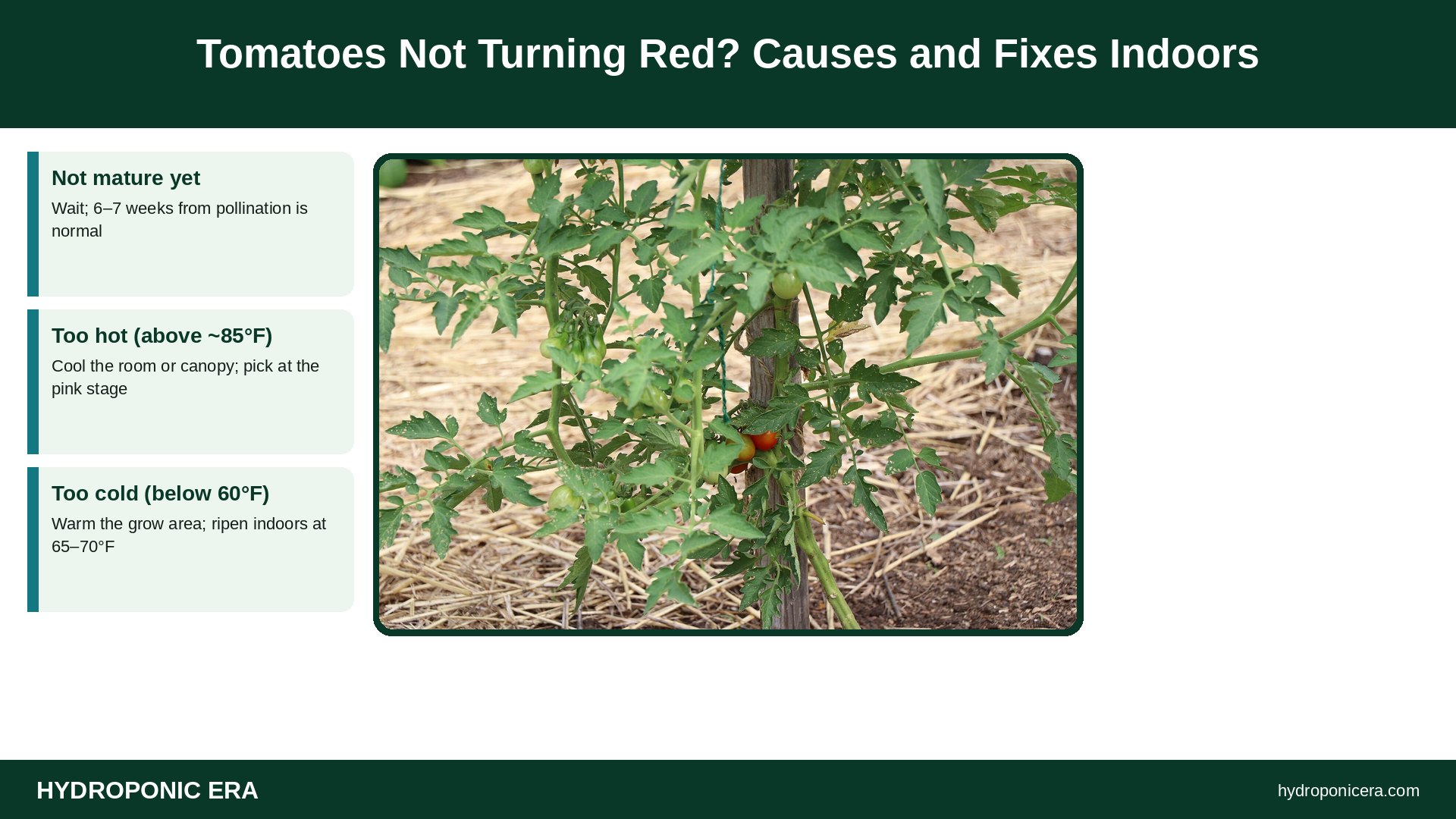
Tomatoes not turning red are usually waiting on time or stuck in the wrong temperature. Purdue Extension notes red pigment doesn’t form above 86°F, and University of Missouri specialists say ripening is fastest at 68–77°F. Fruit also needs six to seven weeks from pollination to mature. Most green tomatoes ripen once temperatures are back in range. If you get yellow shoulders or blotches, check potassium and heat.

springtails in hydroponics — Springtails in Hydroponics: Harmless or a Problem?

Springtails in hydroponics are usually a moisture signal, not a crop emergency. These tiny, jumping hexapods (about 1/16 to 1/8 inch long) feed mostly on fungi, algae and decaying organic matter. University extension specialists say they rarely harm established plants, though large numbers can nibble tender seedlings. If you see them, dry out wet surfaces, clean up algae and old roots, and they usually fade within days.

shore flies — Shore Flies vs Fungus Gnats: How to Tell and Fix

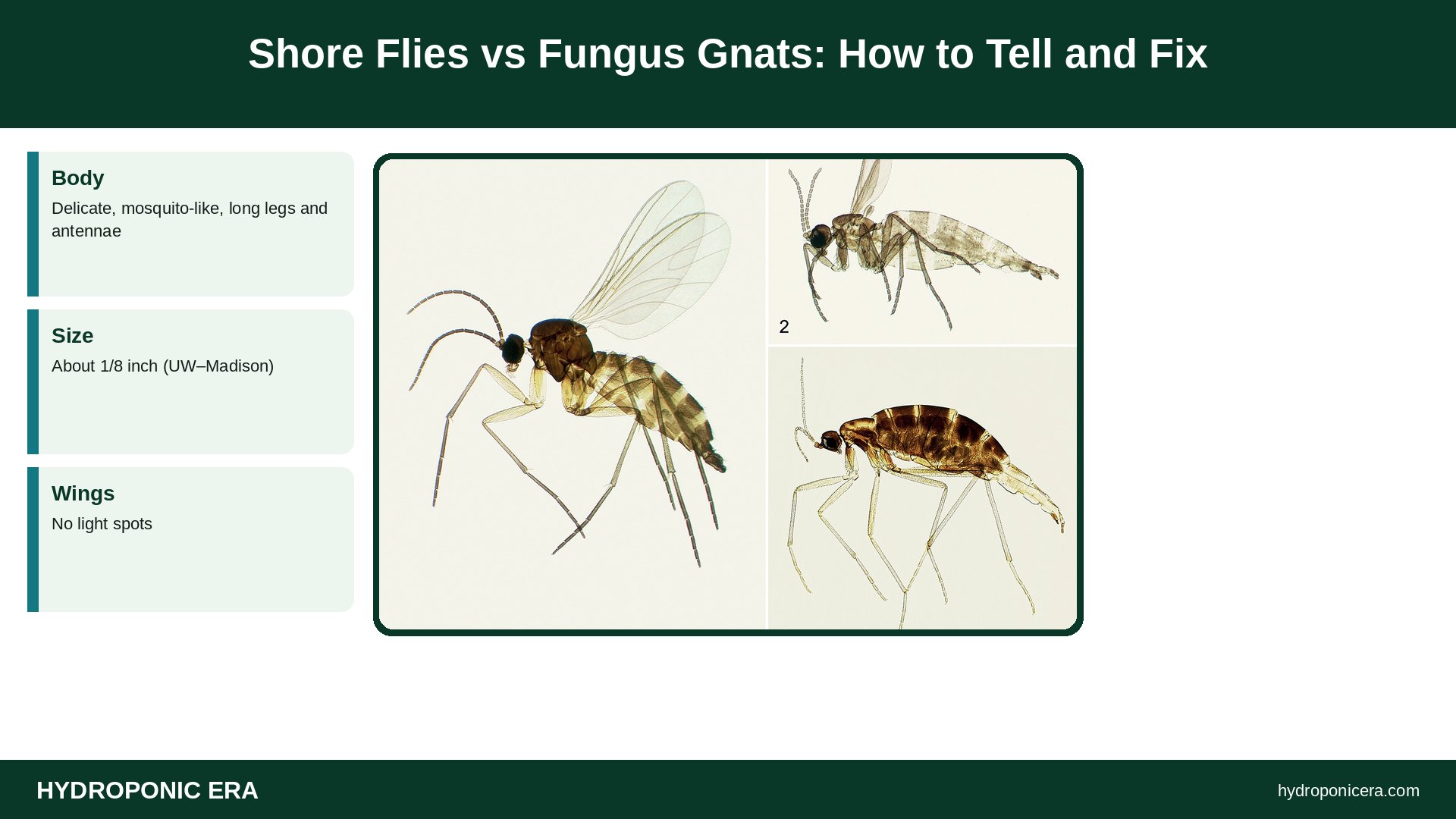
Shore flies are small, sturdy, dark flies with light spots on their wings that breed in algae and standing water. Fungus gnats are delicate, long-legged, weak fliers whose larvae live in moist media and can feed on roots. Extension entomologists say shore fly larvae eat algae, not plants, so the fix is algae and moisture control. Fungus gnats need drier media plus larval control. Correct ID saves time and money.

mint rust — Mint Rust: Spot It, Treat It, Keep Mint Safe

Mint rust is a fungal disease caused by Puccinia menthae . It shows up as pale, twisted spring shoots and dusty orange pustules under the leaves, later turning yellow and then black. It spreads through infected stems and rhizomes, so cutting leaves off rarely cures it. The reliable fix is to remove and bag infected plants, keep foliage dry, and restart from clean stock. Don’t eat or sell rust-spotted leaves.

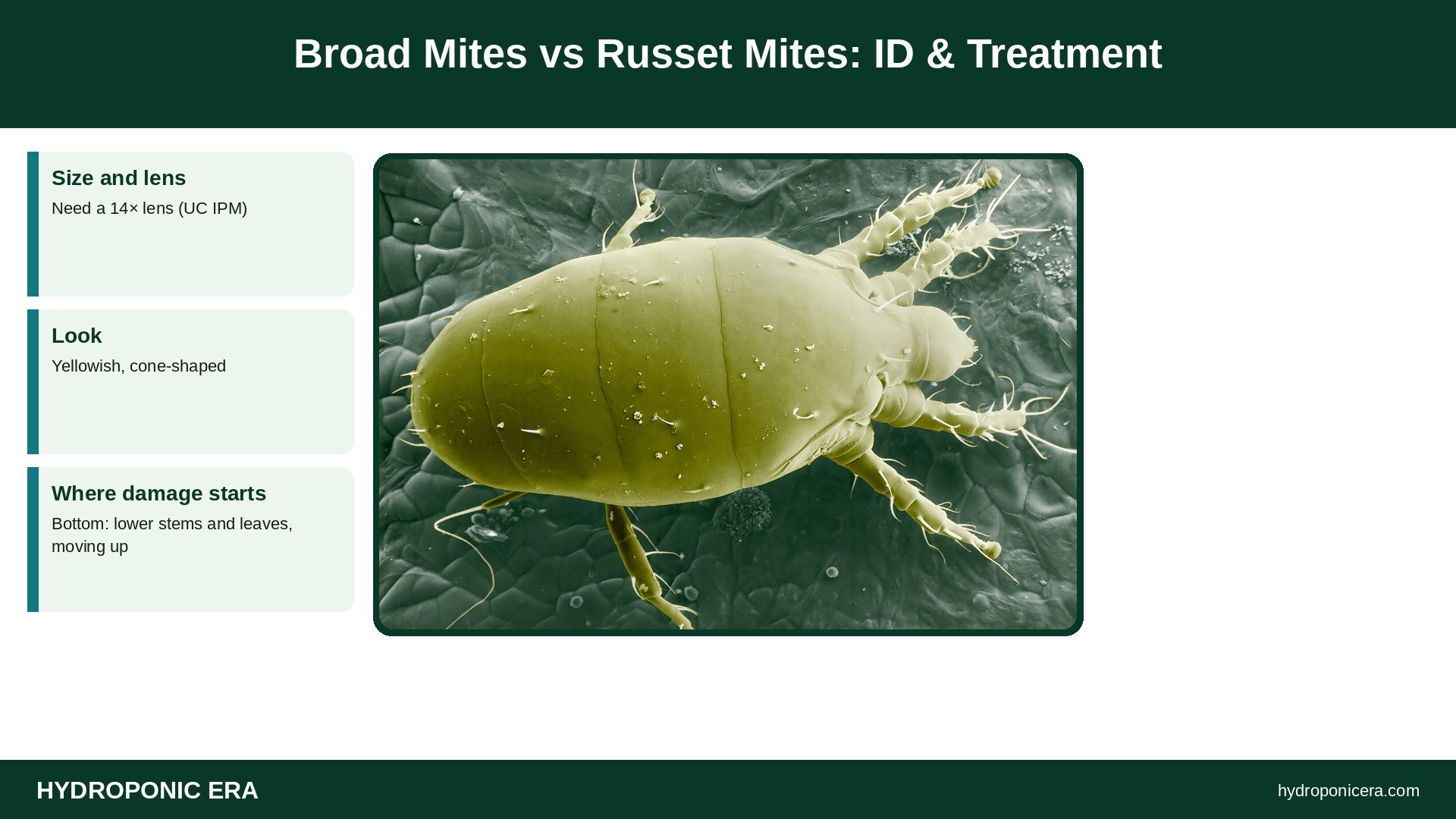
broad mites — Broad Mites vs Russet Mites: ID & Treatment

Broad mites attack the newest growth, leaving young leaves twisted, cupped and bronzed. Russet mites start low on the plant and turn stems and lower leaves greasy bronze as they move up. Both are too small to see without a 14–20× lens. Control starts with confirming the mite, removing badly hit shoots, using predatory mites and choosing a true miticide.