The best hydroponics course for most US beginners is a short university program: the University of Arizona’s online Introduction to Hydroponics ($299, self-paced) or Oregon State’s Introduction to Hydroponics ($285, asynchronous). For careers, look at CEA Works ($500 for four courses) or Arizona’s annual CEA Short Course. None is a license; they build skills.
Container farming cost starts at roughly $215,000 to buy a turnkey hydroponic shipping-container farm in 2026, or about $3,000 a month to lease through a farm-as-a-service plan. Then add power (tens of thousands of kWh a year), about 25 labor hours a week, seeds, packaging and delivery. Profit depends far more on your selling price than on the box.
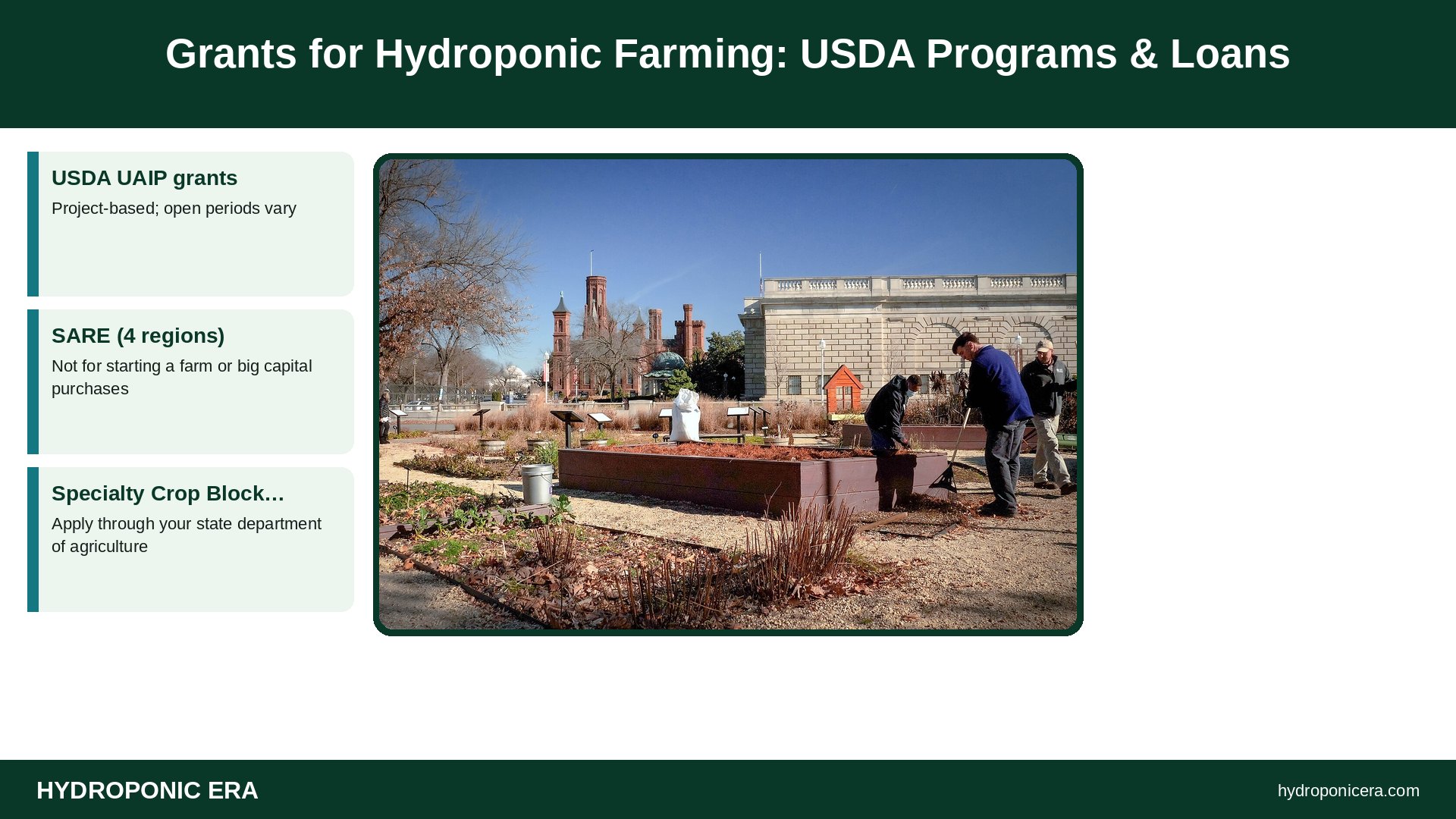
Grants for hydroponic farming exist, but they’re competitive, project-based and rarely cover simply starting a farm. In the US, look at USDA Urban Agriculture and Innovative Production grants, regional SARE grants, and Specialty Crop Block Grants through your state. FSA loans are often the realistic funding path, and EQIP high tunnel support excludes hydroponics.
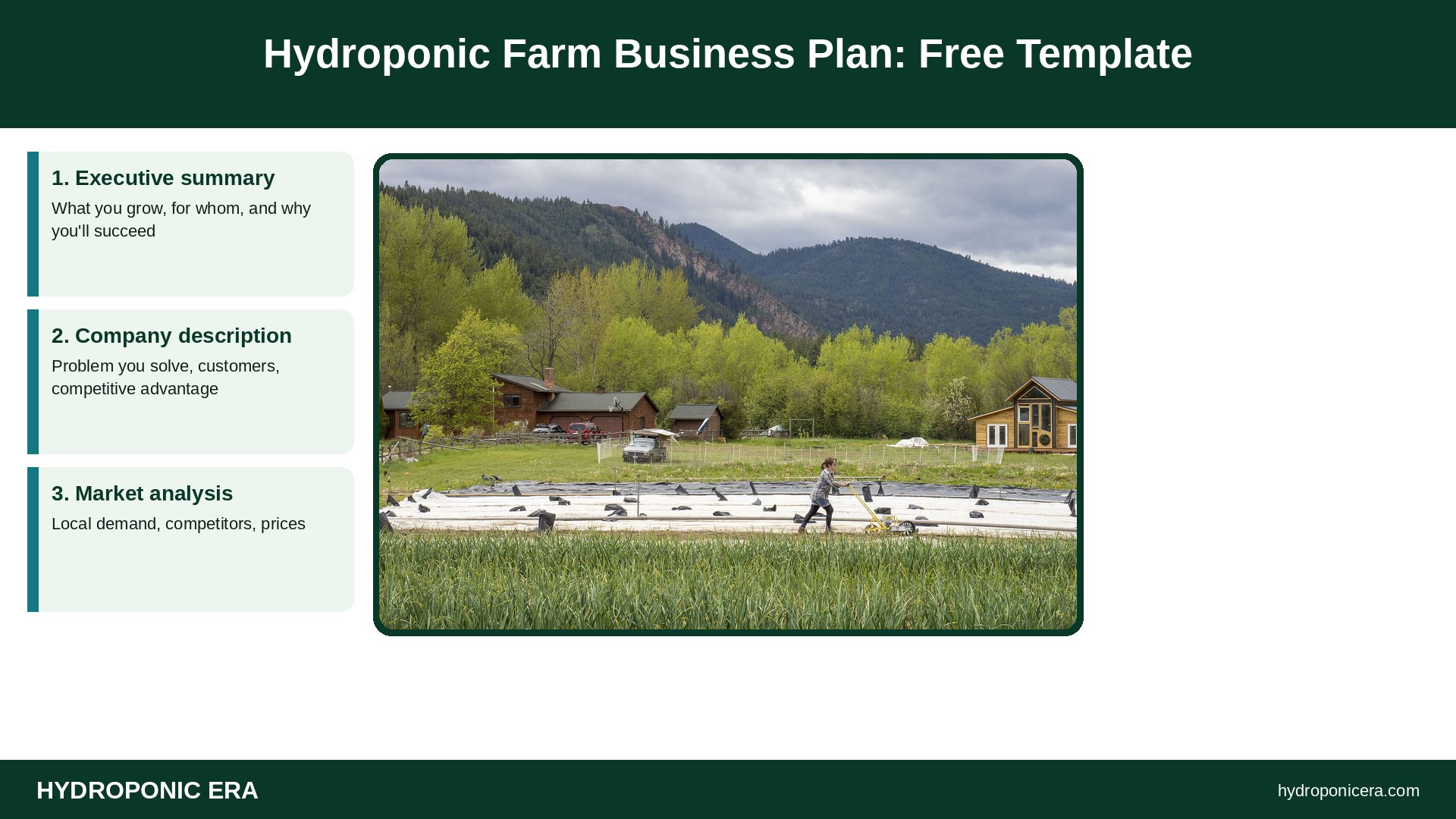
A hydroponic farm business plan should follow the SBA’s traditional structure: executive summary, company description, market analysis, management, products, marketing and sales, funding request and financial projections. Add a production plan covering your system, crops, yields and labor. Build it on local prices and buyer conversations, not brochure yields.
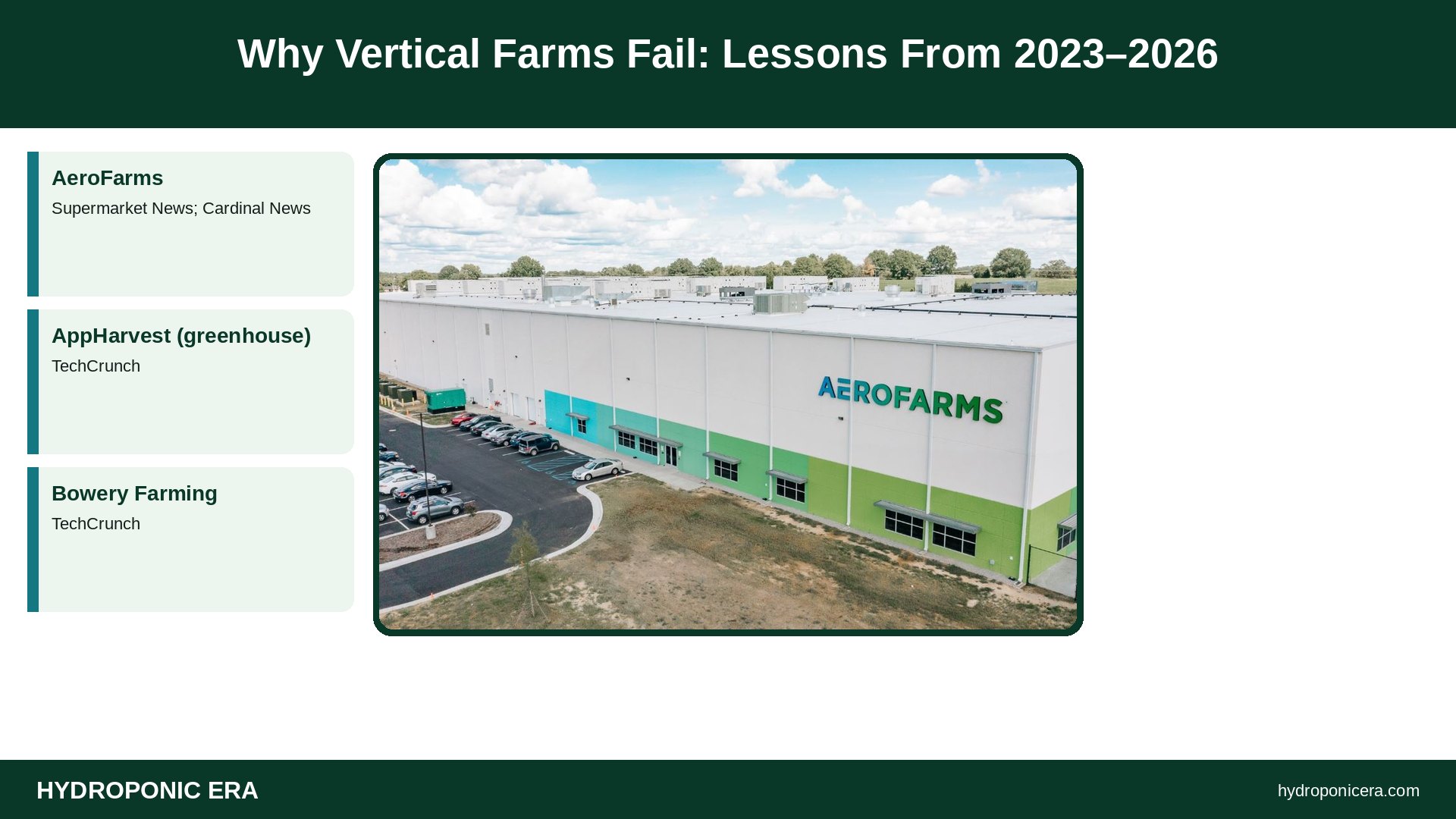
Why vertical farms fail usually comes down to money: high capital costs, heavy electricity and labor bills, and leafy greens that sell for supermarket prices. From 2023 to 2026, Bowery, AeroFarms, Plenty, 80 Acres Farms and Freight Farms all closed or went through bankruptcy. Survivors narrowed their crops, sold premium products, or found new owners.
Hydroponic farms in the US are a major part of protected food production. USDA’s 2024 Census of Horticultural Specialties counted 3,731 operations selling food crops grown under protection, and about 60% of that production came from hydroponic systems. Lettuce and tomatoes lead. Big names include Gotham Greens, Little Leaf Farms and BrightFarms, mostly in sunlit greenhouses.
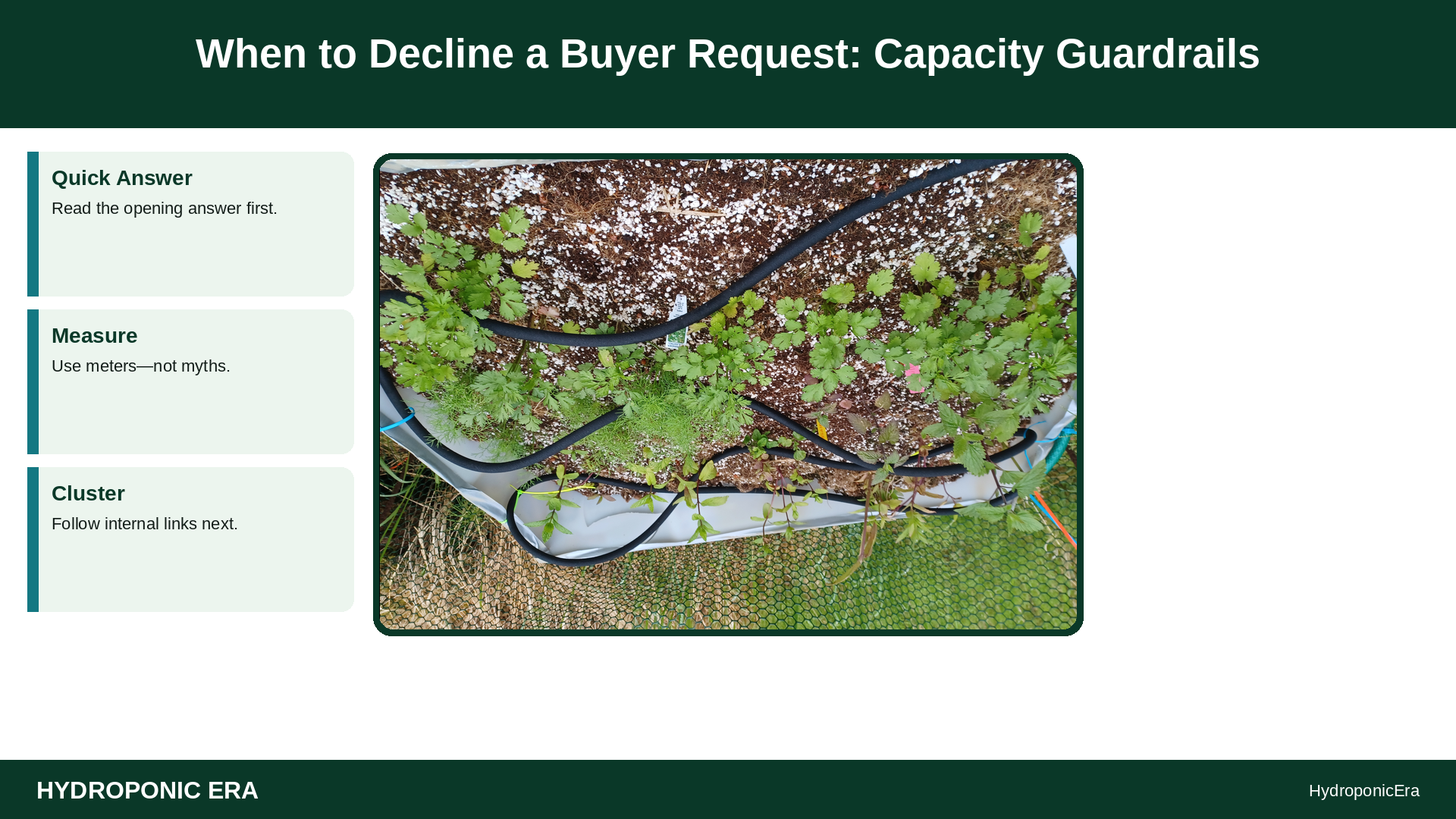
Decision rules for turning down oversized or off-crop orders without burning chef relationships.
How to structure weekly standing orders, pause rules, and quality feedback loops for repeat buyers.
How to design repeatable mixed-herb SKUs (weights, substitutes, labels) that match real harvest capacity.
Simple time-study worksheet to learn true labor cost before pricing—no fabricated wage claims.