
Hydroponic farms in the US are a major part of protected food production. USDA’s 2024 Census of Horticultural Specialties counted 3,731 operations selling food crops grown under protection, and about 60% of that production came from hydroponic systems. Lettuce and tomatoes lead. Big names include Gotham Greens, Little Leaf Farms and BrightFarms, mostly in sunlit greenhouses.
| Crop (2024) | Operations | Total production (cwt) | From hydroponic systems (cwt) | Hydroponic share | Sales |
|---|---|---|---|---|---|
| All food crops under protection | 3,731 | 5,774,596 | 3,442,159 | About 60% | $1.01 billion |
| Tomatoes | 2,925 | 2,641,546 | 1,806,478 | About 68% | $383.0 million |
| Lettuce | 1,346 | 831,022 | 710,127 | About 85% | $238.3 million |
| Cucumbers | 1,439 | 293,130 | 232,474 | About 79% | $40.7 million |
| Fresh-cut herbs | 945 | 431,044 | 134,307 | About 31% | $86.5 million |
| Microgreens | 516 | 508,132 | 42,008 | About 8% | $86.4 million |
Source: USDA NASS, 2024 Census of Horticultural Specialties, Table 15. Shares are our calculations.

How Many Hydroponic Farms Are in the US?
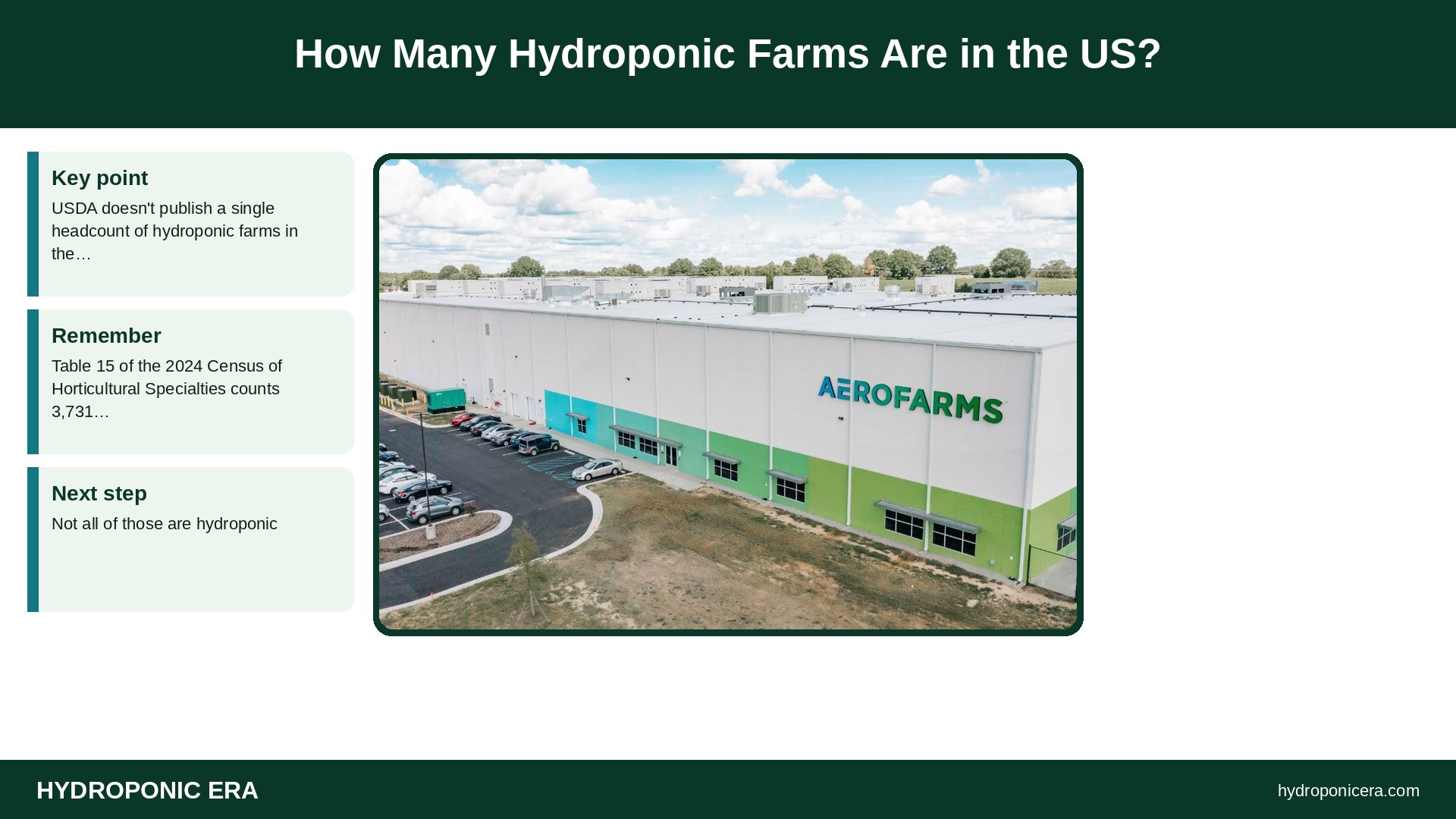
USDA doesn’t publish a single headcount of hydroponic farms in the US, so read the data carefully. Table 15 of the 2024 Census of Horticultural Specialties counts 3,731 operations that grew and sold food crops under protection, such as in greenhouses or indoor facilities, on about 89.6 million square feet. Not all of those are hydroponic. What the census does report is production volume: 3,442,159 hundredweight of the 5,774,596 total came from hydroponic systems, or about 60%.
The census covers operations that produced and sold $10,000 or more of horticultural specialty products in 2024, so hobby growers and many very small farms aren’t included.
What Do Hydroponic Farms in the US Grow?
Tomatoes and lettuce dominate. Tomatoes had the most operations (2,925) and the highest sales, about $383 million, with roughly 68% of production from hydroponic systems. Lettuce is even more hydroponic: about 85% of protected lettuce production came from hydroponic systems, with about $238 million in sales. Cucumbers are also mostly hydroponic. Herbs and microgreens are big sellers but rely less on hydroponic systems, since many are grown in soilless mixes or trays.
For growers, that pattern matches what works: leafy greens and vine crops suit hydroponic production. See our hydroponic farm crop selection guide.
Which Companies Run Large Hydroponic Farms in the US?

We list only companies whose own sites or press releases describe hydroponic growing:
- Gotham Greens says it grows leafy greens year-round in climate-controlled greenhouses using hydroponic techniques, mainly nutrient film technique. Its farm page lists Brooklyn and Queens, NY; Chicago, IL; Providence, RI; Baltimore, MD; Stevensburg, VA; Aurora and Windsor, CO; Davis, CA; Atlanta Metro, GA; and Dallas County, TX.
- Little Leaf Farms says it hydroponically grows baby greens with rainwater, with 70 acres in Devens, MA, and McAdoo, PA, and a Manchester, TN, greenhouse “opening soon.”
- BrightFarms, a Cox Farms brand, describes a network of hydroponic greenhouse farms in Illinois, Texas, Georgia and New Hampshire. In August 2026, it announced Macon, Georgia-grown greens for Atlanta-area Costco stores.
These are some of the best-known hydroponic farms in the US, but there are many more regional and family operations.
What Are the Biggest US Greenhouse Produce Growers?
CEAg World’s 2026 list of the top 25 US greenhouse produce growers ranks Mastronardi Produce first at about 500 acres, followed by Windset Farms (168 acres) and Cox Farms (107.8 acres, including BrightFarms and Mucci Farms). Little Leaf Farms ranks eighth at 50 acres and Gotham Greens eleventh at 41.3 acres. Note that the list covers greenhouse growers, and not every company on it is necessarily hydroponic, so don’t treat it as a list of hydroponic farms in the US.
Where Are Hydroponic Farms in the US Located?

Big greenhouse operations cluster near large cities and in sunny or cool regions. From the company pages above, hydroponic greenhouses operate from New England and New York to the Mid-Atlantic, Midwest, Southeast, Texas, Colorado and California. Being close to customers shortens delivery time; Little Leaf says lettuce “shouldn’t have to travel cross-country,” and BrightFarms describes Macon greens harvested about an hour from Atlanta.
Why Are Most Large Hydroponic Farms in the US Greenhouses?
Sunlight is free. A greenhouse uses the sun for most of its light and adds supplemental lighting only when needed, while a fully indoor farm pays for every photon with electricity. That difference shows up in the company list above: Gotham Greens, Little Leaf Farms and BrightFarms all describe greenhouse operations. Little Leaf adds that it captures rainwater and treats every drop with UV light, and says its system uses 90% less water than field-grown greens.
Greenhouses also suit the crops that lead the census data. Tomatoes and cucumbers are tall vining crops that are hard to stack, and lettuce grows quickly in sunlit NFT channels or ponds. That’s why most large hydroponic farms in the US look like glass greenhouses rather than warehouses. Smaller farms, though, use everything from hoop houses to converted buildings and shipping containers.
Are Indoor Vertical Farms Part of This?
Some are, but many of the biggest indoor vertical farms struggled. Bowery, 80 Acres Farms and Freight Farms closed between 2024 and 2026, while AeroFarms and Plenty restructured. Sunlit hydroponic greenhouses have generally fared better. Read why vertical farms fail for the details.
How Do You Find Hydroponic Produce Near You?
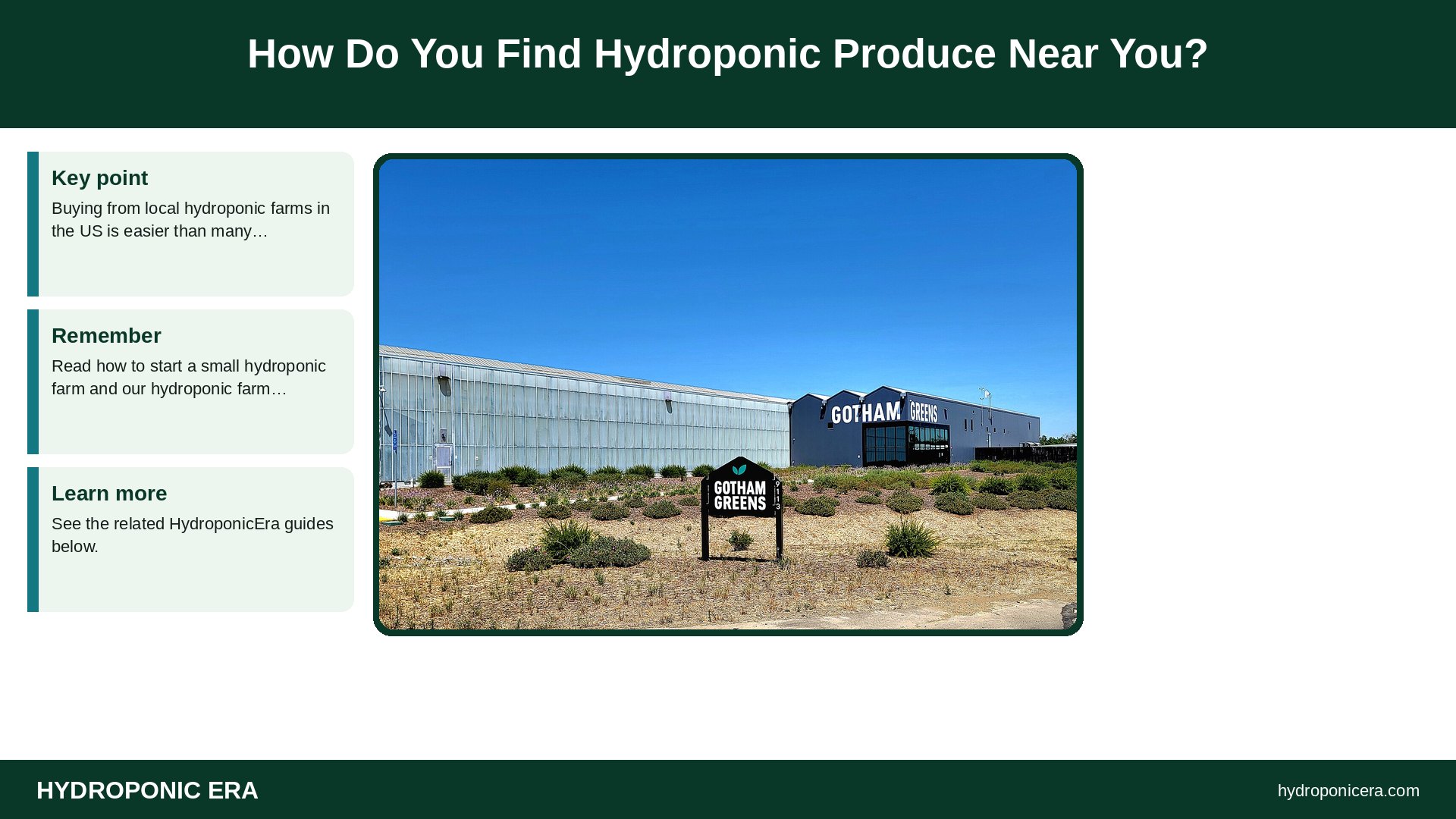
Buying from local hydroponic farms in the US is easier than many shoppers think:
- Check packaging for words like “hydroponically grown” or “greenhouse grown” and the farm’s location.
- Visit farmers markets; many small hydroponic farms sell there.
- Ask your grocer’s produce manager where living or greenhouse lettuce comes from.
- Search your state department of agriculture’s local food directory.
- Check company “where to buy” pages for brands above.
Thinking of starting your own? Read how to start a small hydroponic farm and our hydroponic farm business plan guide.
Common Misreadings About Hydroponic Farms in the US
| Claim | What the data says |
|---|---|
| “There are 3,731 hydroponic farms” | 3,731 operations grew food under protection; not all are hydroponic |
| “Most greenhouse food is hydroponic” | About 60% of protected food production came from hydroponic systems |
| “Every top greenhouse grower is hydroponic” | The CEAg list covers greenhouse growers generally |
FAQs: Hydroponic Farms in the US
How much produce do hydroponic farms in the US grow?
USDA’s 2024 census reports 3,442,159 hundredweight of protected food crops from hydroponic systems.
What is the largest hydroponic crop in the US?
Tomatoes, by volume, at 1,806,478 hundredweight from hydroponic systems.
Is most US greenhouse lettuce hydroponic?
Yes. About 85% of protected lettuce production came from hydroponic systems in 2024.
Which states have hydroponic farms in the US?
Many. Company pages above list facilities in at least a dozen states, including NY, IL, MA, PA, GA, TX, CO and CA.
Related HydroponicEra Guides
- Why vertical farms fail
- Hydroponic farm business plan
- How to start a small hydroponic farm
- Hydroponic greenhouse for beginners
Sources
- USDA NASS — 2024 Census of Horticultural Specialties, Tables 15–17 (PDF)
- USDA NASS — 2024 Census of Horticultural Specialties, Introduction (PDF)
- Gotham Greens — Our Farms
- Little Leaf Farms — The Greenhouse
- BrightFarms via PR Newswire (Aug. 13, 2026) — BrightFarms Brings Georgia-Grown Salad Greens to Atlanta-Area Costco Stores
- CEAg World (June 2026) — The Top 25 Greenhouse Produce Growers in the U.S. in 2026
- Photo credits (Wikimedia Commons, edited with titles): Gotham Greens in Davis, California by Cullen328 (CC BY-SA 4.0); AeroFarms Danville Location by Kristian Bottini (CC0); Greenhouse filled with tomato plants and a bucket on the path by Shixart1985 (CC BY 2.0); Lettuce Mini Heads (7331119710) by Dwight Sipler from Stow, MA, USA (CC BY 2.0)
1 thought on “Hydroponic Farms in the US: Where They Are & What They Grow”