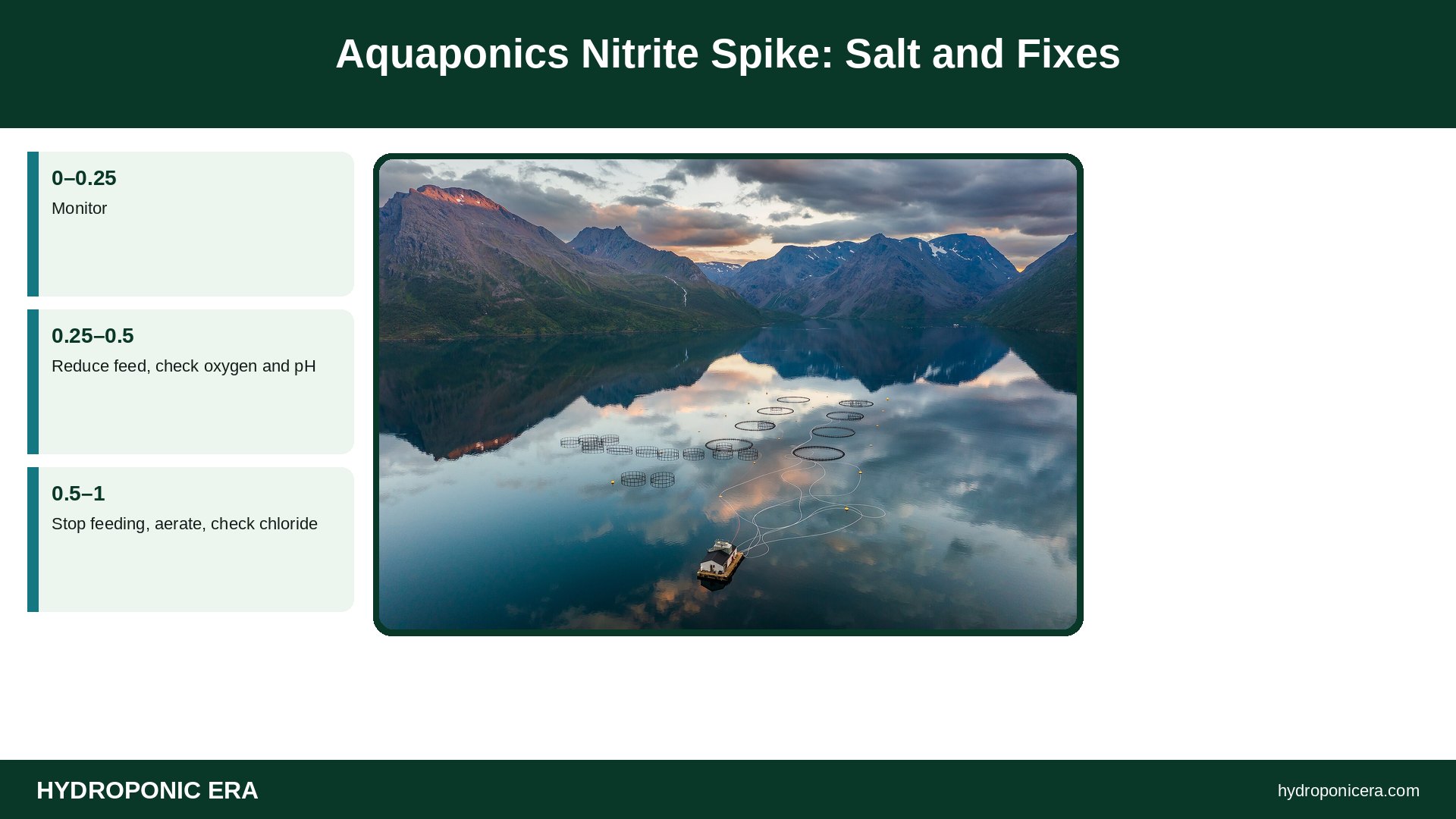
aquaponics nitrite spike — Aquaponics Nitrite Spike: Salt and Fixes

An aquaponics nitrite spike happens when nitrite (NO2) climbs above about 0.5–1 mg/L because the second group of nitrifying bacteria hasn’t caught up with ammonia conversion. Nitrite causes “brown blood disease,” which stops fish blood from carrying oxygen. The fast fix is to stop feeding, increase aeration, do a 25–50% water change, and add plain salt (sodium chloride) so chloride is at least 6 times the nitrite level, because chloride blocks nitrite uptake at the gills. Keep salt doses low in aquaponics, since plants are sensitive to sodium and chloride.
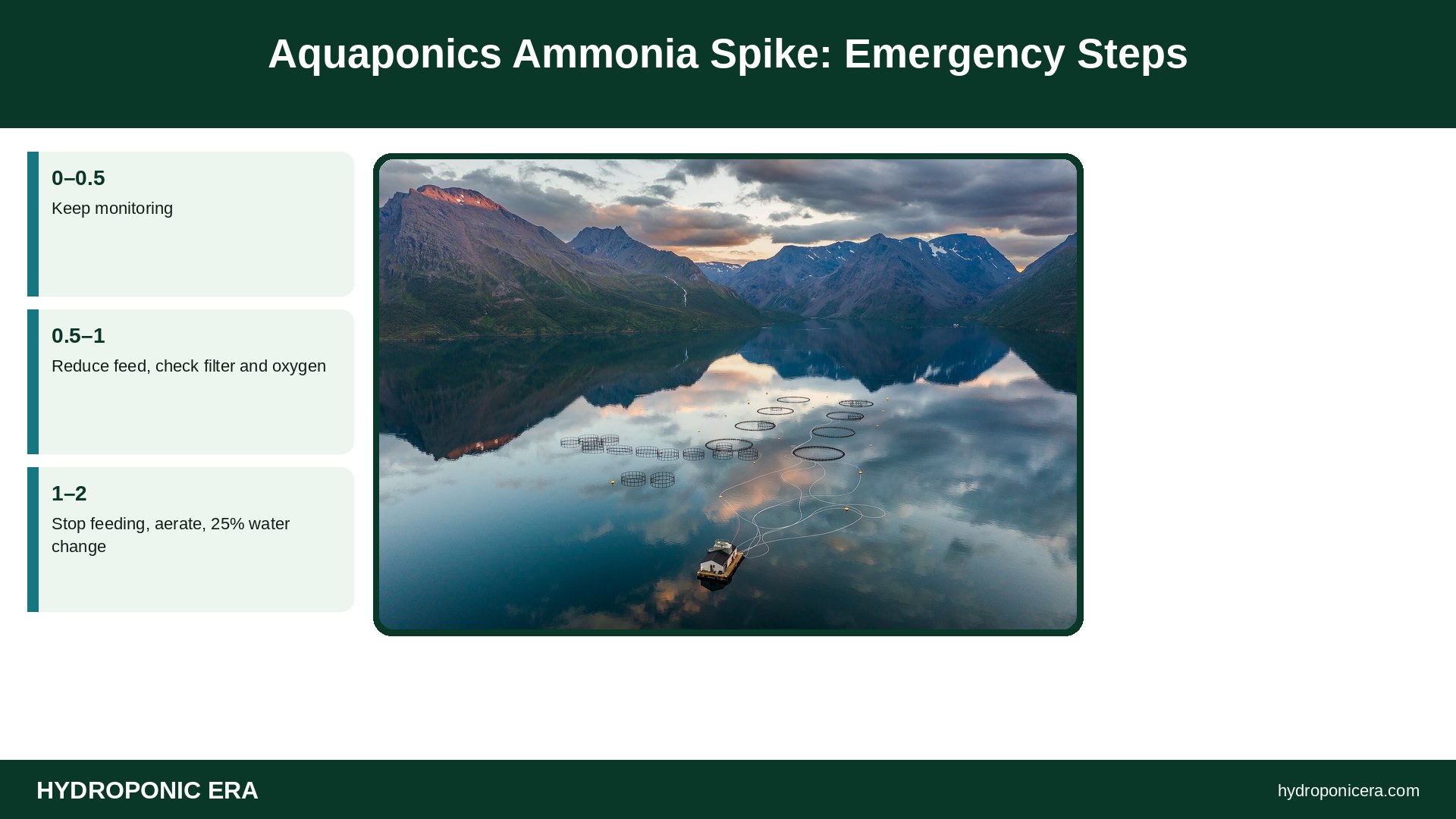
aquaponics ammonia spike — Aquaponics Ammonia Spike: Emergency Steps

An aquaponics ammonia spike means total ammonia nitrogen (TAN) has climbed above about 1 mg/L (ppm) and keeps rising, which can burn fish gills within hours, especially at high pH and warm temperatures. Emergency steps: stop feeding, add aeration, test pH and temperature, remove any dead fish or rotting feed, and do a 25–50% water change with dechlorinated water at the same temperature. Then find the cause, which is usually overfeeding, too many fish for the biofilter, a dead fish, low oxygen, low pH or alkalinity, or something that killed the nitrifying bacteria.

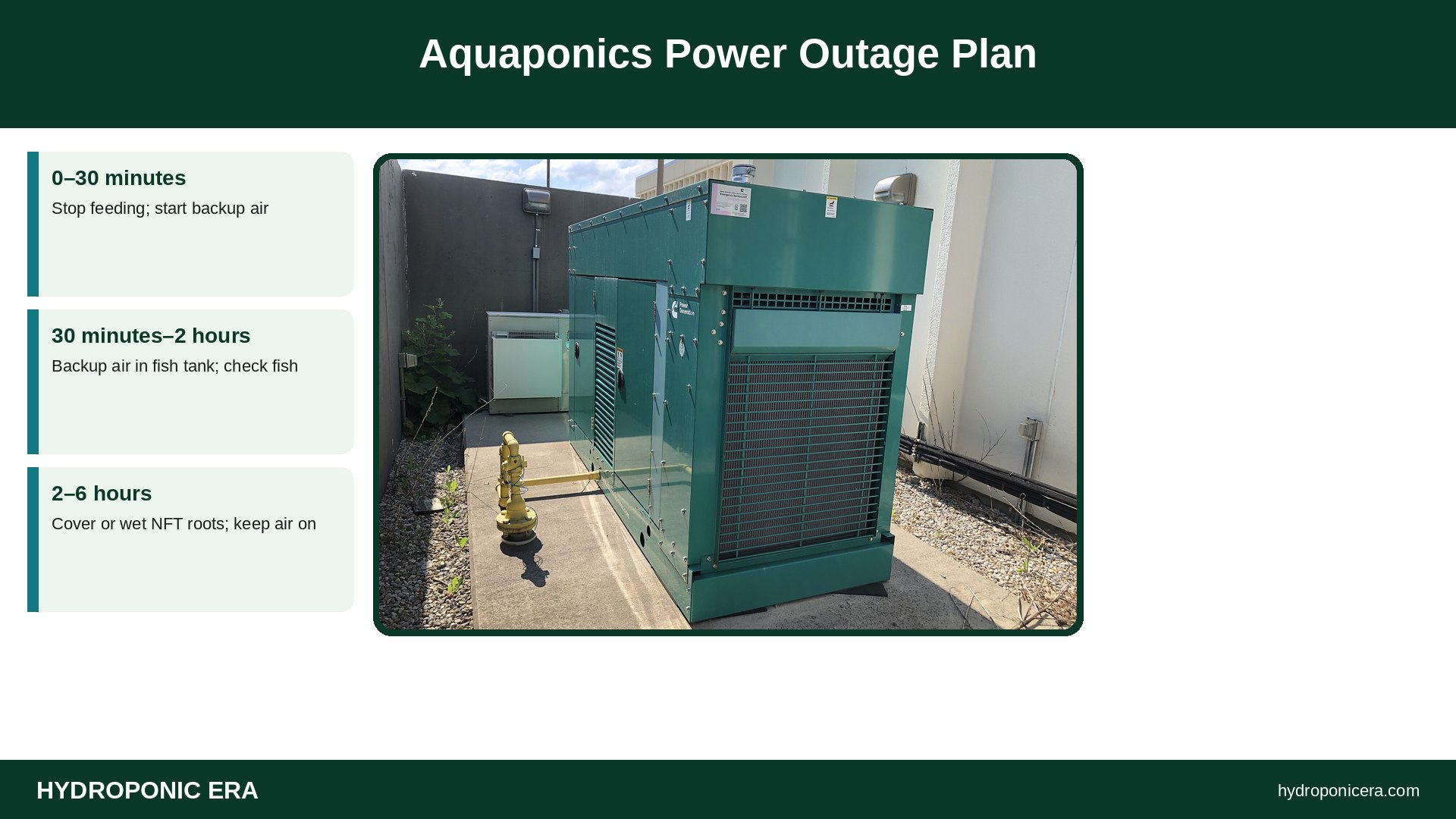
aquaponics power outage — Aquaponics Power Outage Plan

An aquaponics power outage is dangerous mainly because aeration and water circulation stop, so dissolved oxygen in the fish tank can fall to lethal levels within one to a few hours in warm, heavily stocked systems. Your plan should do four things: keep air going to the fish (battery air pump, inverter or generator), stop feeding, keep plant roots from drying out, and restart the system slowly and safely when power returns. A battery-backup air pump that switches on automatically is the cheapest and most important single item.

aquaponics air pump — Aquaponics Air Pump Sizing

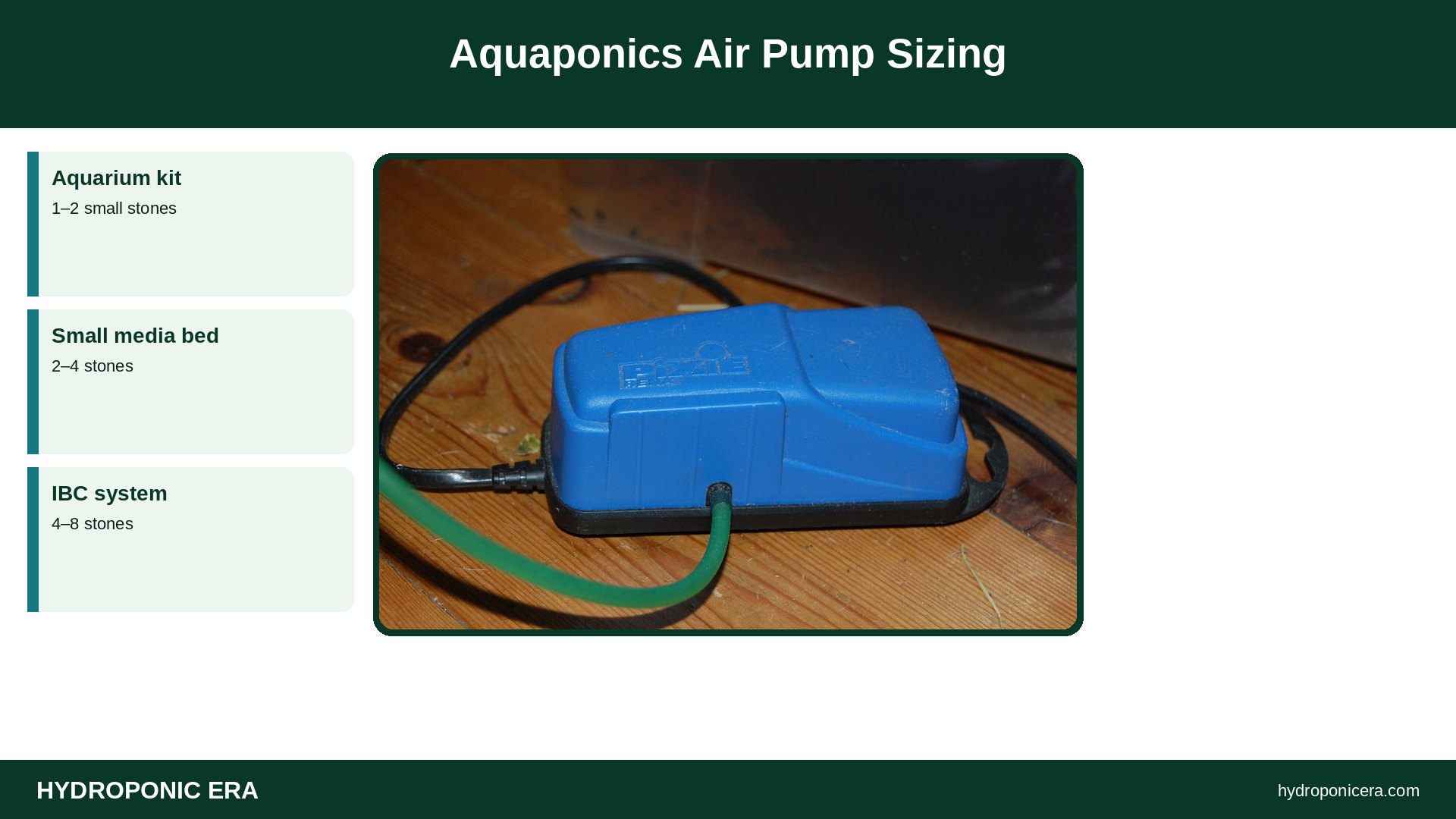
To size an aquaponics air pump , match the pump’s airflow to your total water volume and fish load, and make sure its pressure rating beats the depth of your deepest air stone. Many hobby growers start with roughly 1 liter per minute (LPM) of air for every 10–20 gallons of total system water for lightly stocked systems, and double that for heavier fish loads or warm water. A 300-gallon IBC system, for example, usually runs well on a 30–60 LPM linear or diaphragm pump feeding stones in the fish tank, sump and raft beds.

leca — Semi-Hydroponics With LECA for Houseplants

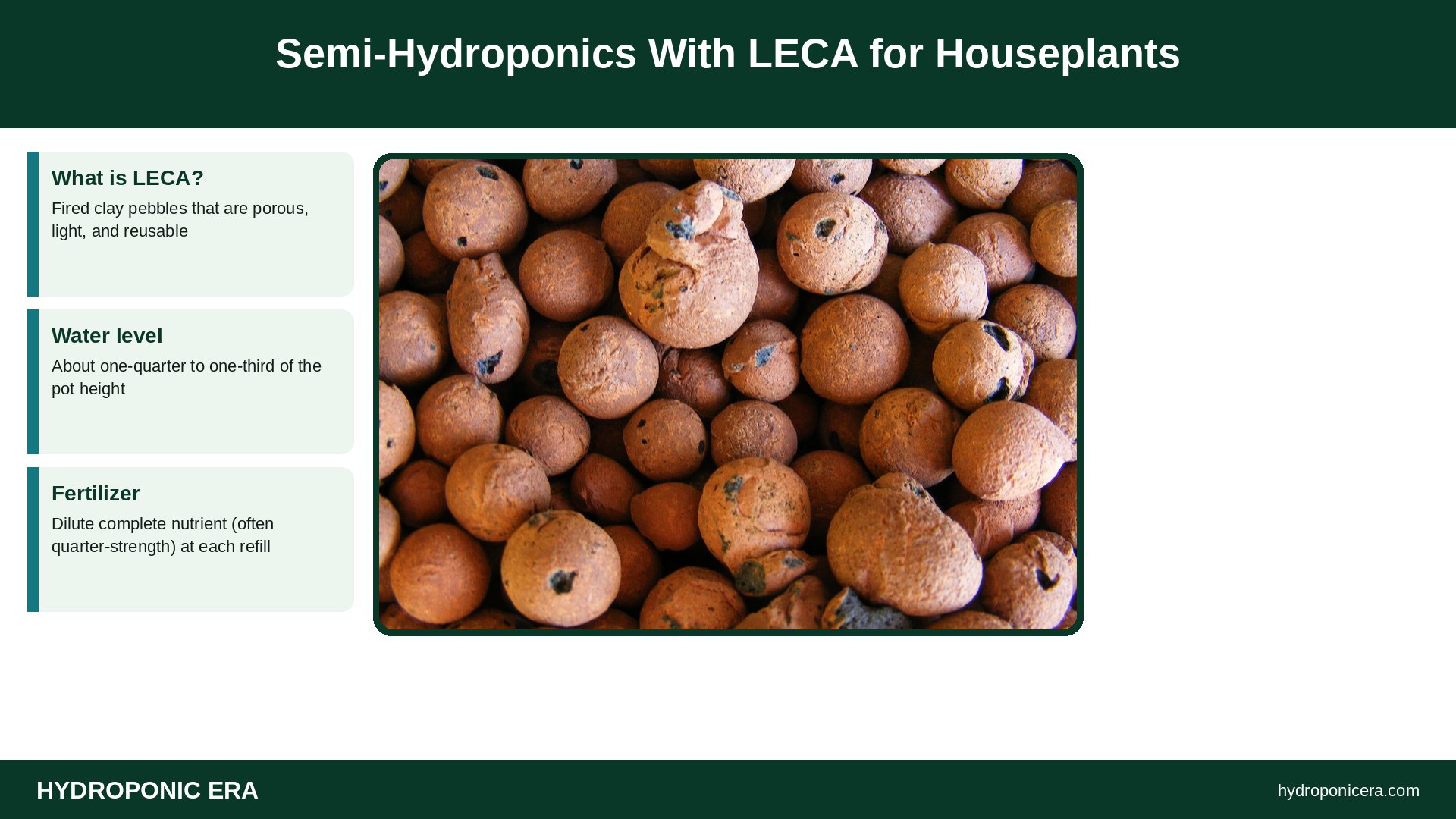
Semi-hydroponics with LECA (lightweight expanded clay aggregate, or clay pebbles) means growing houseplants in inert clay balls instead of soil, with a shallow reservoir of dilute nutrient solution at the bottom of the pot. The clay wicks water up to the roots while the gaps between pebbles keep plenty of air around them. LECA suits many popular houseplants, including pothos, philodendron, monstera, hoya, and peace lily. Success depends on fully rinsing soil off the roots, keeping the water level low, and feeding with a weak, complete fertilizer.

aquaponics dissolved oxygen — Aquaponics Dissolved Oxygen: Targets and Fixes

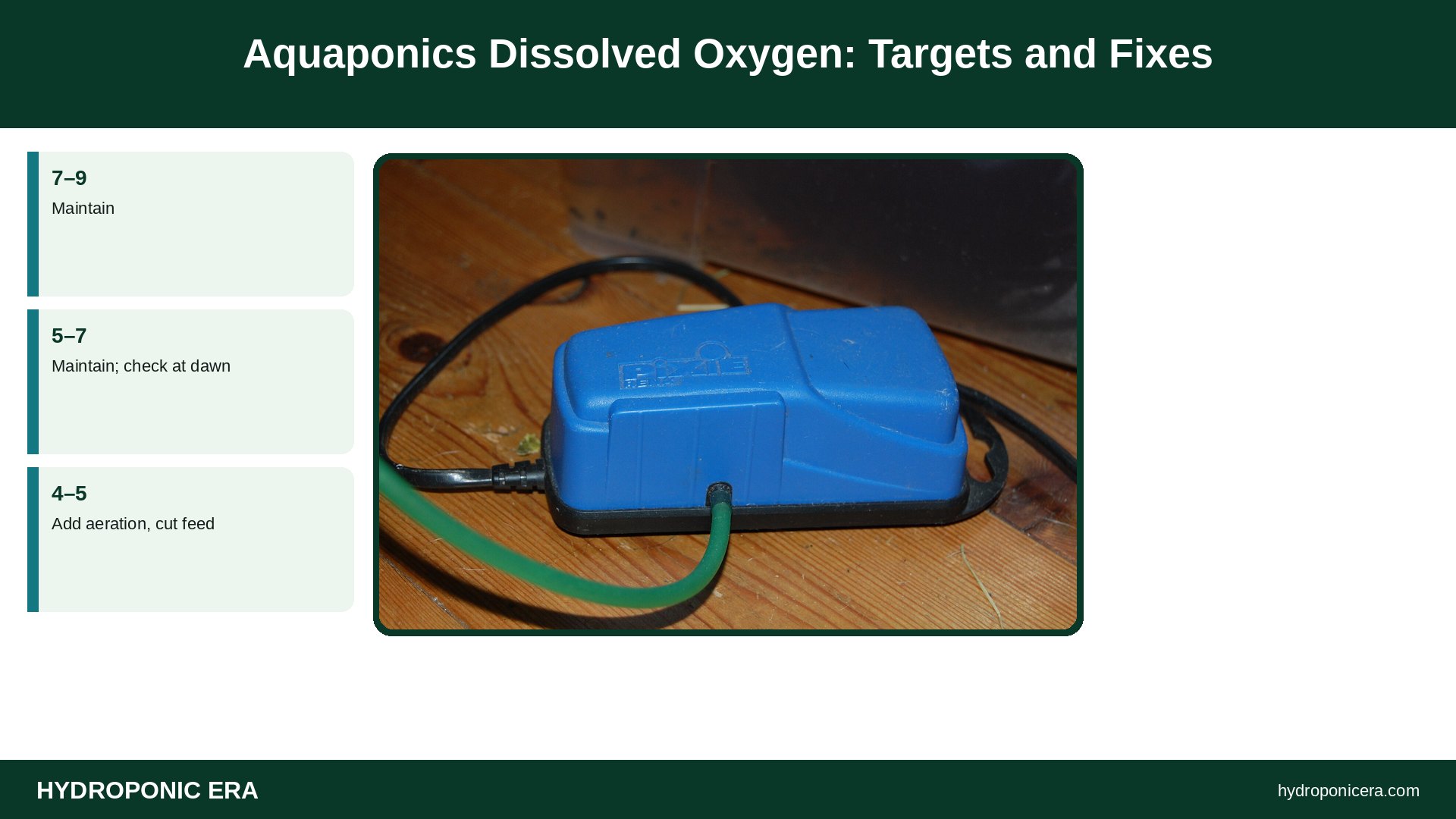
Healthy aquaponics dissolved oxygen levels are at least 5 mg/L (5 ppm) in the fish tank and throughout the system, with 6–8 mg/L better for trout, high stocking densities and fast plant growth. Below about 4 mg/L most warm-water fish such as tilapia eat less and grow slowly; below 2–3 mg/L they gasp at the surface and can die within hours. Nitrifying bacteria and plant roots also need oxygen, so low aquaponics dissolved oxygen shows up as ammonia spikes and root rot as well as stressed fish.

greenhouse heating — Greenhouse Heating for Hydroponics: Sizing and Costs

To size greenhouse heating for hydroponics, multiply the total exposed surface area of the greenhouse (walls, ends and roof, not the floor) by the temperature difference you need to hold on the coldest night and by the heat loss factor (U-value) of the covering: BTU/hr = area × ΔT × U. A double-poly greenhouse has a U-value of about 0.7, so a 12 by 20 foot hobby house with about 900 square feet of surface, held at 55°F when it’s 15°F outside, needs roughly 900 × 40 × 0.7 ≈ 25,000 BTU/hr of heater output. Add 10–25% for wind, leaks and distribution losses, and size by output, not input.

how much light do herbs need — How Much Light Do Herbs Need Indoors?

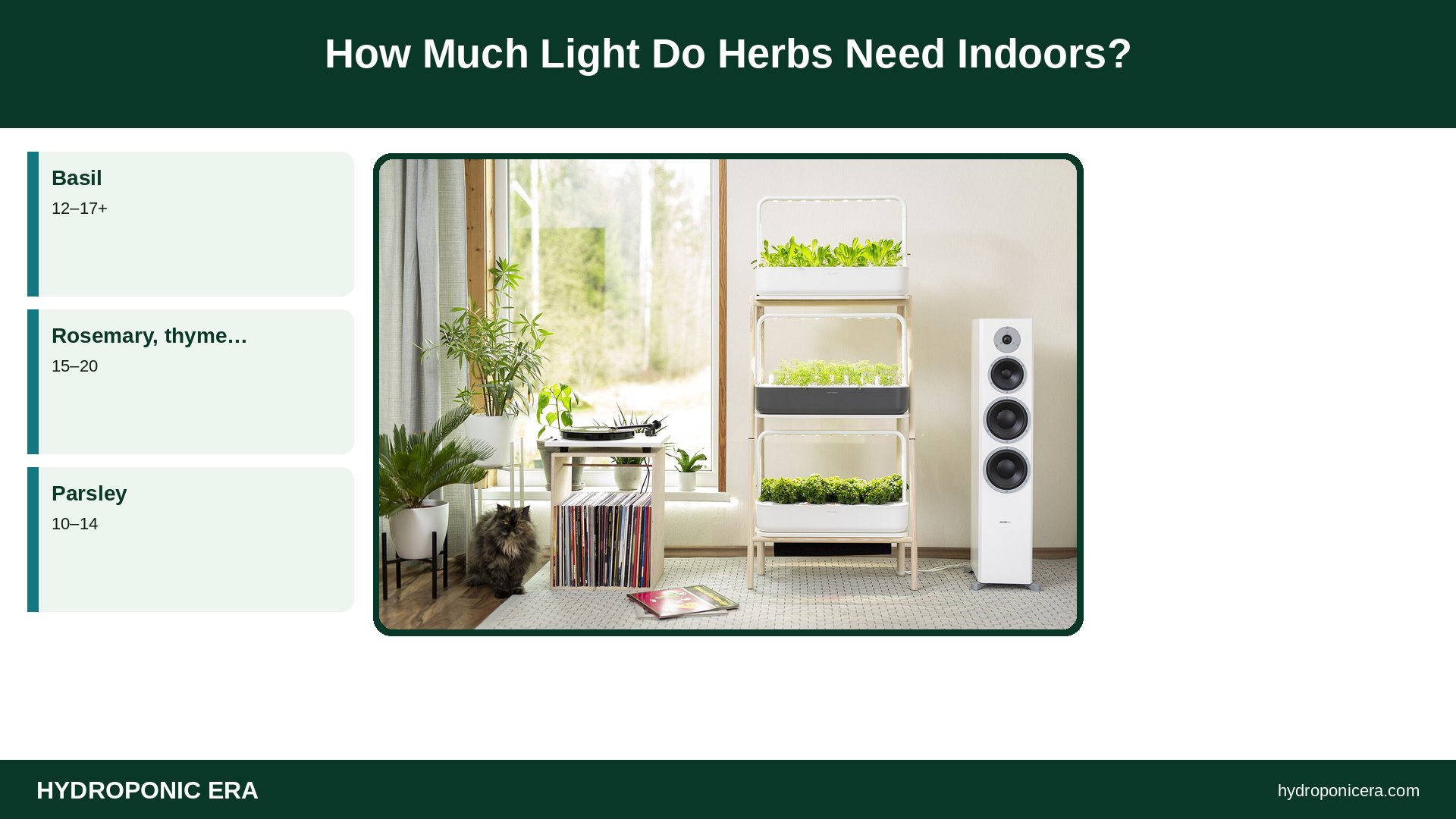
How much light do herbs need? Most culinary herbs need the equivalent of at least 6 hours of direct sun a day, which indoors means a daily light integral (DLI) of about 10–17 mol/m²/day, or roughly 200–400 µmol/m²/s of PPFD for 14–16 hours under grow lights. Basil, rosemary, thyme, oregano and sage sit at the high end; parsley, cilantro, chives, mint and dill tolerate the lower end. A south-facing window in winter rarely gives enough, so most indoor herbs grow better with an LED.

grow lights for hydroponic lettuce — Grow Lights for Hydroponic Lettuce: PPFD and DLI

The best grow lights for hydroponic lettuce are full-spectrum white LED fixtures that deliver about 200–300 µmol/m²/s of PPFD at the canopy for 14–16 hours a day, which adds up to a daily light integral (DLI) of roughly 12–17 mol/m²/day. Cornell’s CEA lettuce program uses a target of about 17 mol/m²/day for fast greenhouse lettuce. For a 2 by 4 foot shelf, a quality LED drawing about 100–150 watts is usually enough; seedlings need only about 100–200 µmol/m²/s.

diy aeroponic cloner — DIY Aeroponic Cloner: Build and Root Cuttings

A DIY aeroponic cloner is a lidded tote with a small submersible pump that feeds a ring of misting sprayers inside, so cuttings held in foam collars hang with their stems in a fine spray of water. You can build one in an afternoon for about $40–$70 with a 10–18 gallon opaque tote, a 160–250 GPH pump, 1/2-inch PVC, 360° sprayers, and 2-inch neoprene collars. Keep the water at about 68–75°F, run the pump continuously or on a short-cycle timer, and most soft cuttings such as basil, mint, tomato and pepper root in 7–14 days.