The right aquaponics fish tank size for most home systems is 50–300 gallons, with roughly equal volumes of fish tank and grow bed for media-bed systems. Smaller tanks (10–40 gallons) work for ornamental fish and a few herbs, but they swing quickly in temperature and ammonia. For edible fish such as tilapia, catfish or bluegill, plan on at least 100 gallons and stock no more than about 1 pound of fish per 5–10 gallons as a beginner. Bigger water volume is more stable and more forgiving.
To dechlorinate water for aquaponics, first find out whether your utility uses chlorine or chloramine. Free chlorine leaves water on its own if you aerate it in an open container for 24–48 hours. Chloramine does not; it needs a dechlorinating product based on sodium thiosulfate or a chloramine-rated conditioner, ascorbic acid (vitamin C), or a catalytic carbon filter. For small top-offs, a water conditioner dosed by label is the simplest, safest option, and it works on both chlorine and chloramine.
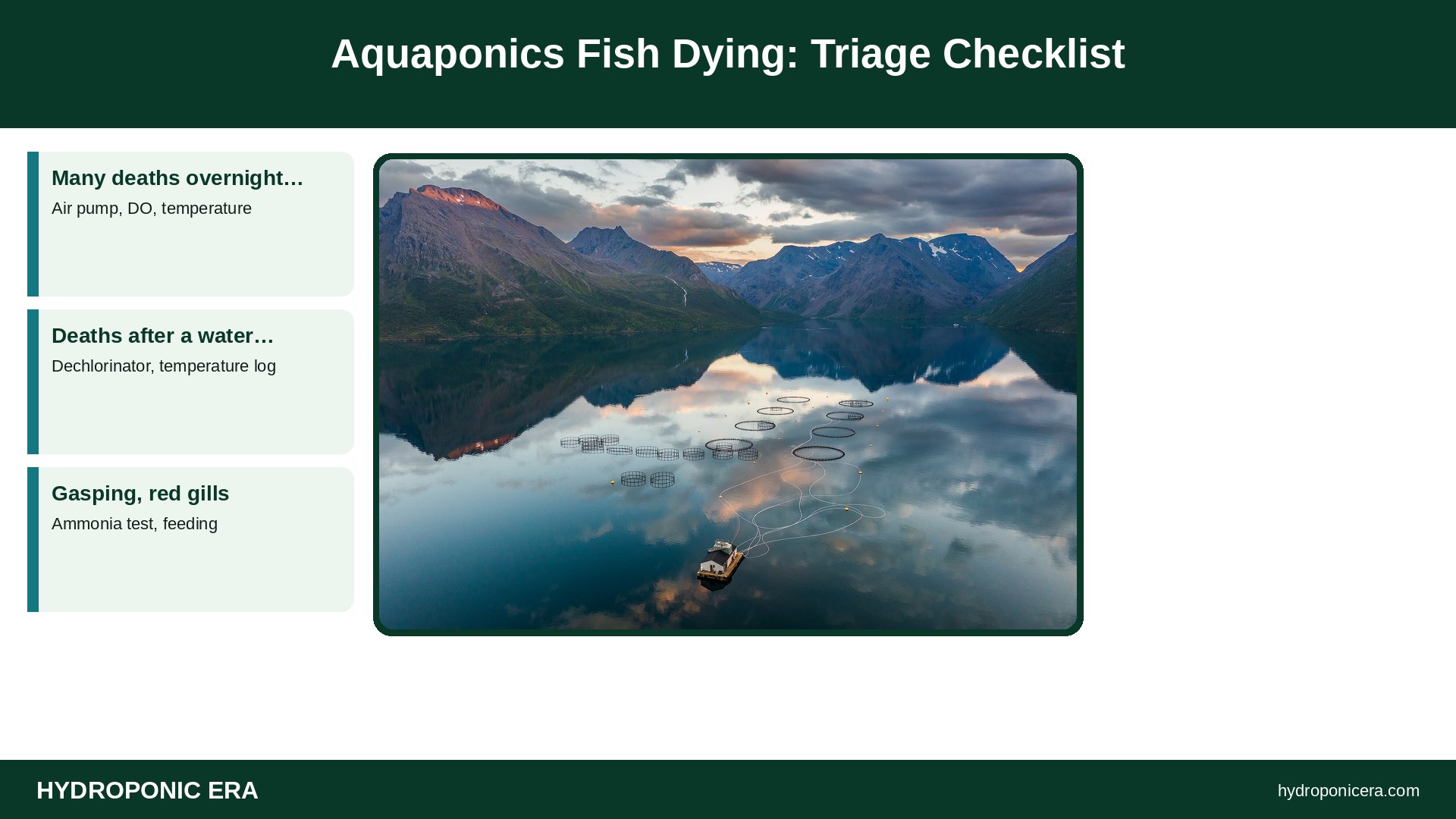
When aquaponics fish dying is the problem, act in this order: check that air and water pumps are running, test dissolved oxygen, ammonia, nitrite, pH and temperature, remove dead fish immediately, stop feeding, and do a 25–50% water change with dechlorinated, temperature-matched water if any reading is off. Most sudden deaths come from low oxygen, ammonia or nitrite spikes, temperature shock, chlorine from untreated tap water, or a chemical contaminant. Slow, steady losses over days or weeks point more often to disease, poor nutrition or chronic stress.
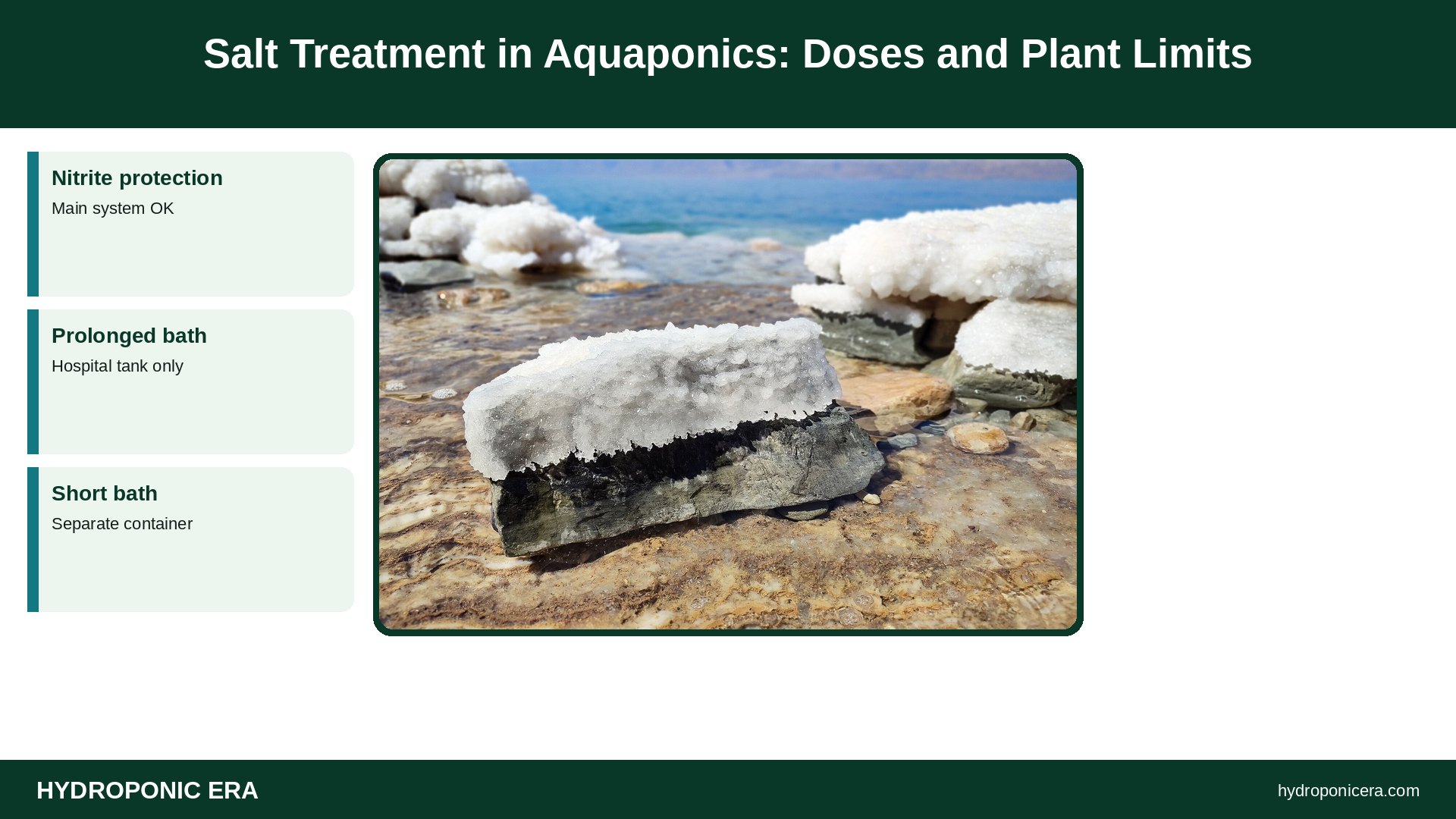
Salt treatment in aquaponics is useful but must be done carefully, because doses that help fish can damage plants. Low chloride levels (about 10–50 ppm) used to block nitrite are usually safe in the main system. Therapeutic doses for parasites and stress, typically 1–3 parts per thousand (ppt, or 1–3 grams per liter) for prolonged baths, 10 ppt for short baths, and about 30 ppt for brief dips, should be given in a separate hospital or quarantine tank, never in the plant system. One gram of salt per liter raises EC by roughly 2 mS/cm, which is already above the salt tolerance of lettuce and many other vegetables.
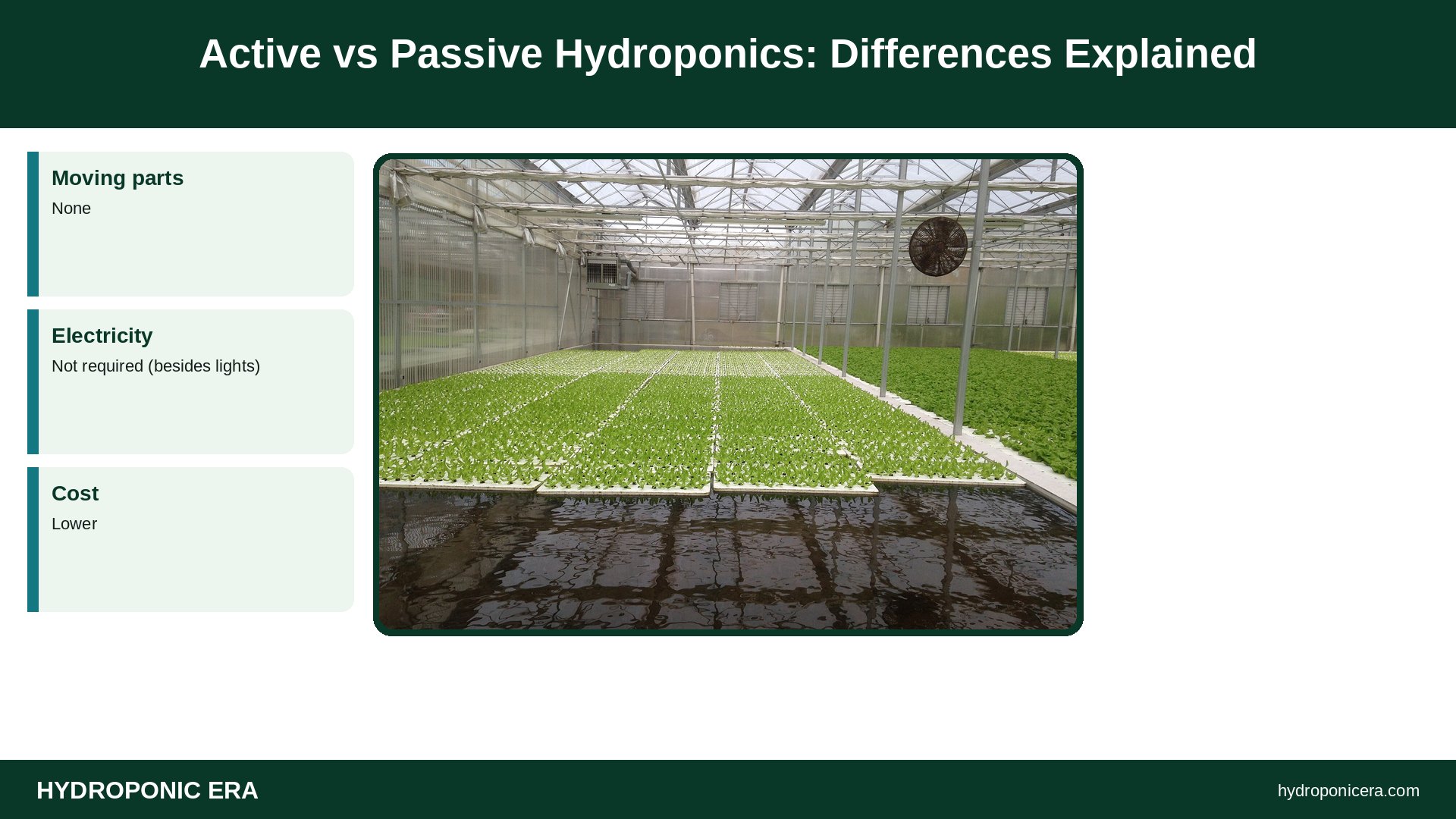
Active vs passive hydroponics is about whether the system uses moving parts to deliver water, nutrients, and oxygen. Active hydroponics uses pumps, air stones, or timers, as in deep water culture with an air pump, NFT, ebb and flow, drip, and aeroponics. Passive hydroponics has no pumps; it relies on wicking, gravity, or an air gap, as in the Kratky method, wick systems, and many semi-hydroponic houseplant setups. Active systems grow larger, faster plants; passive systems are cheaper, silent, and nearly maintenance-free for small crops.
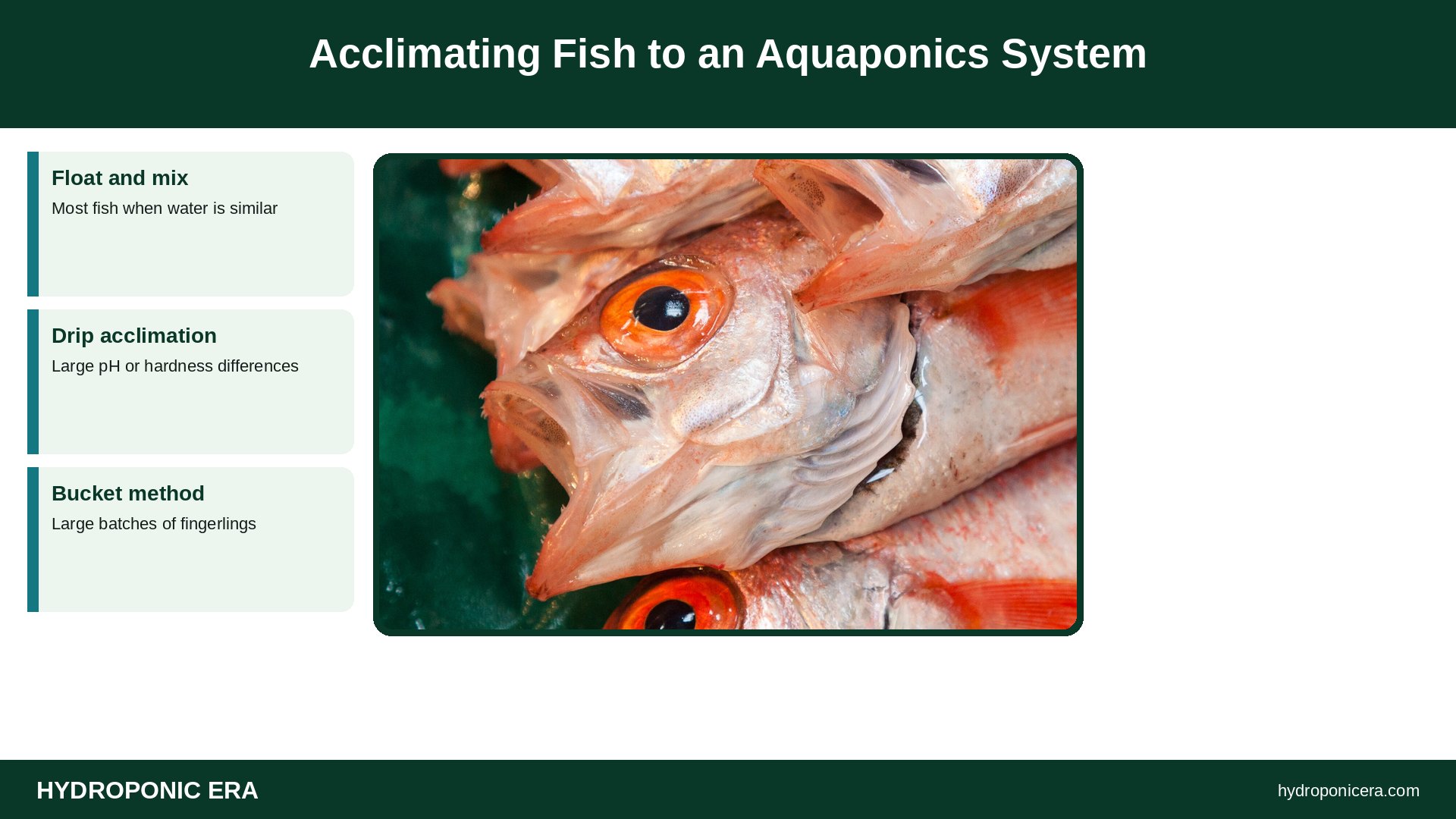
Acclimating fish to an aquaponics system means slowly matching them to your water’s temperature and chemistry before release, so they avoid shock. The standard method is to float the sealed bag for 15–20 minutes to equalize temperature, then add a little system water to the bag every 5 minutes for 20–30 minutes until the volume roughly doubles, and finally net the fish into the tank without adding the shipping water. If pH or hardness differ a lot between the shipping water and your system, use a slower drip method over 45–90 minutes. Acclimate into a quarantine tank first, not straight into the main system.
To quarantine new fish before adding them to aquaponics, keep them in a separate tank with its own water, filter, aeration and equipment for at least 30 days, the minimum UF/IFAS recommends to catch Ich and other diseases that often appear 1–3 weeks after shipping. Watch them daily, feed lightly, test water often, and treat any problems in the quarantine tank, where salt or medication can’t harm your plants or biofilter. Only move fish into the main system after they’ve eaten well and shown no signs of disease for the full period.
The most common aquaponics fish diseases are Ich (white spot), columnaris, motile Aeromonas infections, Streptococcus (especially in tilapia), water mold (Saprolegnia) and small external parasites such as Trichodina and gill flukes. Most outbreaks start after stress from poor water quality, temperature swings, crowding or new fish that weren’t quarantined. Treatment options are limited in aquaponics, because many medications harm plants, nitrifying bacteria or food safety, so prevention through quarantine, good water quality and moderate stocking is the main defense. Salt, temperature management and moving sick fish to a separate hospital tank are the safest first steps.
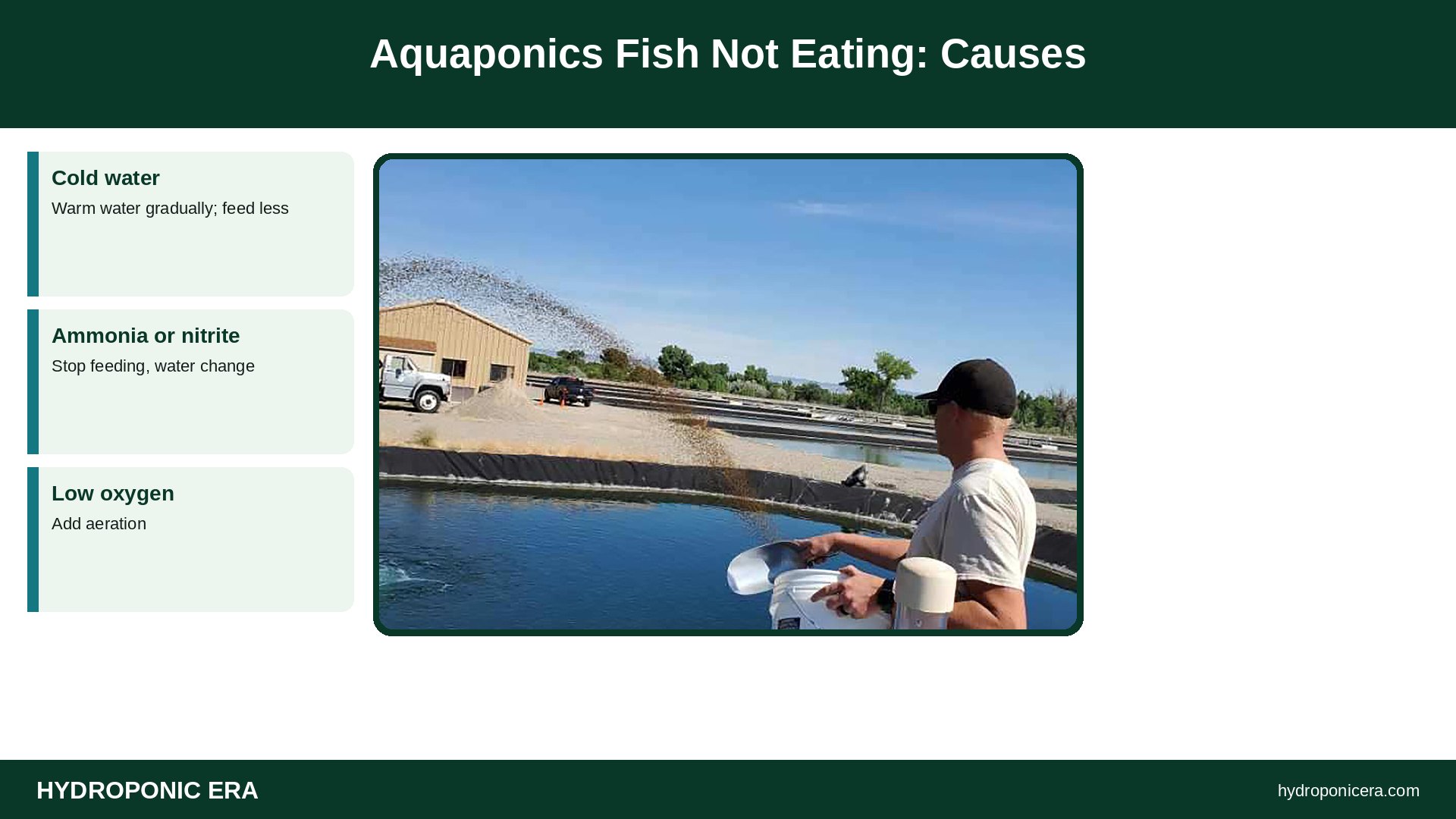
When aquaponics fish not eating becomes a problem, the cause is usually water temperature, water quality or stress, not the food itself. Check these in order: water temperature (most fish eat less when water drops below their comfort range), ammonia and nitrite (should be near zero), dissolved oxygen (above 5 mg/L), pH (about 6.8–7.4), recent stress (new fish, handling, loud noise, a power cut) and signs of disease. Fix the underlying problem first, then offer small amounts of fresh feed once or twice a day and remove anything uneaten after 5–10 minutes.
When aquaponics nitrate too high readings show up, it usually means the system has more fish and feed than plants to use the nitrogen. Most aquaponics systems run well with nitrate (NO3) between about 5 and 150 mg/L. Levels above about 150–200 mg/L can stress sensitive fish, push plants toward soft, leafy growth with poor fruiting, and signal that solids are breaking down in the system. Fix it by adding plant growing area or fast-growing leafy crops, doing partial water changes, trimming feed or fish numbers, and cleaning out trapped solids.