
The most common aquaponics fish diseases are Ich (white spot), columnaris, motile Aeromonas infections, Streptococcus (especially in tilapia), water mold (Saprolegnia) and small external parasites such as Trichodina and gill flukes. Most outbreaks start after stress from poor water quality, temperature swings, crowding or new fish that weren’t quarantined. Treatment options are limited in aquaponics, because many medications harm plants, nitrifying bacteria or food safety, so prevention through quarantine, good water quality and moderate stocking is the main defense. Salt, temperature management and moving sick fish to a separate hospital tank are the safest first steps.
Key takeaway: Quarantine every new fish for at least 30 days, as UF/IFAS recommends for Ich, and never treat the main system with medications that aren’t approved for food fish and safe for plants.
| Disease | Main signs | Common triggers |
|---|---|---|
| Ich (white spot) | Salt-grain white spots, flashing | New fish, temperature drops |
| Columnaris | Gray-white patches, “saddleback,” frayed fins, gill rot | Warm water, stress, handling |
| Motile Aeromonas | Red sores, hemorrhages, ulcers | Poor water quality, injury |
| Streptococcus | Erratic swimming, popeye, curved body | Warm water, crowding (tilapia) |
| Water mold (Saprolegnia) | Cotton-like tufts on skin or eggs | Cold water, wounds |
| Trichodina, gill flukes | Flashing, rapid breathing, excess mucus | Crowding, organic load |

Why Aquaponics Fish Diseases Spread Quickly
Recirculating systems share one water supply, so any pathogen in one tank reaches every fish. UF/IFAS notes that bacteria such as Aeromonas, Streptococcus and Flavobacterium columnare, and parasites such as Ich and Trichodina, can become concentrated in recirculating systems. Warm water speeds pathogen growth, and stressed fish have weaker defenses. See stocking density and water temperature.
Ich (White Spot)
Ich is a protozoan parasite that appears as small white spots on skin, fins and gills. Fish flash and rub against surfaces and may breathe fast. The parasite has a free-swimming stage that is the only stage treatment can kill, so treatments must continue for the whole life cycle, which is faster in warm water. UF/IFAS recommends a minimum 30-day quarantine for new fish and warns that nets and equipment shared between tanks spread the cysts. In aquaponics, a salt bath in a hospital tank and raising temperature (for warm-water species) are common approaches.
Columnaris

Columnaris is a bacterial disease that causes gray or white patches, often across the back (the “saddleback” look), frayed fins, and gill damage. It spreads quickly in warm water and after handling. Reduce stress, improve water quality, lower stocking density and remove affected fish. Severe cases may need a veterinarian and a prescribed treatment in a separate tank.
Motile Aeromonas Septicemia
Aeromonas bacteria live in most fish systems and cause disease when fish are stressed or injured. Signs include red streaks, hemorrhages, ulcers and swollen bellies. Fixing water quality and stress is the key; antibiotic use in food fish is regulated and should only be done under veterinary direction.
Streptococcus in Tilapia
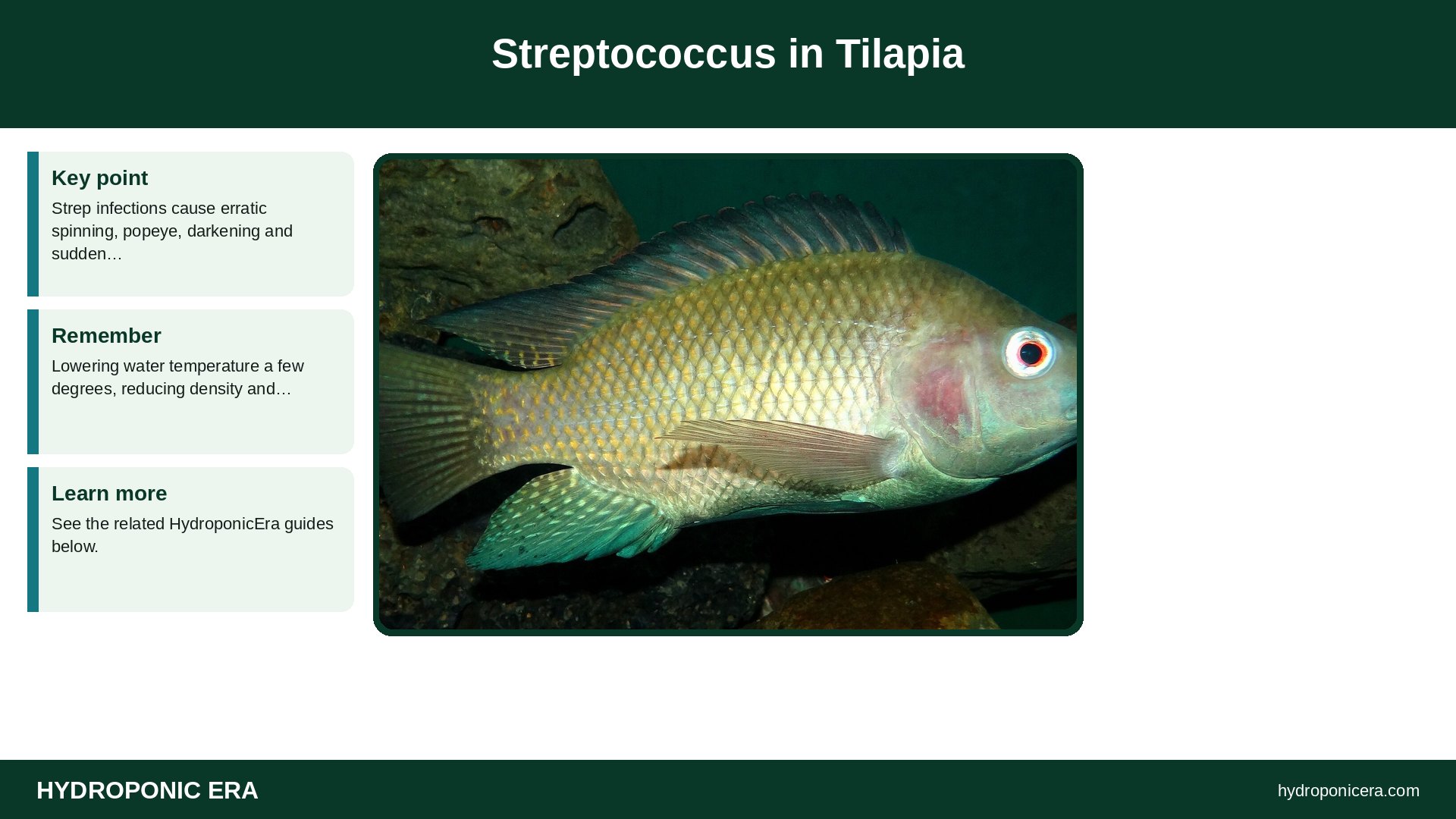
Strep infections cause erratic spinning, popeye, darkening and sudden deaths, mainly in warm water above about 80–85°F and in crowded tanks. Lowering water temperature a few degrees, reducing density and removing sick fish help. See tilapia aquaponics.
Water Mold and Fungus
Saprolegnia shows up as white cottony tufts on wounds, fins or eggs, often in cool water. It’s usually a secondary infection after injury or another disease. Handle fish gently, keep water clean, and remove dead eggs or fish promptly.
External Parasites
- Trichodina and other protozoa: cause flashing, mucus and gill irritation.
- Gill and skin flukes: cause rapid breathing and pale gills.
- Anchor worms and lice: visible attached parasites on goldfish and koi.
A short salt bath in a separate container is a common, plant-safe first treatment for many external parasites.
Treating Aquaponics Fish Diseases Safely

- Isolate. Move sick fish to a hospital tank with clean, aerated, dechlorinated water.
- Diagnose. Many state labs and veterinarians examine fish for a small fee. Wrong treatment wastes time.
- Use salt carefully. Salt baths and dips work for many external problems.
- Avoid medications in the main system. Many kill nitrifying bacteria or harm plants, and only FDA-approved or legally permitted drugs may be used on food fish in the US.
- Fix the cause. Water quality, temperature and crowding.
Preventing Aquaponics Fish Diseases
- Buy fish from reputable, disease-free hatcheries. See best fish for aquaponics.
- Quarantine new fish for at least 30 days.
- Keep ammonia and nitrite near zero and oxygen above 5 mg/L. See aquaponics dissolved oxygen.
- Avoid sudden temperature changes.
- Stock at moderate density and feed a quality diet. See aquaponics fish food.
- Disinfect nets and tools between tanks.
- Remove dead fish immediately.
- Don’t add wild fish, plants or water from ponds.
Fish Diseases and Plant Safety
Salt and most fish pathogens don’t harm plants at the doses used for fish, but many fish medications do. Some antibiotics and dyes also kill the biofilter and leave residues in leafy crops. If you must medicate, do it in a hospital tank and don’t return water to the system. See aquaponics nitrite spike for chloride use.
Food Safety
Most fish pathogens aren’t a human risk, but some bacteria in fish systems can cause infections in cuts. Wear gloves when handling sick fish, wash hands after working in the system, and keep fish water away from harvested produce. See home hydroponic food safety.
Spotting Aquaponics Fish Diseases Early
The best time to catch aquaponics fish diseases is at feeding. Fish that hang back, don’t rise for food, swim at odd angles or rub against the tank walls are telling you something before visible signs appear. Spend a minute watching the whole group every time you feed, and look closely at a few fish each week in good light. Note anything unusual in your log with the water test results from that day. Small changes caught early are much easier to fix than a full outbreak.
Aquaponics Fish Diseases and Water Temperature
Temperature drives many aquaponics fish diseases. Ich and water mold are more common when warm-water fish are chilled in fall or after a heater failure. Columnaris and Streptococcus become more common in hot summer water. Keeping temperature steady and within the species’ comfort range removes one of the biggest triggers. Use a heater with a thermostat in winter and shade, insulation or a chiller in summer.
Setting Up a Hospital Tank
A spare 20–100 gallon tank or tote with its own air pump, heater and sponge filter is enough. Fill it with dechlorinated water at the same temperature and pH as the main system. Keep separate nets and buckets for it, and disinfect them after use. This one piece of equipment lets you treat aquaponics fish diseases without risking the plants or the biofilter.
FAQs
What is the most common aquaponics fish disease?
Ich is one of the most common, especially after adding new fish.
Can I treat fish in the main system?
Usually not; medications can harm plants and bacteria.
Does salt help sick fish?
Often, for external parasites and stress, in a separate tank.
How long should I quarantine new fish?
At least 30 days.
Why are my fish getting sick?
Stress from water quality, temperature or crowding is the usual root cause.
Who can diagnose fish disease?
State fish health labs, extension specialists or fish veterinarians.
Sources
- UF/IFAS Extension — Ichthyophthirius multifiliis (White Spot) Infections in Fish
- UF/IFAS Extension — Fish Health Management Considerations in Recirculating Aquaculture Systems, Part 2: Pathogens
- Texas A&M AgriLife Extension — Bath Treatment for Sick Fish
- UF/IFAS Tropical Aquaculture Laboratory — Extension Publications
- Photo credits (Wikimedia Commons, edited with titles): Ichthyophthiriasis by No machine-readable author provided. Djpalme assumed (based on copyright claims) (Public domain); Fish farming on Øksfjorden in Loppa, Troms og Finnmark, Norway, 2022 August by Ximonic (Simo Räsänen) (CC BY-SA 4.0); Dead Sea salt crystals by Petar Milošević (CC BY-SA 4.0); Oreochromis-niloticus-Nairobi by Bjørn Christian Tørrissen (CC BY-SA 3.0); Oweston sting fish for sale at Tsukiji Fishmarket, Tokyo-30 by MichaelMaggs (CC BY-SA 3.0)