
Aquaponics fish food should be a complete commercial pellet sized for your fish, because the feed is the only real nutrient input for both fish and plants. FAO’s aquaponics manual recommends standard manufactured pellets as a whole feed with the right balance of protein, fats, carbohydrates, vitamins, and minerals. Omnivores such as tilapia and carp need about 32% protein, while carnivores such as trout need more, around 42%. Feed what the fish eat in about 30 minutes, usually 1–2% of their body weight per day for grow-out fish, and remove leftovers so they don’t rot and spike ammonia.
Key takeaway: Buy fresh, species-appropriate pellets, store them cool and dry, never overfeed, and use the feed amount to balance your plant area.
| Fish | Protein (FAO) | Typical feed type |
|---|---|---|
| Tilapia | 28–32% | Floating pellets |
| Common carp, koi, goldfish | 30–38% (carp) | Floating pellets |
| Channel catfish | 25–36% | Floating or sinking; can be trained to floating |
| Rainbow trout | About 42% | Trout pellets |
| Freshwater prawns | About 35% | Sinking pellets |

Why Feed Matters So Much in Aquaponics
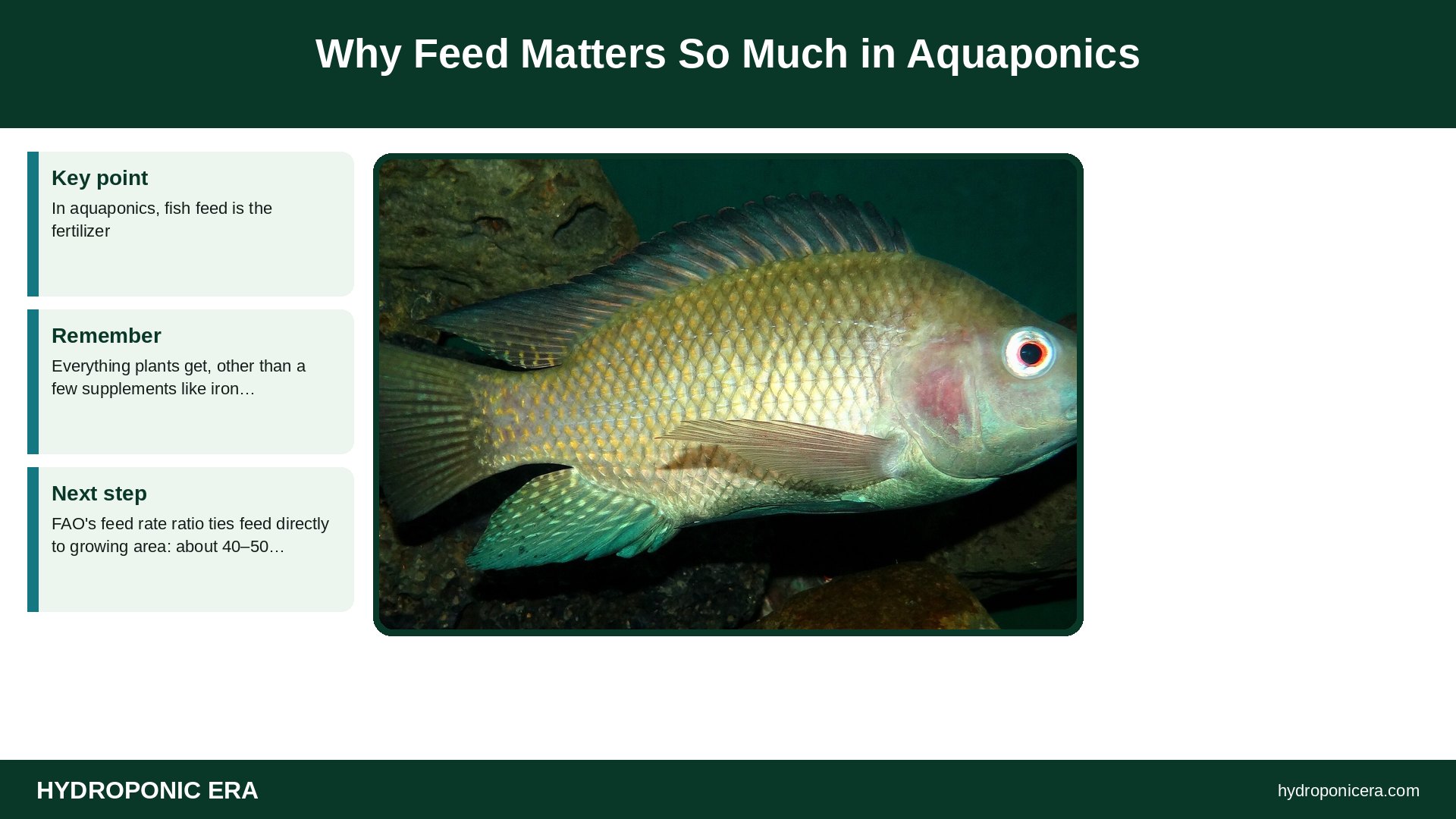
In aquaponics, fish feed is the fertilizer. Everything plants get, other than a few supplements like iron, calcium, or potassium, starts as feed. FAO’s feed rate ratio ties feed directly to growing area: about 40–50 g of feed per m² of leafy greens per day and 50–80 g for fruiting crops, assuming a 32% protein feed. A poor feed means poor fish growth and weaker plants. See aquaponics fish to plant ratio.
What’s in Good Aquaponics Fish Food
FAO lists the key components:
- Protein: the most important part for building body mass. FAO notes methionine and lysine are often limiting amino acids in vegetable-based feeds.
- Lipids (fats): high-energy, and the source of omega-3 and omega-6 fatty acids in fish.
- Carbohydrates: cheap energy and pellet binder, though fish digest them poorly.
- Vitamins and minerals: needed for growth, immunity, and bone.
Choosing Aquaponics Fish Food Pellet Size and Type
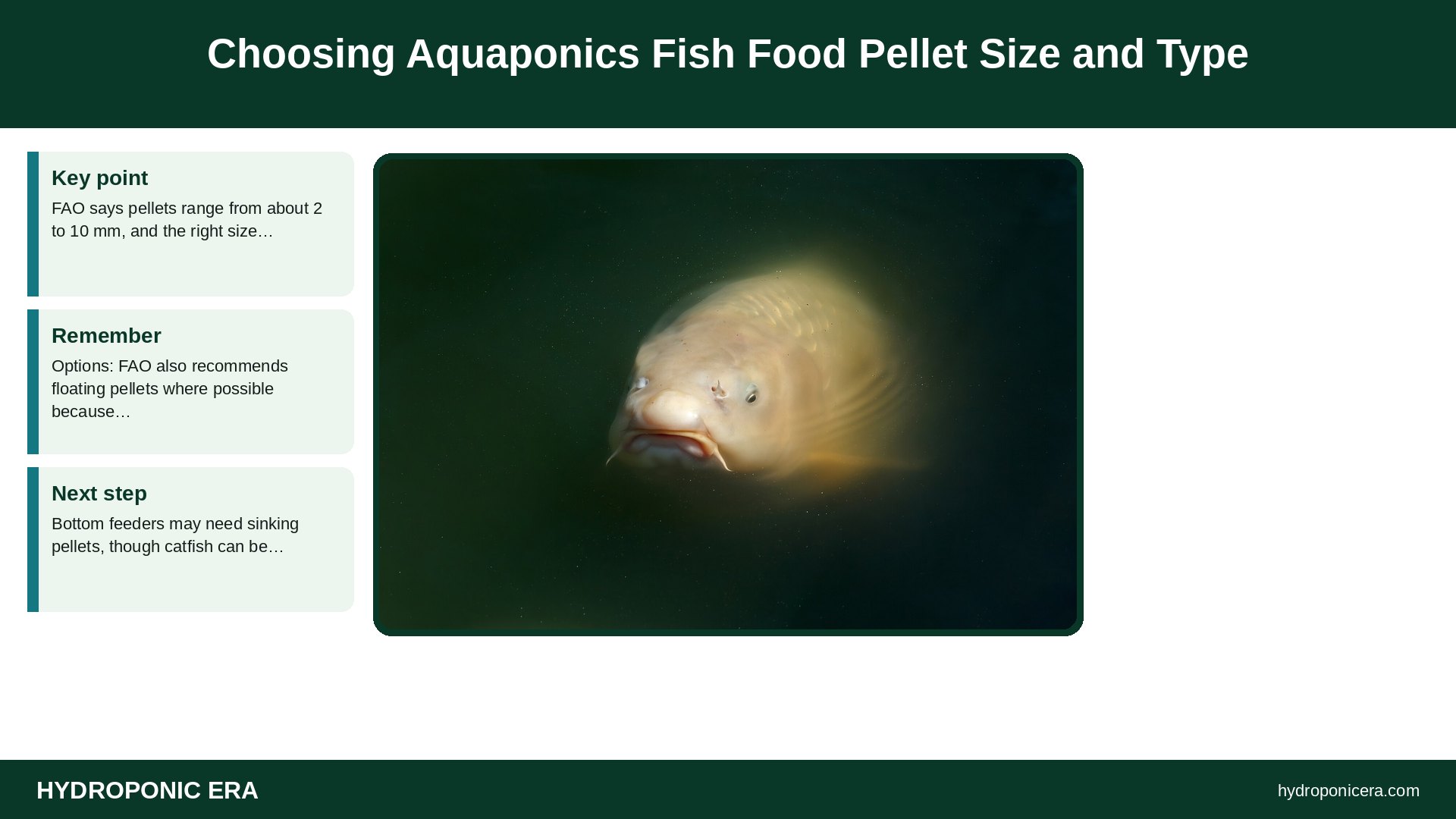
FAO says pellets range from about 2 to 10 mm, and the right size depends on fish size: fry and fingerlings can’t eat big pellets, and large fish waste energy on tiny ones. Options:
- Buy feed for each life stage.
- Crush large pellets into powder for fry and crumbles for fingerlings.
- Use medium 2–4 mm pellets that fish can eat from fingerling to adult, as FAO suggests.
FAO also recommends floating pellets where possible because you can see how much fish eat. Bottom feeders may need sinking pellets, though catfish can be trained to eat floating feed. See catfish aquaponics.
How Much Aquaponics Fish Food to Feed, and How Often
FAO says grow-out fish larger than about 50 g eat roughly 1–2% of their body weight per day; small fish eat more as a percentage. Practical rules:
- Feed once to three times daily.
- Give only what the fish finish in about 30 minutes, per FAO, and remove leftovers.
- If food is left, feed less next time.
- Feed less in cool water, when appetite drops.
- Skip feeding before handling or harvest.
Why Overfeeding Is So Harmful

FAO warns that uneaten feed is eaten by heterotrophic bacteria that use a lot of oxygen, that rotting feed can push ammonia and nitrite to toxic levels quickly, and that leftover pellets clog filters and create anoxic spots. In aquaponics, it’s tempting to overfeed “for the plants,” but extra feed hurts the fish first. See ammonia, nitrite and nitrate.
Feed Conversion Ratio
FCR measures feed efficiency: kilograms of feed per kilogram of fish growth. FAO notes tilapia in good conditions have an FCR of about 1.4–1.8, so growing a 2.2-pound fish takes about 3–4 pounds of feed. FAO suggests periodically weighing a sample of 10–20% of your fish to track growth: weigh a bucket of system water, add five average fish, reweigh, and divide.
Storing Aquaponics Fish Food
FAO says to store feed in dark, dry, cool, secure conditions. Warm, damp feed can grow bacteria and molds that release toxins, and spoiled feed should never be fed. Buy amounts you’ll use within a few months, keep bags sealed, and protect them from rodents.
Supplemental and Homegrown Feeds
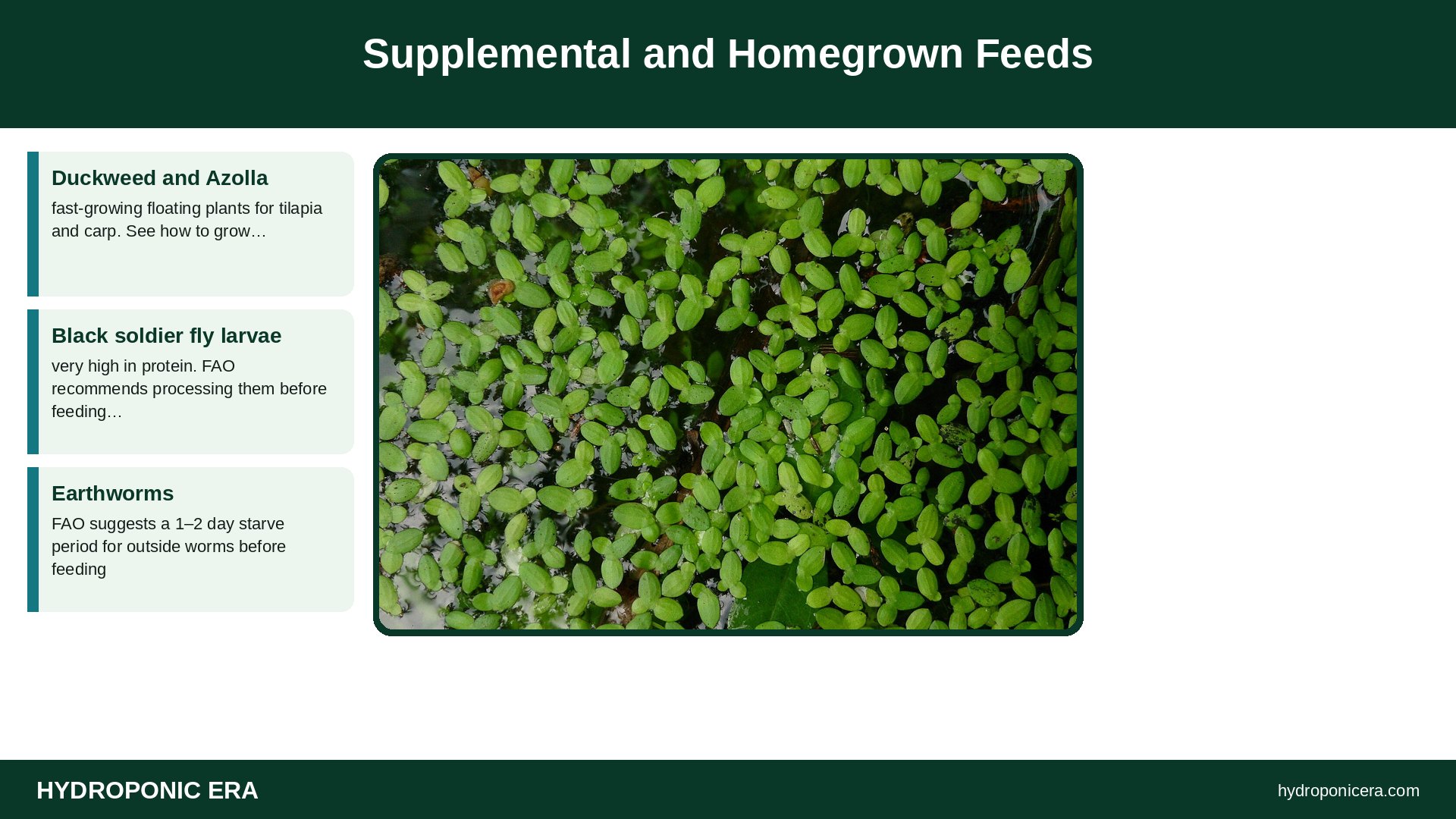
FAO describes several supplements, mostly as additions rather than replacements:
- Duckweed and Azolla: fast-growing floating plants for tilapia and carp. See how to grow duckweed.
- Black soldier fly larvae: very high in protein. FAO recommends processing them before feeding; baking at 170°C (about 340°F) for an hour destroys pathogens.
- Earthworms: FAO suggests a 1–2 day starve period for outside worms before feeding.
- Crop trimmings: small amounts for omnivores.
FAO cautions that homemade feeds are often less digestible and less balanced, and insect larvae are high in fat, so don’t overuse them. Commercial pellets should still be the base diet.
Feeding Through the Seasons
Fish metabolism depends on water temperature. Tilapia stop feeding below about 63°F, per FAO, while trout keep eating in cold water. Adjust feed with temperature and watch nitrate, since less feed means fewer nutrients for plants.
Aquaponics Fish Food and Plant Nutrients
Because aquaponics fish food is the main nutrient input, the amount you feed sets how many plants you can grow. FAO’s feed rate ratio, about 40–50 g of feed per m² per day for leafy greens and 50–80 g for fruiting crops, is based on a 32% protein feed. If you switch to a lower-protein aquaponics fish food, plants receive less nitrogen. FAO also notes fish feed doesn’t supply enough iron, potassium, and calcium for plants, so plan to supplement those. See ammonia, nitrite and nitrate.
Buying Aquaponics Fish Food in the US
US farm stores and aquaculture suppliers sell floating pellets for catfish, tilapia, trout, and koi. Check the label for crude protein, pellet size, and a manufacture date, and buy amounts you’ll use within a few months, since FAO warns that spoiled feed should never be used. Avoid medicated feeds unless a vet recommends them, because treatments can reach the plants. A sealed, rodent-proof bin in a cool garage or basement keeps aquaponics fish food fresh.
A Simple Aquaponics Fish Food Log
Record the date, amount fed, water temperature, and whether food was left after 30 minutes. Over weeks, this log shows appetite trends, flags health problems early, and lets you estimate FCR. FAO recommends tracking fish growth by weighing a sample of 10–20% of the fish periodically.
FAQs: Aquaponics Fish Food
What is the best aquaponics fish food?
A complete commercial pellet with the right protein for your species, about 32% for tilapia.
How much should I feed my fish?
About 1–2% of body weight daily for grow-out fish, and only what they eat in 30 minutes.
Can I feed fish homemade food?
As a supplement. FAO notes homemade feeds are often less digestible and less balanced.
Floating or sinking pellets?
Floating pellets make it easier to see how much fish eat.
How should I store aquaponics fish food?
Cool, dry, dark, sealed, and used while fresh.
Sources
- FAO — Small-scale aquaponic food production
- Photo credits (Wikimedia Commons, edited with titles): Fish Feed Pellets by Narek75 (CC BY-SA 4.0); Oreochromis-niloticus-Nairobi by Bjørn Christian Tørrissen (CC BY-SA 3.0); Koi in a garden pond in Tuntorp 3 by W.carter (CC BY-SA 4.0); Channel Catfish (Ictalurus punctatus) white background by USFWS Mountain Prairie (Public domain); Common Duckweed (Lemna minor) by Mokkie (CC BY-SA 3.0)
1 thought on “What to Feed Fish in Aquaponics: Feed Types and Rates”