
Aquarium aquaponics means growing plants on top of a home fish tank so the fish waste feeds the plants and the roots help clean the water. It works well for herbs, houseplants, and small greens on 10- to 55-gallon tanks, using a small pump to lift water into a planter tray or simply letting roots of plants like pothos hang into the water. It’s not a replacement for filtration or water changes in a stocked aquarium, and for bettas it’s only safe with a proper heated, filtered tank of at least 5 gallons, not a vase where the fish must live off plant roots.
Key takeaway: Aquarium aquaponics is a bonus for the tank, not a substitute for good fishkeeping. Keep the heater and filter, test water, and add plants gradually.
| Setup | How it works | Best for |
|---|---|---|
| Hang-on planter | Small pump feeds a tray on the rim; water drains back | Herbs, lettuce, pothos |
| Top-of-tank grow bed | Tray of clay pebbles across the top; pump or siphon | Herbs and greens on 20–55 gal tanks |
| Roots in water | Cuttings with roots hanging into the tank | Pothos, philodendron, peace lily |
| Floating plants | Plants float on the surface | Natural nitrate uptake; shade |
How Aquarium Aquaponics Works
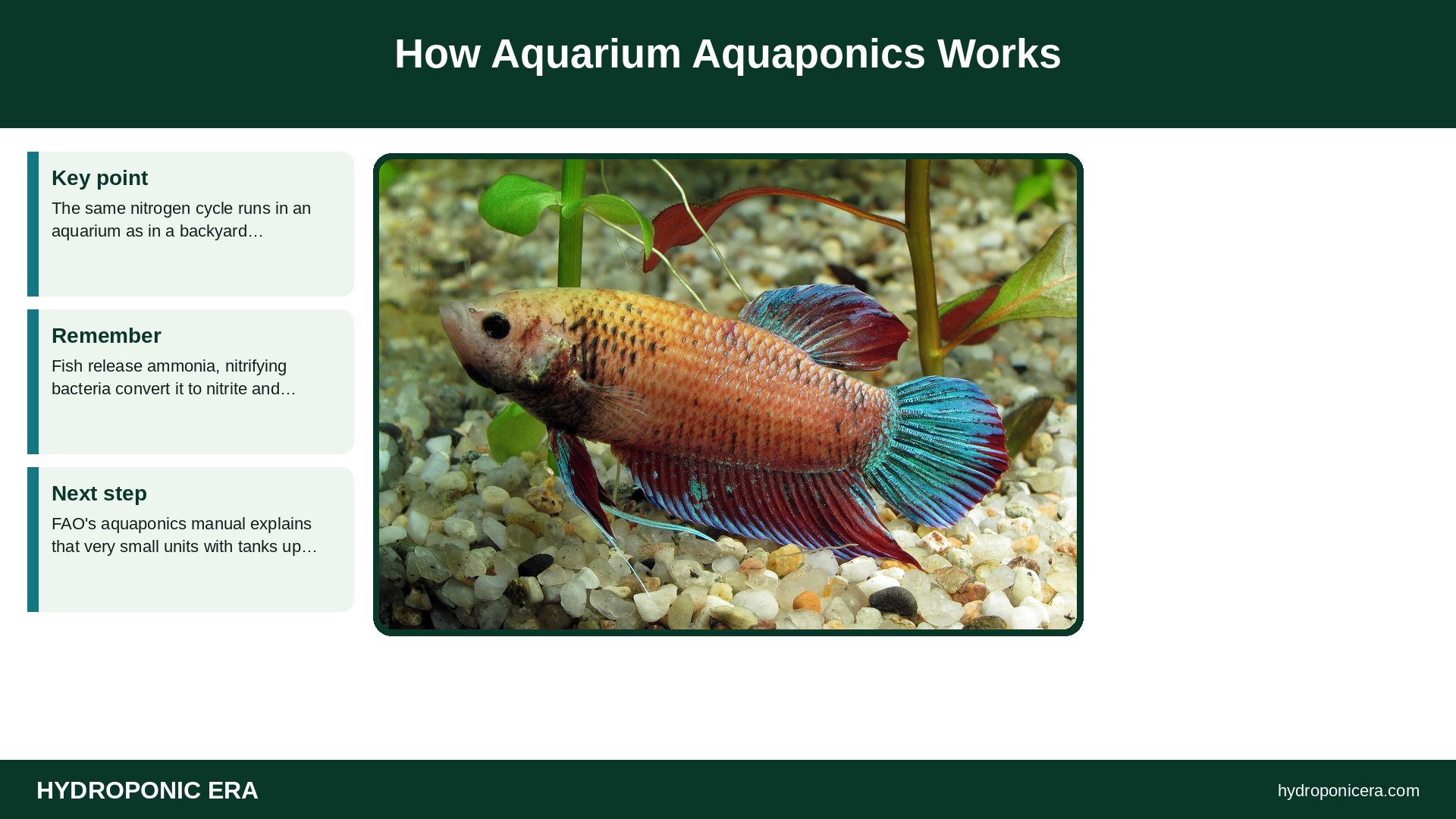
The same nitrogen cycle runs in an aquarium as in a backyard aquaponics system. Fish release ammonia, nitrifying bacteria convert it to nitrite and then nitrate, and plants absorb nitrate. FAO’s aquaponics manual explains that very small units with tanks up to about 200 liters (53 gallons) can pump directly from the fish tank to a grow bed and let water trickle back. On an aquarium, that’s a planter on top. See nitrifying bacteria.
What Plants Can and Can’t Do for Your Tank
Plants use nitrate and can slow algae by competing for nutrients. They don’t replace:
- Mechanical filtration, which removes solid waste.
- Water changes, which remove other waste compounds and refresh minerals.
- Heating for tropical fish.
- Testing, because ammonia and nitrite still need to stay near zero.
A typical aquarium has only a few fish, so it can support only a few plants. FAO’s feed rate ratio for leafy greens is 40–50 g of feed per m² per day; a home aquarium is usually fed a gram or two a day, enough for a small herb planter, not a vegetable garden.
Is Aquarium Aquaponics Betta-Safe?
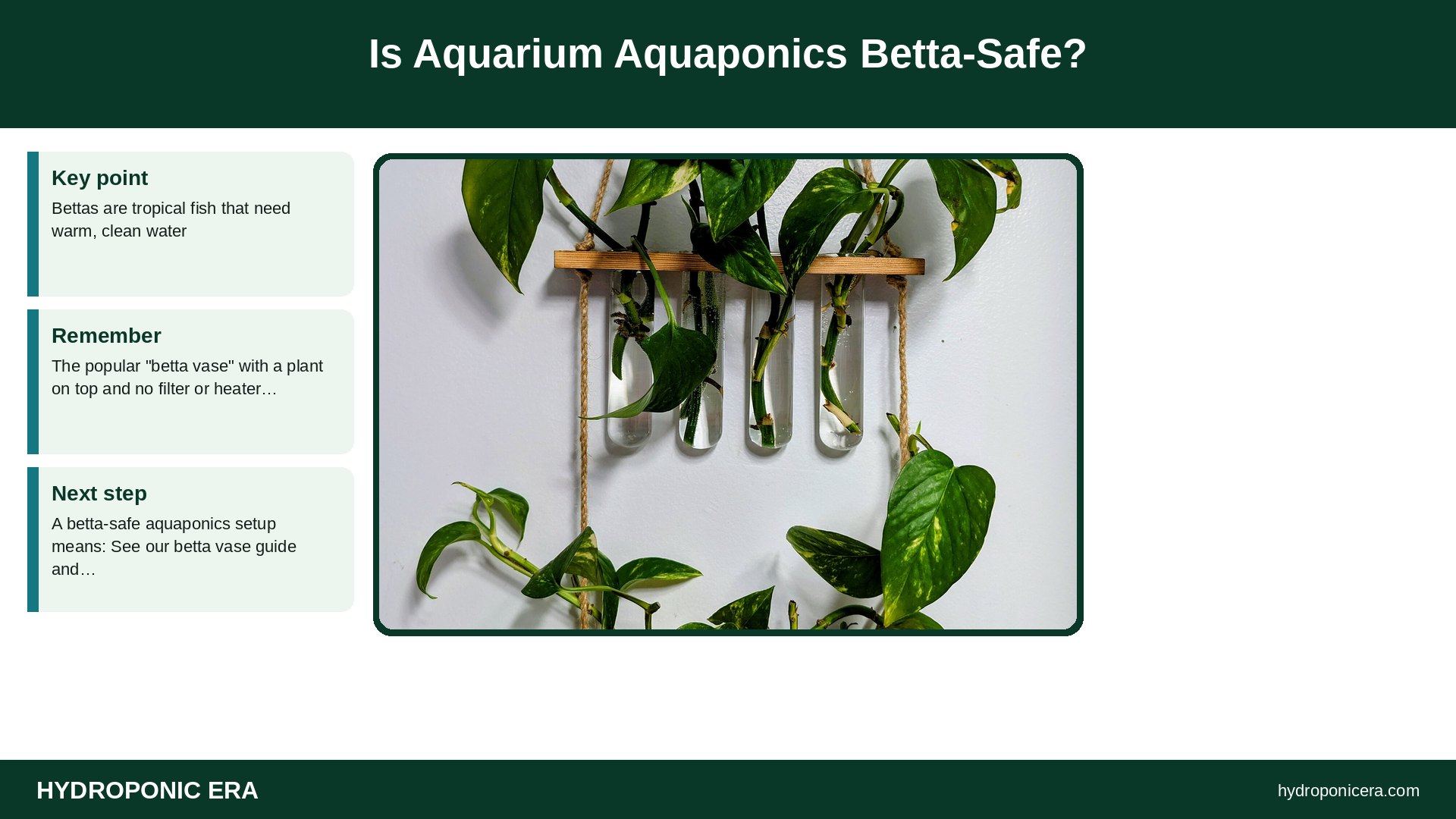
Bettas are tropical fish that need warm, clean water. The popular “betta vase” with a plant on top and no filter or heater is not a good home. A betta-safe aquaponics setup means:
- A tank of at least 5 gallons with a heater and gentle filter.
- A small planter with gentle return flow, since bettas dislike strong current.
- Regular food and partial water changes as usual.
- Plants such as pothos with roots in the water, which bettas often rest among.
See our betta vase guide and pothos in water.
Building a Simple Top-of-Tank Planter
- Choose a food-safe plastic tray that sits securely across the tank rim or hangs on the back.
- Drill drain holes and cover them with mesh so media stays in.
- Fill with rinsed clay pebbles, which are light and pH-neutral. See clay pebbles.
- Run tubing from a small adjustable aquarium pump to the tray.
- Set the flow so water trickles evenly and drains without splashing.
- Plant rooted cuttings or small seedlings and rinse soil off roots completely.
Best Plants for Aquarium Aquaponics

- Pothos and philodendron: tough, low-light tolerant, root easily in water. See philodendron in water.
- Peace lily: keep the crown above water. See peace lily in water.
- Herbs: basil, mint, and parsley under a grow light.
- Lettuce and watercress: quick and small.
Avoid plants with toxic sap or plants treated with pesticides, which can harm fish. Rinse new plants well, and consider quarantining them first.
Light and Algae
Plants on top need light, but light on the tank water fuels algae. FAO advises reducing light on fish tank water while avoiding complete darkness. Use a small LED grow light aimed at the planter and keep the tank’s own light on a normal schedule. See algae control.
Water Quality Routine

- Test ammonia, nitrite, nitrate, and pH weekly. See safe levels.
- Keep doing partial water changes with dechlorinated water.
- Don’t use aquarium medicines or fertilizers labeled unsafe for invertebrates or plants without checking.
- Never add hydroponic nutrients to a fish tank; they can harm fish.
Common Mistakes
- Removing the filter because “the plants clean the water.”
- Too many plants for too few fish, causing yellowing.
- Strong return flow that stresses small fish.
- Soil left on roots, clouding the tank.
Aquarium Aquaponics Maintenance Routine
A small aquarium aquaponics setup is easy to keep healthy with a short routine:
- Daily: feed only what the fish eat quickly and check that water flows to the plants.
- Weekly: test ammonia, nitrite, and nitrate; trim dead leaves and roots.
- Every 2–3 weeks: clean the pump intake, as FAO recommends for submersible pumps.
- As needed: top up with dechlorinated water and do partial water changes if nitrate climbs very high in a lightly planted tank.
Aquarium Aquaponics Mistakes to Avoid
The most common aquarium aquaponics problems are overstocking fish, overfeeding, and using fertilizers or plant treatments that are unsafe for fish. Don’t add houseplant fertilizer to the tank. Avoid plants treated with systemic pesticides from garden centers; rinse roots well before adding any new plant. See aquaponics cycling before adding fish to a new tank.
Best Fish for Aquarium Aquaponics
Small, hardy fish suit aquarium aquaponics best: bettas in small heated tanks, guppies, platies, and goldfish in larger tanks. Goldfish produce plenty of waste for plants but need room; avoid crowding them into small tanks. See goldfish aquaponics.
FAQs: Aquarium Aquaponics
Does aquarium aquaponics replace a filter?
No. Keep your filter and water changes; plants are an extra.
Is aquarium aquaponics safe for bettas?
Yes, in a heated, filtered tank of at least 5 gallons with gentle flow. Not in a vase.
What plants grow best on an aquarium?
Pothos, philodendron, peace lily, and herbs like basil and mint.
Can I grow vegetables on a fish tank?
Small greens and herbs, yes. A home tank has too little waste for big crops.
Do I need a grow light?
For herbs and greens, usually. Houseplants like pothos tolerate lower light.
Sources
- FAO — Small-scale aquaponic food production
- Photo credits (Wikimedia Commons, edited with titles): Fish farming on Øksfjorden in Loppa, Troms og Finnmark, Norway, 2022 August by Ximonic (Simo Räsänen) (CC BY-SA 4.0); Siamese fighting fish (Betta splendens) female orange by Bernard Ladenthin (CC BY 4.0); Pothos plant on water by Joli Rumi (CC BY-SA 4.0); Peace lily – 2 by W.carter (CC BY-SA 4.0); Philodendron hederaceum, Singapore Botanic Gardens (141542) by Moheen Reeyad (CC BY-SA 4.0)