
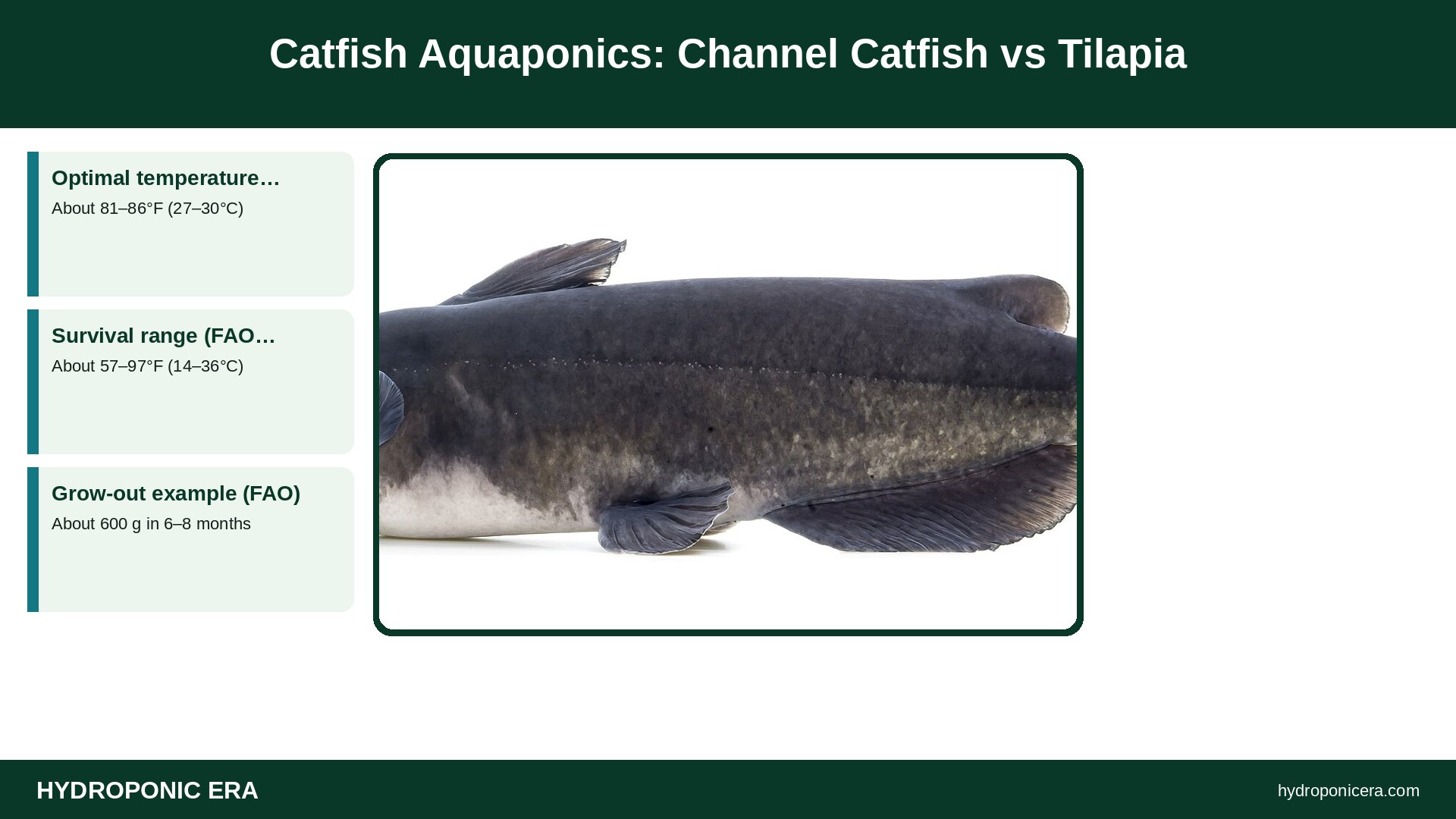
Catfish aquaponics uses channel catfish, a hardy fish native to much of the central and eastern US, to feed plant beds. FAO lists an optimal water temperature of about 75–86°F for channel catfish, with survival across a much wider range, and describes catfish as one of the easiest groups for beginners because they tolerate swings in oxygen and temperature. Compared with tilapia, channel catfish handle cooler water better and are legal in more states, but they grow more slowly in tanks, live on the bottom, and need wide tanks rather than tall ones. In catfish aquaponics, many growers raise them alongside a mid-water fish like bluegill or tilapia.
Key takeaway: Choose channel catfish if you want a native, hardy food fish. Give them floor space, steady aeration, and solids removal.
| Trait | Channel catfish | Tilapia |
|---|---|---|
| Optimal temperature (FAO) | About 75–86°F (24–30°C) | About 81–86°F (27–30°C) |
| Survival range (FAO “vital”) | About 41–93°F (5–34°C) | About 57–97°F (14–36°C) |
| Grow-out example (FAO) | About 400 g in 9–10 months | About 600 g in 6–8 months |
| Feed protein (FAO) | 25–36% | 28–32% |
| Native to the US | Yes, much of the central and eastern US | No |
| Where they swim | Bottom | Mid-water |
| Breeding in tanks | Rare without special setup | Breed readily |
Why Choose Catfish Aquaponics?
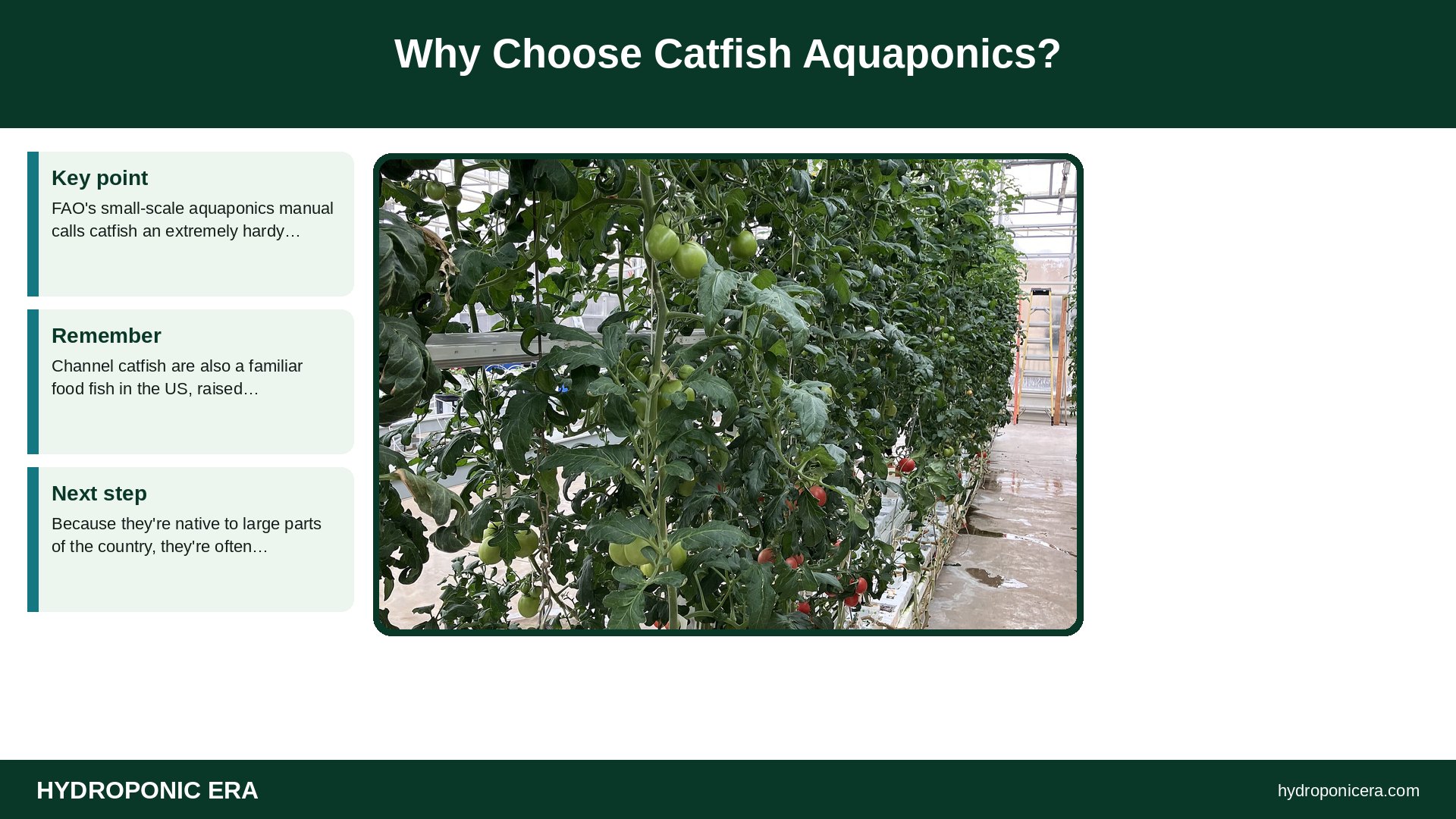
FAO’s small-scale aquaponics manual calls catfish an extremely hardy group of fish that tolerate wide swings in dissolved oxygen, temperature, and pH, and it notes they’re among the easiest species for beginners. Channel catfish are also a familiar food fish in the US, raised commercially across the South, which means fingerlings and feed are relatively easy to find. Because they’re native to large parts of the country, they’re often easier to keep legally than non-native species, though rules still vary by state.
Catfish Aquaponics vs Tilapia Aquaponics
Both are warm-water fish, so the choice often comes down to climate, rules, and goals:
- Cooler water: Channel catfish tolerate cooler conditions than tilapia, which stop eating below the mid-60s °F. Catfish still grow slowly in cool water, so warmth helps both.
- Growth speed: FAO’s comparison shows tilapia reaching harvest size faster in ideal conditions.
- Breeding: Tilapia breed readily in warm tanks and can overcrowd; channel catfish rarely spawn in tanks without nesting containers and seasonal cues.
- Legality: Tilapia are restricted in some states, while channel catfish are native across much of the US.
- Tank use: Catfish stay on the bottom; tilapia use the whole water column.
FAO notes many farmers pair catfish with a species that uses the upper tank, commonly bluegill, perch, or tilapia. So many growers keep both: tilapia or bluegill in mid-water and catfish on the bottom. See tilapia aquaponics and best fish for aquaponics.
Tank Shape and Stocking in Catfish Aquaponics
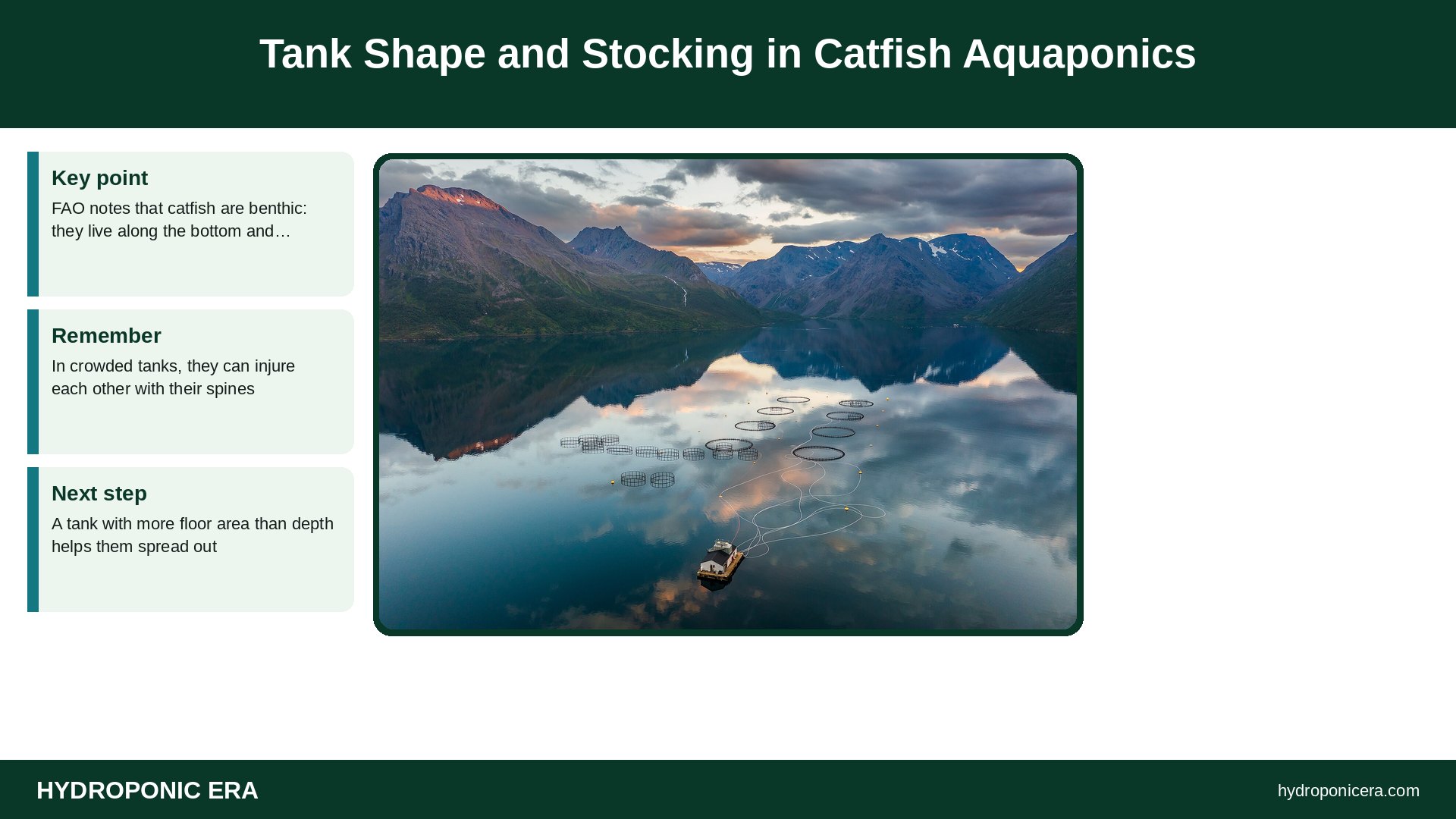
FAO notes that catfish are benthic: they live along the bottom and don’t spread through the water column. In crowded tanks, they can injure each other with their spines. A tank with more floor area than depth helps them spread out. Round stock tanks and wide IBC totes laid out horizontally work better than tall, narrow barrels.
For stocking, use weight rather than counts. FAO recommends small-scale aquaponic systems stay below about 20 kg of fish per 1,000 liters of water, roughly 0.17 pounds per gallon. Start lower while your biofilter matures. FAO adds that catfish can be stocked at higher densities in commercial systems, but those need more solids removal than a typical backyard system has.
Catfish Aquaponics Water Quality
FAO’s species table lists these targets for channel catfish:
- Total ammonia nitrogen under 1 mg/L.
- Nitrite under 1 mg/L.
- Dissolved oxygen above 3 mg/L, though the whole system does better above 5 mg/L.
FAO also notes recent research suggesting nitrate above about 100 mg/L may reduce catfish appetite. If nitrate keeps climbing, add more plants or do partial water changes. Keep pH near 6–7 as a compromise for plants and bacteria. See dissolved oxygen.
Managing Catfish Solids
FAO notes that catfish solid waste is less voluminous and more dissolved than tilapia waste, which helps it mineralize into plant nutrients. Even so, FAO says higher catfish densities only work with adequate mechanical filtration, so a settling tank or screen filter helps keep grow beds and raft channels clean. Media beds can process some solids, especially with worms, but a dedicated solids step between the fish tank and the plant area keeps oxygen higher and roots healthier.
Feeding Fish in Catfish Aquaponics
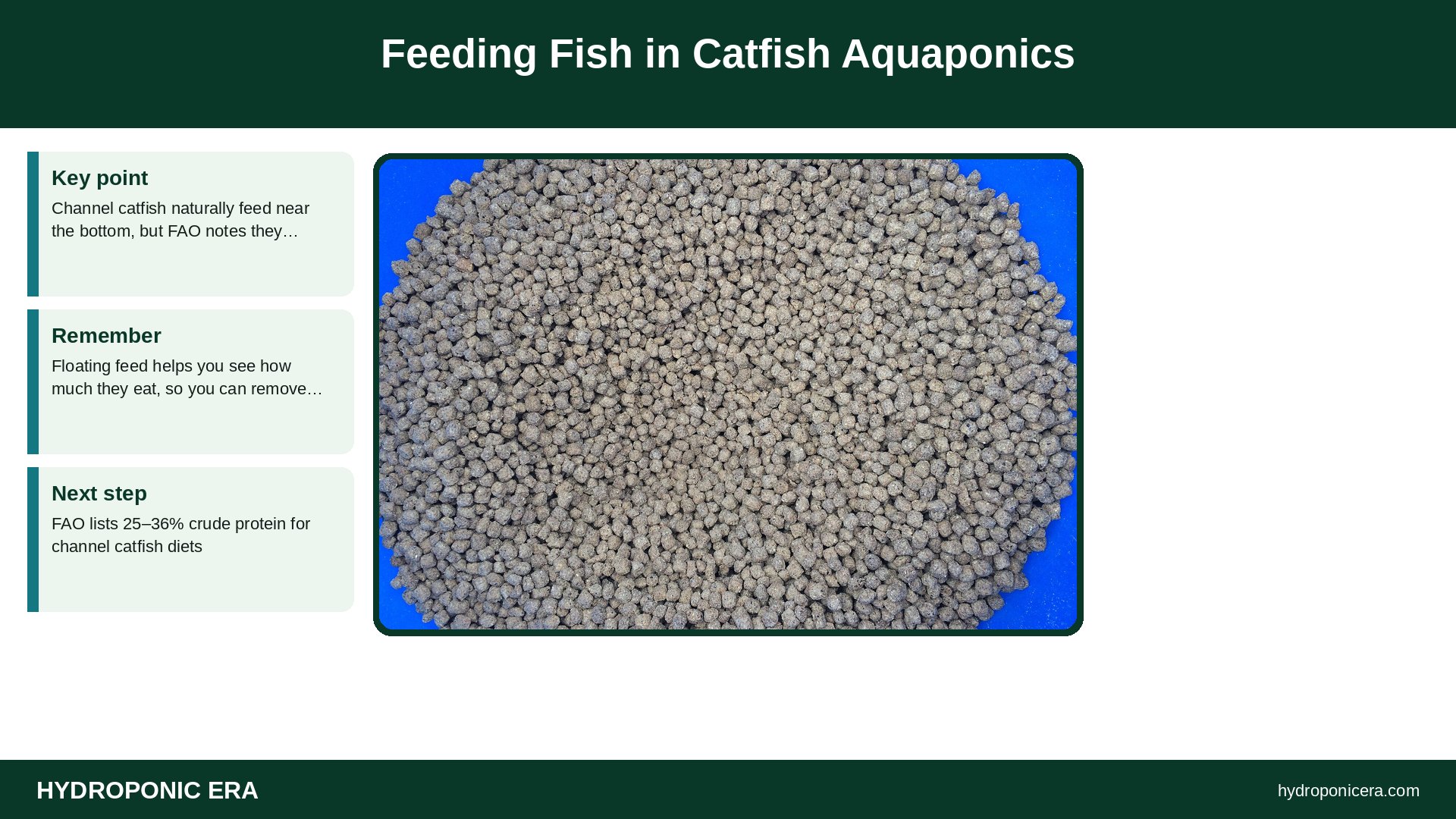
Channel catfish naturally feed near the bottom, but FAO notes they can be trained to eat floating pellets. Floating feed helps you see how much they eat, so you can remove leftovers. FAO lists 25–36% crude protein for channel catfish diets. Feed once or twice daily, what the fish eat within several minutes, and feed less in cooler water when their appetite drops. Feeding amount sets plant capacity; FAO’s guideline is about 40–50 grams of feed per square meter of leafy greens per day, or 50–80 grams for fruiting crops.
Temperature by Season
Channel catfish grow best in summer-warm water, so outdoor catfish aquaponics is seasonal in much of the US. In northern states, an outdoor system will slow in fall and nearly stop in winter. Options include moving the system into a greenhouse, insulating tanks, or accepting a slower winter and feeding lightly. Hybrid sunfish have been shown in research from Southern Illinois University to keep growing at lower temperatures where channel catfish lost weight, which is one reason some northern growers mix species. See heaters for tanks and greenhouse basics.
Plants That Pair Well With Catfish Aquaponics
Leafy greens, herbs, and fruiting crops all work in catfish aquaponics once the system is mature. Lettuce, kale, basil, chard, and tomatoes are common. Warm summer water favors basil, okra, and peppers over lettuce, which may bolt in heat.
Harvesting Catfish
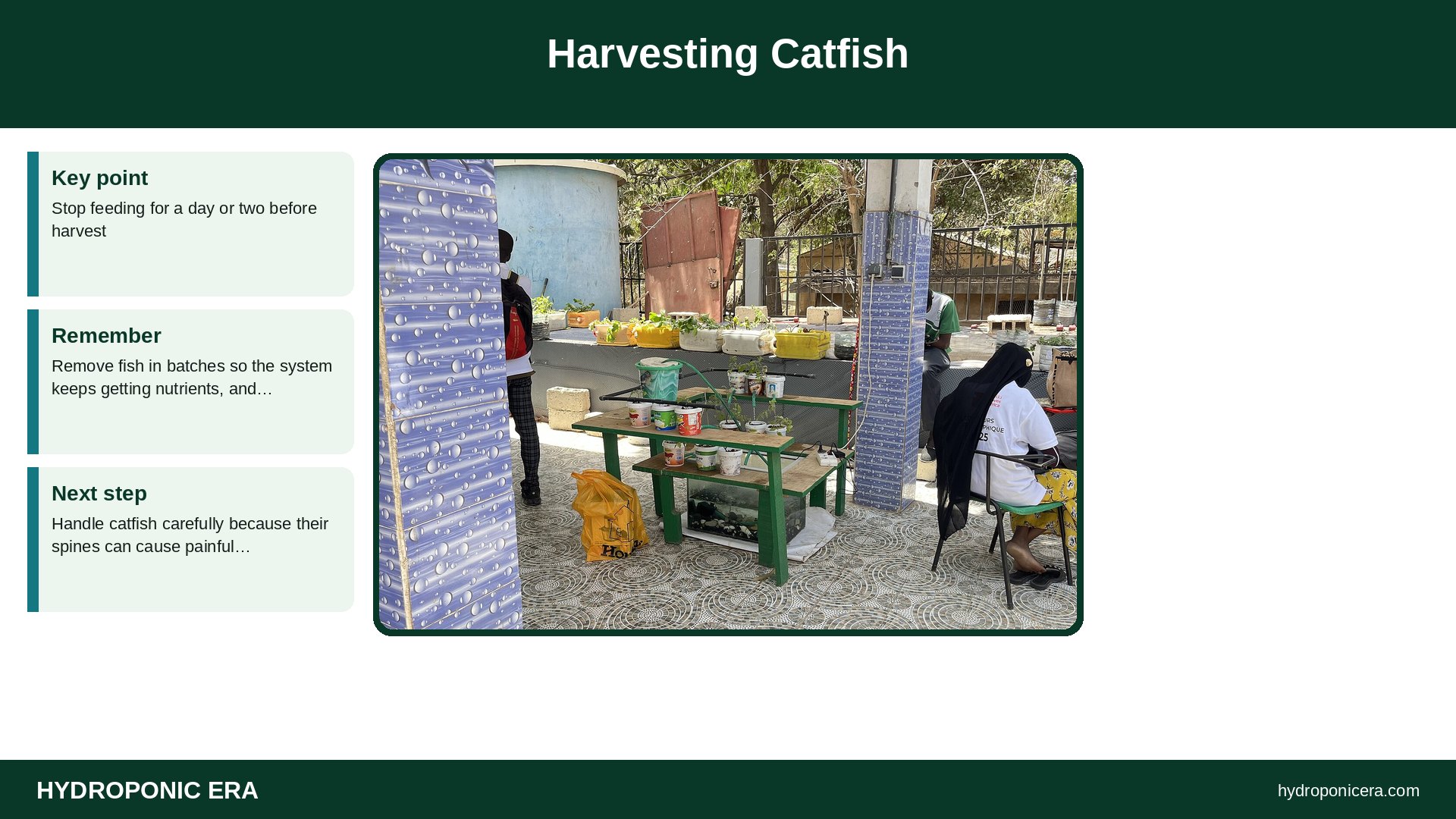
Stop feeding for a day or two before harvest. Remove fish in batches so the system keeps getting nutrients, and restock with fingerlings. Handle catfish carefully because their spines can cause painful puncture wounds; use a net and gloves.
Legal Check Before You Buy
Even native species can be regulated. Some states require permits to buy, transport, or sell live fish, or to operate any aquaculture facility, and some may restrict non-native catfish species in specific waters. Before you start catfish aquaponics and order fingerlings, contact your state fish and wildlife or agriculture agency. Our fish farming for beginners guide covers the general steps.
Common Catfish Aquaponics Mistakes
- Using tall, narrow tanks that crowd fish on a small floor.
- Skipping solids filtration.
- Overfeeding in cool weather when fish eat less.
- Stocking heavily before the biofilter is ready.
- No backup aeration; see backup power.
FAQs: Catfish Aquaponics
Is catfish aquaponics good for beginners?
Yes. Channel catfish are hardy, native to much of the US, and tolerant of changing water conditions.
Catfish vs tilapia: which is better?
Tilapia grow faster in warm water; catfish handle cooler water better and are legal in more places. Many growers keep both.
What temperature do catfish need?
About 75–86°F for best growth, with growth slowing in cooler water.
Do catfish need special tanks?
They do best in wide tanks with plenty of floor space.
Can catfish breed in catfish aquaponics tanks?
Rarely without special nesting setups, which helps prevent overcrowding.
Sources
- FAO — Small-scale aquaponic food production
- Southern Illinois University — Growth of Hybrid Sunfishes and Channel Catfish at Low Temperatures
- Southern Regional Aquaculture Center — Aquaponics: Integrating Fish and Plant Culture (SRAC 454)
- Photo credits (Wikimedia Commons, edited with titles): Channel Catfish (Ictalurus punctatus) white background by USFWS Mountain Prairie (Public domain); Solanum lycopersicum in aquaponics at the NC Greenhouse Nursery by Gogerr (CC BY-SA 4.0); Fish farming on Øksfjorden in Loppa, Troms og Finnmark, Norway, 2022 August by Ximonic (Simo Räsänen) (CC BY-SA 4.0); Fish Feed Pellets by Narek75 (CC BY-SA 4.0); AQUAPONIE by Hopeballa (CC BY-SA 4.0)