
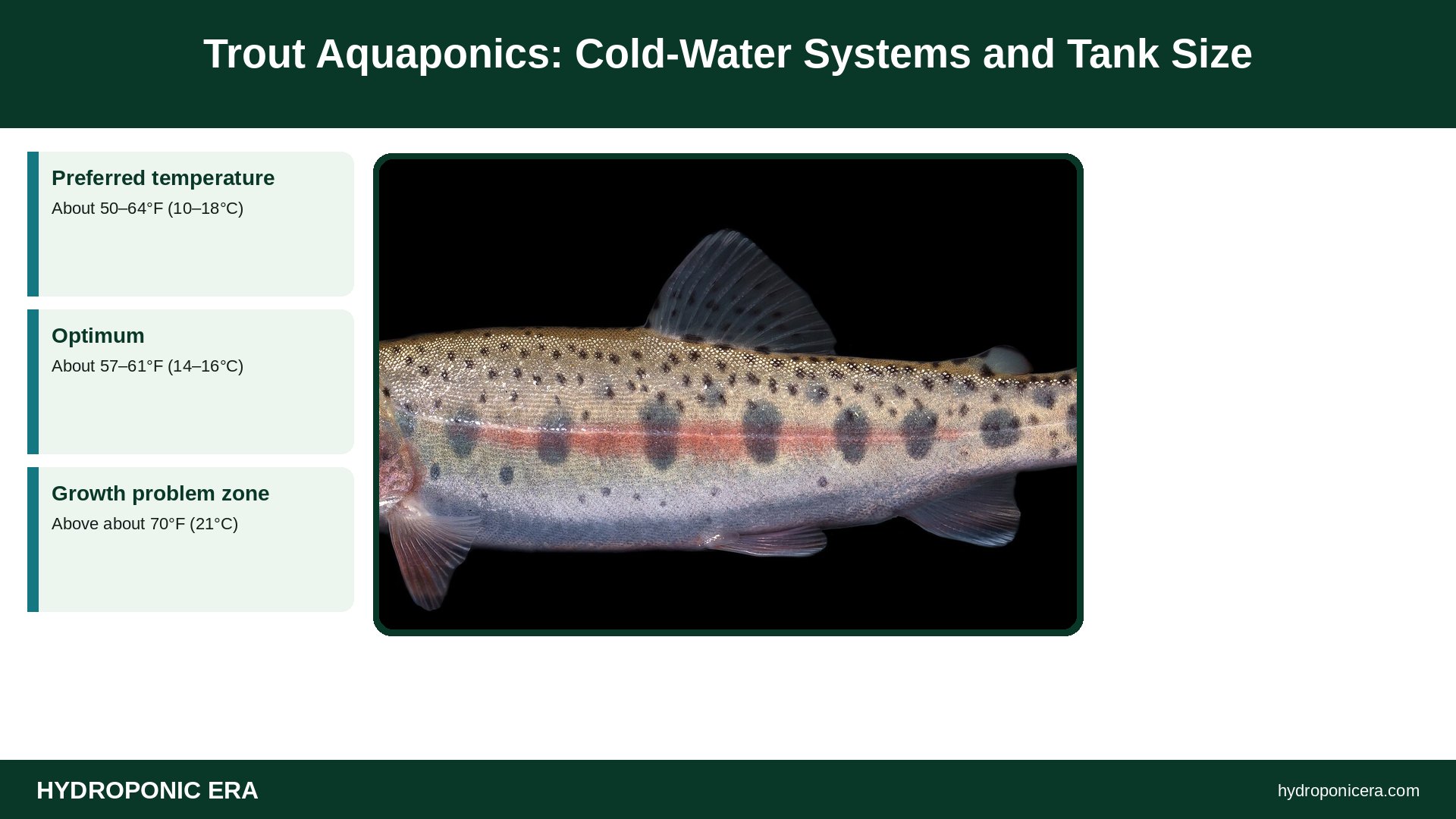
Trout aquaponics is the go-to option for cold climates, unheated basements, and winter systems, because rainbow trout prefer water around 50–64°F with an optimum near 59°F, according to FAO. Above about 70°F their growth drops sharply. Trout need cleaner water and more dissolved oxygen than tilapia or catfish, so a trout system must have strong aeration, reliable backups, good solids removal, and steady monitoring. In return, trout eat a high-protein diet that releases plenty of nitrogen for leafy greens, and they’re an excellent food fish.
Key takeaway: Choose trout only if you can keep the water cold and the oxygen high all the time. Backup aeration isn’t optional with trout.
| Parameter | Rainbow trout (FAO) |
|---|---|
| Preferred temperature | About 50–64°F (10–18°C) |
| Optimum | About 57–61°F (14–16°C) |
| Growth problem zone | Above about 70°F (21°C) |
| Total ammonia nitrogen | Under 0.5 mg/L |
| Nitrite | Under 0.3 mg/L |
| Dissolved oxygen | Above 6 mg/L |
| Feed protein | About 42% |
| Grow-out example | About 1,000 g in 14–16 months |
Why Choose Trout Aquaponics?
FAO describes trout as ideal for aquaponics in cool and temperate regions, especially in winter. Rainbow trout is the most common trout species grown in US aquaculture. They’re oily fish, rich in omega-3 fatty acids, and highly valued for eating. For growers in the northern US, a trout system can run in an unheated garage, barn, or basement where tilapia would need costly heating. Another useful trait: trout feed is high in protein, which FAO notes puts more nitrogen into the system per unit of feed, supporting more leafy greens.
Keeping Trout Aquaponics Water Cold
Cold water is the core requirement of trout aquaponics. Growth slows above the low 60s °F and suffers above about 70°F. Options to stay cold include:
- Running trout aquaponics only in the cool seasons and switching to a warm-water fish in summer, as FAO suggests for temperate climates.
- Keeping the system in a basement or shaded building.
- Insulating tanks and pipes and covering tanks to block sun.
- Using a chiller in warm months; see water chillers.
Measure the fish tank temperature, not the room, and log it daily in warm weather.
Oxygen: The Make-or-Break Factor
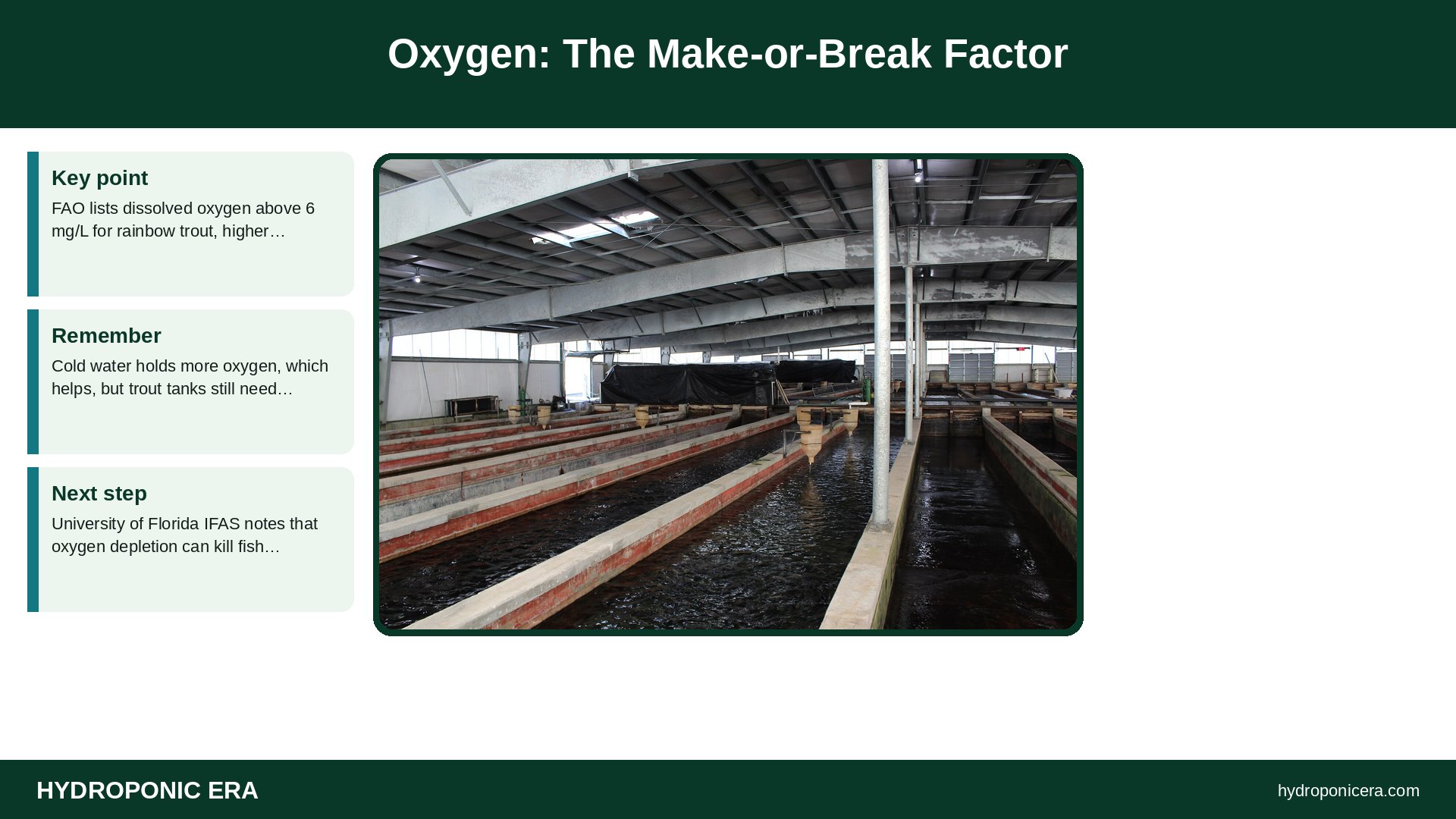
FAO lists dissolved oxygen above 6 mg/L for rainbow trout, higher than for tilapia, carp, or catfish, and notes trout may not be able to use oxygen properly once water warms above about 70°F, even when it’s available. Cold water holds more oxygen, which helps, but trout tanks still need strong aeration. University of Florida IFAS notes that oxygen depletion can kill fish quickly, so trout aquaponics needs:
- A properly sized air pump with multiple air stones.
- A backup air pump on battery or generator power. See backup power for pumps.
- A dissolved oxygen test kit or meter.
- Water returning to the tank with some splash for extra aeration.
Ammonia and Nitrite Limits Are Stricter
Trout are more sensitive to ammonia and nitrite than warm-water species. FAO’s table lists total ammonia nitrogen under 0.5 mg/L and nitrite under 0.3 mg/L. That means you should cycle the system fully before adding trout and stock lightly at first. Cold water also slows nitrifying bacteria: FAO notes bacterial productivity drops below about 63°F and drops much more below 50°F, so a trout system needs a generously sized biofilter. See beneficial bacteria.
Trout Aquaponics Stocking Density
FAO recommends small-scale aquaponics stay below about 20 kg of fish per 1,000 liters (about 0.17 lb per gallon). In trout aquaponics, start well below that. Their higher oxygen needs and lower ammonia tolerance mean a lightly stocked system is much safer.
Feeding Trout
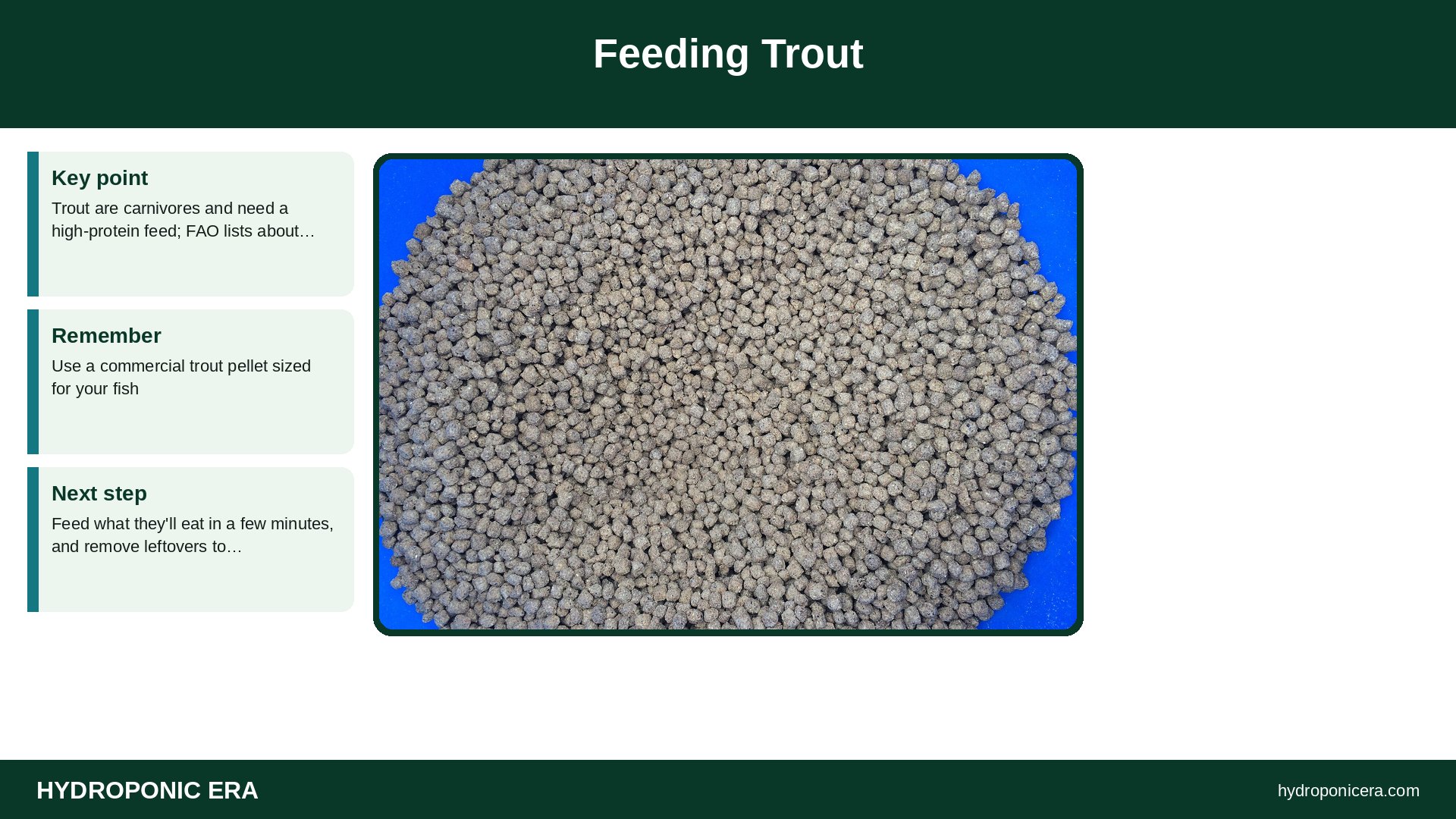
Trout are carnivores and need a high-protein feed; FAO lists about 42% protein. Use a commercial trout pellet sized for your fish. Feed what they’ll eat in a few minutes, and remove leftovers to protect water quality. Feeding slows as water cools. Because trout feed is rich in protein, each gram of feed delivers more nitrogen for plants than lower-protein feeds.
Best Plants for Trout Aquaponics
Trout aquaponics water favors leafy greens and herbs that like cool roots: lettuce, spinach, kale, chard, parsley, cilantro, and watercress. Warm-season fruiting crops like tomatoes and peppers prefer warmer roots and may grow slowly in a cold trout system. FAO notes that many leafy greens grow best in cooler conditions and bolt in warm temperatures, which makes them a natural match. See growing lettuce.
Seasonal Trout and Tilapia Rotation
A practical approach for many US climates is to grow trout from fall to spring and a warm-water fish such as tilapia from late spring to early fall. Harvest one species before the water changes enough to stress it, then stock the other. This keeps the plant beds producing year-round without major heating or chilling. See tilapia aquaponics.
Buying Trout and Legal Checks
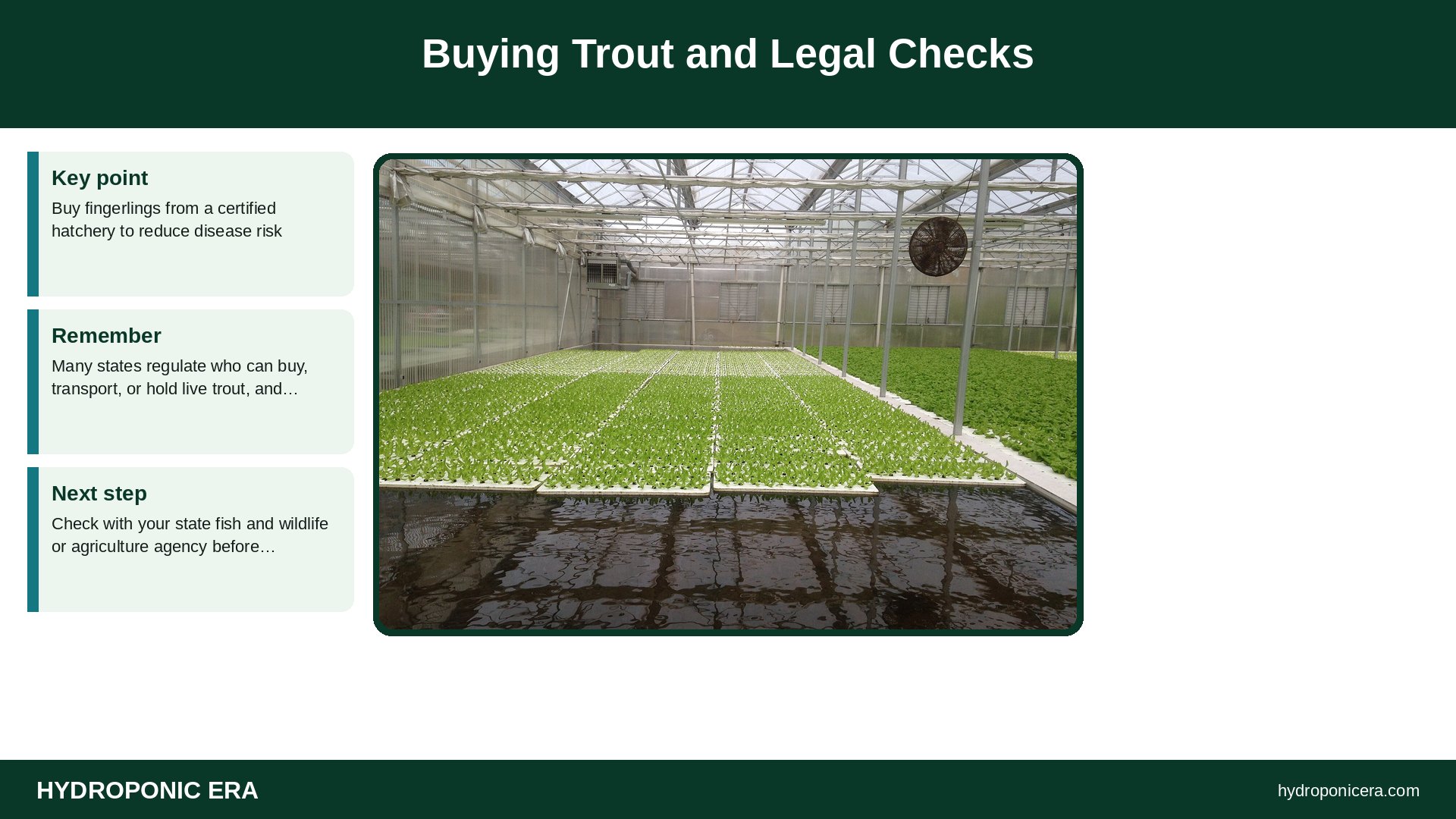
Buy fingerlings from a certified hatchery to reduce disease risk. Many states regulate who can buy, transport, or hold live trout, and some require permits for private aquaculture or require disease certification. Check with your state fish and wildlife or agriculture agency before buying. See fish farming for beginners.
Warning Signs in Trout Aquaponics
- Fish gathering at the surface or water inlet: low oxygen. Increase aeration immediately.
- Lethargy and reduced feeding: rising temperature, ammonia, or nitrite. Test the water.
- Red or inflamed gills: possible ammonia or nitrite stress.
- Sudden deaths: often oxygen loss from pump or power failure.
Acclimating Trout Without Shock
Trout aquaponics is less forgiving than tilapia or catfish, so careful stocking matters. FAO lists temperature and pH differences as the two big stressors during transfer. Float the sealed bag for at least 15 minutes to equalize temperature, then add tank water to the bag gradually over at least another 15 minutes. If the pH differs by more than 0.5, FAO recommends holding the fish in an aerated tub of their original water and slowly adding system water over at least 24 hours. Trout bags warm up quickly in the car, so bring a cooler and get them into cold water fast.
FAO also recommends buying from reputable hatcheries, inspecting new fish for disease, and considering quarantine in a separate tank before mixing fish into the main system.
Purging and Flavor Before Harvest
Trout are prized for flavor, so the last step matters. FAO explains that farmed freshwater fish can pick up muddy or musty off-flavors from compounds called geosmin and 2-methylisoborneol, produced by blue-green algae and certain bacteria. The standard fix is to purge fish for 3–5 days in clean, aerated water without feeding before harvest. In aquaponics, FAO points out that the purge water can later be used to top up the system, so nothing is wasted. Keeping tanks shaded to limit algae also helps prevent off-flavors in the first place.
Sizing Plant Beds for Trout Aquaponics
Because trout feed is high in protein, each gram releases more nitrogen than typical tilapia feed. FAO’s general feed rate ratio is 40–50 grams of feed per square meter of leafy greens daily, based on a 32% protein feed, so a trout system may support a little more leafy area per gram of feed. Cool water slows plant growth too, so watch nitrate: if it climbs above 150 mg/L, add plants or exchange some water.
FAQs: Trout Aquaponics
What temperature does trout aquaponics need?
About 50–64°F, with an optimum near 59°F. Growth suffers above about 70°F.
Is trout aquaponics good for beginners?
They’re more demanding than tilapia or catfish because they need cold, highly oxygenated, clean water.
How fast do trout grow?
FAO lists about 1,000 grams in 14–16 months under good conditions.
Can trout and tilapia share a system?
Not at the same time, since their temperature needs don’t overlap well. Rotate them by season.
What plants grow best with trout?
Cool-season leafy greens and herbs such as lettuce, spinach, kale, and parsley.
Sources
- FAO — Small-scale aquaponic food production
- University of Florida IFAS — Dissolved Oxygen for Fish Production
- Photo credits (Wikimedia Commons, edited with titles): Rainbow Trout (Oncorhynchus mykiss) Gavins Point by USFWS Mountain Prairie (Public domain); Air Stone Disk aquarium Germany 2024 by Nimmerwelk (CC BY-SA 4.0); Raceways at Ennis National Fish Hatchery (51267218370) by USFWS Mountain Prairie (Public domain); Fish Feed Pellets by Narek75 (CC BY-SA 4.0); Deep water culture by ArcadiYay (CC BY-SA 4.0)