
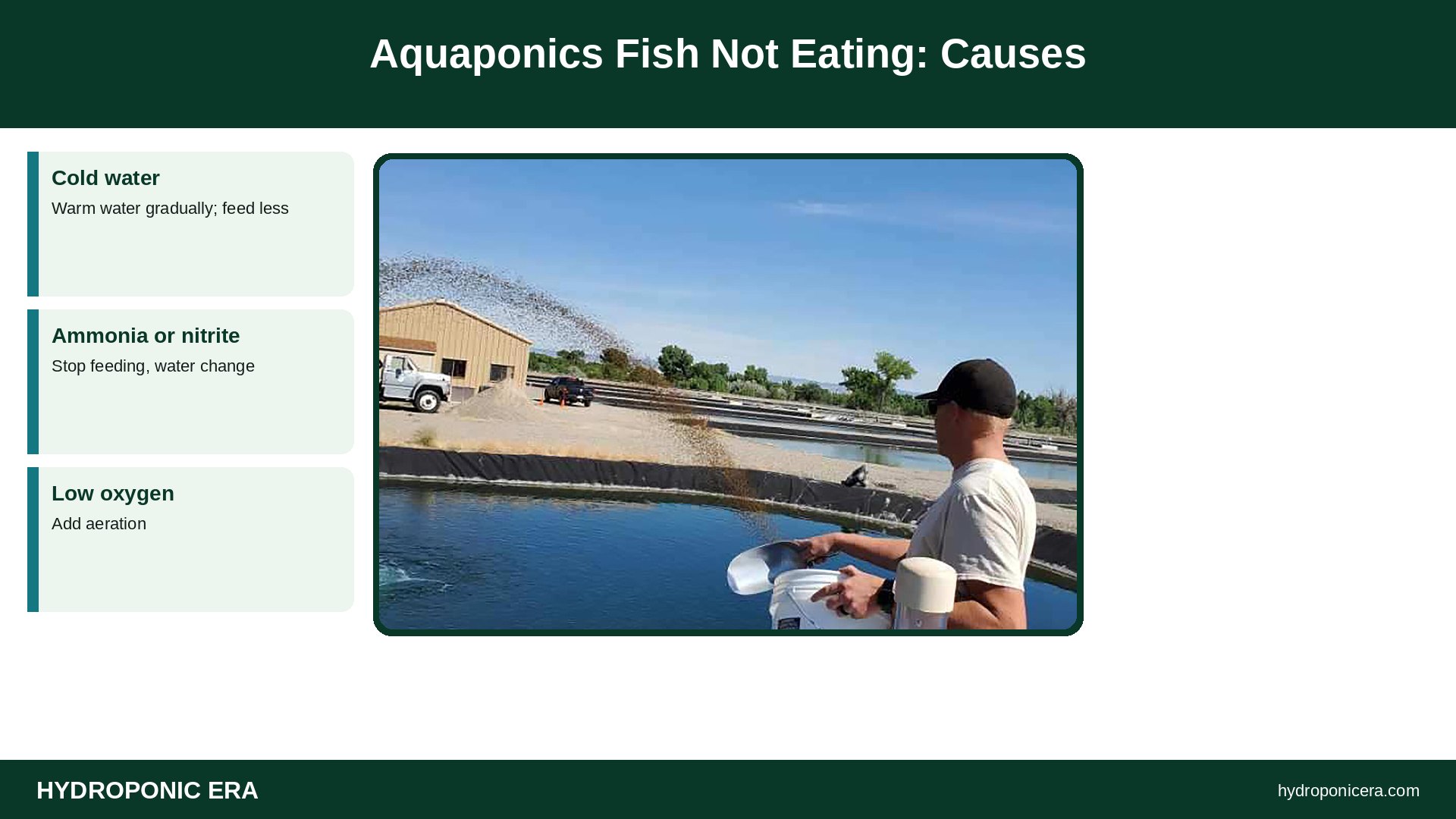
When aquaponics fish not eating becomes a problem, the cause is usually water temperature, water quality or stress, not the food itself. Check these in order: water temperature (most fish eat less when water drops below their comfort range), ammonia and nitrite (should be near zero), dissolved oxygen (above 5 mg/L), pH (about 6.8–7.4), recent stress (new fish, handling, loud noise, a power cut) and signs of disease. Fix the underlying problem first, then offer small amounts of fresh feed once or twice a day and remove anything uneaten after 5–10 minutes.
Key takeaway: Loss of appetite is an early warning sign. Test the water the same day you notice it, before fish start dying.
| Possible cause | Clues | First fix |
|---|---|---|
| Cold water | Fish slow and near the bottom | Warm water gradually; feed less |
| Ammonia or nitrite | Gasping, red or brown gills | Stop feeding, water change |
| Low oxygen | Fish at surface, worse at dawn | Add aeration |
| pH swing | Sudden change after buffering | Stabilize slowly |
| Stress | New fish, handling, noise | Give quiet time, cover tank |
| Disease or parasites | Spots, flashing, fin damage | Diagnose; quarantine |
| Wrong or stale feed | Pellets spat out, old bag | Fresh, right-size feed |
Water Temperature Is the Most Common Cause

Fish are cold-blooded, so their metabolism and appetite follow water temperature. Tilapia eat well at about 75–86°F and slow down sharply below about 70°F. Catfish, bluegill and perch eat less below about 60–65°F. Trout prefer about 55–65°F and lose appetite above about 68–70°F. In fall, when water cools, aquaponics fish not eating is often just a normal seasonal slowdown. Reduce feed to match, and don’t force it. See aquaponics water temperature and aquaponics in winter.
Check Water Quality Right Away
Test ammonia, nitrite, pH and dissolved oxygen. Even moderate ammonia or nitrite makes fish lose appetite before they show other signs. Low oxygen does the same. UF/IFAS notes that nitrite can be harmful at low levels and that nitrifying bacteria stop working when oxygen or alkalinity is low. See aquaponics ammonia spike, aquaponics nitrite spike and aquaponics dissolved oxygen.
pH and Alkalinity
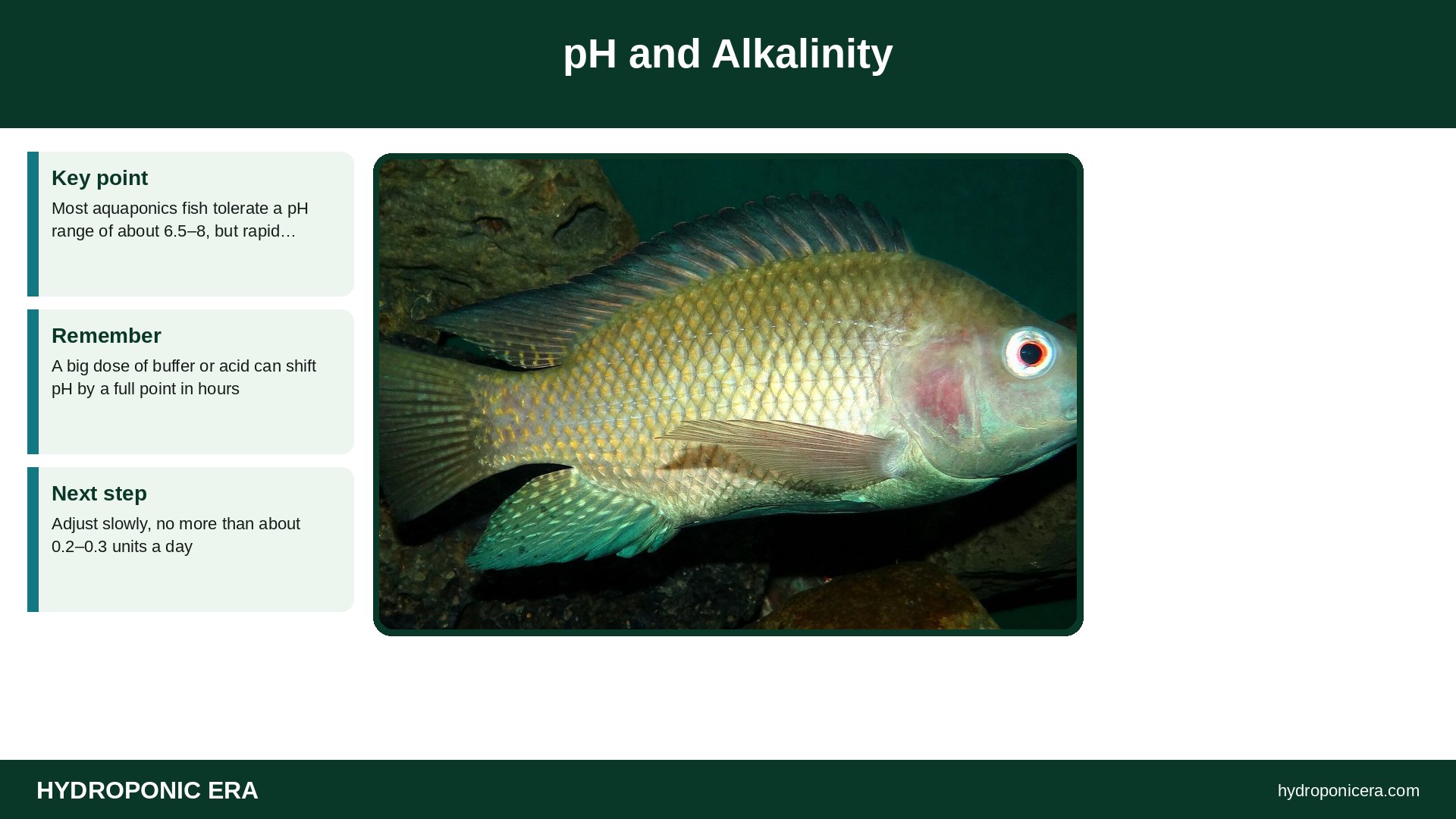
Most aquaponics fish tolerate a pH range of about 6.5–8, but rapid swings stress them more than a steady value. A big dose of buffer or acid can shift pH by a full point in hours. Adjust slowly, no more than about 0.2–0.3 units a day. See aquaponics pH.
Stress and New Fish
New fish often refuse food for a few days after transport. Handling, netting, moving tanks, loud pumps, bright light or other animals near the tank all cause stress. Cover part of the tank to give shade and a sense of security, keep the area quiet, and wait 2–3 days before expecting normal feeding.
Aquaponics Fish Not Eating Because of Disease
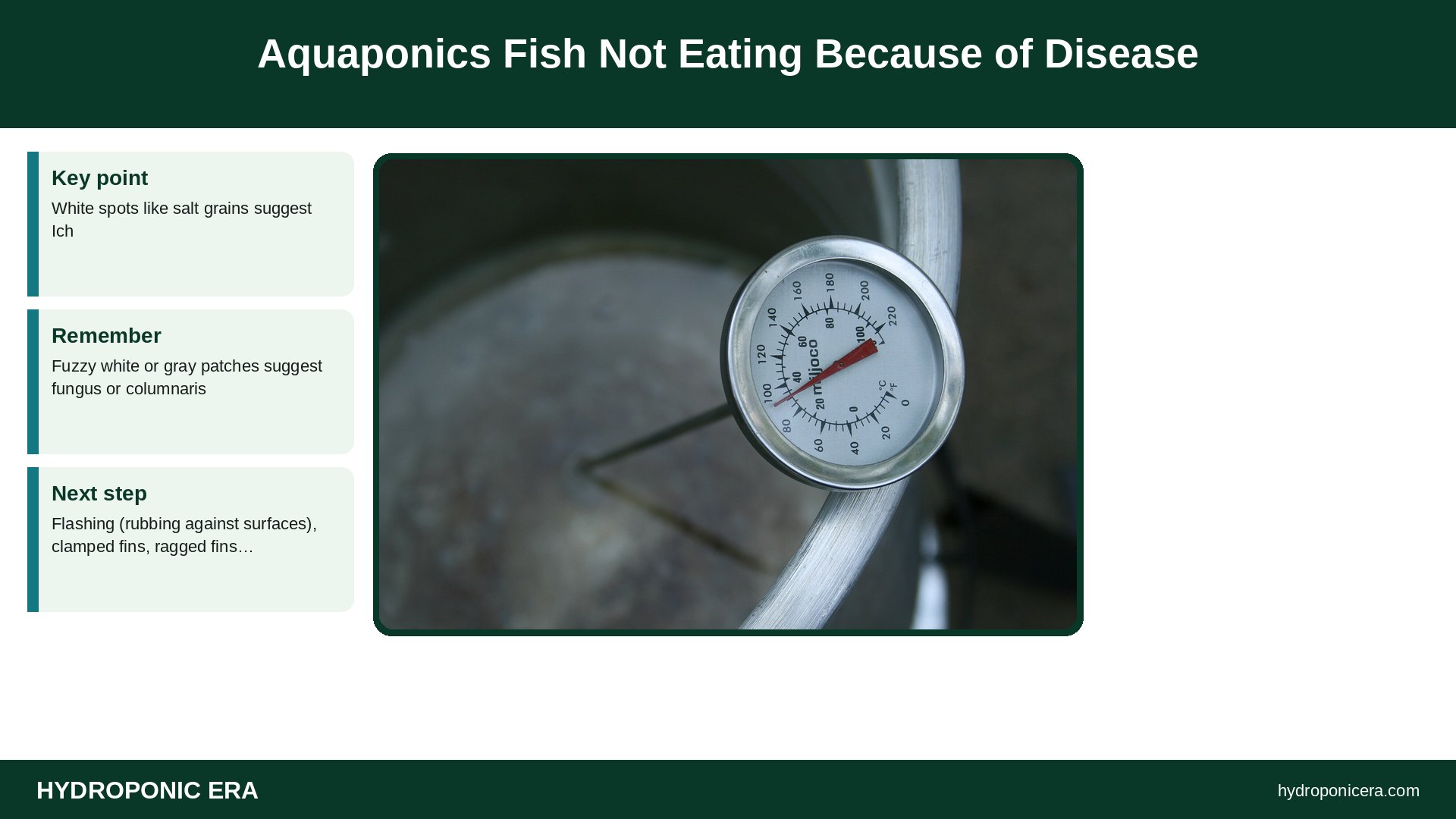
Look closely at the fish. White spots like salt grains suggest Ich. Fuzzy white or gray patches suggest fungus or columnaris. Flashing (rubbing against surfaces), clamped fins, ragged fins, cloudy eyes or swollen bellies all point to health problems. UF/IFAS stresses quarantine of new fish as the best prevention. Remove sick fish to a separate tank and get a diagnosis before treating, because many fish medications harm nitrifying bacteria and plants. See best fish for aquaponics.
Feed Problems
- Wrong pellet size: fingerlings can’t eat large pellets; big fish ignore tiny crumbles.
- Stale feed: feed loses vitamins and can go rancid. Store it cool and dry and use within about 3–6 months.
- Floating vs sinking: tilapia and catfish usually take floating feed; some fish prefer sinking.
- Sudden diet change: mix old and new feed for a week.
See aquaponics fish food.
Spawning Behavior
Tilapia and some other species stop eating while guarding nests or brooding eggs. Mouthbrooding female tilapia hold eggs and fry in their mouths and won’t eat for one to two weeks. This is normal and not a sign of illness. See tilapia aquaponics.
How to Restart Feeding
- Fix any water quality problem first.
- Offer a small pinch of fresh feed at the same time each day.
- Remove uneaten feed after 5–10 minutes.
- Increase slowly as fish start eating again.
- Try a treat such as duckweed or earthworms to tempt appetite. See duckweed fish food.
When to Get Help
If aquaponics fish not eating continues for more than a week with good water quality, or fish are dying, contact your state extension aquaculture specialist or a fish veterinarian. Many state labs can examine a sample fish and identify parasites or bacteria, so you treat the right problem.
How Long Can Fish Go Without Eating?
Healthy adult fish can go a week or more without food, especially in cool water, so a short fast won’t harm them. Fingerlings have less reserve and need food within a few days. Long refusals usually mean an ongoing problem that needs fixing.
Effects on Plants
When fish eat less, less ammonia enters the system, so plants receive fewer nutrients. Plants may show nitrogen shortage after a week or two. Don’t add extra feed to compensate; the uneaten feed rots and fouls the water. See aquaponics plants turning yellow.
Aquaponics Fish Not Eating After a Water Change
A large water change can shock fish if the new water is colder, warmer or different in pH from the system water, or if chlorine or chloramine wasn’t removed. If you see aquaponics fish not eating the day after a water change, test for chlorine, check the temperature, and compare pH with your source water. Next time, change no more than about 10–30% at once, match temperature within 2–3°F, and dechlorinate every time. See chlorine and chloramine.
Aquaponics Fish Not Eating in Summer
Heat can cut appetite too. When water climbs above the comfort range, oxygen falls and fish stop feeding to reduce their oxygen demand. Shade the tank, add aeration, feed early in the morning, and cut rations on the hottest days. If you keep cool-water fish such as trout, a chiller may be the only reliable fix. See reservoir chillers.
A Quick Diagnostic Routine
- Note the date, time and water temperature when fish stopped eating.
- Test ammonia, nitrite, nitrate, pH and, if possible, dissolved oxygen.
- Look at gills, skin, fins and eyes on a few fish.
- Think back over the last week: new fish, water changes, power cuts, new feed, chemicals nearby.
- Fix what you find, then retest in 24 hours.
Working through this list usually explains aquaponics fish not eating within a day, before the problem spreads to the plants.
FAQs
Why are my aquaponics fish not eating?
Most often cold water, poor water quality or stress.
Should I keep feeding if fish don’t eat?
No; offer small amounts and remove leftovers.
Do fish eat less in winter?
Yes, as water cools their metabolism slows.
Can new fish refuse food?
Yes, for a few days after transport.
Why did my tilapia stop eating?
Females may be brooding eggs; otherwise check temperature and water quality.
How long can fish go without food?
Adults about a week or more; fingerlings less.
Sources
- UF/IFAS Extension — Ammonia in Aquatic Systems
- UF/IFAS Extension — Ichthyophthirius multifiliis (White Spot) Infections in Fish
- New Mexico State University — Important Water Quality Parameters in Aquaponics Systems
- FAO — Small-scale aquaponic food production
- Photo credits (Wikimedia Commons, edited with titles): Feeding fish (51250565367) by USFWS Mountain Prairie (Public domain); Fish Feed Pellets by Narek75 (CC BY-SA 4.0); Oreochromis-niloticus-Nairobi by Bjørn Christian Tørrissen (CC BY-SA 3.0); 2008-09-20 Thermometer reading by Ildar Sagdejev (Specious) (CC BY-SA 4.0); Fish farming on Øksfjorden in Loppa, Troms og Finnmark, Norway, 2022 August by Ximonic (Simo Räsänen) (CC BY-SA 4.0)