
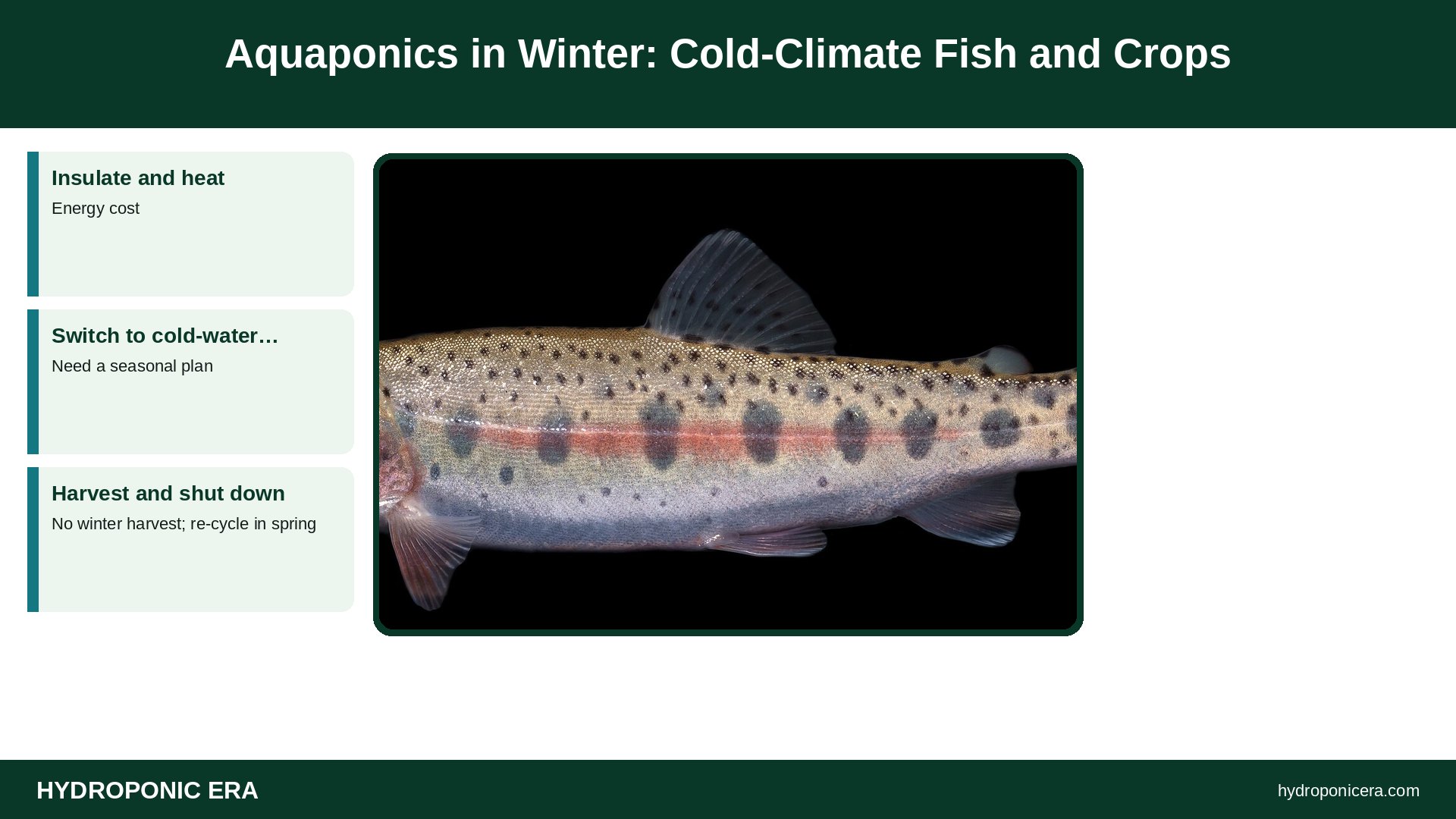
Aquaponics winter growing is possible in cold US climates if you either keep the water warm enough for your fish or switch to cold-tolerant fish and crops. FAO’s aquaponics manual lists three strategies: protect and heat the system (insulation, greenhouses, passive solar heating), switch to cold-water fish and winter vegetables when average temperatures stay below about 59°F (15°C) for more than three months, or harvest everything and shut down until spring. Nitrifying bacteria slow down below 63°F (17°C), so in winter you also need to feed less and watch ammonia and nitrite more closely.
Key takeaway: In cold climates, pick cold-hardy fish like trout or perch and winter greens, insulate, and reduce feed as water cools.
| Strategy (FAO) | Best for | Trade-off |
|---|---|---|
| Insulate and heat | Mild winters, greenhouses | Energy cost |
| Switch to cold-water fish and winter crops | Long cold winters | Need a seasonal plan |
| Harvest and shut down | Severe winters, outdoor systems | No winter harvest; re-cycle in spring |
How Cold Water Affects an Aquaponics System
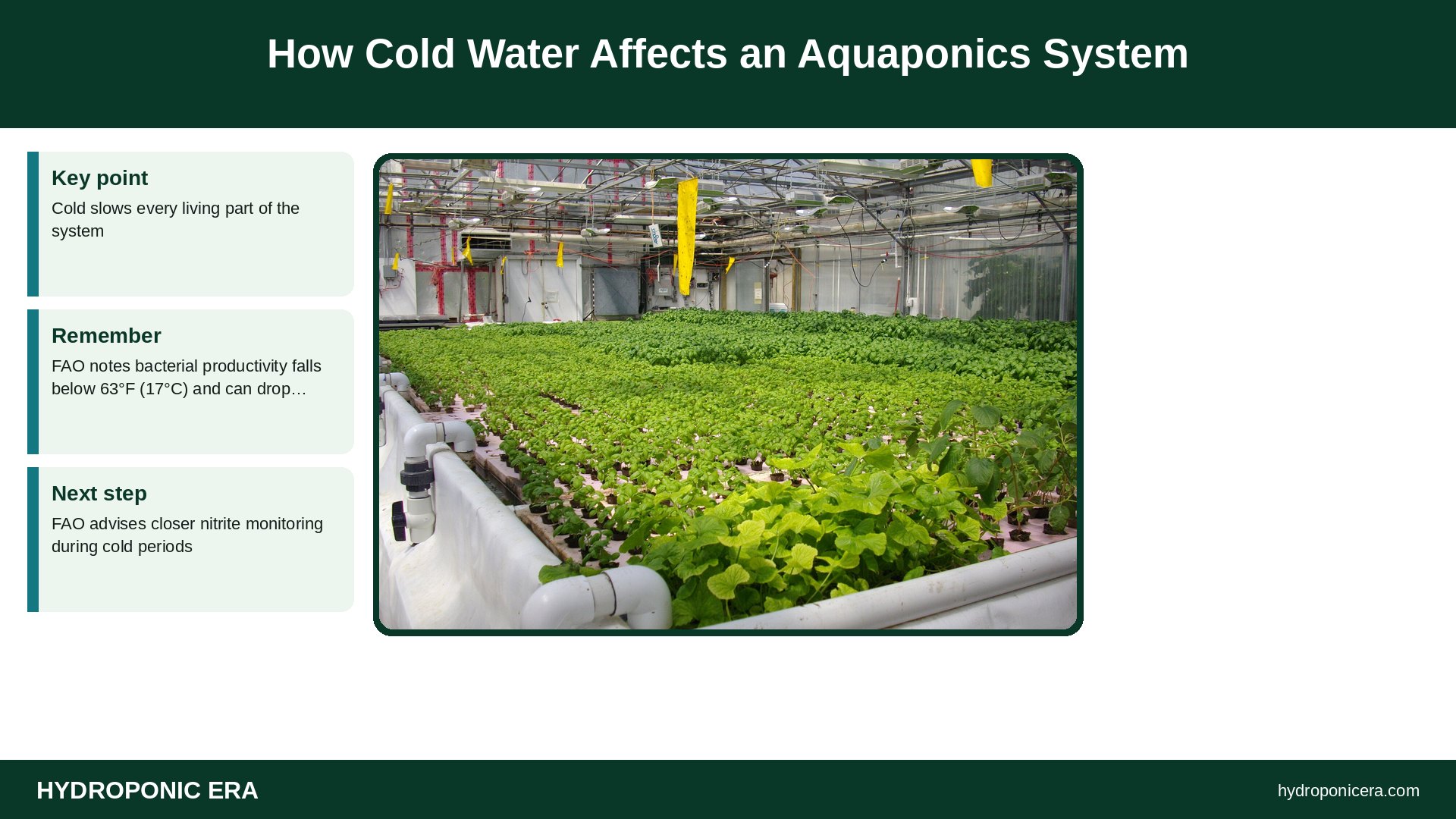
Cold slows every living part of the system. FAO notes bacterial productivity falls below 63°F (17°C) and can drop by half or more below 50°F (10°C), so ammonia and nitrite can build up. FAO advises closer nitrite monitoring during cold periods. Fish appetite falls too: tilapia stop eating and growing below 63°F (17°C). Plants grow more slowly, and summer crops stop altogether.
Aquaponics Winter Fish Choices
- Rainbow trout: a classic winter fish, with an optimal range of 57–61°F (14–16°C) per FAO. See trout aquaponics.
- Yellow perch: SRAC notes growth nearly stops below 50°F (10°C), but perch survive cold water. See yellow perch aquaponics.
- Bluegill: native cold-hardy sunfish. See bluegill aquaponics.
- Goldfish and koi: tolerate cold but eat little in winter. See goldfish aquaponics.
- Catfish: FAO lists a vital range down to about 41°F (5°C), though they grow slowly when cold.
Tilapia need heated water or should be harvested before winter. FAO describes switching to cold-adapted fish and plants in winter and back to warm-water species in spring.
Aquaponics Winter Crops
FAO says winter vegetables do best in water around 46–68°F (8–20°C), and leafy greens prefer 57–68°F (14–20°C). Good winter choices include:
- Lettuce
- Kale
- Swiss chard
- Spinach
- Bok choy and other Asian greens
- Parsley and cilantro
- Broccoli and cabbage
Short winter days also limit growth, so indoor or greenhouse systems may need grow lights.
Insulating Your System for Aquaponics Winter
FAO recommends insulating fish tanks during winter, and notes that air stones disperse significant heat, so covering and insulating the biofilter helps. Practical steps:
- Wrap tanks and sumps with foam board insulation.
- Cover tanks with lids.
- Bury or insulate pipes against freezing.
- Put the system in a garage, basement, or greenhouse.
- Use floating rafts, which FAO notes insulate the water surface.
Aquaponics Winter Heating Options
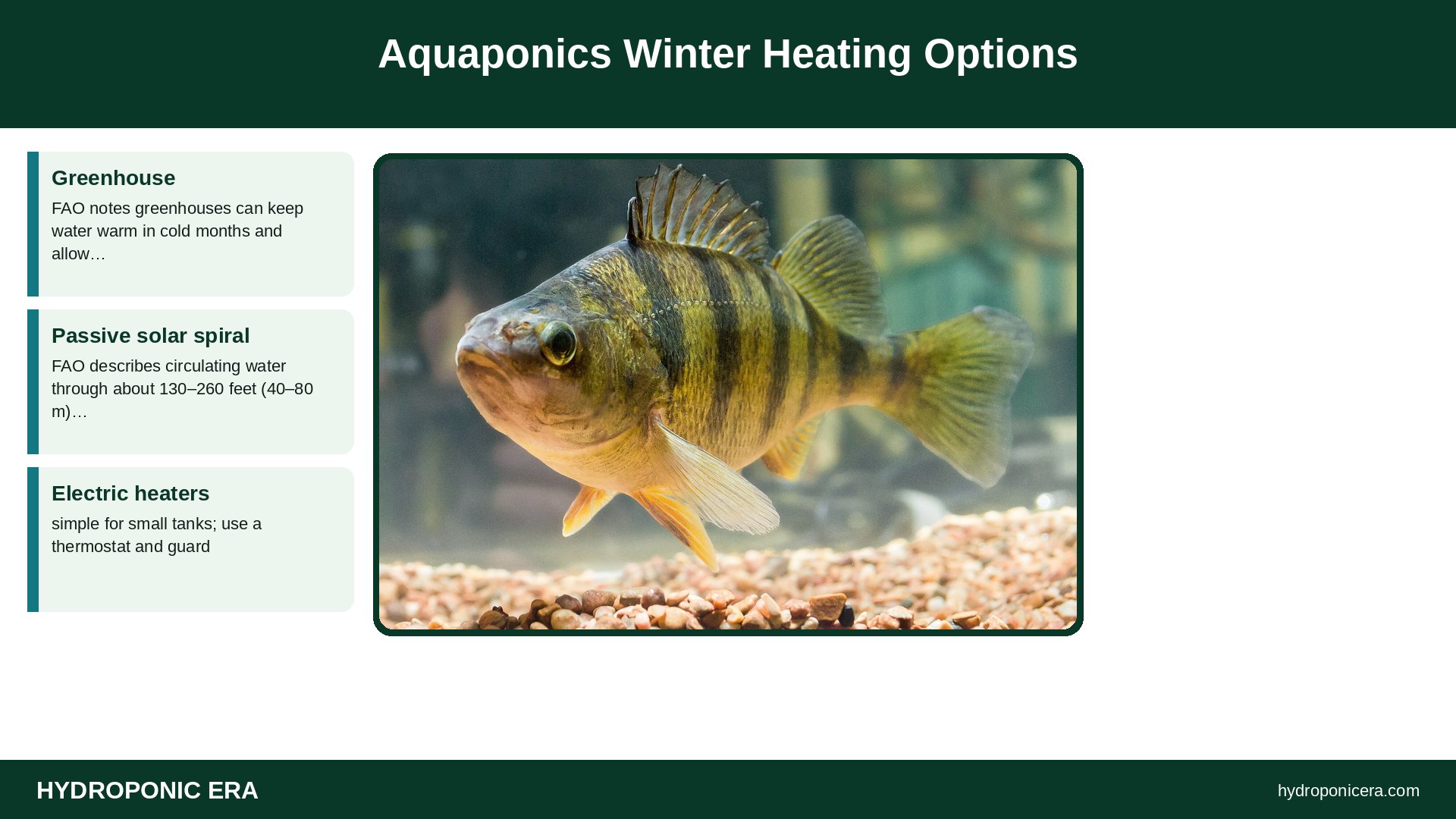
- Greenhouse: FAO notes greenhouses can keep water warm in cold months and allow year-round production. See greenhouse basics.
- Passive solar spiral: FAO describes circulating water through about 130–260 feet (40–80 m) of black 1-inch (25 mm) hose coiled in the sun.
- Electric heaters: simple for small tanks; use a thermostat and guard.
- Thermal mass: larger water volume changes temperature more slowly.
Winter Feeding and Water Quality
FAO’s troubleshooting advice for cold water: insulate tanks, use heaters if needed, and reduce both feed and the plant load. Feed only what fish eat, test ammonia and nitrite more often, and keep good aeration even though cold water holds more oxygen. See aquaponics water temperature.
Aquaponics Winter Shutdown
If heating isn’t practical, FAO says you can harvest fish and plants at the start of winter and shut the system down until spring. Drain and clean pumps and pipes so they don’t freeze and crack. When you restart, you’ll need to re-cycle the system. See aquaponics cycling.
Protect Against Freezing and Power Outages
In winter, a power failure can quickly chill water and freeze pipes. Have a backup air pump, keep spare insulation, and check the system daily. Never let pipes freeze while water is inside.
An Aquaponics Winter Plan Month by Month
- Early fall: decide whether to heat, switch species, or shut down. Order trout or perch if switching.
- Before first frost: harvest tilapia, insulate tanks, protect pipes, and plant winter greens.
- Midwinter: feed lightly, test ammonia and nitrite weekly, and watch for freezing.
- Late winter: start warm-season seedlings indoors.
- Spring: as water warms, restock warm-water fish and increase feed gradually.
Aquaponics Winter Costs
Heating is often the biggest aquaponics winter cost. Larger water volumes need more energy to warm, and every degree of difference from the outside air matters. Insulation and covers usually pay back fastest, followed by passive solar heating. If heating costs outweigh the value of your harvest, FAO’s shutdown option may be the better choice.
Aquaponics Winter Indoors
Moving a small system indoors for winter is often easier than heating it outside. Basements and garages stay warmer and more stable than the outdoors, though they still get cold in northern states. Indoor systems need grow lights during short days and good ventilation to control humidity. Keep the system on a waterproof base and plan for the weight of water.
Aquaponics Winter Pest Benefits
Winter isn’t all bad. Many garden pests are less active in cold months, and cool-season crops like kale and spinach often taste sweeter after cool nights. A well-run aquaponics winter garden can give clean greens when outdoor beds are frozen.
Insulating and Covering Tanks for Aquaponics Winter
FAO notes that in very hot or cold areas it may be necessary to thermally insulate fish tanks, and that all fish tanks should be covered. In winter, a lid or insulated cover cuts heat loss from the water surface, keeps out leaves and debris, and stops fish from jumping, which FAO says often happens when water quality is off. Wrap tank sides with rigid foam board and set tanks on foam rather than bare concrete. FAO also points out that water and stone media are heavy and hard to move, so if you plan to bring a system indoors for winter, design it in movable sections from the start.
FAQs: Aquaponics Winter
Can I do aquaponics in winter?
Yes, with insulation, heating, or cold-hardy fish and crops.
What fish are best for aquaponics winter?
Trout, perch, bluegill, goldfish, and koi.
What plants grow in winter aquaponics?
Lettuce, kale, chard, spinach, Asian greens, and herbs.
Should I feed less in winter?
Yes. Fish eat less, and bacteria work slower.
Can I shut down for winter?
Yes. FAO lists harvesting and shutting down as an option.
Sources
- FAO — Small-scale aquaponic food production
- SRAC — Species profile: yellow perch
- Photo credits (Wikimedia Commons, edited with titles): Rainbow Trout (Oncorhynchus mykiss) Gavins Point by USFWS Mountain Prairie (Public domain); CDC South Aquaponics Raft Tank 1 2010-07-17 by Bryghtknyght (CC BY 3.0); SantoriniGrapeVine06679 by User:Leonard G. (Public domain); D3149-1. yellow perch (Perca flavescens) by Robert Colletta (Public domain); Romaine lettuce by Rainer Zenz (CC BY-SA 3.0)