
Acclimating fish to an aquaponics system means slowly matching them to your water’s temperature and chemistry before release, so they avoid shock. The standard method is to float the sealed bag for 15–20 minutes to equalize temperature, then add a little system water to the bag every 5 minutes for 20–30 minutes until the volume roughly doubles, and finally net the fish into the tank without adding the shipping water. If pH or hardness differ a lot between the shipping water and your system, use a slower drip method over 45–90 minutes. Acclimate into a quarantine tank first, not straight into the main system.
Key takeaway: Temperature differences of more than about 3–5°F and pH jumps of more than about 0.5 units are the biggest acclimation risks. Go slowly when either is large.
| Method | Time | Best for |
|---|---|---|
| Float and mix | 35–50 minutes | Most fish when water is similar |
| Drip acclimation | 45–90 minutes | Large pH or hardness differences |
| Bucket method | 45–60 minutes | Large batches of fingerlings |
| Tank transfer | Same day | Moving fish between your own tanks with matched water |
Why Acclimating Fish Matters
Fish in shipping bags have been sitting in a small amount of water, often for hours. Temperature has drifted, carbon dioxide has built up, and pH has usually dropped. When the bag is opened, CO2 escapes and pH rises, which can turn any ammonia in the bag into its more toxic form. Dropping fish straight into a tank at a different temperature or pH stresses them at a time when they’re already weakened, and stressed fish are more likely to get sick. UF/IFAS notes that transport and handling can trigger disease outbreaks in new fish. See quarantine new fish.
Before the Fish Arrive
- Set up and cycle the quarantine tank.
- Test pH, temperature, ammonia and nitrite.
- Ask the supplier what pH and temperature they keep fish at.
- Dim the room lights; bright light stresses fish coming out of dark boxes.
- Have a clean net, bucket and thermometer ready.
Float and Mix Method
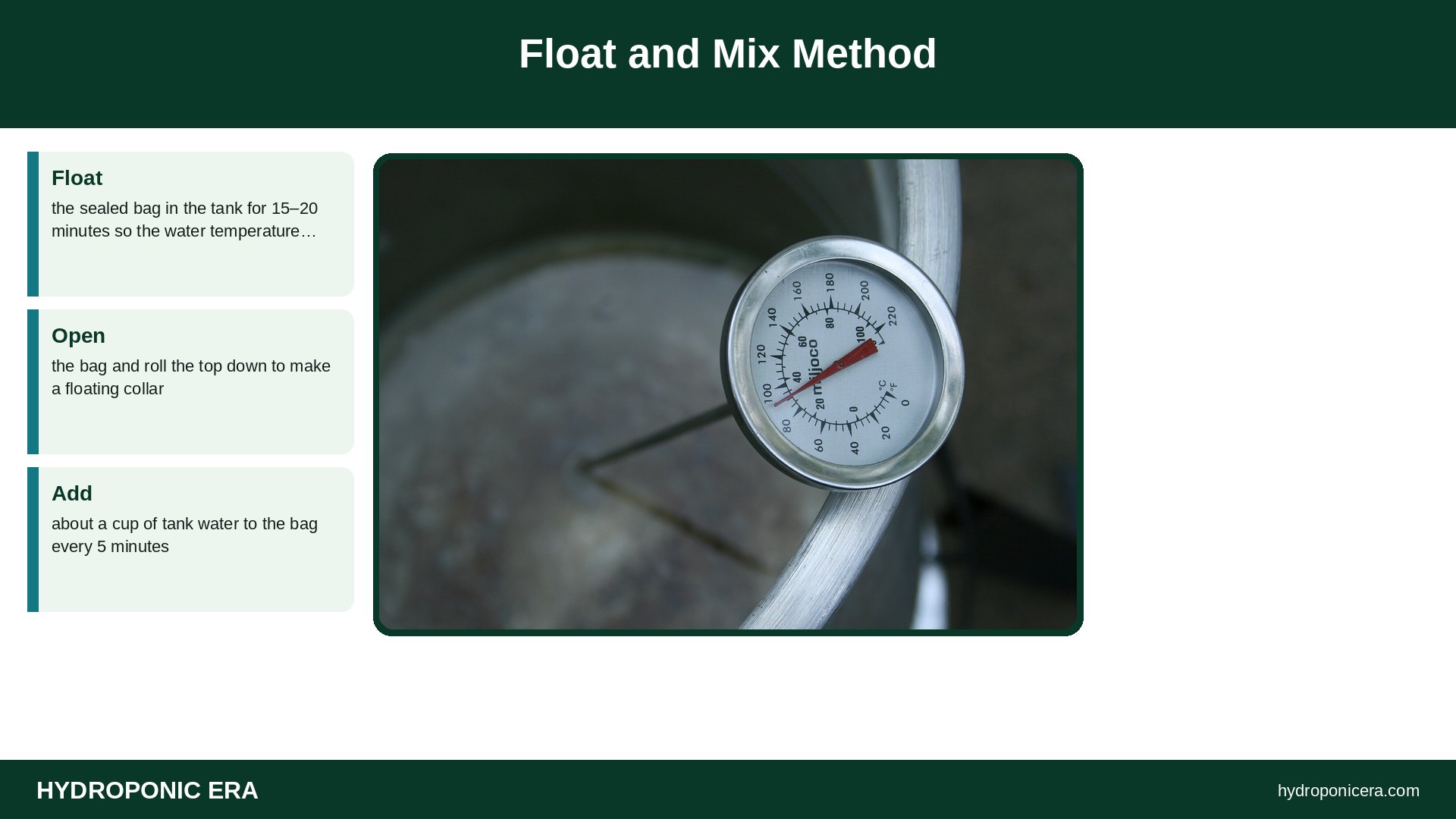
- Float the sealed bag in the tank for 15–20 minutes so the water temperature evens out.
- Open the bag and roll the top down to make a floating collar.
- Add about a cup of tank water to the bag every 5 minutes.
- Repeat for 20–30 minutes until the bag holds about twice its original volume.
- Net the fish out and release them. Discard the bag water.
Drip Method for Acclimating Fish
Place fish and their water in a clean bucket. Run airline tubing from the tank to the bucket with a loose knot or valve so it drips 2–4 drops per second. Over 45–90 minutes, let the bucket volume triple or quadruple. This gentle method suits fish coming from very different water, such as soft, acidic water into a hard, alkaline system. Add an air stone to the bucket for large batches.
Watch the pH
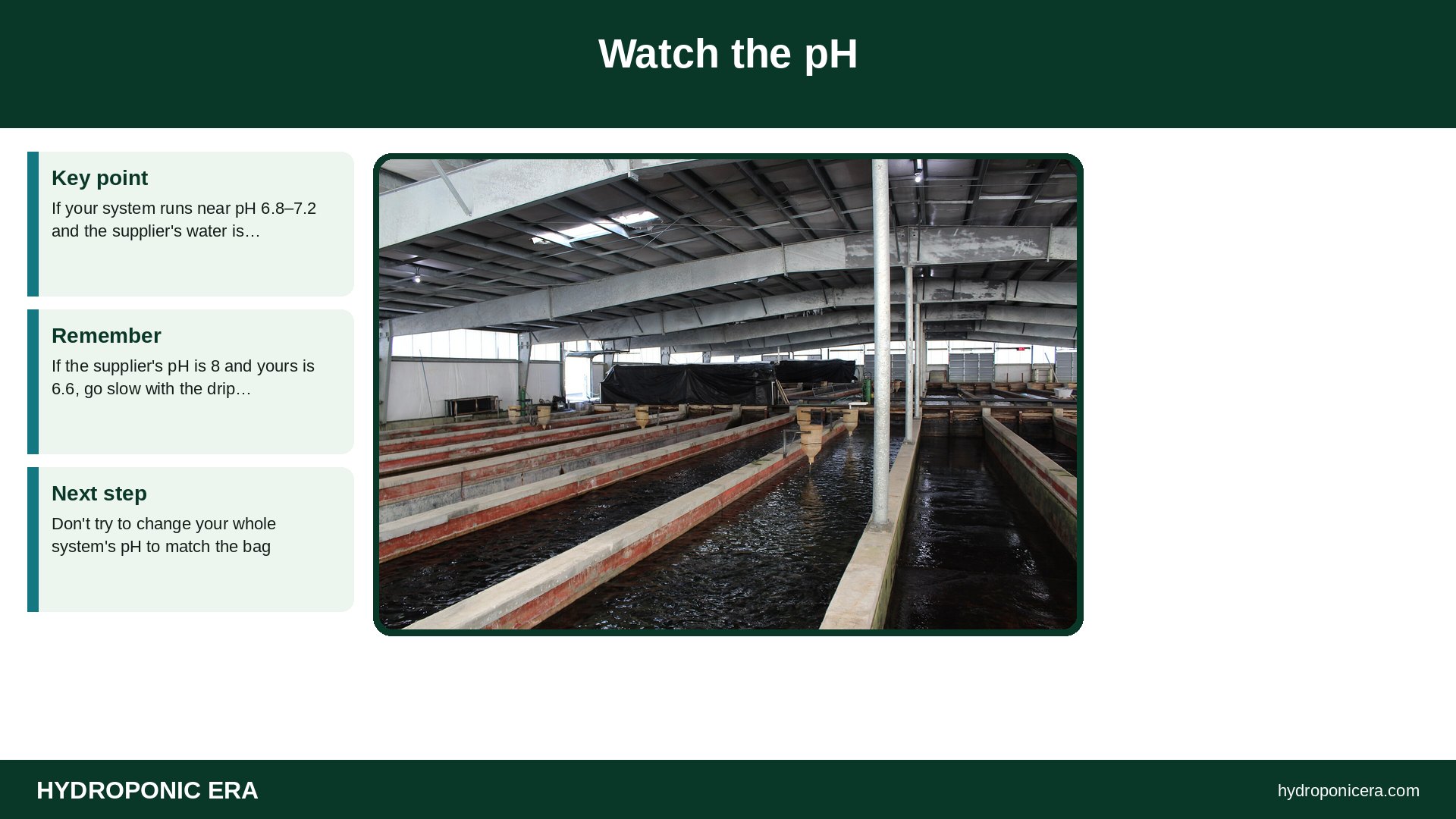
If your system runs near pH 6.8–7.2 and the supplier’s water is similar, acclimation is easy. If the supplier’s pH is 8 and yours is 6.6, go slow with the drip method. Don’t try to change your whole system’s pH to match the bag. See aquaponics pH.
Temperature Tips
Warm-water fish such as tilapia handle a few degrees of change, but a sudden 10°F drop can bring on Ich or other disease. In winter, shipping boxes can arrive cold; warm the bag slowly by floating it longer. In summer, don’t leave bags in a hot car or in the sun. See aquaponics water temperature.
Acclimating Fish in Large Batches

Fingerling shipments of 50 or more fish often come in large bags or coolers. Use the bucket method: pour fish and water into clean buckets with air stones, then slowly add system water over 45–60 minutes. Net fish into the tank in small groups. Count them as you go and note any dead or weak fish to report to the supplier. See stocking density.
After Release
- Leave lights low for the rest of the day.
- Don’t feed until the next day, then feed lightly.
- Watch for gasping, hiding, or flashing.
- Test water daily for the first week.
- Keep fish in quarantine for at least 30 days.
Moving Fish Into the Main System
When quarantine is over, acclimate again if water differs between the two tanks. If both run the same temperature and pH, a gentle net transfer is enough. Add fish in small groups so the biofilter has time to adjust to the extra ammonia. See aquaponics ammonia spike.
Record the Details
Write down the arrival time, bag temperature, bag pH if you test it, how long acclimating fish took, and how many were weak or dead. Suppliers often replace losses only if you report them within a day, and the notes help you improve the process next time.
Common Mistakes
- Pouring bag water into the tank, which can introduce pathogens and ammonia.
- Opening the bag in bright light.
- Rushing temperature matching.
- Releasing fish straight into the main system without quarantine.
- Feeding right after release.
Acclimating Fish by Species
Tilapia: hardy and tolerant of a wide pH range, but sensitive to cold. Make sure the system is above about 72°F before acclimating fish of this species. See tilapia aquaponics.
Trout: need cold, well-oxygenated water. Acclimate in a cool, shaded spot and keep the bag from warming. Don’t let the temperature rise above about 65°F during the process. See trout aquaponics.
Catfish and bluegill: tolerant and easy to acclimate with the float and mix method. See catfish aquaponics and bluegill aquaponics.
Goldfish and koi: hardy, but koi are valuable, so many keepers use the drip method and a longer quarantine. See goldfish aquaponics.
Acclimating Fish That Arrive Stressed
Fish that arrive gasping, on their sides, or with cloudy water in the bag need fast action. Ammonia in the bag can turn toxic as soon as the bag is opened and pH rises. In this case, skip the long float, match temperature as quickly as is safe, and move fish into clean, well-aerated quarantine water within about 10–15 minutes. Take photos of the bag and fish, and contact the supplier right away.
Acclimating Fish to Salt
If your quarantine tank has a low salt level, add it to the tank before fish arrive and acclimate fish to that water as usual. Don’t add salt directly to the bag. Salt at low levels can reduce handling stress, but sudden changes in salinity are a shock of their own.
FAQs
How long does acclimating fish take?
About 35–50 minutes with float and mix, longer with drip.
Should I add bag water to my tank?
No; net the fish and discard the bag water.
What if fish arrive cold?
Float the bag longer and warm slowly.
Is drip acclimation necessary?
Only when pH or hardness differ a lot.
When can I feed new fish?
Lightly, the day after release.
Do I need to acclimate between my own tanks?
Only if temperature or pH differ.
Sources
- UF/IFAS Extension — Ichthyophthirius multifiliis (White Spot) Infections in Fish
- Texas A&M AgriLife Extension — Bath Treatment for Sick Fish
- UF/IFAS Extension — Ammonia in Aquatic Systems
- Photo credits (Wikimedia Commons, edited with titles): Oweston sting fish for sale at Tsukiji Fishmarket, Tokyo-30 by MichaelMaggs (CC BY-SA 3.0); Fish farming on Øksfjorden in Loppa, Troms og Finnmark, Norway, 2022 August by Ximonic (Simo Räsänen) (CC BY-SA 4.0); 2008-09-20 Thermometer reading by Ildar Sagdejev (Specious) (CC BY-SA 4.0); Raceways at Ennis National Fish Hatchery (51267218370) by USFWS Mountain Prairie (Public domain); Oreochromis-niloticus-Nairobi by Bjørn Christian Tørrissen (CC BY-SA 3.0)