water level — Hydroponic Water Level Indicators: Types and DIY

A hydroponic water level indicator shows how much nutrient solution is left in your reservoir without lifting the lid. The common types are a float gauge (a stick on a float that rises and falls), a clear sight tube on the side of the tank, electronic float switches or sensors that trigger alarms, and smart sensors that send alerts to your phone. A cheap DIY water level indicator can be built from a fishing bobber, a wooden dowel, and a straw, or from clear vinyl tubing on a bulkhead fitting.
aerogarden replacement — AeroGarden Replacement Pods, Lights and Pumps

For AeroGarden replacement parts, start with the brand itself: AeroGarden is part of ScottsMiracle-Gro, and the company says its gardens, seed pods, and accessories are stocked and supported. The parts that most often need replacing are pumps, LED light hoods, power adapters, grow decks, and seed pods. AeroGarden says LED hoods don’t need replacing until individual diodes fail, and that diodes have a 2–4 year lifespan. Before ordering, find your exact model name, run the built-in pump test, and match connectors, because parts differ between Harvest, Bounty, and older models.

hydroponic vs soil taste — Does Hydroponic Food Taste Different From Soil-Grown?

On hydroponic vs soil taste , the research doesn’t show a clear winner: variety, ripeness, harvest timing, and growing conditions usually matter more than whether roots sit in soil or water. A 2011 sensory pilot study published in Food and Nutrition Sciences found no overall differences in taste, odor, visual quality, or texture between hydroponic lettuce and conventionally or organically field-grown lettuce. For tomatoes, a Journal of the Science of Food and Agriculture study found harvest date and maturity had larger effects on quality than growing in soil versus rockwool. Grow a flavorful variety, pick it ripe, and don’t overfeed.

3d printed hydroponics — 3D Printed Hydroponics: Towers, Pots and Parts

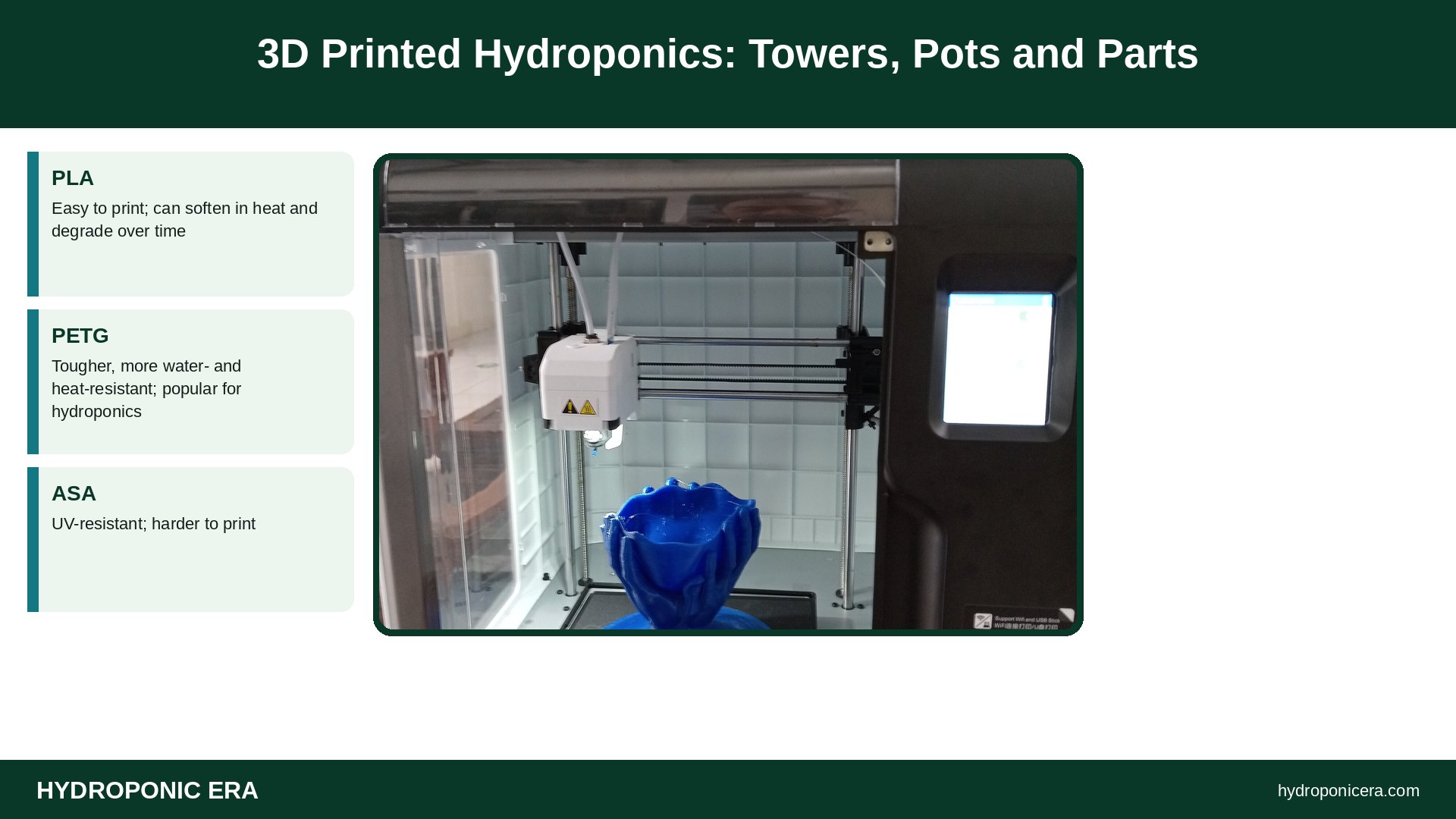
3D printed hydroponics lets you make custom net cups, tower sections, NFT end caps, seed-starter trays, and brackets at home, usually in PETG, which handles water and light better than PLA. The key concern is that the parts touch water used to grow food. Oklahoma State University’s Food and Agricultural Products Center and printer maker Prusa both warn that layer lines and gaps in FDM prints can harbor bacteria and that filament isn’t automatically food safe. Choose food-contact-rated filament where possible, print with smooth surfaces, use opaque colors, and clean and replace parts regularly.

watts per square foot — LED Grow Light Watts per Square Foot (and Why PPFD Matters More)

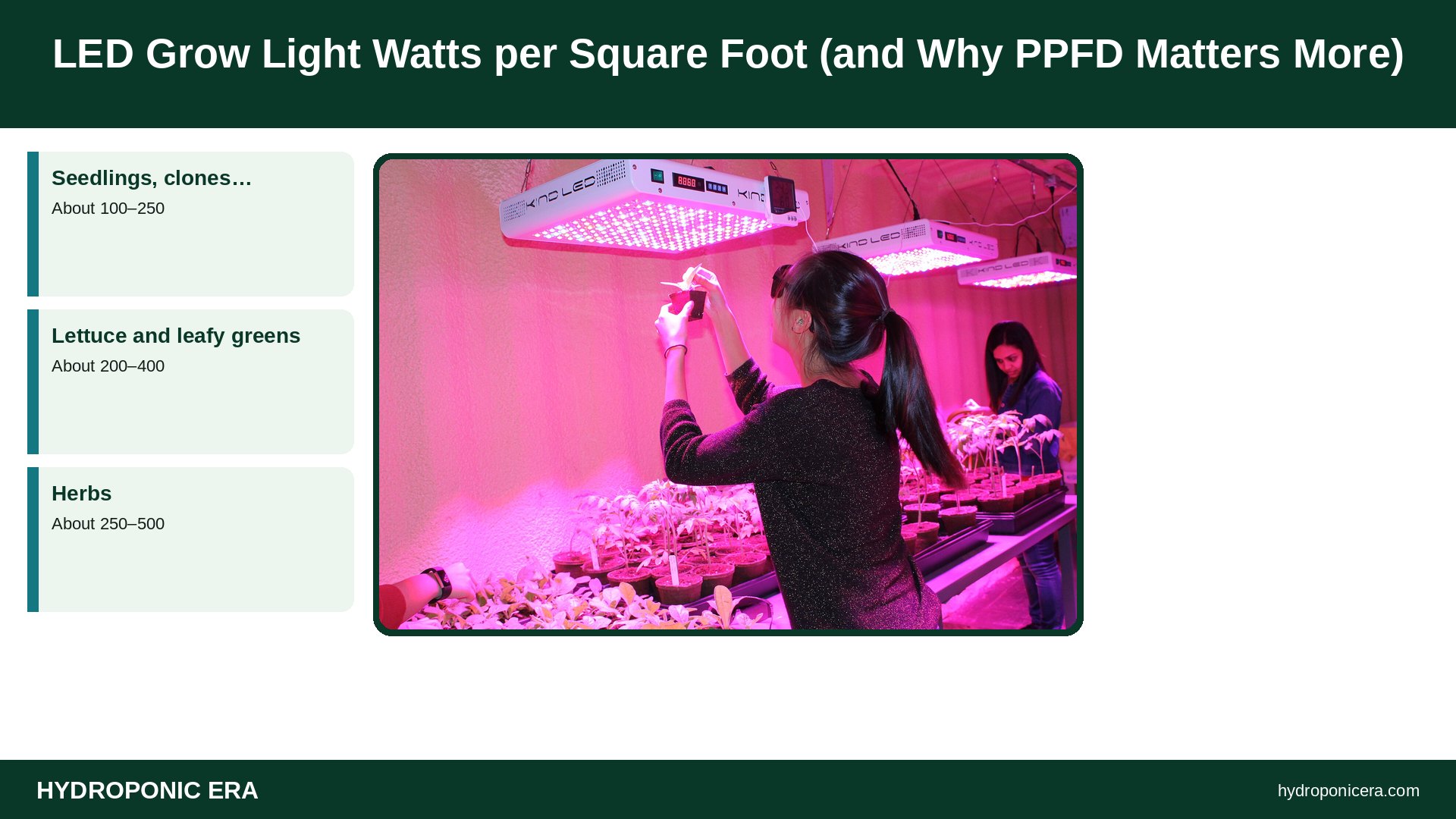
A common rule of thumb for LED grow lights is roughly 20–40 actual watts per square foot for leafy greens and seedlings, and about 30–50 or more watts per square foot for fruiting crops. But watts measure electricity, not light. Two fixtures with the same wattage can deliver very different light levels, so PPFD (photosynthetic photon flux density, in µmol/m²/s) and DLI (daily light integral) are the numbers that actually predict growth. Use watts per square foot as a rough first filter, then confirm with PPFD.

led grow lights — T5 vs LED Grow Lights for Hydroponics

For most hydroponic growers, LED grow lights now beat T5 fluorescents: LEDs produce more usable light per watt, last longer, run cooler at the canopy, and come in full-spectrum fixtures that cover seedlings through fruiting. In the T5 vs LED question, T5 tubes still make sense for cheap seedling shelves, clones, and microgreens, especially if you already own fixtures. For anything bigger or longer-running, a quality LED usually saves money over time.

cheap hydroponic system — How to Build a Cheap Hydroponic System

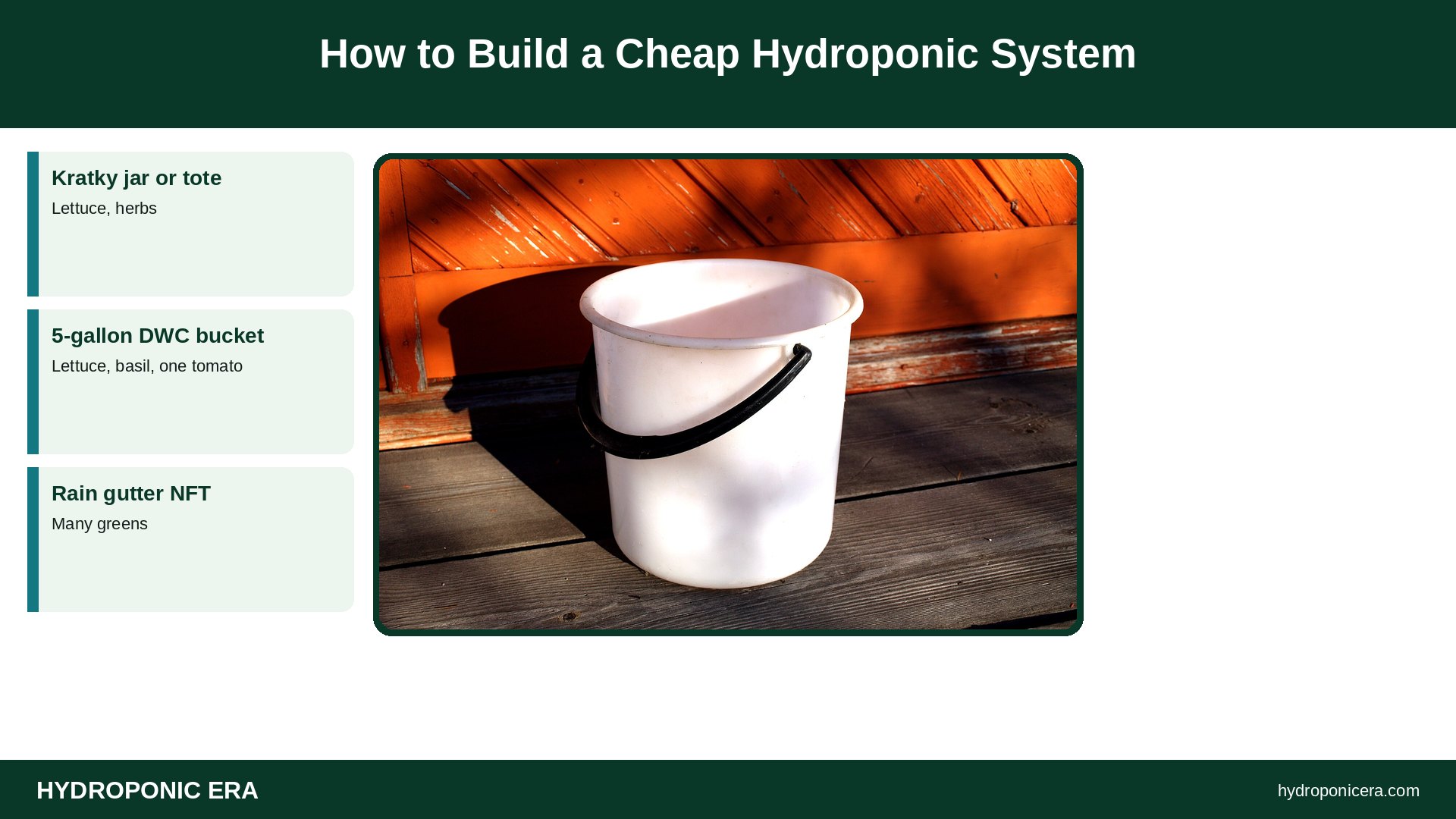
The cheap hydroponic system that works best for beginners is a Kratky setup: an opaque bucket or tote, a lid with holes for net cups, nutrient solution, and seedlings. It needs no pump or electricity and can cost under about $20 if you reuse containers. The next step up is a single 5-gallon bucket deep water culture (DWC) system with an aquarium air pump and air stone. Either can grow lettuce, herbs, and greens well. The parts you shouldn’t skimp on are a decent hydroponic nutrient, a pH test, and an opaque, food-safe container.

hot climates — Hydroponics in Hot Climates: Keeping Roots Cool

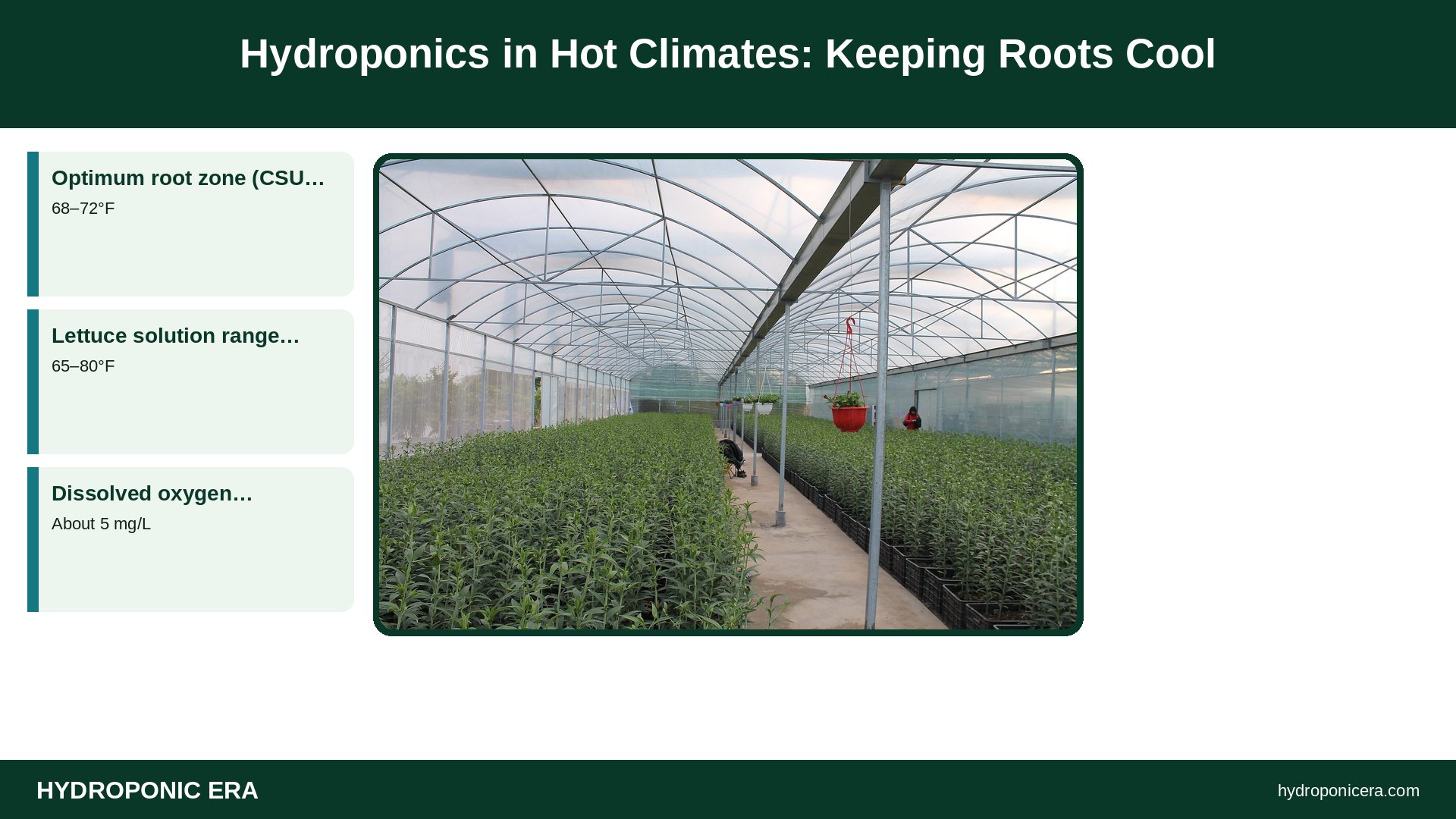
Hydroponics in hot climates succeeds when you keep the root zone cool and oxygenated, because warm nutrient solution holds less dissolved oxygen and favors root rot. Colorado State’s PlantTalk calls 68–72°F the optimum root zone temperature, and UF/IFAS Extension suggests keeping lettuce solutions between 65 and 80°F with dissolved oxygen around 5 mg/liter. In hot US regions like Texas, Arizona, and Florida, that means shading and insulating reservoirs, burying or enlarging them, aerating heavily, choosing heat-tolerant crops in summer, and saving lettuce for cooler months.

outdoor hydroponics — Outdoor Hydroponics: Can You Grow Hydroponics Outside?

Yes, outdoor hydroponics works well, especially for lettuce, herbs, tomatoes, peppers, and strawberries, as long as you manage the factors indoor growers don’t face: heat, rain, wind, pests, and sun on the reservoir. Free sunlight is the biggest advantage. The biggest risk is warm nutrient solution, which holds less oxygen and favors root rot. Colorado State’s PlantTalk says a root zone of about 68–72°F is optimum, and UF/IFAS Extension suggests keeping lettuce solutions between 65 and 80°F. Shade and insulate the reservoir, use light-colored containers, and grow in spring and fall in hot regions.

hydroponic wall garden — Hydroponic Wall Garden: Indoor Living Wall Systems

A hydroponic wall garden is a vertical growing system mounted on a wall, where nutrient solution is pumped to the top and drips or trickles down through pockets, channels, or panels before draining back to a reservoir. Indoors, it can grow herbs, lettuce, and trailing houseplants in a few inches of floor space. The big design questions are weight, waterproofing, lighting, and access: a wall garden holds water next to drywall, so you need a sealed backing, a catch tray, and a reliable pump. For edible greens, keep the solution in the ranges UF/IFAS Extension gives for small lettuce systems, about 65–80°F and EC 1.2–1.8 mS/cm.