
Yes, outdoor hydroponics works well, especially for lettuce, herbs, tomatoes, peppers, and strawberries, as long as you manage the factors indoor growers don’t face: heat, rain, wind, pests, and sun on the reservoir. Free sunlight is the biggest advantage. The biggest risk is warm nutrient solution, which holds less oxygen and favors root rot. Colorado State’s PlantTalk says a root zone of about 68–72°F is optimum, and UF/IFAS Extension suggests keeping lettuce solutions between 65 and 80°F. Shade and insulate the reservoir, use light-colored containers, and grow in spring and fall in hot regions.
Key takeaway: Outdoor hydroponics works if you shade the reservoir, protect from rain dilution, manage pests, and match crops to the season.
| Outdoor factor | Problem | Fix |
|---|---|---|
| Heat | Warm water, low oxygen, root rot | Shade, insulate, bury reservoir, aerate |
| Rain | Dilutes nutrients, can overflow | Lids, covers, overflow outlet |
| Sun on containers | Algae and heat | Opaque, light-colored containers |
| Wind | Tips towers, dries plants | Anchor systems, windbreaks |
| Pests | Aphids, caterpillars, birds | Netting, scouting, row covers |
| Cold | Slows growth, freezes pipes | Season extension or shutdown |
Benefits of Outdoor Hydroponics

- Free, intense sunlight; no grow light costs.
- Natural airflow and pollinators for fruiting crops.
- Uses patios, balconies, and rooftops with no soil. See balcony hydroponics.
- Less water than soil gardening, since water recirculates.
Best Outdoor Hydroponics Systems
- Kratky buckets and totes: no pump, simple. See Kratky method.
- Dutch buckets: great for tomatoes, peppers, and cucumbers. See DWC vs NFT vs Dutch bucket.
- Deep water culture: good for greens if water stays cool.
- Towers and gutters: space-efficient, but heat up faster. See rain gutter hydroponics.
Keeping Outdoor Hydroponics Water Cool
Warm water is the top outdoor problem. Steps that help:
- Shade the reservoir and keep it out of afternoon sun.
- Use white or light-colored containers, or wrap them in reflective insulation.
- Bury or partly sink the reservoir in the ground.
- Use a larger reservoir; bigger volumes warm more slowly.
- Add aeration to keep oxygen up.
Colorado State notes low oxygen favors root disease and recommends proper aeration. See Pythium root rot and reservoir chillers.
Rain and Outdoor Hydroponics
Rain dilutes nutrients, shifts pH, and can overflow open systems. Keep reservoirs covered, use net-cup lids, and add an overflow outlet so heavy rain doesn’t flood roots. After storms, check EC and pH and adjust. See EC and TDS.
Pests in Outdoor Hydroponics
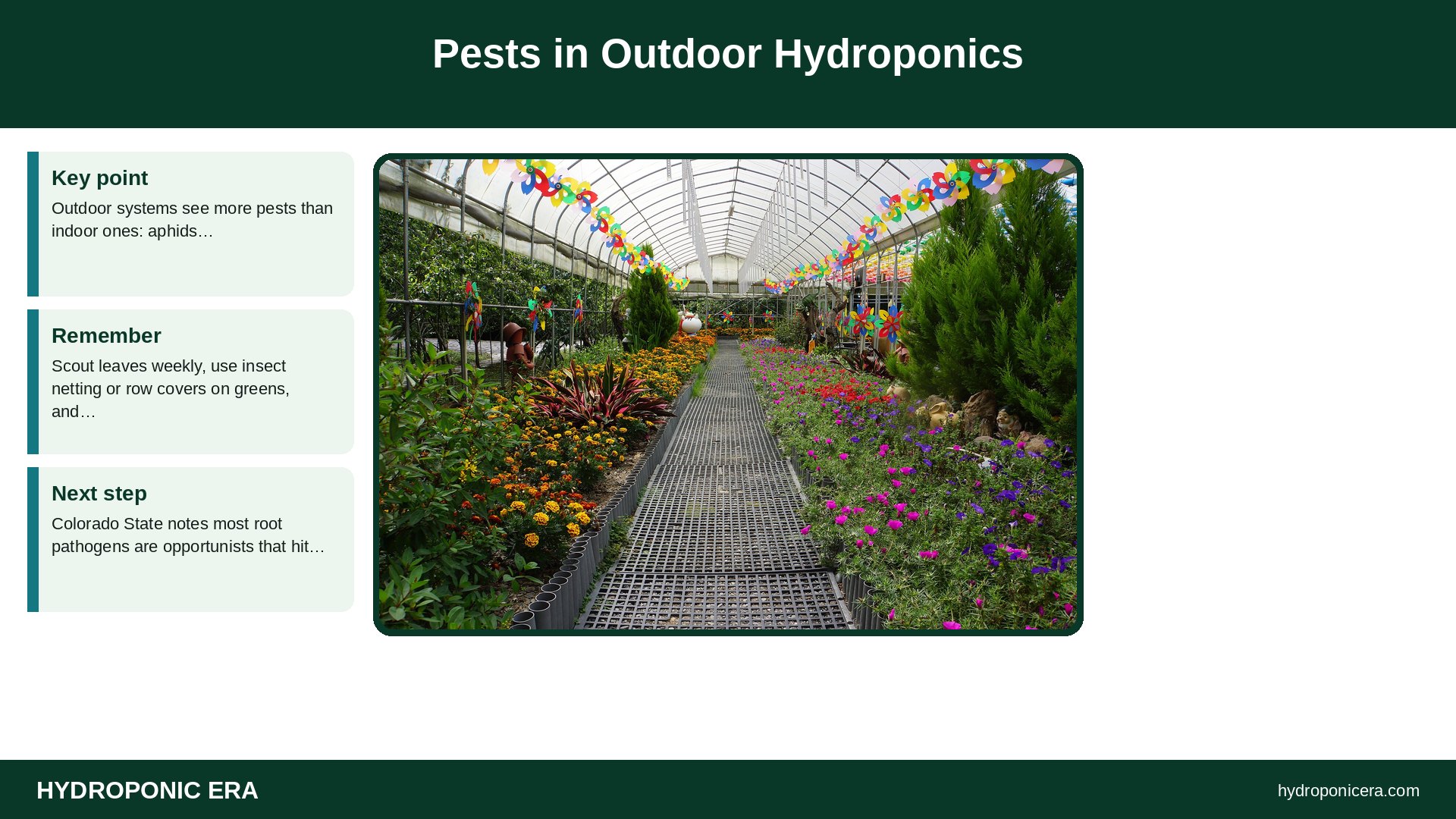
Outdoor systems see more pests than indoor ones: aphids, caterpillars, whiteflies, and birds. Scout leaves weekly, use insect netting or row covers on greens, and handpick caterpillars. Colorado State notes most root pathogens are opportunists that hit stressed plants, so healthy growth is the best defense.
Outdoor Hydroponics by Season
- Spring and fall: lettuce, kale, chard, cilantro, and peas.
- Summer: tomatoes, peppers, cucumbers, basil, and melons, with shaded reservoirs.
- Winter: mild climates can grow greens; cold regions should move indoors or shut down.
The University of Kentucky notes lettuce air temperatures shouldn’t exceed about 75°F by day, so in the South, leafy greens are best grown in cooler months. See heat and cold stress.
Outdoor Hydroponics Safety
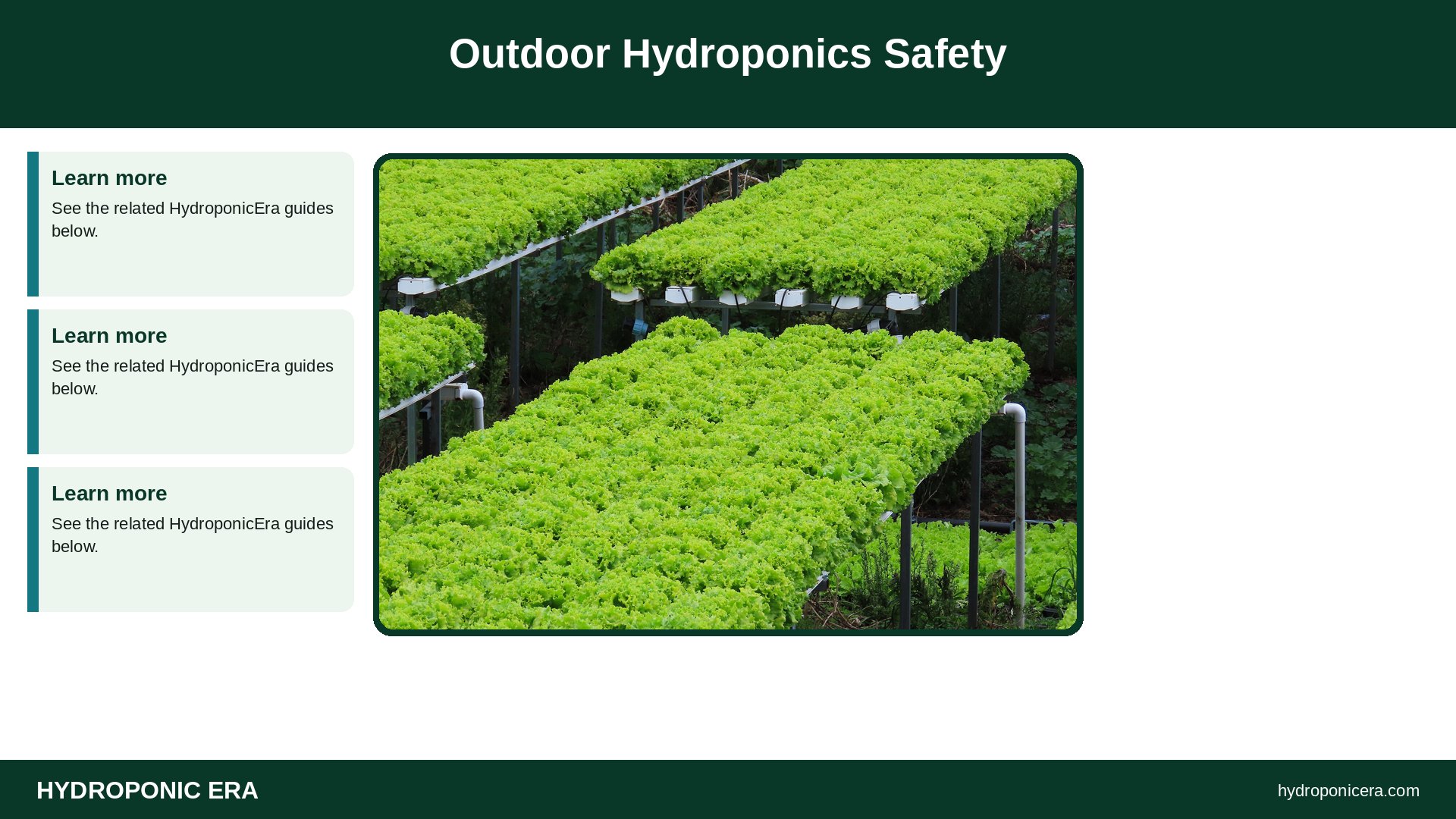
- Use outdoor-rated, GFCI-protected outlets and cords.
- Anchor tall systems against wind.
- Keep nutrient concentrates and acids locked away from kids and pets.
- Cover open water to prevent mosquito breeding.
Planning Tips: Outdoor Hydroponics
Outdoor hydroponics faces things an indoor grow room doesn’t: rain diluting the reservoir, sun heating the water, wind, and pests. Cover the reservoir and keep it shaded, use opaque tubing, and check EC after heavy rain. In hot weather, a larger reservoir and shade cloth help keep roots cool.
Plan for the end of the season too. Drain and clean pumps and lines before a frost, because standing water can freeze and crack them.
Weekly Routine for Outdoor Hydroponics
- Check pH and EC, and record them.
- Top off the reservoir with plain, pH-adjusted water.
- Look at roots for color and smell.
- Check leaves, especially undersides, for pests.
- Clean filters, emitters, and pump intakes.
- Change the nutrient fully every two to three weeks, or sooner if EC drifts.
Beginner Mistakes With Outdoor Hydroponics
The most common mistakes are skipping pH testing, using nutrient that’s too strong, letting light reach the water, and ignoring water temperature. Each one is easy to fix once you know to check for it. Start with fewer plants than you think you need, learn the routine, and expand once the system runs smoothly.
Best Systems for Outdoor Hydroponics
Dutch buckets, media beds, and vertical towers all work well for outdoor hydroponics. Dutch buckets suit tomatoes, peppers, and cucumbers; towers and NFT suit lettuce and herbs. Kratky containers need no power, making them simple for a patio. Avoid shallow systems that heat up fast in direct sun. See DWC vs NFT vs Dutch bucket.
Pests in Outdoor Hydroponics
Outdoor plants face aphids, caterpillars, and beetles. Check plants often, use row cover or insect netting, and remove pests by hand when you can. Avoid sprays that can contaminate the reservoir.
Power and Safety Outdoors
Use outdoor-rated extension cords and a GFCI outlet for pumps, and keep electrical connections off the ground and away from splashes. A battery or solar backup is useful where power cuts are common.
Seasonal Outdoor Hydroponics Calendar
In spring, start cool-season greens once nights stay above freezing, and start warm crops indoors. In summer, switch to tomatoes, peppers, cucumbers, and basil, and shade reservoirs. In fall, return to lettuce, kale, and other greens as heat drops. Before hard frost, drain and store equipment, or move a small system indoors. In mild southern states, outdoor hydroponics can run most of the year with crop changes by season.
FAQs: Outdoor Hydroponics
Can you do hydroponics outside?
Yes, with shaded reservoirs and protection from rain and pests.
What is the best outdoor hydroponics system?
Kratky and Dutch buckets are simple and reliable outdoors.
How do I keep the water cool?
Shade, insulate, bury, or enlarge the reservoir, and aerate.
Does rain hurt hydroponics?
It can dilute nutrients and overflow systems; cover reservoirs.
Can I grow tomatoes outdoors hydroponically?
Yes, Dutch buckets work well in summer.
Can I use rainwater for outdoor hydroponics?
Yes, rainwater is low in dissolved salts, but check pH and keep it covered.
Sources
- Colorado State University PlantTalk — Root Disease Problems and Management
- UF/IFAS Extension — Growing Lettuce in Small Hydroponic Systems
- University of Kentucky — Hydroponic Lettuce Production
- Photo credits (Wikimedia Commons, edited with titles): Somers Middle School Planting Native Garden (8952728708) by Forest Service Northern Region from Missoula, MT, USA (Public domain); Net house by vi:User:Goodmorninghpvn (CC BY-SA 3.0); Drip irrigation (2552390830) by Dwight Sipler from Stow, MA, USA (CC BY 2.0); Greenhouse in Qingjing Small Swiss Garden 清境小瑞士花園溫室 – panoramio by lienyuan lee (CC BY 3.0); Hydroponic lettuce @ Plaine des Cafres 03 by Rémih (CC BY-SA 4.0)