
On hydroponic vs soil taste, the research doesn’t show a clear winner: variety, ripeness, harvest timing, and growing conditions usually matter more than whether roots sit in soil or water. A 2011 sensory pilot study published in Food and Nutrition Sciences found no overall differences in taste, odor, visual quality, or texture between hydroponic lettuce and conventionally or organically field-grown lettuce. For tomatoes, a Journal of the Science of Food and Agriculture study found harvest date and maturity had larger effects on quality than growing in soil versus rockwool. Grow a flavorful variety, pick it ripe, and don’t overfeed.
Key takeaway: Hydroponic produce can taste as good as soil-grown. Variety, ripeness, light, and nutrient strength drive flavor more than the growing medium.
| Factor | Effect on taste |
|---|---|
| Variety | Very large; flavor is largely genetic |
| Ripeness at harvest | Very large, especially for fruit |
| Light | More light usually means more sugars and aroma |
| Nutrient strength (EC) | Higher EC can concentrate flavor; too high reduces yield |
| Soil vs hydroponics | Small or inconsistent in studies |

What Studies Say About Hydroponic vs Soil Taste

In the 2011 lettuce pilot study (Murphy and colleagues, Food and Nutrition Sciences), a panel compared hydroponic, conventional, and organic lettuces and found no overall differences in taste, odor, visual quality, or texture, with one odor difference noted for one variety. For tomatoes, the JSFA study comparing soil and rockwool found that harvest date, maturity, variety, and EC had stronger effects on sensory quality than growth medium. A 2021 study in Frontiers in Plant Science found cultivation approach affected tomato fruit microbes and some flavor chemistry, while cultivar remained important.
Hydroponic vs Soil Taste: Why Some Hydroponic Produce Tastes Bland
The bland supermarket tomato isn’t caused by hydroponics. Commercial fruit is often bred for shipping and shelf life, picked before full ripeness, and stored cold, all of which cut flavor whether grown in soil or not. Home hydroponic growers can pick fully ripe, which makes a big difference. See tomatoes not turning red.
How to Improve Hydroponic vs Soil Taste Results
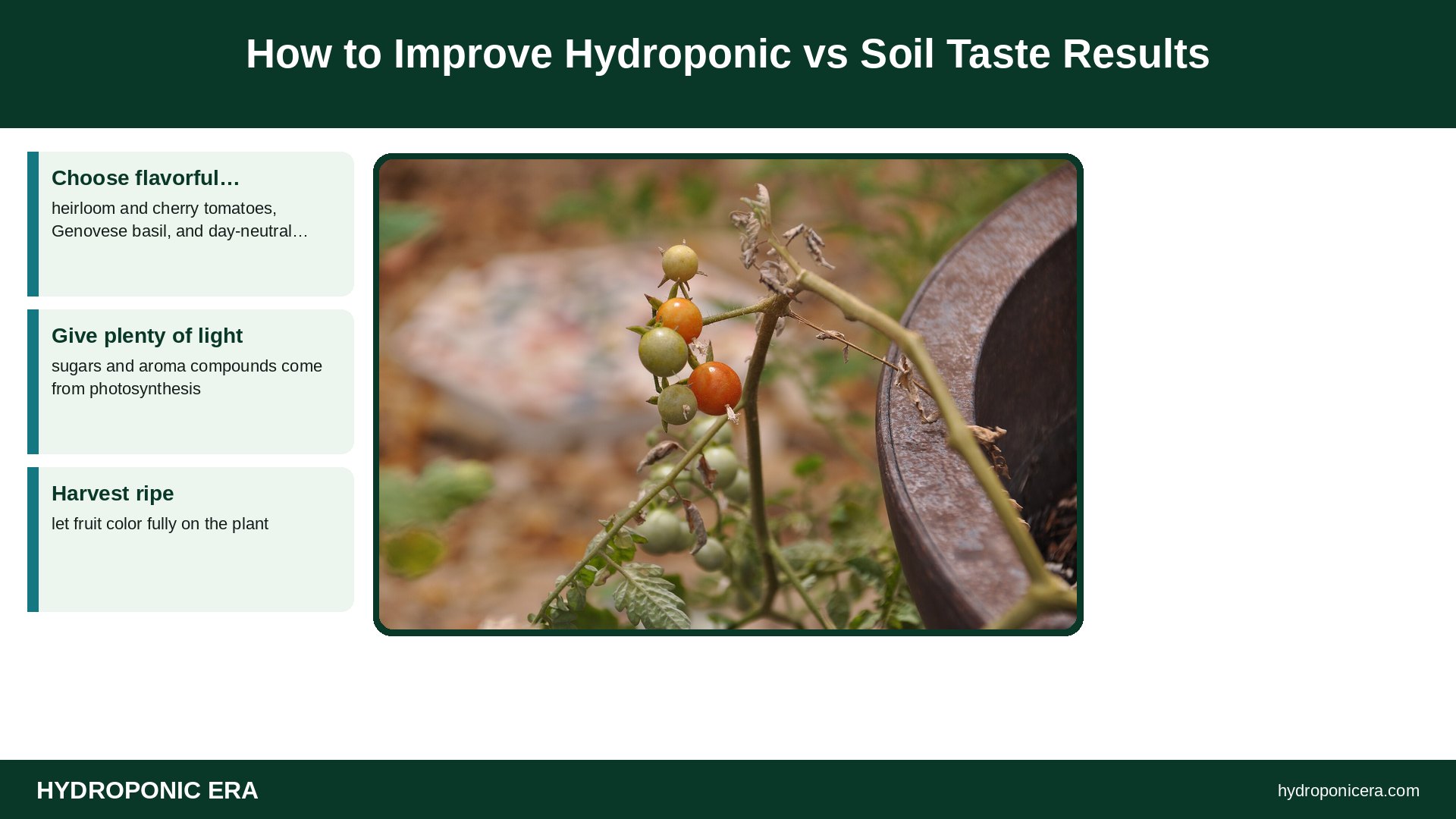
- Choose flavorful varieties: heirloom and cherry tomatoes, Genovese basil, and day-neutral strawberries bred for taste.
- Give plenty of light: sugars and aroma compounds come from photosynthesis.
- Harvest ripe: let fruit color fully on the plant.
- Don’t overfeed: very high nitrogen gives soft, watery growth.
- Use moderate EC for fruit: slightly higher EC can concentrate flavor in tomatoes.
Hydroponic vs Soil Taste: EC and Flavor
Raising nutrient strength (EC) tends to concentrate sugars and acids in tomatoes but can reduce fruit size and yield. The JSFA study included EC as one of the factors affecting quality. For home growers, running tomatoes in the middle-to-upper part of their EC range during fruiting is a reasonable compromise. See hydroponic nutrients for tomatoes.
Hydroponic vs Soil Taste: Herbs and Greens
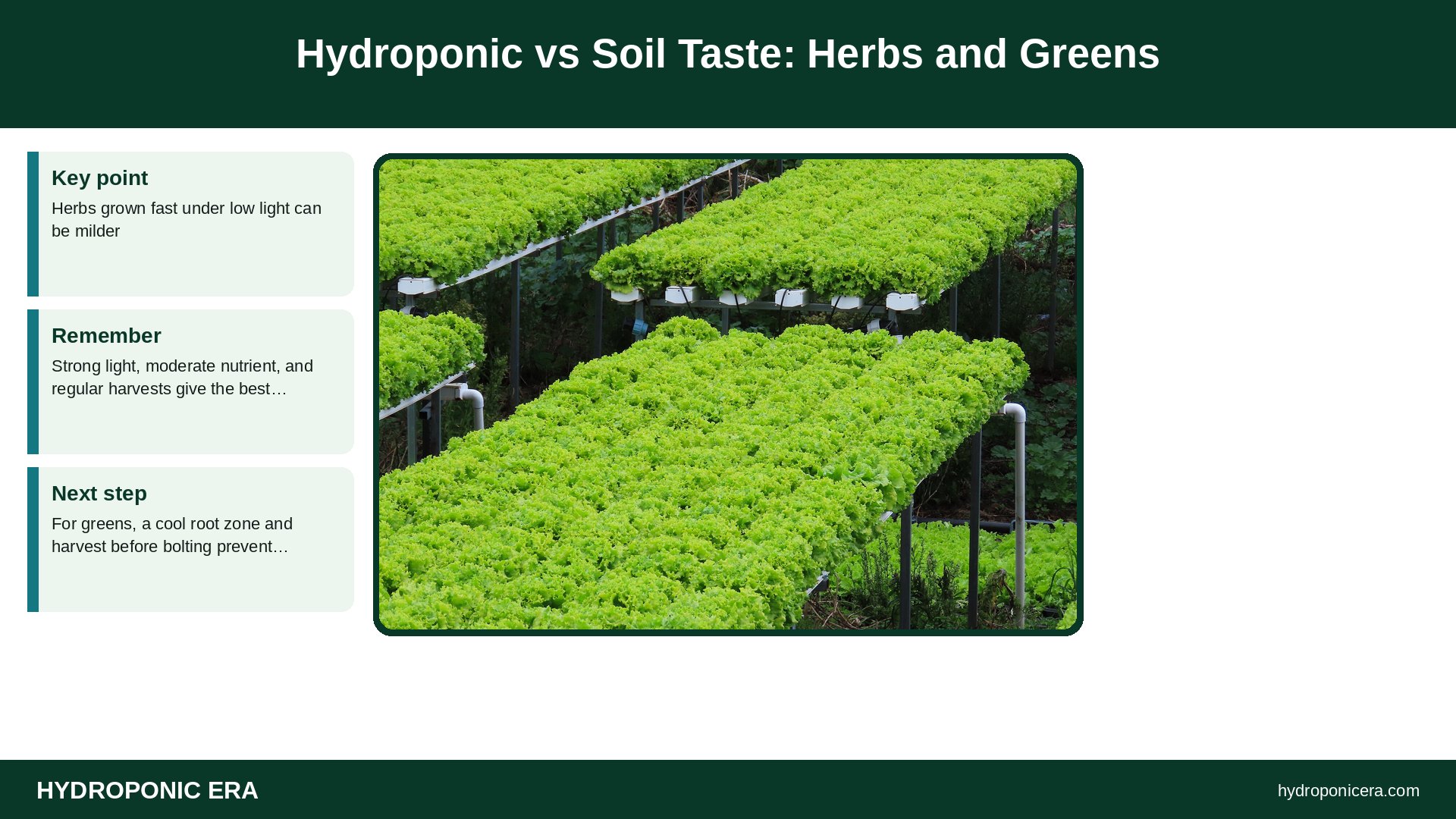
Herbs grown fast under low light can be milder. Strong light, moderate nutrient, and regular harvests give the best aroma. For greens, a cool root zone and harvest before bolting prevent bitterness. See hydroponic nutrients for herbs.
Hydroponic vs Soil Taste: Nutrition vs Taste
Taste and nutrition are related but not the same. Nutrient content varies with variety, light, and harvest timing in both systems. Fresh, just-picked produce from either system often beats older store-bought produce for both flavor and quality.
Running Your Own Taste Test

- Grow the same variety in soil and in hydroponics at the same time.
- Harvest both at the same ripeness on the same day.
- Label samples with codes so tasters don’t know which is which.
- Have several people score sweetness, flavor, and texture.
This blind approach mirrors how sensory studies are run and removes bias.
Common Myths
- “Hydroponic food is watery”: watery fruit comes from overfeeding nitrogen, low light, or early harvest.
- “Soil always tastes better”: studies show small or mixed differences.
- “Hydroponic food is artificial”: plants take up the same mineral nutrients either way.
Hydroponic vs Soil Taste by Crop
For leafy greens, studies like the 2011 lettuce pilot suggest little difference. For tomatoes, results are mixed, with variety, maturity, and EC playing the biggest roles. For herbs, aroma depends heavily on light and harvest timing. Strawberries are strongly affected by variety and ripeness. In every case, a good variety picked at peak ripeness is the biggest step toward great flavor.
Equipment Checklist for Hydroponic vs Soil Taste
- Two growing setups for side-by-side tests.
- The same seed variety for both.
- Labels or codes for blind tasting.
- A scoring sheet.
- A few willing tasters.
Most of this gear is reusable from crop to crop, so the first setup costs the most. Buy reliable meters first; they prevent the majority of problems.
Beginner Mistakes With Hydroponic vs Soil Taste
The biggest mistake in comparisons is testing different varieties or harvest dates and blaming the growing method. Keep everything else the same.
Getting Started With Hydroponic vs Soil Taste
Start small, change one thing at a time, and keep a simple log of pH, EC, temperature, and what you changed. Most hydroponic problems show up as patterns in those numbers before they show on the plant. Compare your notes with the sources below, and adjust slowly rather than chasing every small swing. A steady routine matters more than any single product or setting.
FAQs: Hydroponic vs Soil Taste
Does hydroponic food taste different?
Studies mostly find small or no differences; variety and ripeness matter more.
Are hydroponic tomatoes less tasty?
Not inherently; ripeness and variety drive flavor.
Can I make hydroponic produce taste better?
Yes: strong light, flavorful varieties, ripe harvest, and moderate feeding.
Is hydroponic lettuce as good as soil lettuce?
A 2011 sensory pilot found no overall difference.
Does EC affect taste?
Yes; higher EC can concentrate flavor in tomatoes.
Do hydroponic strawberries taste good?
With a good variety, strong light, and ripe harvest, yes.
Sources
- Murphy et al., Food and Nutrition Sciences (2011) — Comparison between Hydroponically and Conventionally and Organically Grown Lettuces for Taste, Odor, Visual Quality and Texture: A Pilot Study
- Journal of the Science of Food and Agriculture — Integration of Sensory and Objective Measurements of Tomato Quality
- Frontiers in Plant Science (2021) — The Bacterial Microbiome of the Tomato Fruit Is Highly Dependent on the Cultivation Approach and Correlates With Flavor Chemistry
- Photo credits (Wikimedia Commons, edited with titles): Tomatoes on display for sale by Gaurav Dhwaj Khadka (CC BY-SA 4.0); The interior of a typical Trader Joe’s grocery store produce section by Harrison Keely (CC BY 4.0); Ripening Tomatoes by WarmPhoto (CC BY-SA 4.0); Hydroponic lettuce @ Plaine des Cafres 03 by Rémih (CC BY-SA 4.0); Ennis – Market Place – Farmers’ Market – Vegetable Stand – geograph.org.uk – 3038450 by Joseph Mischyshyn (CC BY-SA 2.0)