
Banana peel water for plants is mostly a myth. Banana peels do contain potassium, but University of Maryland Extension says it is “not aware of any research” showing that soaking peels makes fertilizer-strength water. A Clemson Extension director adds that nobody knows what, if anything, leaches into the jar. Compost the peels instead, and feed plants with a labeled fertilizer based on a soil test.
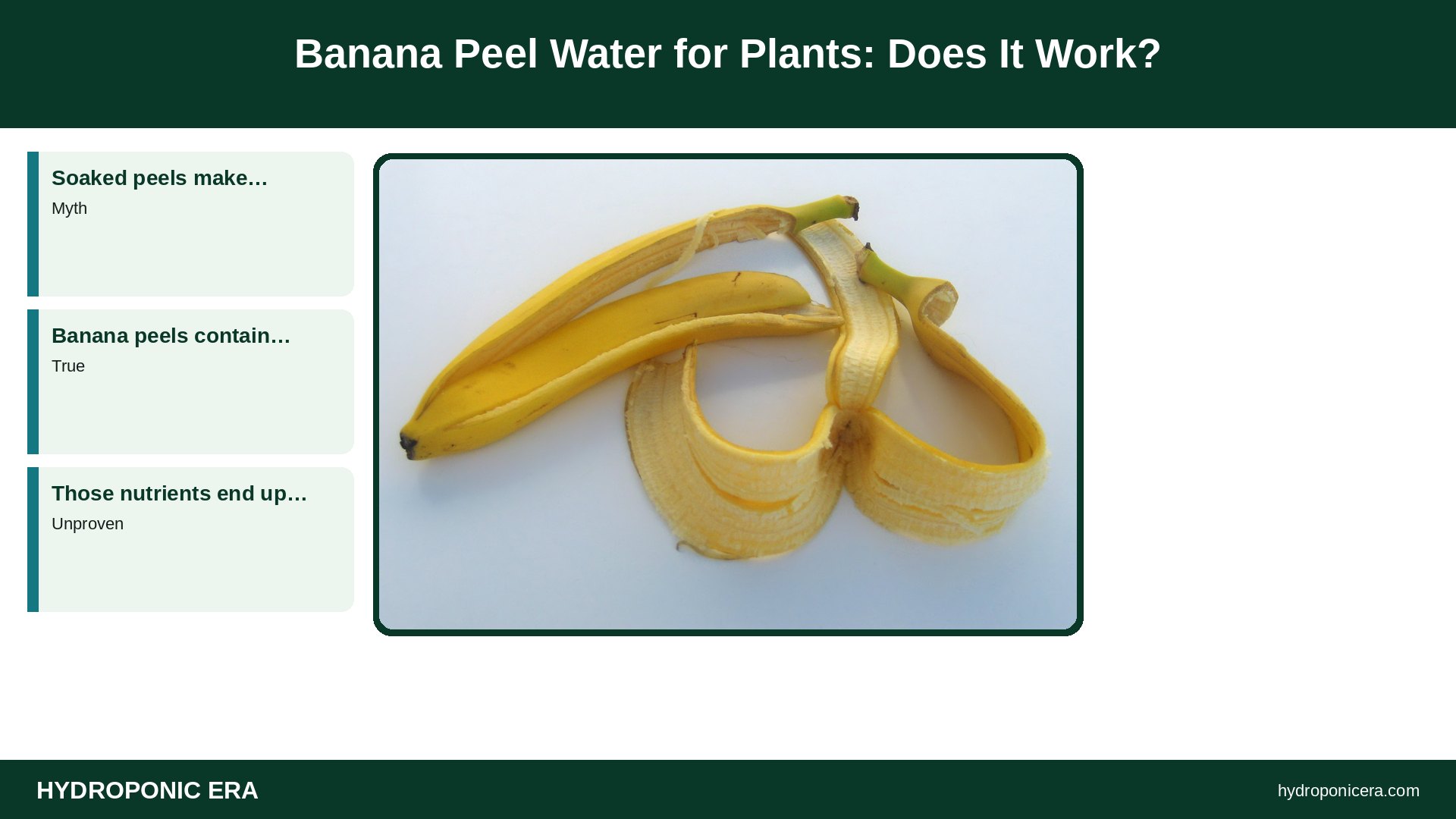
| Claim | What the evidence says | Verdict |
|---|---|---|
| Soaked peels make “fertilizer-strength” water | No research supports it (UMD Extension) | Myth |
| Banana peels contain potassium | True; peels contain potassium and other minerals | True |
| Those nutrients end up in the water | Unknown; amount varies with ripeness, ratio, time and temperature (Clemson) | Unproven |
| Banana water helps plants survive heat | Potassium in banana water won’t make plants more drought-tolerant (UMD) | Myth |
| Composting peels returns nutrients | Composting is the more efficient route (UMD, Clemson) | True |
What Is Banana Peel Water for Plants?
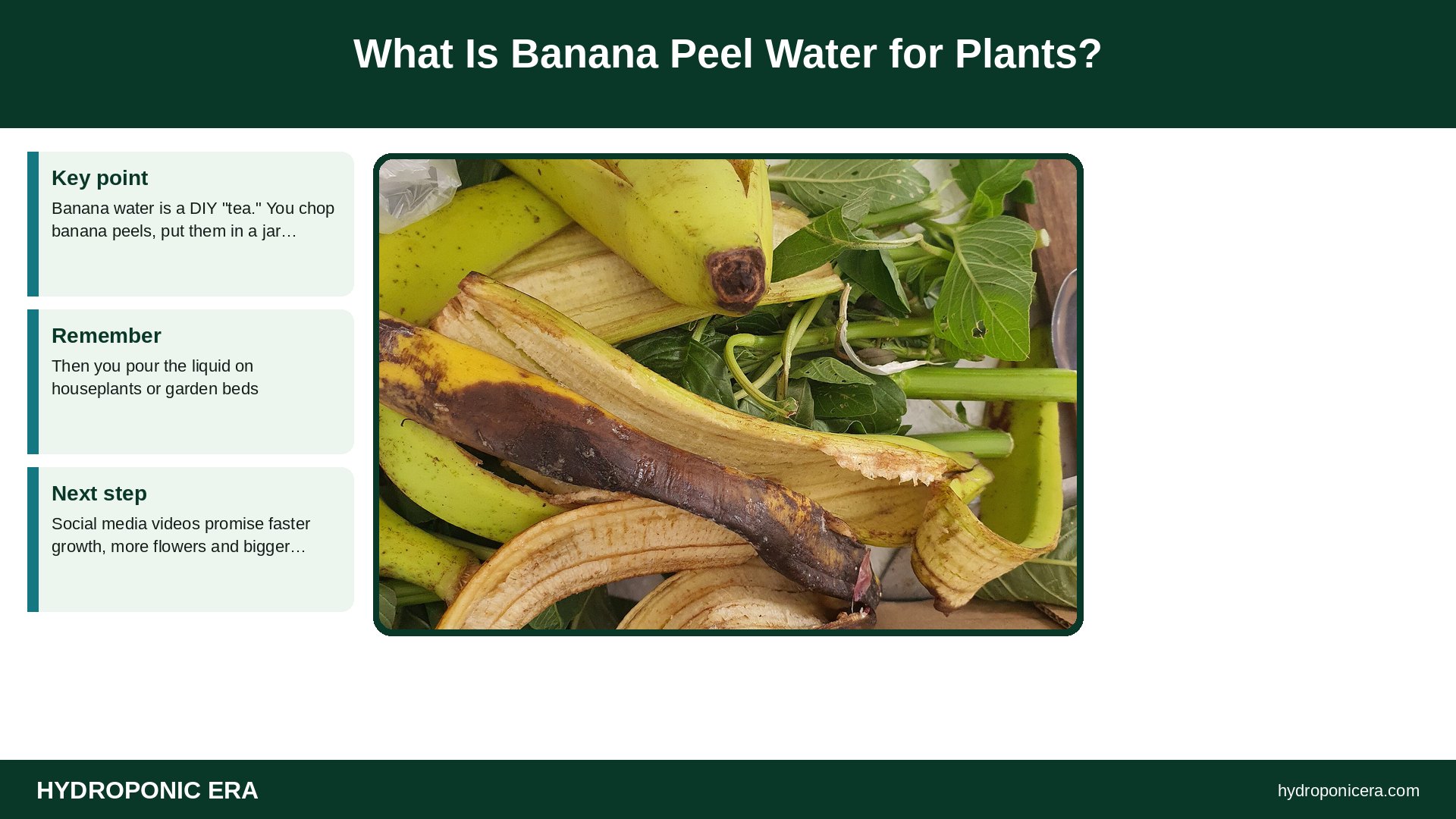
Banana water is a DIY “tea.” You chop banana peels, put them in a jar of water, cover it, and soak them for anywhere from a day to several weeks. Then you pour the liquid on houseplants or garden beds. Social media videos promise faster growth, more flowers and bigger fruit.
The appeal makes sense. It’s free, it uses kitchen scraps, and bananas are famous for potassium. The question is whether banana peel water for plants actually delivers useful nutrients.
What Extension Experts Say About Banana Peel Water for Plants
A Maryland gardener asked University of Maryland Extension’s Home and Garden Information Center whether soaking peels produces “fertilize-strength” water. The answer: “we are not aware of any research that supports that idea.” The expert explained that food scraps contain only very small amounts of nutrients, and that the nutrients released by scraps alone “are probably not sufficient to fertilize your plants.”
Clemson Cooperative Extension’s Terasa Lott told Country Living much the same. Peels do contain potassium, she said, but “it isn’t known if potassium or other nutrients are released when they are soaked in water.” Without that data, “a homeowner can’t be sure what the banana water is providing other than water.”
Why Banana Water Is Unreliable

- Unknown dose. Lott notes the type and amount of nutrients could vary with ripeness, the peel-to-water ratio, water temperature and soak time.
- Not a complete feed. Even if some potassium leaches out, plants also need nitrogen, phosphorus and micronutrients.
- Fermentation. Peels left in water for days start to rot. That can smell, attract fungus gnats and fruit flies, and grow mold.
- False confidence. If a plant is actually short on nitrogen or iron, banana water won’t fix it.
Banana Peel Water for Plants in Hydroponics: Don’t
For hydroponic growers, the answer is clearer still. Never add banana peels or banana water to a reservoir. Decaying organic matter feeds bacteria, which compete for dissolved oxygen around the roots. That’s a recipe for slime, clogged pumps and Pythium root rot.
If you want potassium in a hydroponic system, use a complete hydroponic nutrient with a known label analysis. If you’re interested in organic options, our guide to organic and bioponic nutrients explains what works and the extra risks. If leaves show yellow or scorched edges, check our potassium deficiency guide before reaching for kitchen scraps.
What to Do Instead: 5 Better Options
- Compost the peels. Clemson Extension says compost “breaks up heavy clay soils, helps sandy soils retain water and nutrients, and releases essential nutrients for plant growth.” See our composting for beginners guide.
- Bury chopped peels. UMD suggests chopping and burying food scraps in empty garden spots or between widely spaced plants, which works better than soaking.
- Get a soil test. UMD recommends basing fertilizing on soil test results. Your county extension office can usually test soil for a small fee.
- Use a labeled fertilizer. Lott points out commercial products are labeled, so you know exactly what nutrients you’re applying and how much.
- Water deeply in heat. UMD says the key in hot, dry weather is to water plants regularly and deeply, not to add potassium.
Banana Peel Water vs Compost vs Fertilizer
| Option | Known nutrient content? | Best use | Main risk |
|---|---|---|---|
| Banana peel water | No | Not recommended as a fertilizer | Odor, gnats, mold, no real feeding |
| Composted peels | Variable, slow release | Soil amendment for beds and pots | Needs time to break down |
| Labeled fertilizer | Yes, guaranteed analysis | Feeding based on soil test or plant needs | Overfeeding if label rates are ignored |
| Hydroponic nutrient | Yes | Reservoirs and soilless systems | Needs EC and pH monitoring |
Want to Test Banana Peel Water for Plants Yourself?
If you’re curious, run a fair side-by-side test instead of trusting a viral video. This won’t prove anything scientifically, but it will show you whether banana peel water for plants makes a visible difference in your own conditions.
- Pick two matching plants of the same type, size and pot.
- Give them the same light, soil and watering schedule.
- Water one with banana water and the other with plain water, same volume, same days.
- Soak peels for 24–48 hours at most and keep the jar covered to limit fruit flies.
- Photograph both plants weekly for six to eight weeks and note new leaves, color and any gnats or mold.
Most home gardeners who try this find little or no difference, which matches what extension experts expect. If both plants look hungry, the answer is a real fertilizer, not more banana peel water for plants.
Is Banana Peel Water for Plants Harmful?

In small amounts on outdoor beds, banana peel water for plants is unlikely to cause serious harm. It’s mostly water. Indoors, the bigger issues are smell, fungus gnats and mold on the soil surface. The real harm is opportunity cost: a struggling plant doesn’t get the nutrients it actually needs.
FAQs: Banana Peel Water for Plants
Does banana peel water for plants really work?
There’s no research showing it works as a fertilizer. UMD Extension says nutrients released by food scraps alone are probably not sufficient.
Can I put banana peels directly in my pots?
Whole peels on a houseplant pot can mold and attract gnats. Composting them first is the better approach.
Which plants is banana water good for?
None in a proven way. Popular claims about roses, tomatoes and houseplants aren’t backed by research.
Can I use banana water in hydroponics?
No. Organic scraps in a reservoir feed bacteria and raise the risk of root rot.
Related HydroponicEra Guides
- Aspirin for plants: myth check
- Hydroponic nutrient deficiency chart
- Organic farming for beginners
- How to use hydroponic nutrients
Sources
- University of Maryland Extension HGIC via Ask Extension — Soak banana peel potassium (#874919)
- Country Living (expert consulted: Terasa Lott, Clemson Cooperative Extension) — Does TikTok’s Viral Banana Water Fertilizer Actually Work?
- Clemson Cooperative Extension HGIC — Composting
- Clemson Cooperative Extension HGIC — Soil Testing
- Photo credits (Wikimedia Commons, edited with titles): Banane-A-05 cropped by Priwo (Public domain); Kulit pisang sebagai bahan pembuatan kompos by Ahmad Mukhlis (CC BY 4.0); Worm composting 2 by Quadell (CC BY 3.0); Spathiphyllum wallisii hydroponically grown by Kephalian (CC BY-SA 4.0)