
Aeroponics grows plants with roots hanging in air while a fine nutrient mist keeps them fed. Instead of soil or a deep reservoir bath, the root zone stays mostly open so oxygen reaches every surface between spray cycles.
This beginner guide explains how an aeroponic system works at home, what gear you need, how to set up a simple chamber, and how to manage nutrients, pH, and mist timing. You will also see which plants fit first and how to avoid dry-outs, clogged nozzles, and light leaks.
You do not need a laboratory fog tunnel on day one. One opaque chamber, a reliable pump and misters, and a calm check routine teach the whole habit of aeroponics before you scale.
Table of contents
- What Aeroponics Is
- How an Aeroponic System Works
- What You Need for Home Aeroponics
- How to Set Up a Simple Aeroponic System
- Nutrients, pH, and Mist Timing
- Best Plants for Aeroponics
- Common Aeroponics Mistakes
- Frequently Asked Questions
- Final Thoughts
What Aeroponics Is

Aeroponics is a soilless method where plant roots hang inside an enclosed chamber and receive nutrients as a mist or fine spray. The stem stays supported in a net pot or collar while the roots remain exposed to air between pulses.
That air exposure is the point. In soil, pores hold oxygen. In deep water culture, bubbles dissolve oxygen into liquid. In aeroponics, roots breathe directly, then drink briefly when the misters fire. Oklahoma State University’s hydroponics fact sheet describes aeroponics as roots suspended in a chamber and sprayed at short intervals, often every few minutes.
NASA’s XROOTS technology demonstration on the International Space Station explores hydroponic and aeroponic nutrient delivery without heavy growth media, because mist and liquid systems can scale with less mass. Home growers are not copying a space habitat, but the same idea applies: keep roots clean, wet on a schedule, and well aerated.
For beginners, think of aeroponics as a careful middle path between towers and reservoirs. It can feel more technical than a simple bucket, yet it teaches root observation quickly. If you later try a hydroponic tower garden or a full hydroponic garden without soil, the mist habits still help.
How an Aeroponic System Works

An aeroponic system has a few repeating parts: a light-proof root chamber, net pots for plants, a reservoir of nutrient solution, a pump, nozzles or misters, a drain path back to the tank, and a timer that runs short spray cycles.
When the timer turns the pump on, solution moves to the misters and coats the roots. When the pump stops, unused droplets drain back, and the roots sit in humid air. That on–off rhythm is what separates classic aeroponics from methods that keep roots submerged all day.
Low-pressure home kits often use sprinkler-style misters and a cycle timer. High-pressure commercial designs create finer fog. Beginners do well with reliable low-pressure hardware that is easy to clean. The goal is even coverage, not dramatic fog for its own sake.
Because roots dry faster if a pump fails, many growers keep a spare timer, spare nozzles, and a simple alarm habit. That caution is part of calm aeroponics practice, not a reason to avoid the method.
What You Need for Home Aeroponics
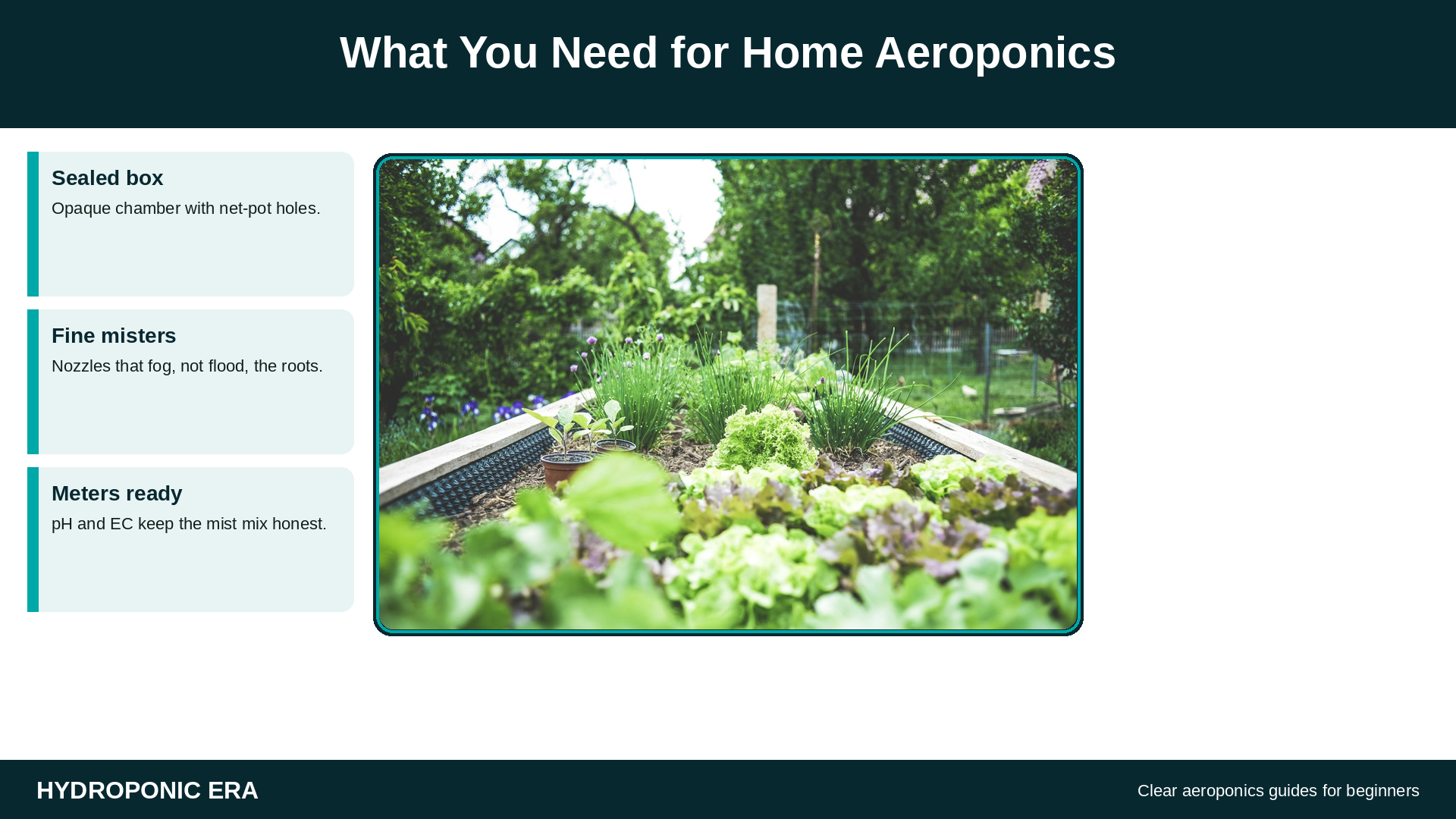
Keep the shopping list practical. A working home setup for aeroponics needs reliable basics more than specialty gadgets.
- Opaque root chamber with a lid that holds net pots tightly
- Net pots and inert media such as clay pebbles or starter plugs (no garden soil)
- Reservoir for nutrient solution, sized to your chamber
- Pump, tubing, and fine misters or spray heads
- Cycle timer that can run short on times (seconds to a minute)
- Hydroponic nutrients made for soilless growing
- pH meter and EC/TDS meter plus pH up/down
- Grow light and timer if the room is dim
Optional later: filters before nozzles, dual pumps, or a small chiller if the room runs hot. On day one, focus on a sealed chamber, even spray coverage, and meters you will actually use.
If you already own indoor lighting, match it to leafy greens first. A clear overview of indoor setups sits in the indoor hydroponic garden beginner guide, and lamp choices are covered in best grow lights for hydroponics.
How to Set Up a Simple Aeroponic System

Building a simple home aeroponic system is mostly careful sealing, aiming, and a dry test before plants go in.
1. Prepare the chamber. Mark net-pot holes in an opaque lid. Cut cleanly so pots sit level. Tape or foam gaps so light cannot reach the root zone. Algae loves nutrient mist as much as it loves open reservoirs.
2. Install misters. Place spray heads so every planting site receives mist. Avoid dead corners. Route tubing neatly and keep fittings snug. A clogged or skewed nozzle is one of the most common early problems in home aeroponics.
3. Connect reservoir and drain. Set the pump to draw clean solution and return unused mist to the tank. Keep the reservoir covered. Confirm the chamber floor slopes toward the drain so puddles do not sit under stems.
4. Dry-test the cycle. Run water only (no nutrients yet) and watch coverage for several cycles. Adjust aim and timer until roots-to-be would stay moist without flooding the collar.
5. Mix, meter, and transplant. Add hydroponic nutrients, check EC and pH, then set seedlings so roots hang freely in the spray path. Start with a few plants if this is your first run.
That skeleton is enough for a beginner chamber. Success afterward comes from monitoring mist, meters, and root color—not from buying more hardware.
Nutrients, pH, and Mist Timing
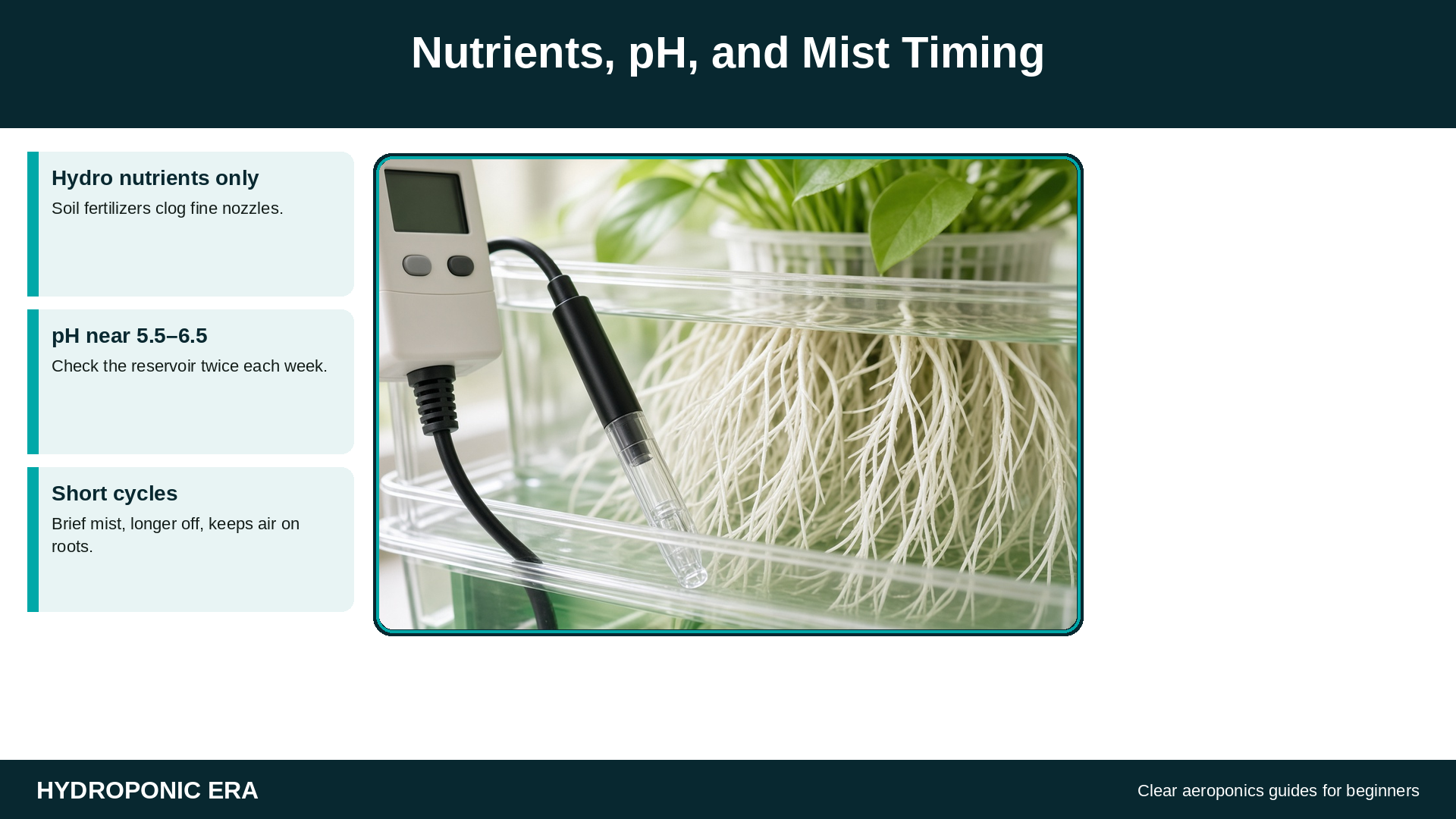
Use a complete hydroponic formula, not soil fertilizer. Fine nozzles clog quickly when organic sludge or insoluble garden feeds enter the line. In aeroponics, every droplet that reaches the roots comes from that reservoir, so clarity matters.
Practical beginner targets for leafy greens often land near:
- pH: about 5.5 to 6.5
- EC: about 1.0 to 1.8 mS/cm for salad greens, rising carefully for heavier feeders
Virginia Tech’s hydroponic and controlled-environment publications for edible crops emphasize regular EC and pH checks. Oklahoma State’s hydroponics overview notes that aeroponic timers often run the pump for only a few seconds every couple of minutes. That short-on, longer-off pattern keeps a film of moisture without drowning the air spaces around roots.
Check meters at least twice a week. Top up with plain water when levels drop, then adjust nutrients if EC drifts. For adjustment habits, see how to control pH in hydroponics for beginners. For reservoir refresh timing, use how often to change hydroponic water.
Mist timing is crop- and climate-dependent. Hot, dry rooms may need slightly more frequent pulses. Cool rooms may need less. Watch the roots: they should look pearly and moist after a cycle, never bone-dry for long stretches. Calm metering is the quiet skill behind a stable aeroponic system.
Best Plants for Aeroponics

Leafy crops forgive small mistakes and finish quickly, which makes them ideal teachers for aeroponics.
Strong beginner choices include lettuce, basil, mint, pak choi, and soft herbs. They enjoy high oxygen at the roots and do not need pollination or heavy trellis work. If you want a lettuce-focused walkthrough that still applies to mist systems, see how to grow lettuce hydroponically.
Fruiting plants can grow in an aeroponic system, but they ask for stronger light, support, and more careful nozzle coverage as root masses thicken. One compact pepper or cherry tomato is a fair second project after greens. Do not mix a heavy feeder with delicate lettuce in the same shared feed strength until you know the chamber well.
Match plant count to spray coverage. Every root ball must receive mist. Crowding creates dry shadows behind neighboring pots. That matching habit keeps home aeroponics predictable.
Common Aeroponics Mistakes

Most beginner failures in aeroponics trace back to nozzles, timers, light leaks, or neglected solution—not mysterious disease.
Dry roots after a pump or timer failure. Mist systems forgive less downtime than deep reservoirs. Check cycles daily at first. Keep spare misters and confirm the timer after power blips.
Clogged nozzles. Undissolved nutrients, hard-water scale, and biofilm shrink spray patterns. Filter where you can, mix thoroughly, and flush lines between crops. Uneven leaf color often starts as uneven mist, not a mystery deficiency.
Brown or slimy roots. Healthy roots stay pale and firm. Brown tissue can mean heat, stagnant puddles in the chamber, dirty solution, or long dry gaps. Improve coverage, cool the room if needed, and refresh the reservoir. For a root-color checklist that applies across soilless methods, read why hydroponic roots turn brown.
Light leaks and algae. Clear lids and open gaps invite green slime on walls and fittings. Keep the chamber opaque. Algae compete for nutrients and clog fine openings.
Other quiet mistakes. Using soil fertilizer, skipping meters, overfilling until stems stay soaked, and packing too many plants into one small spray pattern. Fix the environment before you buy another additive. Prevention is cheaper than rescue in home aeroponics.
Frequently Asked Questions

Is aeroponics good for absolute beginners?
Yes, if you accept that timers and nozzles need daily attention at first. The reward is excellent root oxygen and fast feedback when something drifts.
How is an aeroponic system different from DWC?
Deep water culture keeps roots in an aerated reservoir. Aeroponics keeps roots mostly in air and wets them with timed mist. Both are soilless; the oxygen path differs.
Do I need high-pressure fog?
No. Many home growers succeed with low-pressure misters and a reliable cycle timer. Coverage and cleanliness matter more than pressure marketing.
How often should misters run?
Oklahoma State notes short cycles every few minutes as a common pattern. Adjust to your climate so roots never dry out between pulses.
What plants should I avoid first?
Skip large, long-season fruiting vines until lights, support, and nozzle maintenance feel routine.
Can I pause the system overnight?
Avoid long off periods. Roots in air dry faster than roots sitting in a deep tank.
Related reading
- Why Hydroponic Leaves Turn Yellow
- How to Grow Mint Hydroponically
- How to Grow Peppers Hydroponically
- Aeroponics for Beginners
- How to Grow Microgreens Hydroponically
Final Thoughts

Aeroponics rewards quiet consistency more than dramatic hardware. Build one light-proof chamber, aim the misters evenly, and read pH and EC on a calm schedule.
Start with leafy greens, protect the root zone from light, and treat dry or brown roots as a coverage, timing, or temperature problem first. When that first harvest tastes clean, you will understand an aeroponic system well enough to add sites with confidence.
External reading for deeper detail: NASA’s XROOTS aeroponics and hydroponics demonstration, Oklahoma State University’s hydroponics fact sheet (includes aeroponic mist timing), and Virginia Tech’s Deep Water Culture systems guide (SPES-464) for related soilless root-zone and metering habits you can adapt.
9 thoughts on “Aeroponics for Beginners: How to Grow Plants in Air and Mist”