
Aquaponics for Beginners: How Fish and Plants Grow Together
Aquaponics combines fish culture with soilless plant growing in one recirculating loop. Fish release ammonia; beneficial bacteria convert it to plant-available nitrate; plants take up nutrients and help return cleaner water to the tank. Beginners in the United States, United Kingdom, Australia, and Canada can start small with hardy fish, leafy greens, and daily water checks—after the system has cycled.
This guide explains what aquaponics is, how the loop works, how it compares with hydroponics, which fish and plants suit beginners, how pH and cycling fit together, and which mistakes to avoid. It is practical home guidance, not a commercial business plan or legal advice.
Published by Hydroponic Era, beginner hydroponics and farming guides for home growers.
Key takeaways
- Aquaponics links fish, microbes, and plants in shared water.
- Cycle the biofilter before you stock heavily—ammonia and nitrite must fall first.
- Leafy greens and herbs are the easiest first crops; fruiting plants need more balance.
- Target a compromise pH near neutral so fish, bacteria, and plants can all cope.
- Test temperature, pH, ammonia, nitrite, nitrate, and dissolved oxygen on a schedule.
- Aquaponics is not the same as bottle hydroponics with bag nutrients.
- Check local rules before keeping food fish; this page is not legal advice.
Table of contents
- What Aquaponics Is
- How the Aquaponics Loop Works
- Aquaponics vs Hydroponics
- Beginner Fish and Plant Choices
- pH, Cycling, and Water Quality
- Common Aquaponics Mistakes
- US / UK / AU / CA Beginner Notes
- Frequently Asked Questions
- Final Thoughts
What Aquaponics Is
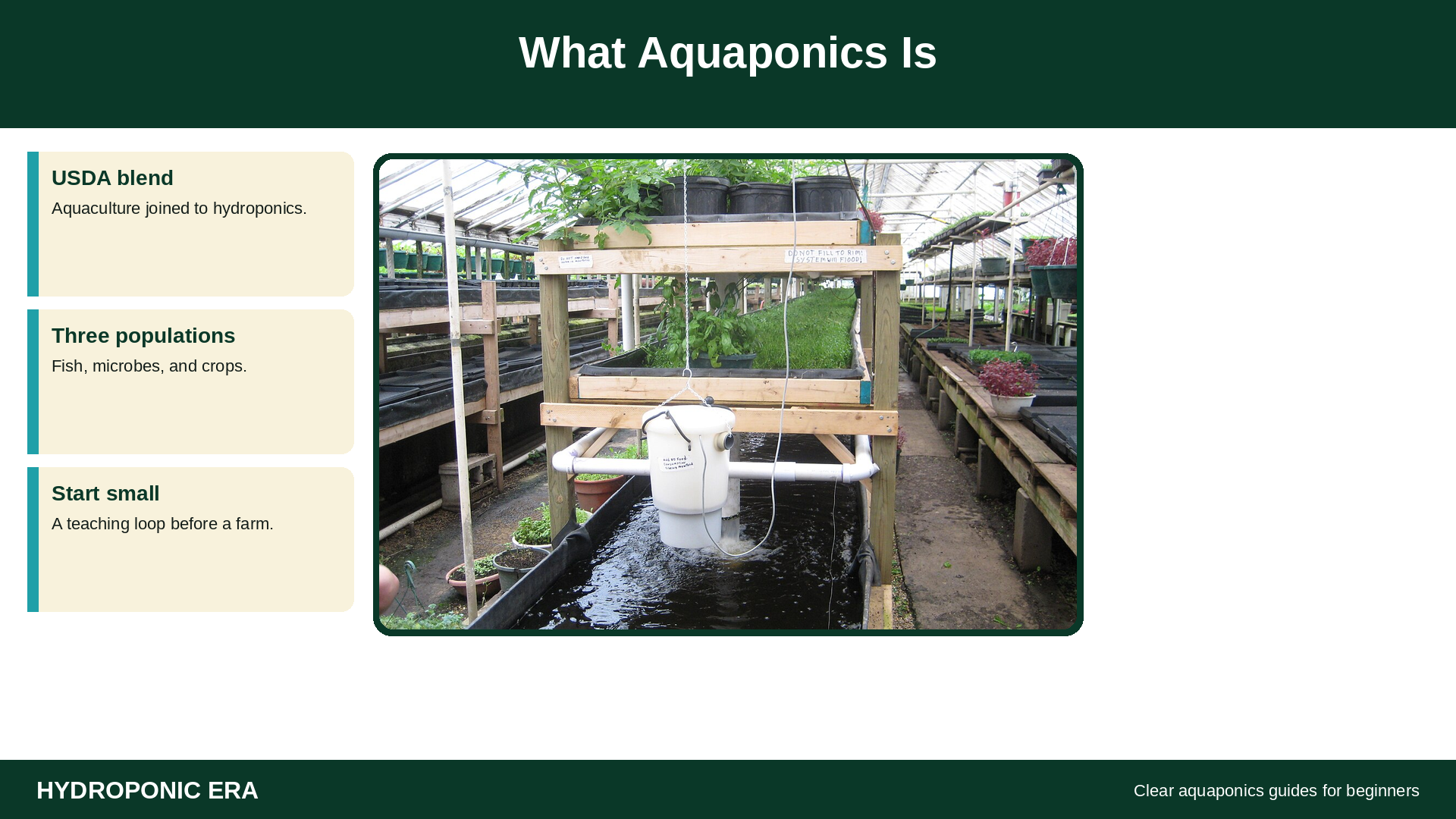
USDA’s Agricultural Research Service describes aquaponics as a blend of aquaculture and hydroponics. Fish are grown in tanks; bacteria break down waste into a natural fertilizer stream; that water irrigates plants in a soilless chamber; cleaned water can return to the fish. ARS notes typical fish such as tilapia, channel catfish, and hybrid striped bass in research and production contexts, and plant lists that include lettuce, spinach, herbs, tomatoes, cucumbers, beans, and peppers.
University of Maryland Extension defines the same idea for small systems: aquaculture that re-uses water plus hydroponic vegetable production, linked so fish waste becomes nitrate fertilizer after biofiltration, while plant roots help purify water for the fish. Rutgers New Jersey Agricultural Experiment Station’s introduction calls it recirculating aquaculture joined to hydroponics, often with a solids filter and a biofilter between the fish tank and the plant raft or media bed.
At beginner scale, aquaponics is usually a fish tank, a pump, aeration, somewhere for solids to settle or be trapped, media or rafts for plants, and a test kit. It is a living balance, not a set-and-forget gadget. You are managing three populations at once: fish, nitrifying bacteria, and crops.
Southern Regional Aquaculture Center materials describe small-scale units as home or hobby systems that can also be scaled up. The principle stays: effluent from fish moves through filtration and into plants before returning. Keep expectations calm. A balcony unit feeds salads and teaches water chemistry. It does not replace a farm overnight.
How the Aquaponics Loop Works
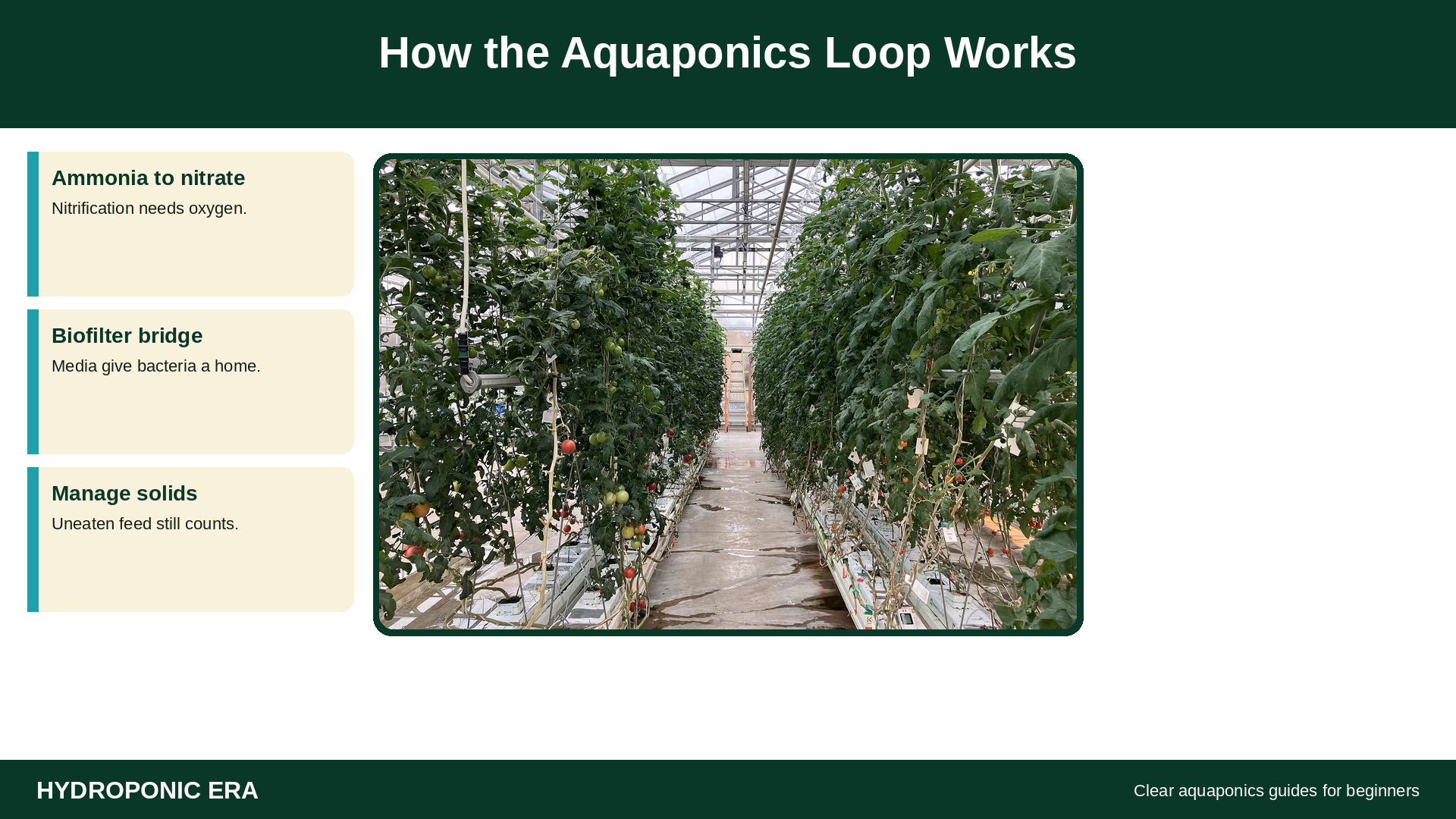
NMSU Extension’s water-quality circular walks through the chemistry beginners must respect. Fish excrete ammonia. If ammonia accumulates, it stresses or kills fish. Nitrifying bacteria convert ammonia to nitrite, then nitrite to nitrate. Nitrite is also dangerous to fish. Nitrate is the form plants use most readily in this loop. Both bacterial steps need oxygen and tend to consume alkalinity and lower pH over time.
That biofilter is the bridge. Without it, aquaponics is just a fish tank dumping waste toward roots that cannot keep up. Media beds, moving-bed filters, or dedicated biofilter chambers give bacteria surface area. Plants then absorb nitrate and other dissolved nutrients. Solids still need management—uneaten feed and feces should not smother roots or clog pumps.
Oklahoma State University Extension’s media-bed nitrification sheet stresses routine testing of ammonia, nitrite, nitrate, pH, temperature, and dissolved oxygen. Their compromise ranges for balanced systems often sit near pH 6 to 7, dissolved oxygen about 5 to 8 mg/L, and low ammonia and nitrite. Exact targets depend on species and temperature; the habit of testing matters more than memorizing one chart on day one.
Iowa State Extension’s miniature system guidance reminds beginners to condition tap water, monitor the nitrogen cycle over time, and acclimate fish slowly. Replace evaporated water with conditioned water. Keep fish density modest while bacteria catch up. Feeding lightly prevents ammonia spikes better than any product on a shelf.
Aquaponics vs Hydroponics
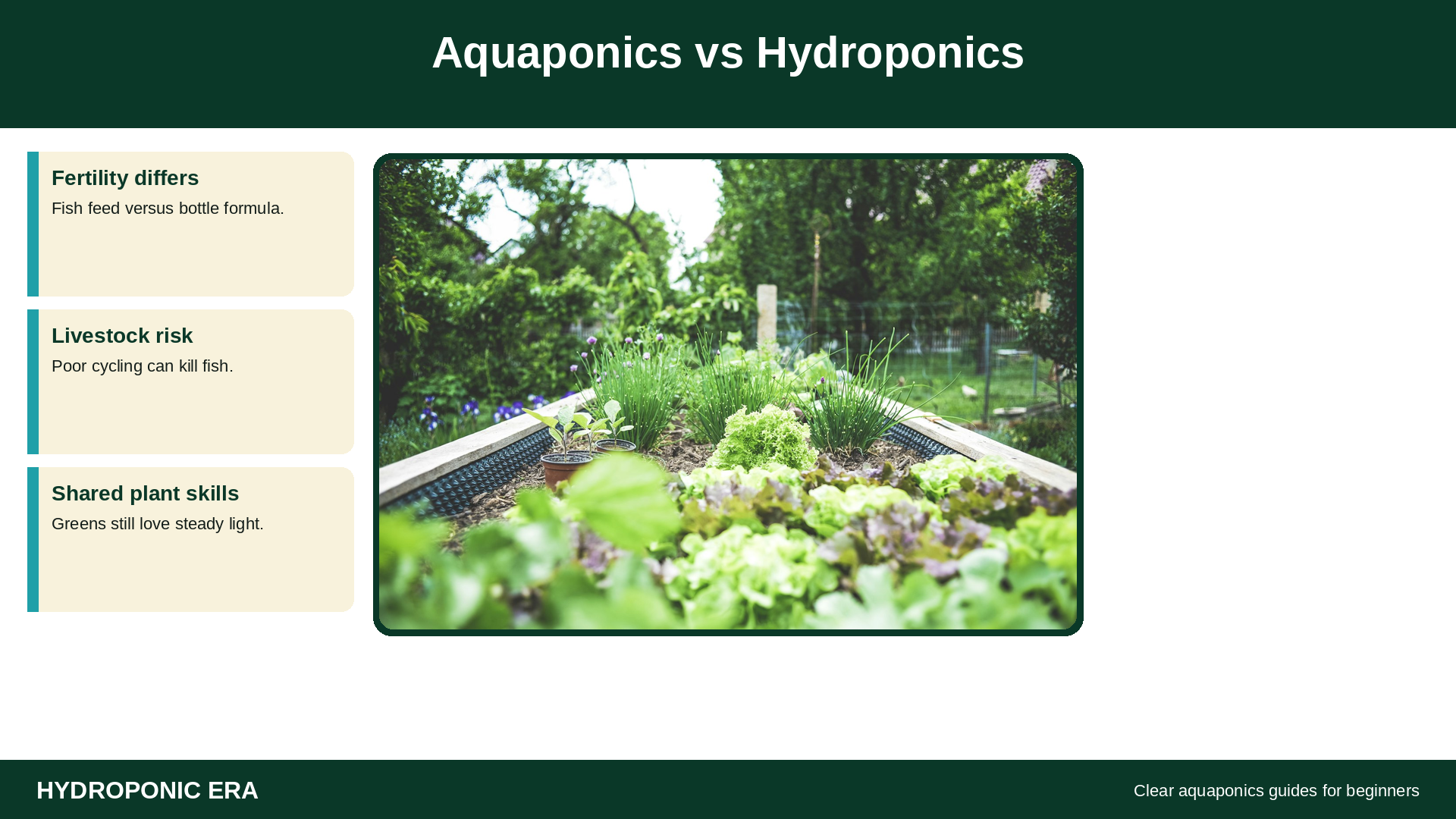
People search aquaponics and hydroponics as if they were twins. They share soilless plant roots and recirculating water ideas. They diverge on fertility and livestock. Hydroponics usually doses a complete nutrient solution you mix from bottles or powders. Aquaponics relies primarily on fish feed and microbial conversion, sometimes with careful supplements when plants show gaps.
| Question | Aquaponics | Home hydroponics |
|---|---|---|
| Fertility source | Fish feed → waste → nitrate via bacteria | Measured nutrient formula |
| Animals in the loop | Yes—fish (or other aquatic livestock) | No |
| Biofilter role | Essential for fish safety and plant feed | Less central; you still manage reservoir hygiene |
| pH compromise | Must suit fish, bacteria, and plants | Tuned mainly for the crop and formula |
| Beginner risk | Fish loss during poor cycling | Nutrient burn, pH drift, root disease |
| Best first crops | Leafy greens and herbs | Leafy greens, herbs, microgreens |
If you want a pure nutrient-solution path first, start with the live hydroponic garden beginner guide, the indoor hydroponic garden guide, the hydroponic tower garden, and aeroponics for beginners. Those pages teach plumbing and plant care without livestock. For reservoir chemistry in a bottle-fed system, use how to control pH in hydroponics and how often to change hydroponic water. Crop habits for lettuce, mint, peppers, and microgreens still help plant-side thinking in aquaponics. Lights remain a separate choice—see best grow lights for hydroponics. Yellow leaves or brown roots troubleshooting on yellow leaves and brown roots can still inform plant symptoms, but always re-check ammonia and nitrite when fish are present.
Beginner Fish and Plant Choices

USDA ARS mentions tilapia, channel catfish, and hybrid striped bass in production-oriented aquaponics descriptions. Home beginners often start with hardy ornamental or feeder species while learning water chemistry, then move to food fish only where climate, tank size, and local rules allow. Texas A&M and other Extension fish-selection notes stress matching species to temperature, stocking density, and your real goals. Warm-water fish and cold-water fish do not share one thermostat fantasy.
Caveats stay visible. Some jurisdictions restrict tilapia or require permits for food fish. Ornamental fish may be easier legally but are not a dinner plan. Never release non-native fish into local waterways. Quarantine new arrivals when you can. Stock lightly at first.
Plants: lettuce, basil, and other leafy herbs forgive imperfect nutrient profiles better than heavy fruiting crops. Tomatoes, cucumbers, and peppers appear in USDA plant lists for aquaponic chambers, but they demand stronger, steadier nutrition and support. Start with greens. Add fruiting crops after your test logs look boring for several weeks.
Media beds suit beginners who want a biofilter and planting surface in one. Raft (deep-water culture) systems shine for lettuce once solids are filtered. Nutrient film channels need reliable flow and clean water. Pick one layout and learn it; do not build three half-finished loops in one weekend.
pH, Cycling, and Water Quality

Cycling means growing the bacterial community that makes aquaponics safe. NMSU describes fish-in and fishless approaches that supply a controlled ammonia source while you watch nitrite rise and then fall as nitrate appears. Rushing fish into a sterile tank is the classic beginner loss event.
OSU’s compromise table for aquaponic organisms often centers near pH 6 to 7, with warm-water fish preferring higher dissolved oxygen and moderate temperatures. Plants may prefer slightly acidic conditions; fish and bacteria may prefer higher. The shared window is the point. Sudden pH swings stress everything. Adjust slowly with methods suited to aquaculture—not with random pool chemicals.
Daily or near-daily tests during cycling, then a steady weekly rhythm once stable, beat panic shopping. Log numbers. If ammonia or nitrite climbs, reduce feeding, increase aeration, and check for dead fish or clogged filters. Iowa State’s miniature guide flags dissolved oxygen above about 5 mg/L and cautious feeding as everyday habits.
Dechlorinate municipal water. Temperature-match top-ups. Keep spare air stones. Backup aeration matters more than decorative lighting when the power blips.
Design the fish tank deeper than your impulse buys suggest. Shallow totes swing temperature fast and leave fish with little oxygen buffer when a pump pauses. Opaque walls reduce algae. A lid with safe access holes stops jumpers and curious pets. Place the tank where you can see the fish every day without moving furniture—daily glances catch gasping, clamped fins, or uneaten feed before a test kit does.
Plumbing should favor simple, serviceable parts. Union fittings near pumps save Saturday rebuilds. Use a pre-filter sponge you can rinse in old system water, not chlorinated tap water that would kill bacteria. Mark the normal water line with tape so evaporation is obvious. Keep a dedicated bucket for aquaponics only; never scoop from a soil-compost area into the fish loop.
Lighting for indoor plant beds still follows hydroponic common sense: leafy greens need consistent daily light without cooking the water. If the tank sits under the same lamps, watch temperature. Warm water holds less oxygen. A small fan across the water surface can improve gas exchange when dissolved oxygen meters are not in the budget yet—though a meter is worth saving for once fish densities rise.
Record-keeping turns vague worry into decisions. Note feed grams, test results, top-up litres or gallons, and harvest weights. After a month you will see whether nitrate climbs while plants stay pale—often a sign to add more plant density rather than more fish. That is the quiet heart of aquaponics: match fish load to plant uptake instead of chasing either side alone.
When something fails, change one variable at a time. Swap media, slash feed, and re-plumb the whole loop on the same afternoon and you will not know what helped. Extension fact sheets exist because other growers already paid that tuition. Read OSU and NMSU ranges as training wheels, then tune to your tank’s actual behavior.
Seasonal shifts matter outdoors. Spring warming can spike metabolism and ammonia. Summer heat demands shade cloth and possibly chillers or reduced stocking. Autumn leaf litter must stay out of outdoor sumps. Winter indoor moves need heaters rated for aquarium duty and grounded circuits. None of this is glamorous. All of it keeps fish alive while plants earn their space in the loop.
Community help beats solitary guessing. Local aquarium clubs, Extension webinars, and university PDF guides are calmer than anonymous comment threads. Bring your test logs when you ask for help. Numbers shorten the advice. That habit alone separates lasting aquaponics setups from abandoned totes behind the shed.
Common Aquaponics Mistakes
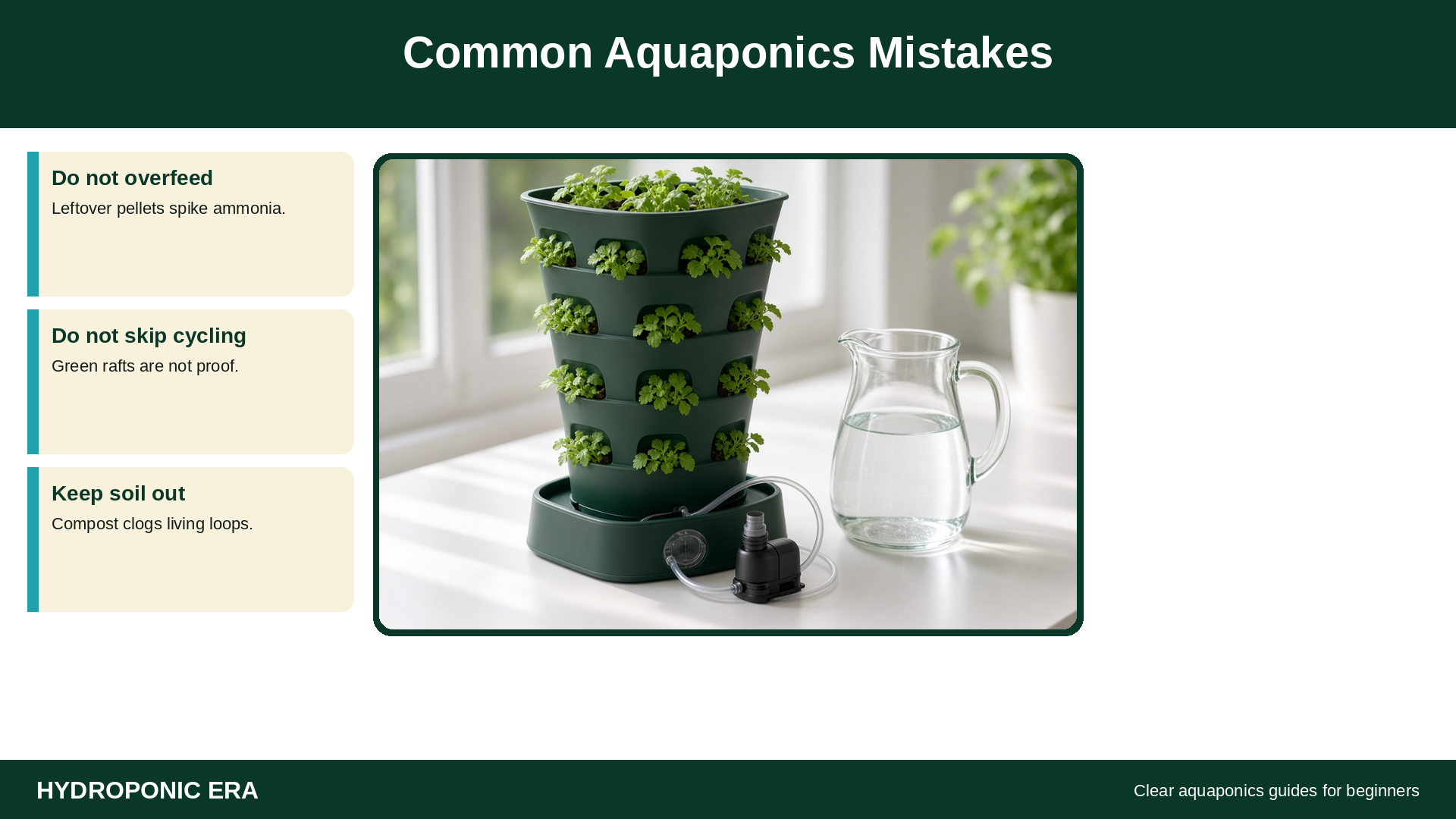
Overstocking and overfeeding top the list. More fish feel productive until ammonia spikes overnight. Feed what fish finish quickly. Remove uneaten pellets.
Skipping the cycle is second. A green raft does not prove the biofilter is ready. Test kits do.
Ignoring solids creates anaerobic pockets and root smothering. Clean mechanical filters on a schedule you can keep.
Chasing fruiting crops before greens succeed wastes months. So does mixing soil or compost into the loop—“natural” is not the same as “safe for pumps.”
Treating aquaponics like a sealed hydro reservoir you can dump and refill weekly also fails fish. Large water changes may be needed in emergencies, but the design goal is a stable living filter, not constant reset.
Finally, skipping local rules. Food fish, effluent discharge, and backyard structures can all have permits. Ask before you scale.
Keep a weekly photo of the raft or media bed beside your water log. Visual history shows whether growth stalled after a hot weekend or a filter cleaning. Share chores if more than one person feeds fish—double feeding is a silent ammonia source. When you travel, arrange a backup who understands “feed less, not more.” A simple printed checklist on the tank beats a long text thread sent from the airport.
If you already run a bottle-fed hydroponic tower, you can learn plant spacing and light height there first, then add fish knowledge as a second course. Many households run both: a clean hydro shelf for herbs and a separate aquaponic loop for the science of shared water. Label hoses. Cross-connecting systems without a plan spreads pests and chemistry surprises.
US / UK / AU / CA Beginner Notes
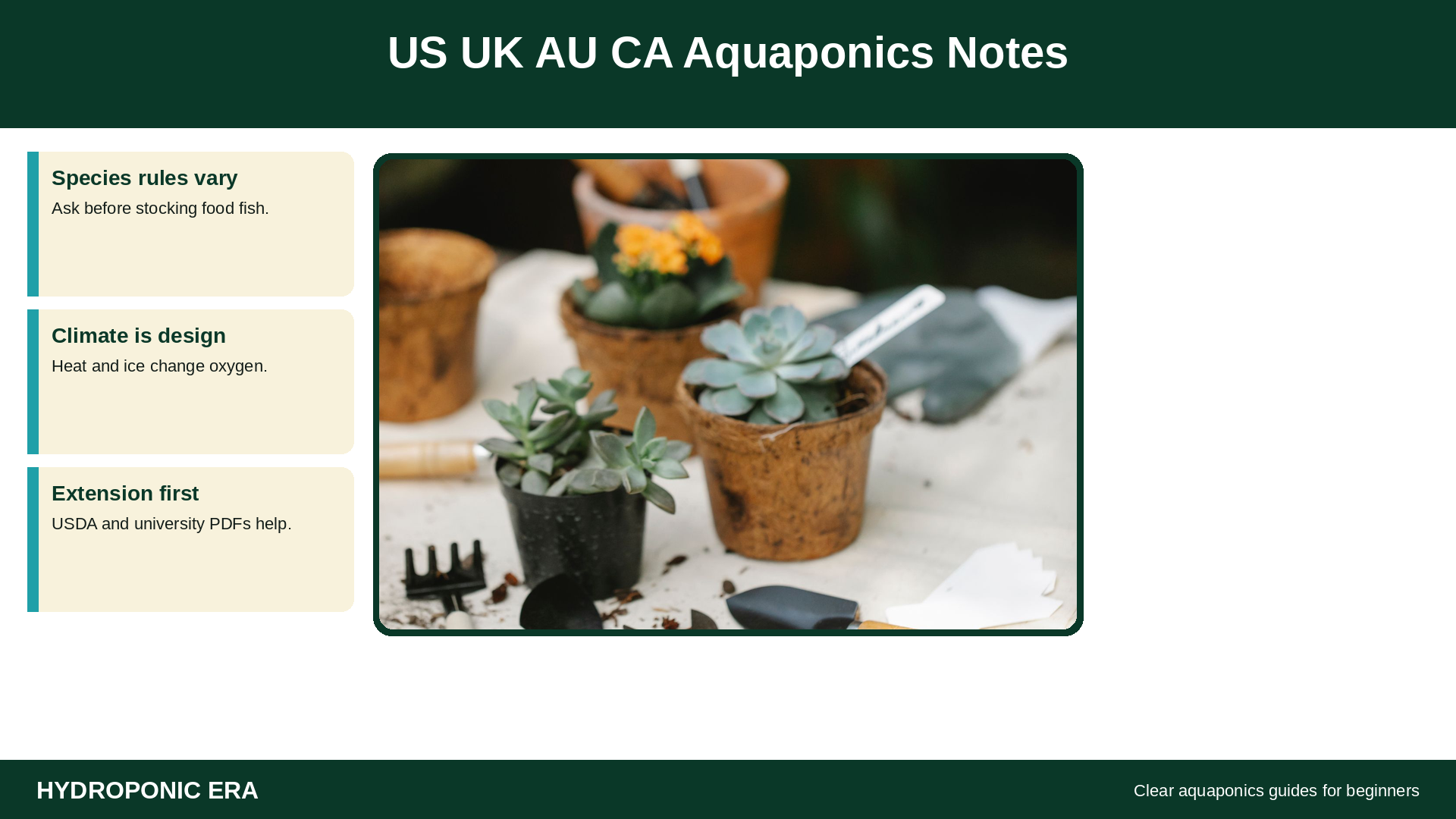
United States. Use USDA ARS explanations for the concept and your state Extension or Sea Grant office for species and water rules. Service centers and aquaculture specialists vary by state.
United Kingdom. Cold glasshouses and animal-keeping rules differ from a Florida garage. Check Environment Agency and local guidance before food-fish plans; ornamental teaching systems are a softer start.
Australia. Heat management and non-native fish rules are serious. State fisheries pages beat forum bravado. Shade, aeration, and temperature control matter in hot summers.
Canada. Short seasons push many growers indoors. Heating water and insulating tanks become part of the design, not extras.
Spellings and units mix on purpose for a four-country audience. Keep your own log in one unit system.
If plant leaves yellow while fish look fine, check iron and potassium gaps common in fish-only fertility, then verify pH is not locking nutrients out. If fish gasp while plants look lush, suspect oxygen, temperature, or a hidden ammonia spike from overfeeding—not a need for more plants alone.
Spare parts belong on a labeled shelf: air stones, airline tubing, a spare pump, dechlorinator, and test reagents with dates. When a pump dies on a holiday weekend, the spare is the whole plan. Label valves so helpers do not open the wrong drain. Photograph the plumbing once it works; future-you will thank present-you when a fitting cracks.
Plant spacing in rafts should leave airflow between heads. Crowded lettuce looks abundant for a week, then invites tip burn and algae. Harvest outer leaves or whole heads on a rotation so the biofilter always has roots working. That steady uptake is what keeps nitrate from climbing while fish keep eating in a healthy aquaponics loop.
Finally, decide your end-of-season plan before you stock. Will fish move indoors? Will you reduce density? Teaching systems need exit strategies as much as start guides. Write the plan on the same card as your emergency contacts.
Frequently Asked Questions
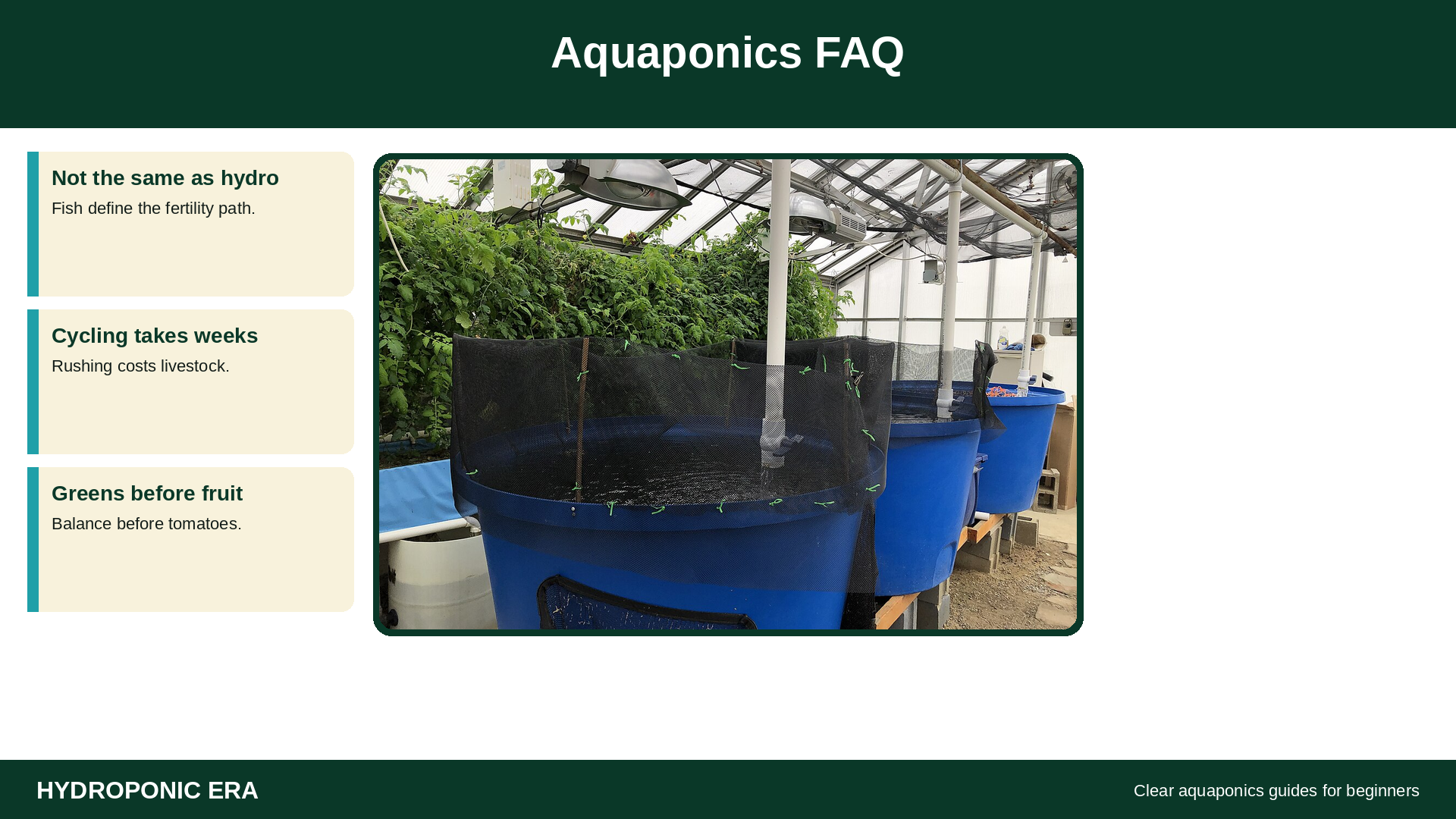
What is aquaponics in simple terms?
Aquaponics grows fish and plants in a shared recirculating system where bacteria turn fish waste into plant nutrients.
Is aquaponics the same as hydroponics?
No. Hydroponics usually uses bottled nutrients without fish. Aquaponics depends on fish and a living biofilter.
How long does cycling take?
Often a few weeks. Wait until ammonia and nitrite stay low and nitrate appears before heavy stocking.
What fish should beginners choose?
Hardy species matched to your temperature and laws. Confirm permits before food fish; start lightly.
What plants work first?
Lettuce and herbs. Add fruiting crops after water quality stays steady.
What pH should I use?
A compromise near neutral is common so fish, bacteria, and plants can coexist. Change pH slowly.
Where can I read reliable sources?
USDA’s aquaponics overview, University of Maryland Extension’s small-scale build guide, Rutgers FS1351, and NMSU’s water-quality circular.
Final Thoughts
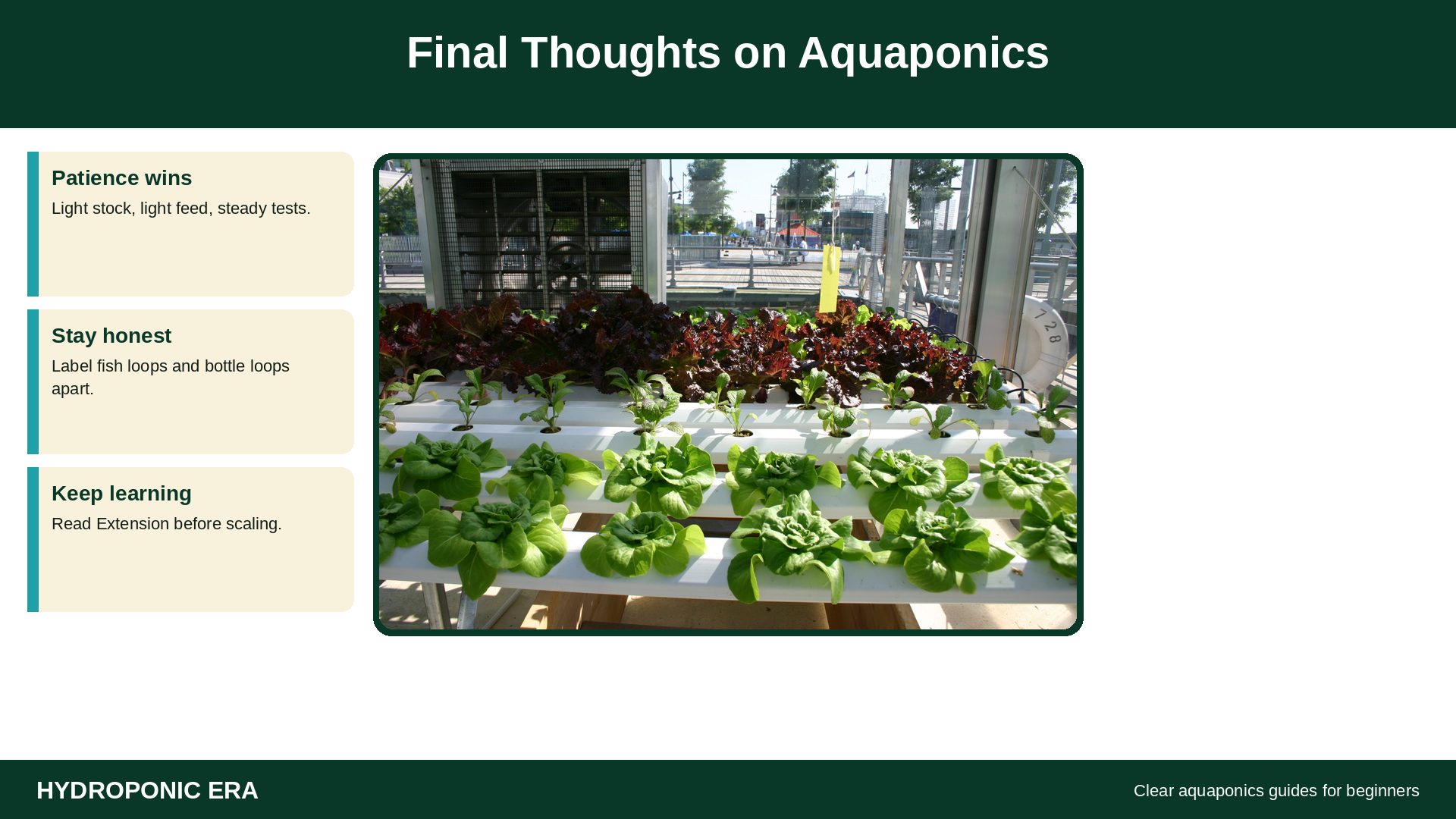
Aquaponics rewards patience more than gear. Cycle first, stock light, feed light, test often, and grow greens before you chase tomatoes. Keep the method honest beside pure hydroponics: one uses fish and microbes; the other uses a measured formula.
Published by Hydroponic Era. External reading: USDA on aquaponics, University of Maryland Extension small-scale aquaponics, Rutgers FS1351 Introduction to Aquaponics, and NMSU water quality in aquaponics (CR-680).
3 thoughts on “Aquaponics for Beginners: How Fish and Plants Grow Together”