
For an aquaponics fish harvest, stop feeding the fish 1–3 days beforehand to empty their guts, net only the fish you’ll process right away, and dispatch them quickly and humanely, usually by a sharp blow to the head or a stun followed by bleeding, or by an ice slurry for small warm-water fish. Chill the fish immediately on ice, clean them within a few hours, and keep them at 40°F or below. Cook fish to 145°F. Harvest a portion of the tank at a time so the system’s nutrient supply for plants doesn’t crash.
Key takeaway: Fast, humane killing and immediate chilling give the best flavor and the safest fish.
| Step | Timing | Why |
|---|---|---|
| Stop feeding | 1–3 days before | Empties gut; cleaner fillets |
| Prepare ice and tools | Day of harvest | Fast chilling; less stress |
| Net a few fish | Just before processing | Reduces stress for the rest |
| Stun and bleed | Immediately | Humane; better flesh quality |
| Chill on ice | Within minutes | Slows spoilage |
| Clean and store | Within a few hours | Keep at 40°F or below |

When Fish Are Ready

Most growers harvest tilapia, catfish and bluegill at about 0.5–1.5 pounds. Larger fish give thicker fillets but grow less efficiently per pound of feed. Weigh a few fish monthly; when the average reaches your target, plan an aquaponics fish harvest. Warm-water fish grown from fingerlings often reach plate size in 6–12 months. See tilapia aquaponics and catfish aquaponics.
Purging Before an Aquaponics Fish Harvest
Stop feeding 1–3 days before harvest. An empty gut makes cleaning easier and reduces contamination of the flesh. Some growers move fish into clean water for a day or two to reduce muddy or “off” flavors, though aquaponics fish usually taste clean because water is filtered constantly.
Humane Dispatch
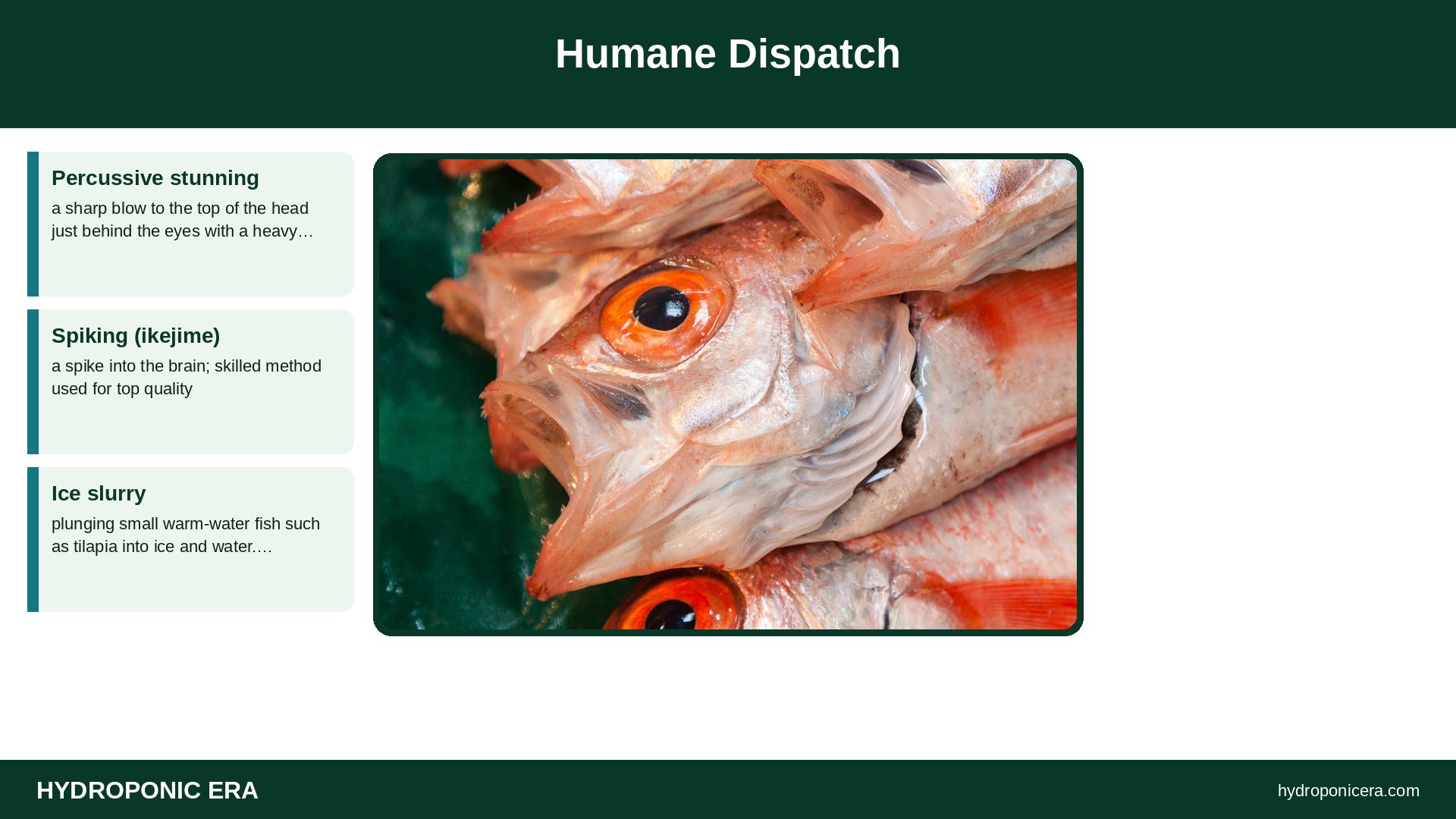
The goal is to make the fish unconscious immediately. Common home methods:
- Percussive stunning: a sharp blow to the top of the head just behind the eyes with a heavy club (“priest”). Follow by bleeding.
- Spiking (ikejime): a spike into the brain; skilled method used for top quality.
- Ice slurry: plunging small warm-water fish such as tilapia into ice and water. It’s widely used for tropical species but slower for cold-water fish.
Avoid letting fish suffocate in air; it’s slow and stressful and lowers flesh quality.
Bleeding
After stunning, cut through the gill arches and place the fish head-down in ice water for several minutes. Bleeding gives whiter, milder fillets and better shelf life.
Chilling and Cleaning
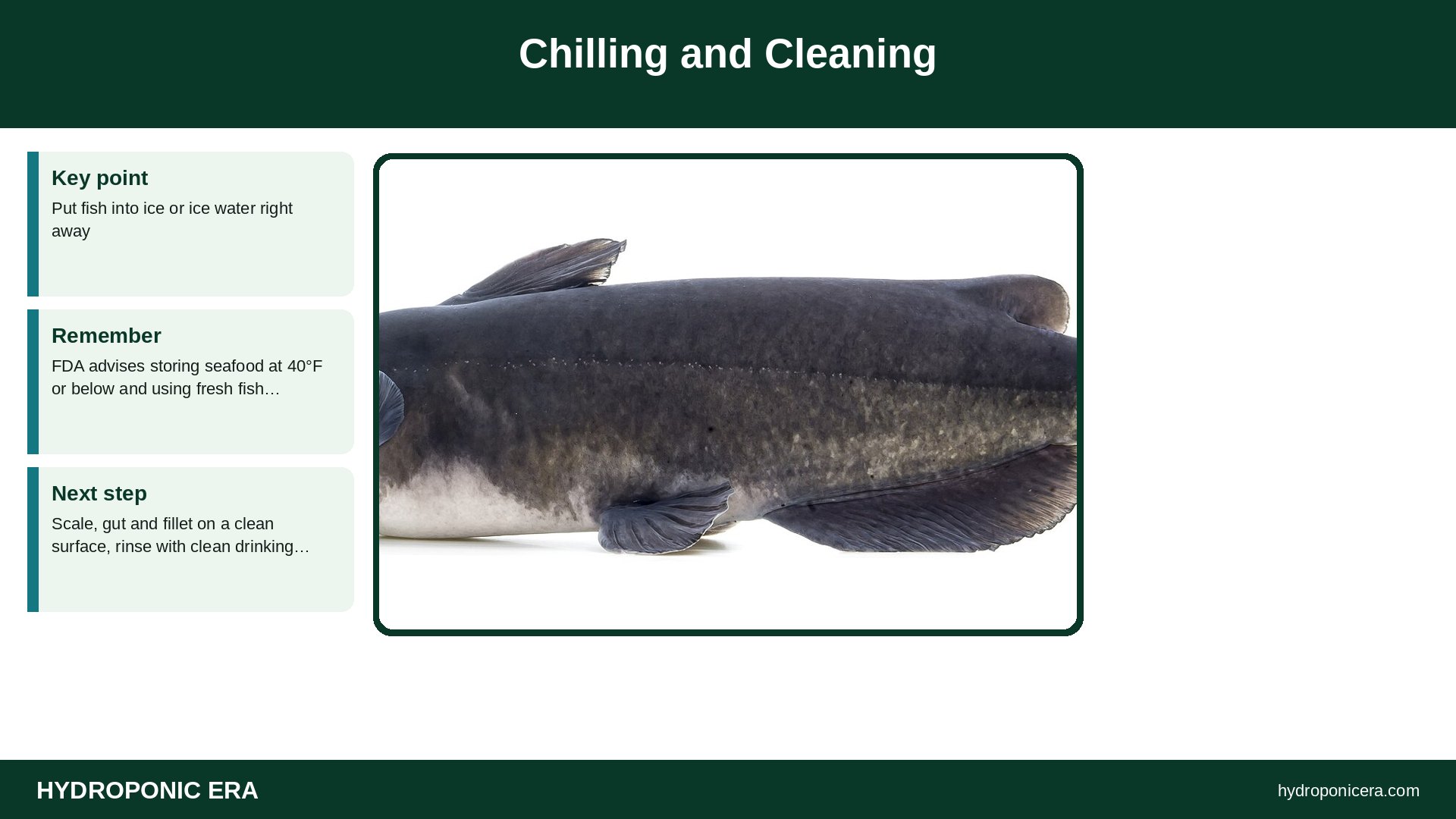
Put fish into ice or ice water right away. FDA advises storing seafood at 40°F or below and using fresh fish within 2 days, or wrapping it tightly and freezing it. Scale, gut and fillet on a clean surface, rinse with clean drinking water, and wash hands and tools well. Don’t use system water for rinsing fillets.
Food Safety
Keep raw fish separate from ready-to-eat food, and cook to an internal temperature of 145°F, or until the flesh is no longer translucent and flakes easily, per FoodSafety.gov. Never harvest fish that were recently treated with medications not approved for food fish, and observe any withdrawal times on labels. See aquaculture permits for aquaponics.
Harvest in Batches

Removing every fish at once cuts off nutrients to your plants. Instead, harvest a quarter to a third at a time and restock with fingerlings, so there’s always a mix of ages producing waste. If you must harvest everything, reduce plant numbers or add a supplemental organic nutrient until new fish grow. See aquaponics fish to plant ratio.
Checking Fish Quality
Fresh fish should smell mild, not sour or ammonia-like, with clear eyes, red gills and firm flesh that springs back when pressed, as FDA describes. Discard any fish that died in the tank before harvest instead of eating it, because you can’t know how long it was dead or why. Fish showing sores, ulcers or unusual behavior should not be eaten either.
Equipment Checklist
- Large net and a holding bucket with aeration
- Cooler with plenty of ice
- Club or spike, sharp fillet knife, cutting board
- Gloves and a scale or measuring board
- Freezer bags or vacuum sealer
Planning Your Aquaponics Fish Harvest Calendar
A good plan keeps both fish and plants productive. Many backyard growers with warm-water fish stock in late spring and do a final aquaponics fish harvest before water cools in fall, since tilapia stop eating below about 63°F and handling stress rises in cold water. Growers with heated greenhouses can stagger batches all year: stock new fingerlings every two to three months and harvest the oldest batch at the same time. That rhythm keeps fish biomass, and therefore nutrient supply, fairly steady. See aquaponics greenhouse and aquaponics fingerlings.
Catching Fish Without Stressing the Rest
Lower the water level in the tank a little before netting if your plumbing allows it; fish are much easier to catch in shallower water. Use a large, soft net and move slowly. Some growers use a divider or a sorting panel to crowd fish to one end. Catch only what you can process in the next 30 minutes, and keep them in an aerated bucket until you’re ready. Chasing fish around for a long time stresses everything in the tank and can trigger disease outbreaks among the fish left behind.
Fillet Yield
Expect roughly a third of a whole fish’s weight as skinless fillets for tilapia and similar species, a bit more for catfish. A 1.5-pound tilapia gives about half a pound of fillet. Keep the frames, heads and guts for stock, compost or worm bins, or bury them in a garden bed away from the system. Don’t put fish waste back into the aquaponics tank. See aquaponics worms.
Freezing and Storage
For storage beyond two days, wrap fillets tightly or vacuum-seal them to prevent freezer burn, label them with the date, and freeze quickly in small, flat packs. Thaw in the refrigerator overnight, or in a sealed bag in cold water if you’re in a hurry, as FDA recommends. Lean white fish such as tilapia keeps its quality in the freezer for several months.
After the Harvest
Reduce feeding to match the smaller fish load and test ammonia and nitrite for a few days, since disturbance can stir up solids. Clean out any sludge from the tank bottom while the population is low. It’s also a good time to check pumps and air stones before restocking. See aquaponics solids filter and aquaponics for beginners.
FAQs
How long before harvest should I stop feeding?
1–3 days.
What’s the most humane way to kill fish?
A sharp blow to the head or a spike to the brain, followed by bleeding.
Can I eat aquaponics fish?
Yes; handle and cook it like any fresh fish.
How long does fresh fish keep?
Up to 2 days at 40°F or below; freeze for longer.
What size is tilapia harvested?
Usually about 1–1.5 pounds.
Will plants suffer after harvest?
Yes, if you remove too many fish at once.
Sources
- US Food and Drug Administration — Selecting and Serving Fresh and Frozen Seafood Safely
- FoodSafety.gov — Safe Minimum Internal Temperatures
- FAO — Small-scale aquaponic food production
- Photo credits (Wikimedia Commons, edited with titles): Pan-fried white fish fillet with vegetables by Armineaghayan (CC BY-SA 4.0); Oreochromis-niloticus-Nairobi by Bjørn Christian Tørrissen (CC BY-SA 3.0); Oweston sting fish for sale at Tsukiji Fishmarket, Tokyo-30 by MichaelMaggs (CC BY-SA 3.0); Channel Catfish (Ictalurus punctatus) white background by USFWS Mountain Prairie (Public domain); Fish farming on Øksfjorden in Loppa, Troms og Finnmark, Norway, 2022 August by Ximonic (Simo Räsänen) (CC BY-SA 4.0)