
Superthrive hydroponics use is popular, but the evidence is mixed. Superthrive’s label ingredients include vitamin B1 (thiamine), a small amount of the synthetic auxin NAA (1-naphthaleneacetic acid), nitrogen and kelp. Extension research says vitamin B1 alone does not stimulate root growth in whole plants, while auxins like NAA can affect rooting. If you try it, use the maker’s low rates (¼ tsp per gallon for seedlings and clones), keep your base nutrients unchanged, and judge it with a side-by-side test.
| Question | Short answer |
|---|---|
| What’s in it? | 0.5% total N, vitamin B1 (0.09%), NAA (0.048%), with kelp (label ingredients as listed by retailers) |
| Does vitamin B1 grow roots? | Not on its own in whole plants, per WSU and University of Arizona Extension |
| Can NAA affect roots? | Yes. Auxins influence rooting; NAA can also inhibit primary root growth |
| Maker’s rate for seedlings and clones | 1 drop per 4 oz cup, or ¼ tsp per gallon |
| Maker’s rate alongside a nutrient program | ¼–1 tsp per gallon, depending on growth stage |
| Is it a nutrient? | No. It’s a supplement, not a replacement for base nutrients |

What Is Superthrive?
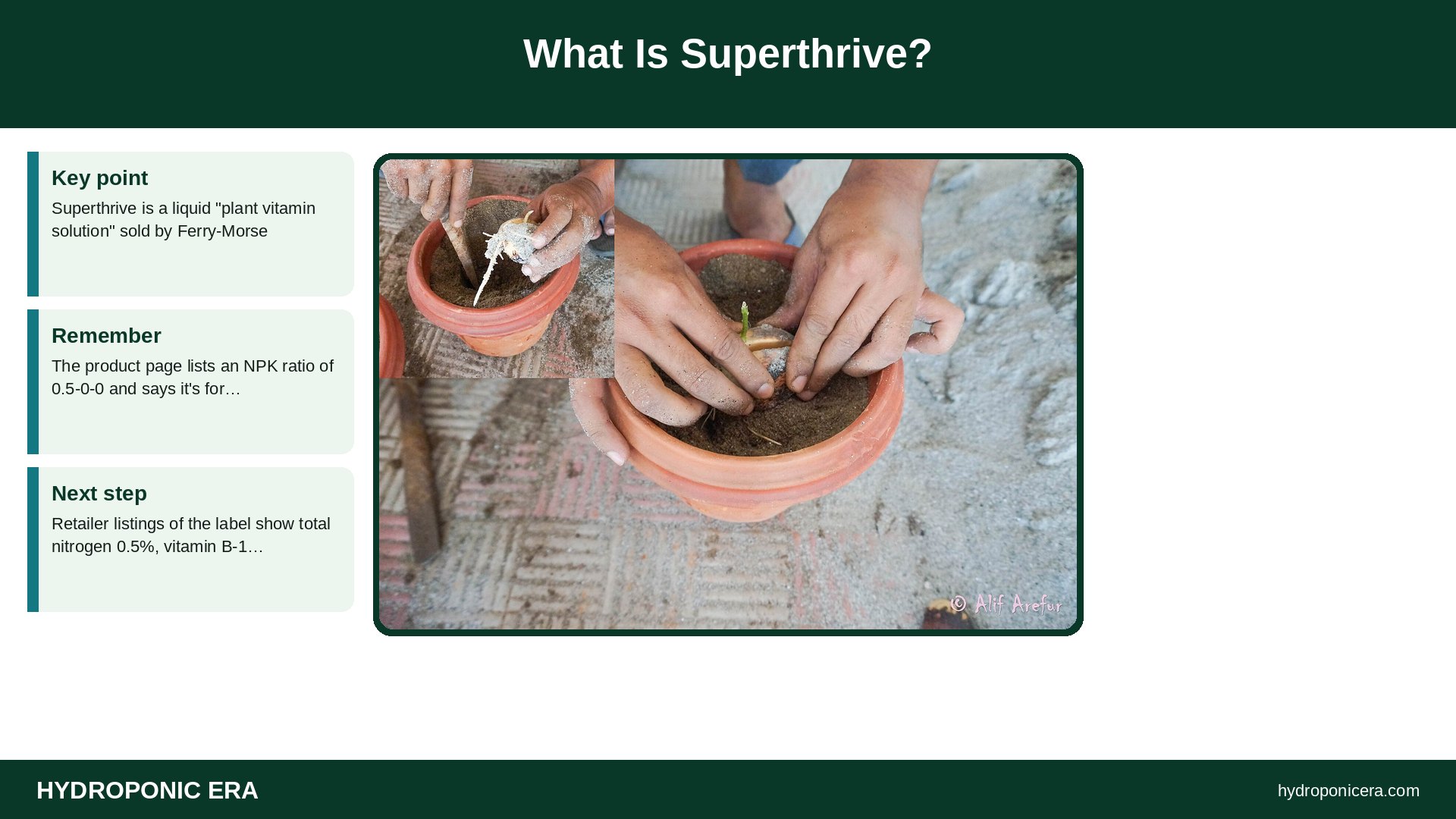
Superthrive is a liquid “plant vitamin solution” sold by Ferry-Morse. The product page lists an NPK ratio of 0.5-0-0 and says it’s for transplanting and maintenance, to help root development, reduce transplant shock and build vigor. Retailer listings of the label show total nitrogen 0.5%, vitamin B-1 0.09% and 1-naphthyl acetic acid 0.048%.
That last ingredient matters most. NAA is a synthetic auxin, a plant growth regulator also used in some rooting products. Vitamin B1 gets the marketing attention, but the research points to the auxin as the active part of products like this.
What the Research Says About Superthrive Hydroponics Claims
We found no independent, peer-reviewed trials of Superthrive itself in hydroponic systems, so any Superthrive hydroponics claim rests on research into its ingredients and on grower anecdotes.
Vitamin B1 (thiamine)
Washington State University’s Linda Chalker-Scott writes that applying vitamin B1 to the roots of whole plants “does not stimulate root growth,” calling it “a myth that refuses to die.” She explains that plants make their own thiamine, and that one study found more root growth with plain water than with thiamine. University of Arizona Cooperative Extension reached the same conclusion, noting that “miracle growth” claims usually come from tissue culture research. It adds that various studies with woody plants, annual flowers and crops “failed to demonstrate” a growth response from vitamin B1 treatments.
NAA (auxin)
Both extension reviews say auxins may stimulate root growth. Chalker-Scott notes that NAA “tends to be toxic to seedling root development,” because it inhibits primary root growth and enhances lateral roots. That may explain its success in regenerating roots of transplanted trees. The takeaway: the dose matters, and more is not better.
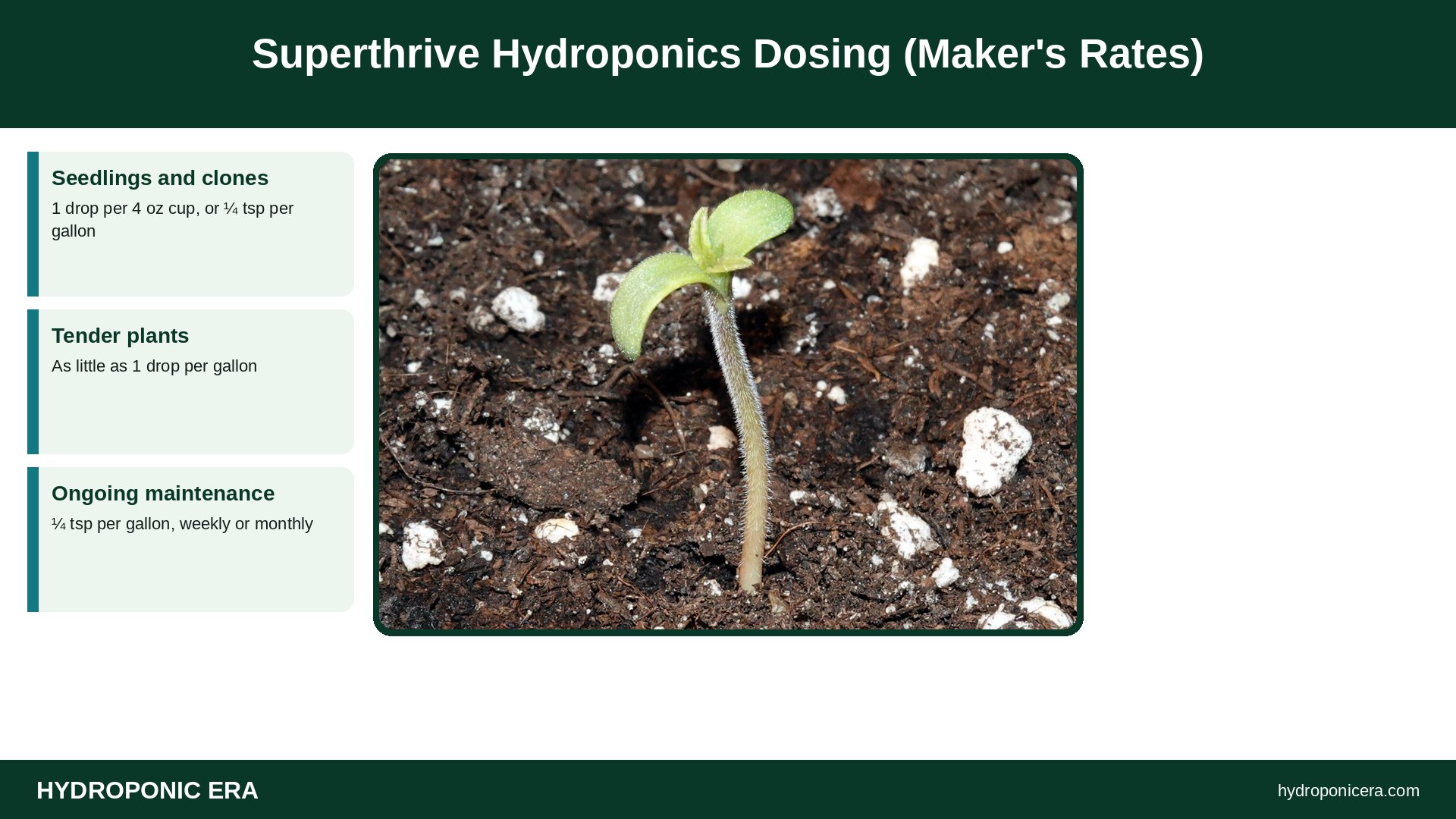
Superthrive Hydroponics Dosing (Maker’s Rates)
| Use | Maker’s suggested rate |
|---|---|
| Seedlings and clones | 1 drop per 4 oz cup, or ¼ tsp per gallon |
| Tender plants | As little as 1 drop per gallon |
| Ongoing maintenance | ¼ tsp per gallon, weekly or monthly |
| Alongside a nutrient program | ¼–1 tsp per gallon, depending on growth stage |
| Transplanting | 1 tsp per gallon |
At ¼ tsp per gallon, our rough estimate is that the NAA ends up well under 1 ppm in the reservoir. That’s a tiny amount, but auxins act at low concentrations, so stick to the low end in recirculating systems.
How to Test Superthrive Hydroponics Use: 6 Steps
- Set up two identical systems or two matching trays of clones.
- Use the same base nutrient, EC and pH in both. See our EC and TDS guide.
- Add Superthrive to one only, at the maker’s low rate.
- Keep light, temperature and timing identical.
- Measure results: days to visible roots, root mass, plant height and losses.
- Repeat once before deciding. One run can mislead.
Cloning? Our hydroponic cloning guide covers rooting hormones designed for cuttings, which are a more direct tool for that job.
How to Add It to a Reservoir Safely
If you go ahead with a Superthrive hydroponics test, add it the same way every time so your results are comparable.
- Mix your base nutrients first and check EC.
- Measure Superthrive with a dropper or ¼ tsp measure, not by eye.
- Stir it into the reservoir, then check pH.
- Note the date and dose in a grow log.
- Replace the solution on your normal schedule rather than stacking extra doses.
Superthrive Hydroponics Risks in a Reservoir

- Organic components: kelp extracts can feed microbes in warm, recirculating reservoirs. Keep water cool and aerated; see our reservoir temperature guide.
- Overdosing auxin: more NAA can inhibit main root growth.
- Masking real problems: brown, slimy roots need a root rot fix, not a tonic. See our Pythium guide.
- Cost: spending on additives before base nutrients, light and oxygen are dialed in.
Superthrive Hydroponics vs Alternatives
| Option | What it does | Evidence level |
|---|---|---|
| Superthrive | B1 + NAA + kelp supplement | Ingredient research only; no independent product trials found |
| Rooting hormone gel or powder (IBA/NAA) | Applied to cuttings at the cut | Widely used for propagation |
| Beneficial microbes | Colonize the root zone | Varies by product; see our beneficial bacteria guide |
| Correct nutrients, oxygen and temperature | Supports healthy roots | Strong |
Who Might Try Superthrive Hydroponics?
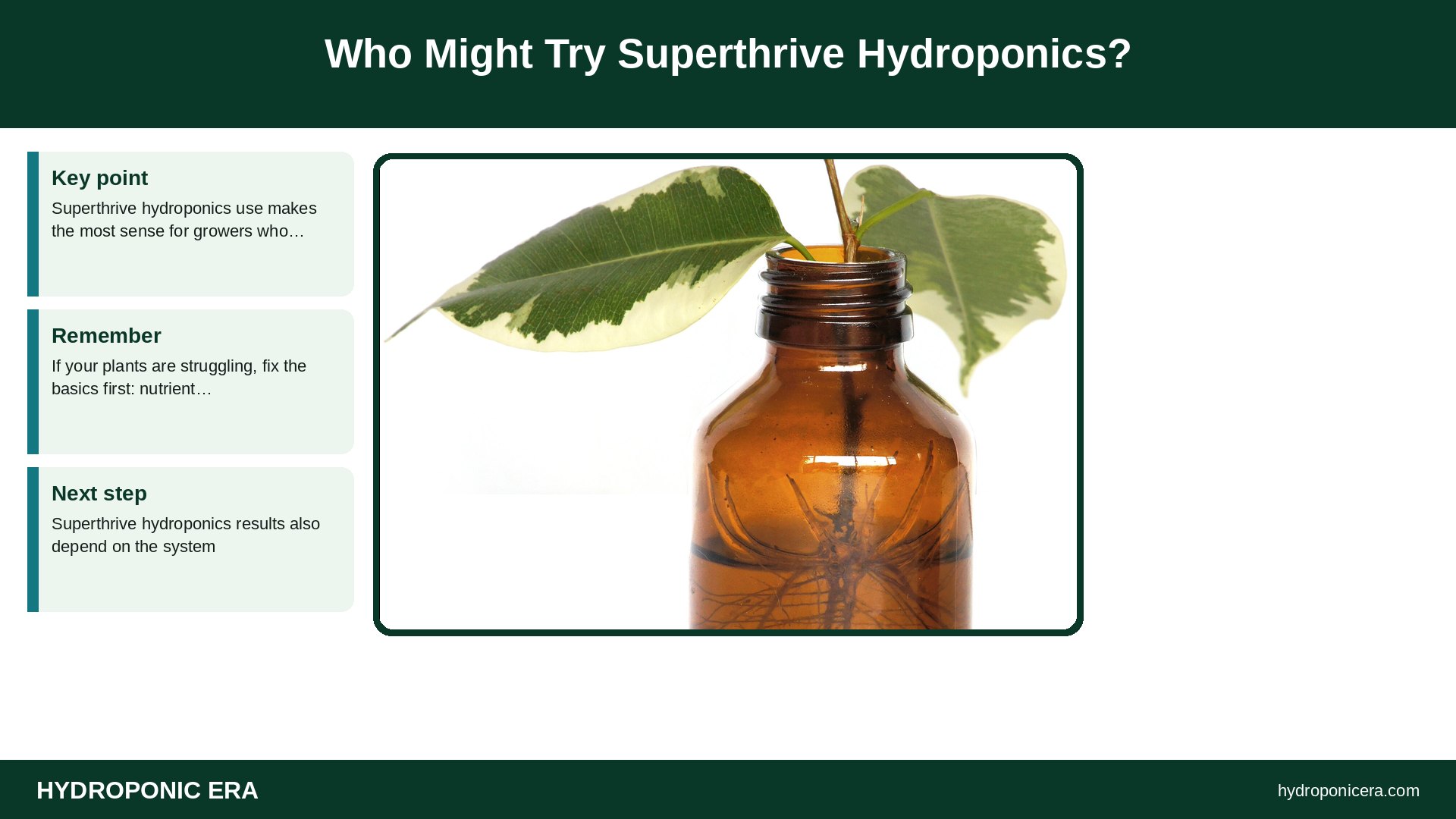
Superthrive hydroponics use makes the most sense for growers who already have a stable system and want to run a controlled test, especially with clones or transplants. If your plants are struggling, fix the basics first: nutrient strength, pH, dissolved oxygen, water temperature and light.
Superthrive hydroponics results also depend on the system. Deep water culture and NFT recirculate everything you add, while drip-to-waste coco flushes it through. Many experienced hydroponic growers skip vitamin tonics entirely and get excellent results. Others like Superthrive for transplants. Both camps agree that it isn’t a substitute for a complete nutrient.
FAQs: Superthrive Hydroponics
Is Superthrive safe for hydroponics?
The maker lists rates for use with nutrient programs. Use the low end, keep the reservoir cool and aerated, and watch roots closely.
Can I use Superthrive for clones?
The maker suggests 1 drop per 4 oz cup or ¼ tsp per gallon for seedlings and clones. A dedicated rooting hormone applied to the cut is another option.
Does vitamin B1 help hydroponic plants?
Extension research says B1 on its own doesn’t stimulate root growth in whole plants, because plants make their own.
Can Superthrive hydroponics use replace nutrients?
No. At 0.5% nitrogen, it isn’t a complete feed. Keep using your base nutrient.
Related HydroponicEra Guides
- Best hydroponic nutrients
- Bloom boosters and PK additives
- Aspirin for plants: what the research shows
- Why hydroponic roots turn brown
Sources
- Washington State University (Linda Chalker-Scott) — The Myth of Vitamin Stimulants (PDF)
- University of Arizona Cooperative Extension — Root Stimulators (PDF)
- Ferry-Morse — SUPERthrive Plant Nutrients and dosage guide
- Ferry-Morse — SUPERthrive Original Vitamin Solution with Kelp
- Perris Hydroponics (retailer label listing) — SUPERthrive 1 Quart
- Photo credits (Wikimedia Commons, edited with titles): Ficus cuttings with roots in a bottle, White background by Biusch (CC BY-SA 3.0); Avocado seed transplanting in pot by Alif Arefur (CC BY-SA 4.0); Hanfsämling mit Wurzelhaaren am Stamm – Hemp seedling with root hairs on the stem by Vschlothauer (CC0); Pepper and tomato seedling trays at Boğaziçi University 2026 by Furkan Akkurt (CC BY-SA 4.0)
HydroponicEra is not affiliated with Ferry-Morse or SUPERthrive. Product names are trademarks of their owners.