
The vegetables you can regrow in water from kitchen scraps are mainly green onions (scallions), celery, romaine lettuce, bok choy and Napa cabbage, plus the leafy tops of beets, turnips and carrots and cuttings of herbs like basil and mint. Set the root end or base in a shallow dish of water, give it a sunny window, and change the water every 2–3 days. Expect a bonus harvest of leaves or shoots, not a full new vegetable. Garlic, ginger and pineapple tops regrow too, but they need soil or a rooting medium rather than water.
Key takeaway: Iowa State University Extension says scrap gardening won’t replace your weekly grocery trip, but it’s a fun, low-cost project, especially with kids. Among all the vegetables you can regrow in water, green onions give the best return; beet and turnip tops give greens only, never a new root.
| Scrap | How to regrow in water | What you get |
|---|---|---|
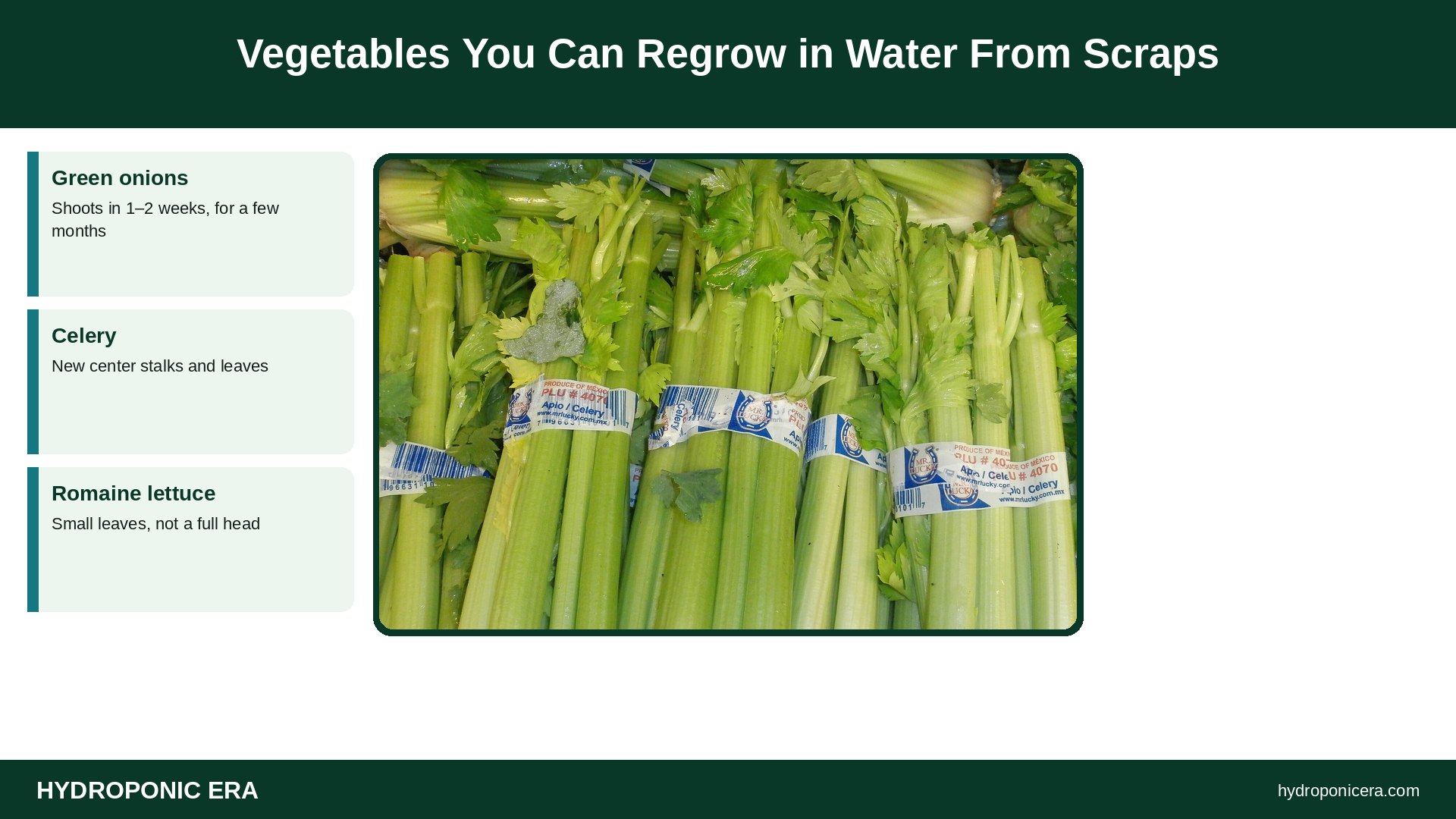
| Green onions | White bulbs with roots; roots just submerged | Shoots in 1–2 weeks, for a few months |
| Celery | Base in shallow water | New center stalks and leaves |
| Romaine lettuce | Bottom 2 inches (5 cm) in about ½–1 inch (1.3–2.5 cm) of water | Small leaves, not a full head |
| Bok choy / Napa cabbage | Base in shallow water | New leaves; bok choy in 1–2 days (UNR) |
| Beets, turnips, carrots | Top 2 inches (5 cm), cut-end down | Greens only |
| Basil, mint, oregano, sage, thyme | 2–4 inch (5–10 cm) cuttings | Rooted plants to pot up |
| Avocado seed | Bottom quarter in water on toothpicks | A houseplant, not fruit |
Green Onions: Easiest of the Vegetables You Can Regrow in Water
Iowa State says to cut off the green tops for cooking, then place the white bulbs with roots in a jar or mug with just enough water to submerge the roots. Keep them in a warm, sunny spot and change the water once a week.
Shoots should appear in a week or two, and the bulbs keep producing for a few months before their reserves run out. UF/IFAS Extension recommends keeping the lower third of the scallion with the roots, filling a glass until half the stalk is submerged, and swapping the water every few days. See our full guide to growing green onions hydroponically.
Leafy Vegetables You Can Regrow in Water: Celery, Romaine, Bok Choy
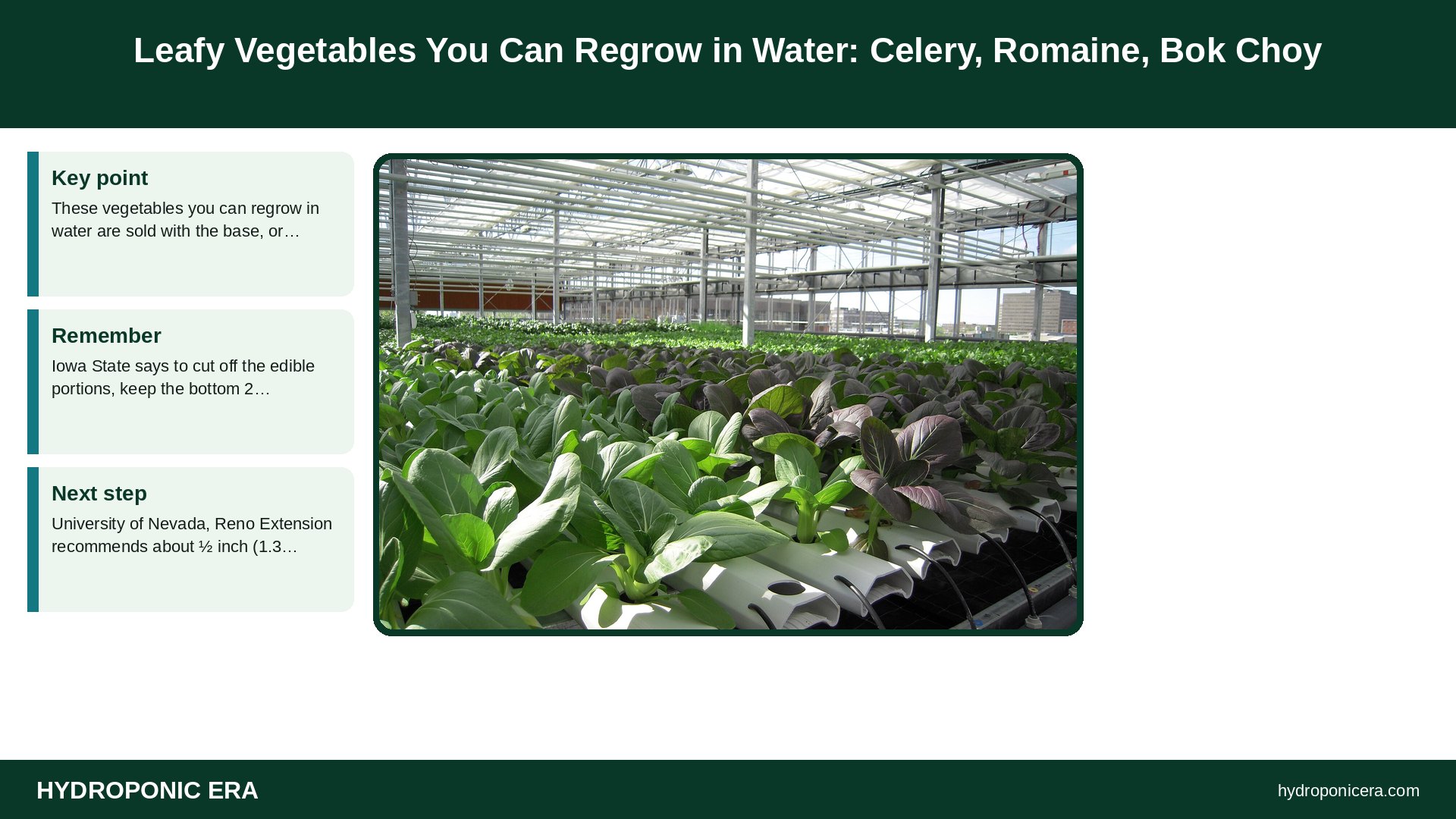
These vegetables you can regrow in water are sold with the base, or basal plate, still attached. Iowa State says to cut off the edible portions, keep the bottom 2 inches (5 cm), and set the base in a shallow dish with water covering the bottom inch (2.5 cm) or so. University of Nevada, Reno Extension recommends about ½ inch (1.3 cm), just enough to cover the base. Change the water every 2–3 days to prevent mold, and put the dish in a sunny window.
UNR reports bok choy can show new growth within 1–2 days, and celery and cabbage in about 3–4 days. With romaine, you’ll get smaller leaves, not a whole new head. Once roots form, Iowa State says you can keep it in clean water or transfer it to potting soil, where it will be more productive. We cover lettuce in detail in regrow lettuce in water.
Root Vegetables You Can Regrow in Water (Greens Only)
Root vegetables regrow from the top, not the base. Iowa State says to cut off the upper 2 inches (5 cm) and set the root top in a shallow jar or dish of water in a warm, sunny spot, changing the water every 2–3 days. A layer of pebbles or marbles in the bottom lets you add more water without submerging too much of the top. UF/IFAS describes cutting off about a third of a beet or turnip from the top and placing it cut-end-down so it is just submerged.
You’ll harvest the leafy greens as garnish or salad. Iowa State is clear that you won’t get a new beet or turnip root from this project.
Herbs to Grow Alongside Vegetables You Can Regrow in Water
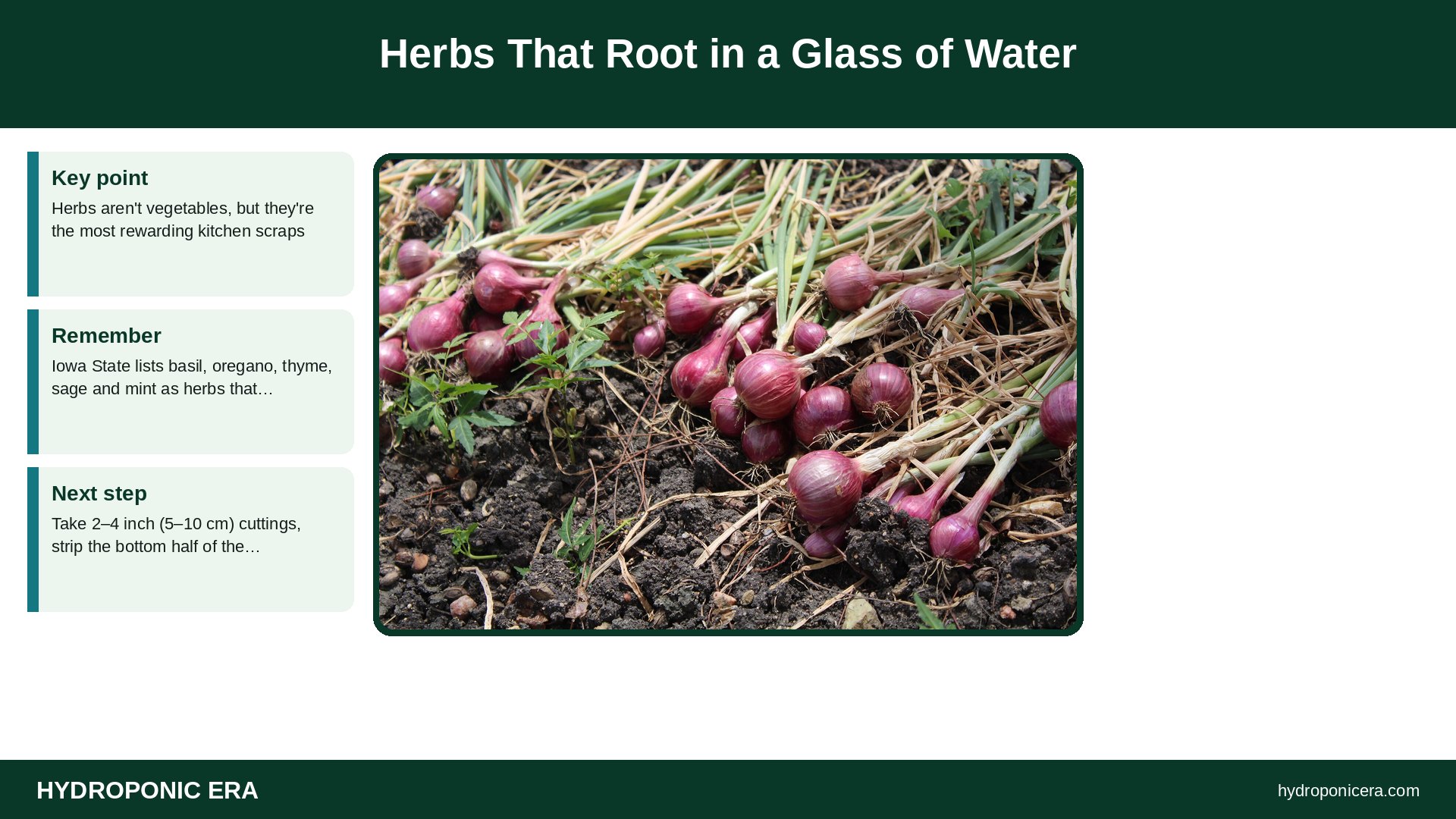
Herbs aren’t vegetables, but they’re the most rewarding kitchen scraps. Iowa State lists basil, oregano, thyme, sage and mint as herbs that root in a glass of water. Take 2–4 inch (5–10 cm) cuttings, strip the bottom half of the leaves, keep leaves above the water, and change the water once or twice a week. Pot them when roots are about 1 inch (2.5 cm) long.
Iowa State notes that water roots are coarser than soil roots, so potted cuttings may wilt briefly. UNR adds cilantro, parsley and lemon balm to the list of herbs that regrow from cuttings. Our guide to rooting basil in water walks through basil step by step.
Scraps That Need Soil Instead of Water
- Pineapple: Iowa State dries the top for several days, then roots it in perlite, vermiculite or coarse sand; rooting takes 6–8 weeks. UF/IFAS lets the crown heal for a day or two before planting 3–4 inches (8–10 cm) deep.
- Ginger and turmeric: UF/IFAS cuts rhizomes into 1–1½ inch (2.5–4 cm) pieces with an eye, dries them for a few days, then plants them in soil. Iowa State notes ginger is slow, often taking 1–2 months to sprout.
- Garlic: UF/IFAS plants individual cloves a couple of inches deep for greens or bulbs.
- Bulb onions: UF/IFAS plants the dried root end in soil.
- Avocado: The one fruit seed often started in water. Iowa State suspends it on toothpicks with the bottom quarter in water; it should sprout within a few weeks, and you should discard it after 2 months without sprouting. Expect a houseplant, not avocados.
Why Some Grocery Scraps Won’t Sprout
Some scraps fail for reasons beyond your control. Iowa State explains that potatoes, sweet potatoes and garlic are often treated with a sprout inhibitor before reaching the store. That’s good for storage but bad for regrowing. If they fail, it’s likely the treatment, not your green thumb. Organic produce is often untreated, though that’s hard to confirm.
How to Keep Vegetables You Can Regrow in Water Healthy
All the vegetables you can regrow in water share the same few rules. Keep water shallow so only the roots or base sit in it, which protects cut surfaces from rot. Change it on schedule, every 2–3 days for most scraps, as Iowa State and UF/IFAS advise, and rinse the container each time. Give them the sunniest window you have; UNR recommends full sun indoors.
Plain water holds almost no nutrients, so scraps grow on stored reserves and slow down after the first flush. When that happens, move them to potting mix or a simple hydroponic jar with dilute nutrients, or start fresh with a new scrap.
FAQs
Which vegetables you can regrow in water are easiest?
Green onions; shoots appear in a week or two.
Are carrots among the vegetables you can regrow in water?
Only the green tops, not a new carrot.
How often should I change the water?
Every 2–3 days for most scraps; weekly for green onions per Iowa State.
Can I regrow potatoes in water?
Store potatoes are often treated to stop sprouting, so results vary.
Do vegetables you can regrow in water need fertilizer?
For longer growth, move them to potting soil or a dilute nutrient solution.
Can kids do this project?
Yes; it’s a classic, safe kitchen science project.
Sources
- Iowa State University Extension and Outreach — How to Grow Vegetables from Kitchen Scraps
- UF/IFAS Extension Gardening Solutions — Grocery Store Starts
- University of Nevada, Reno Extension — Bring Vegetable Growing Indoors This Winter
- University of Illinois Extension — Regrowing Scrap Veggies
- Photo credits (Wikimedia Commons, edited with titles): Celery bunches stacked by Jeffery Martin (CC0); Lufa Farms Bok Choy in NFT System by Lufa Farms (CC BY-SA 2.0); Onion crop by Kasyap (CC BY-SA 4.0); Starr-080608-7435-Mentha spicata-leaves-Water plant Sand Island-Midway Atoll (41264499822) by Forest and Kim Starr (CC BY 3.0 us); Beta vulgaris cotyledons by Tepeyac (CC BY-SA 3.0)