
Grow Strawberries Hydroponically
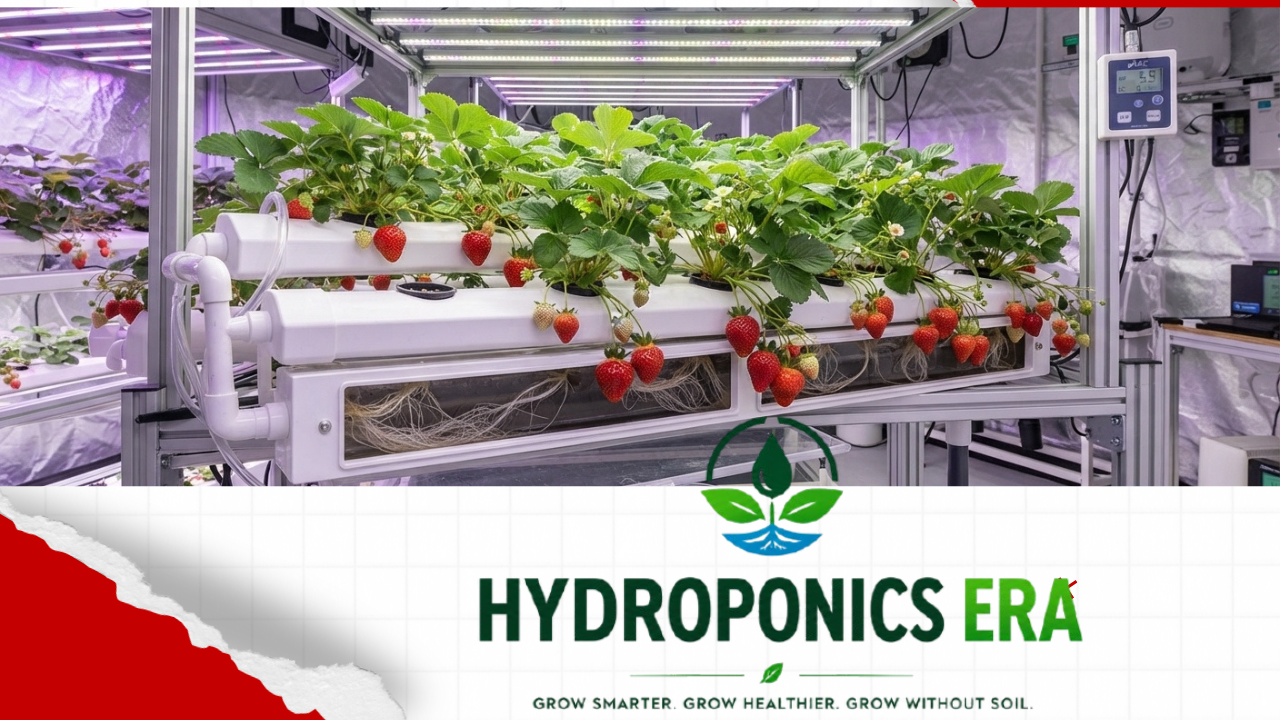
Growing fresh strawberries does not require a backyard garden or traditional soil. If you want to grow strawberries hydroponically, you can produce delicious berries indoors, inside a greenhouse, or in another controlled growing environment. Hydroponic systems provide the roots with water, oxygen, and nutrients while allowing you to control important growing conditions.
If you want to grow strawberries hydroponically successfully, you need to pay attention to more than just water and fertilizer. Light, temperature, humidity, airflow, pH, electrical conductivity (EC), root health, and pollination all influence plant growth and fruit production.
The good news is that strawberries are well suited to controlled growing systems. Their relatively compact size makes them practical for vertical systems, NFT channels, containers, and other hydroponic setups.
This guide explains how to choose strawberry varieties, select a suitable hydroponic system, prepare plants, manage nutrients and lighting, pollinate flowers, prevent common problems, and harvest ripe fruit.
Can You Grow Strawberries Hydroponically?
Yes, strawberries can be grown successfully without traditional soil. When you grow strawberries hydroponically, the plant receives the essential nutrients it would normally obtain from soil through a carefully prepared nutrient solution.
Hydroponics gives growers greater control over the root environment. Instead of depending on soil to provide nutrients and retain moisture, you control the amount of water, nutrients, and oxygen available to the roots.
This makes it possible to grow strawberries hydroponically in places where traditional gardening may not be practical. Indoor rooms, greenhouses, balconies, patios, and other small spaces can all be adapted for hydroponic production.
However, strawberries are fruiting plants, so they generally require more attention than crops such as lettuce or herbs. Producing healthy leaves is relatively easy, but producing large, sweet, well-shaped berries requires suitable lighting, nutrition, temperature, and pollination.
Choose the Right Strawberry Variety
The first step to grow strawberries hydroponically is selecting a variety that matches your growing environment.
Everbearing and day-neutral varieties are often attractive for controlled environments because they can produce fruit over an extended period when environmental conditions are suitable.
Day-neutral strawberries are particularly useful for indoor growing because flowering is less dependent on traditional day-length patterns than short-day varieties.
When choosing plants, look for:
- Healthy green leaves
- Strong crowns
- Well-developed roots
- No visible mold
- No obvious disease symptoms
- No significant insect infestation
- Plants from a reliable supplier
Starting with healthy plants makes it much easier to grow strawberries hydroponically because weak or diseased plants can introduce problems into the entire system.
Avoid placing questionable plants into a shared reservoir. Diseases and root problems can spread quickly through recirculating hydroponic systems.
Choose a Hydroponic System for Strawberries
There are several ways to grow strawberries hydroponically, and the best system depends on your available space, budget, experience, and maintenance preferences.
Nutrient Film Technique
Nutrient Film Technique, commonly called NFT, continuously moves a shallow layer of nutrient solution through growing channels.
The roots remain inside the channel while the nutrient solution flows past them. Strawberries can work well in NFT because their crowns can be positioned above the channel while the fruit hangs outside.
NFT systems require reliable water circulation and proper channel leveling. A pump failure can quickly affect plants because the roots depend on the circulating solution.
Deep Water Culture
Deep Water Culture, or DWC, keeps plant roots suspended in nutrient solution while an air pump and air stone supply oxygen.
DWC is relatively simple and inexpensive, which can make it appealing to beginners. However, when you grow strawberries hydroponically in DWC, you must make sure the crown remains above the nutrient solution.
Constantly wetting the crown can encourage crown problems. The roots need moisture and oxygen, while the crown should remain appropriately exposed.
Drip Hydroponics
Drip systems deliver nutrient solution directly to individual plants through small emitters.
This method works particularly well when strawberries are grown in containers filled with an inert growing medium such as coco coir or another suitable substrate.
A drip system can make it easier to manage individual plants and control how much solution reaches each container.
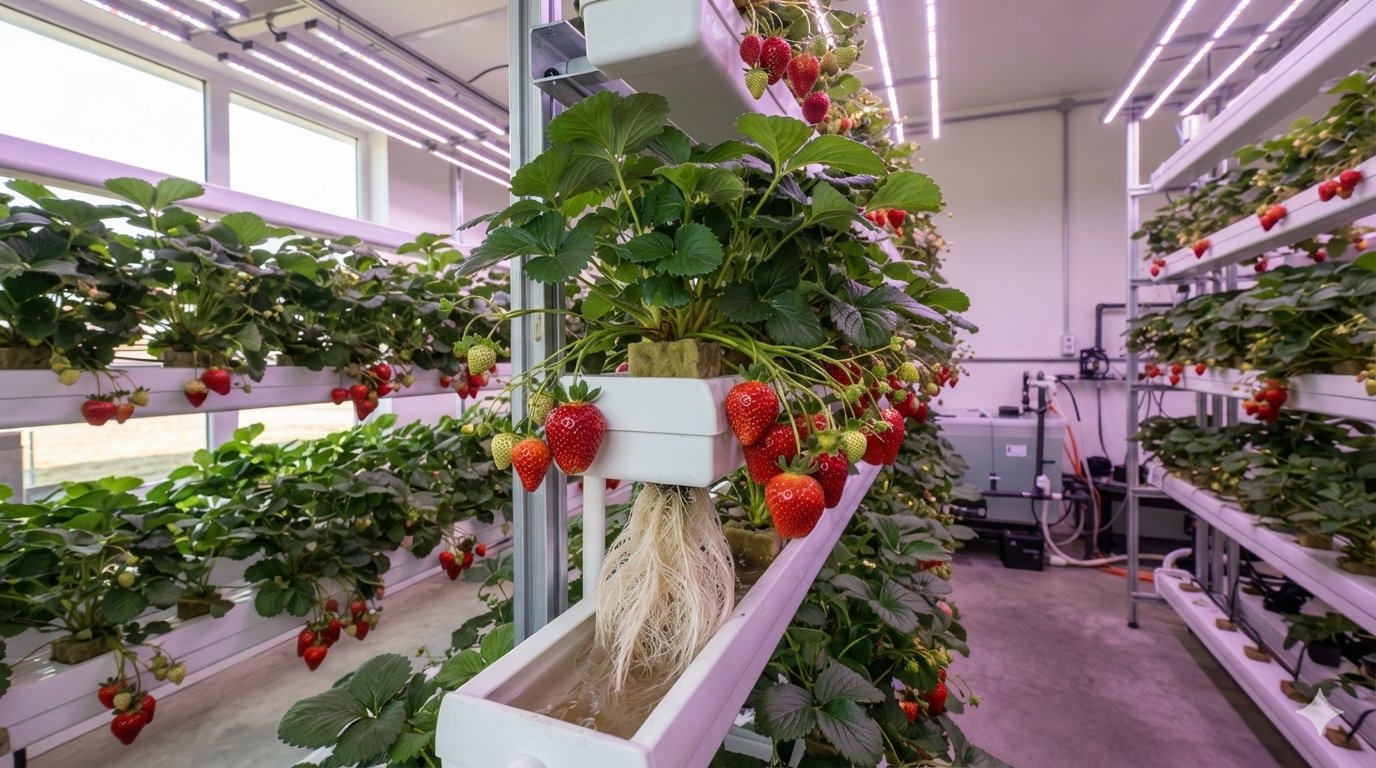
Vertical Hydroponic Systems
Vertical systems stack growing locations above one another, allowing growers to grow strawberries hydroponically while using less floor space.
They can be useful for indoor gardens and small growing areas. However, every level must receive adequate light. Plants near the bottom can become shaded if the system is designed poorly.
For beginners, a small drip system or another simple setup that is easy to inspect and clean is usually a better starting point than an unnecessarily complicated installation.
What You Need to Grow Strawberries Hydroponically
Before you grow strawberries hydroponically, prepare the basic equipment.
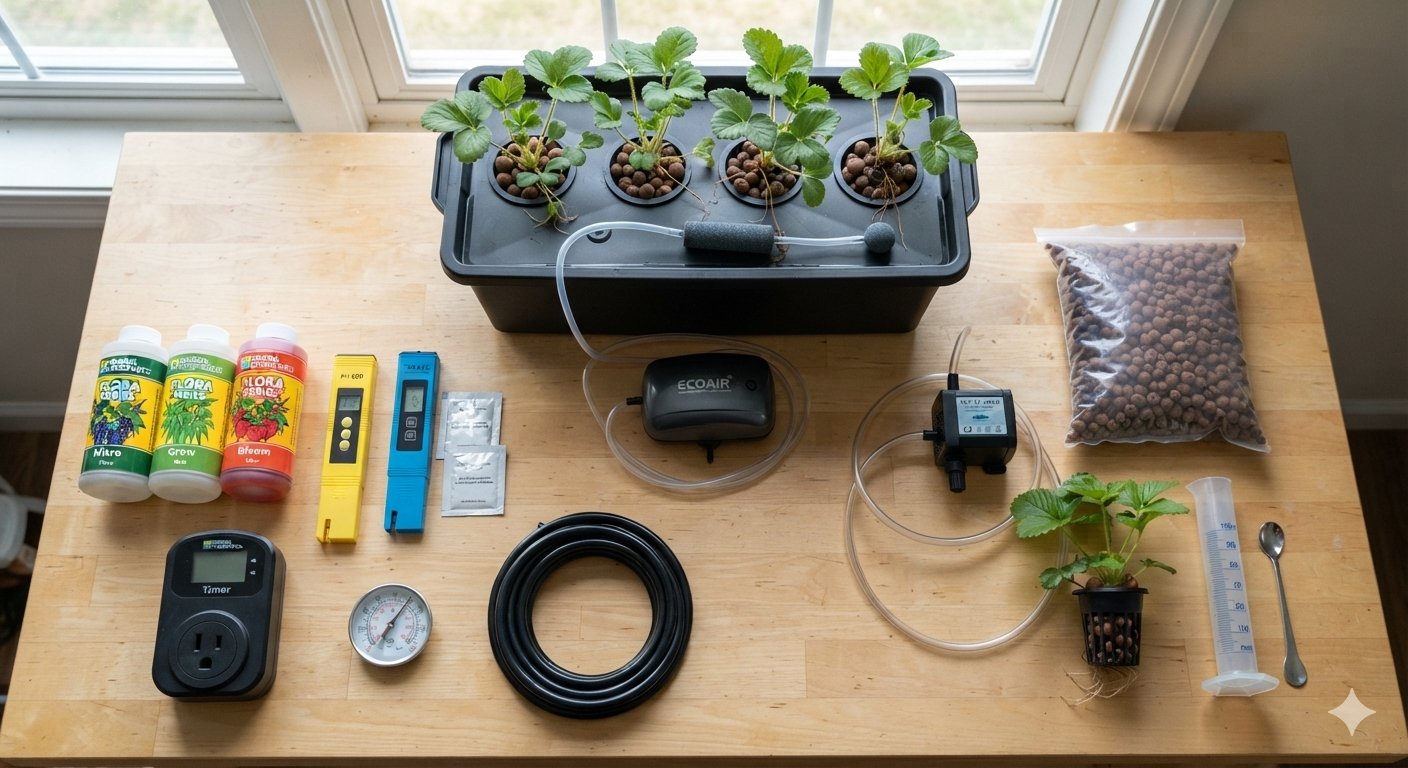
You will generally need:
- Healthy strawberry plants
- Hydroponic growing system
- Reservoir
- Water pump
- Air pump and air stone when appropriate
- Hydroponic nutrients
- Suitable growing medium if required
- pH meter
- EC meter
- Grow lights for indoor growing
- Timer
- Thermometer
- Hygrometer
- Small circulation fan
- Plant support if necessary
A pH meter and EC meter are especially useful. They allow you to measure the nutrient solution instead of trying to determine plant health from appearance alone.
Good monitoring equipment makes it easier to grow strawberries hydroponically consistently because you can identify changes before they become major problems.
How to Grow Strawberries Hydroponically Step by Step
Step 1: Start With Healthy Plants
To grow strawberries hydroponically successfully, begin with healthy strawberry crowns, bare-root plants, or established plants.
If the plants were previously grown in soil, carefully remove as much soil as possible from their roots before transplanting them into the hydroponic system.
Rinse the roots gently with clean water. Avoid aggressively scrubbing them because delicate root tissue can be damaged.
Inspect the roots before planting. Healthy roots should generally appear firm and free from foul odors, excessive slime, or extensive discoloration.
Step 2: Prepare the Growing Area
Set up the entire system before placing your strawberry plants inside.
Check that:
- Pumps operate correctly.
- Water flows through the system.
- Containers do not leak.
- Reservoirs are secure.
- Grow lights are positioned correctly.
- Electrical connections are protected from water.
- The reservoir is easy to access.
- Air circulation is adequate.
A properly prepared growing area makes it easier to grow strawberries hydroponically without constantly dealing with preventable equipment problems.
Keep the strawberry crown above the nutrient solution. The crown is the central part of the plant where the roots and leaves meet.
Step 3: Place the Strawberry Plants
Position each plant so the roots can access water and oxygen while the crown remains exposed.
If you use a growing medium, support the plant firmly without packing material tightly around the crown.
Provide enough space between plants for leaves to develop. Crowding can reduce airflow and increase the risk of fungal problems.
Good spacing also allows berries to hang freely instead of resting against wet surfaces.
Step 4: Prepare the Nutrient Solution
Use a complete hydroponic nutrient formulated for fruiting plants.
Follow the manufacturer’s mixing instructions instead of guessing how much fertilizer to add. Nutrient products have different concentrations and formulations.
Strawberries require essential nutrients such as nitrogen, phosphorus, potassium, calcium, magnesium, sulfur, and various micronutrients.
When you grow strawberries hydroponically, nutrient requirements can change as plants move from vegetative growth into flowering and fruit production.
A commonly used starting pH range for strawberries is approximately 5.5–6.5. For EC, a broad working range may be around 1.0–2.0 mS/cm, depending on cultivar, plant age, environmental conditions, nutrient formulation, and production stage.
These values should be treated as starting points rather than universal rules.
Step 5: Provide Enough Light
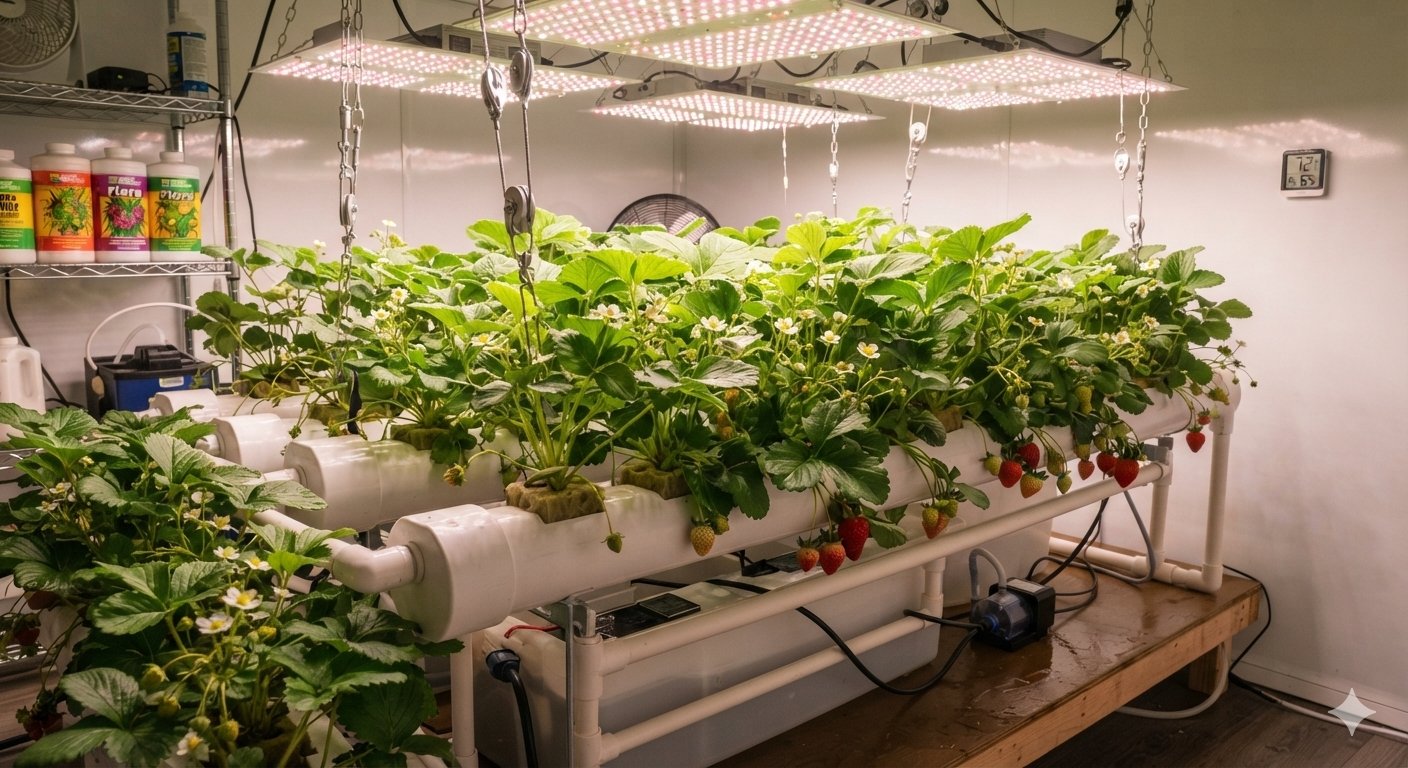
Light is one of the most important factors when you grow strawberries hydroponically indoors.
Strawberry plants need sufficient light for photosynthesis, flowering, and fruit development. If natural sunlight is inadequate, use an appropriate full-spectrum grow light.
Use a timer to maintain a consistent lighting schedule.
The exact light intensity and duration should depend on the cultivar, fixture, growing distance, temperature, and plant response.
More light is not automatically better. Excessive light can increase temperature and cause stress to leaves and flowers.
Step 6: Maintain the Right Temperature
Temperature can have a major influence on strawberry growth and fruit quality.
A practical starting target for many indoor setups is approximately 60–75°F during the day, with somewhat cooler nighttime conditions depending on the cultivar and growth stage.
Very high temperatures can interfere with flowering, pollination, fruit development, and overall plant health.
If you want to grow strawberries hydroponically indoors, use a thermometer rather than estimating temperature by feel.
Step 7: Manage Humidity and Airflow
Humidity and airflow become especially important when you grow strawberries hydroponically in an enclosed room or greenhouse.
Excessive humidity can encourage fungal problems, particularly when foliage or fruit remains wet for long periods.
Use a small circulation fan to create gentle air movement around the plants. Avoid directing strong wind continuously at the leaves.
If humidity remains too high, improve ventilation and increase spacing between plants.
Step 8: Pollinate the Flowers
Pollination is one of the most commonly overlooked parts of indoor strawberry production.
Outdoor strawberries can receive help from insects and natural air movement. Indoor plants may not have enough natural pollination.
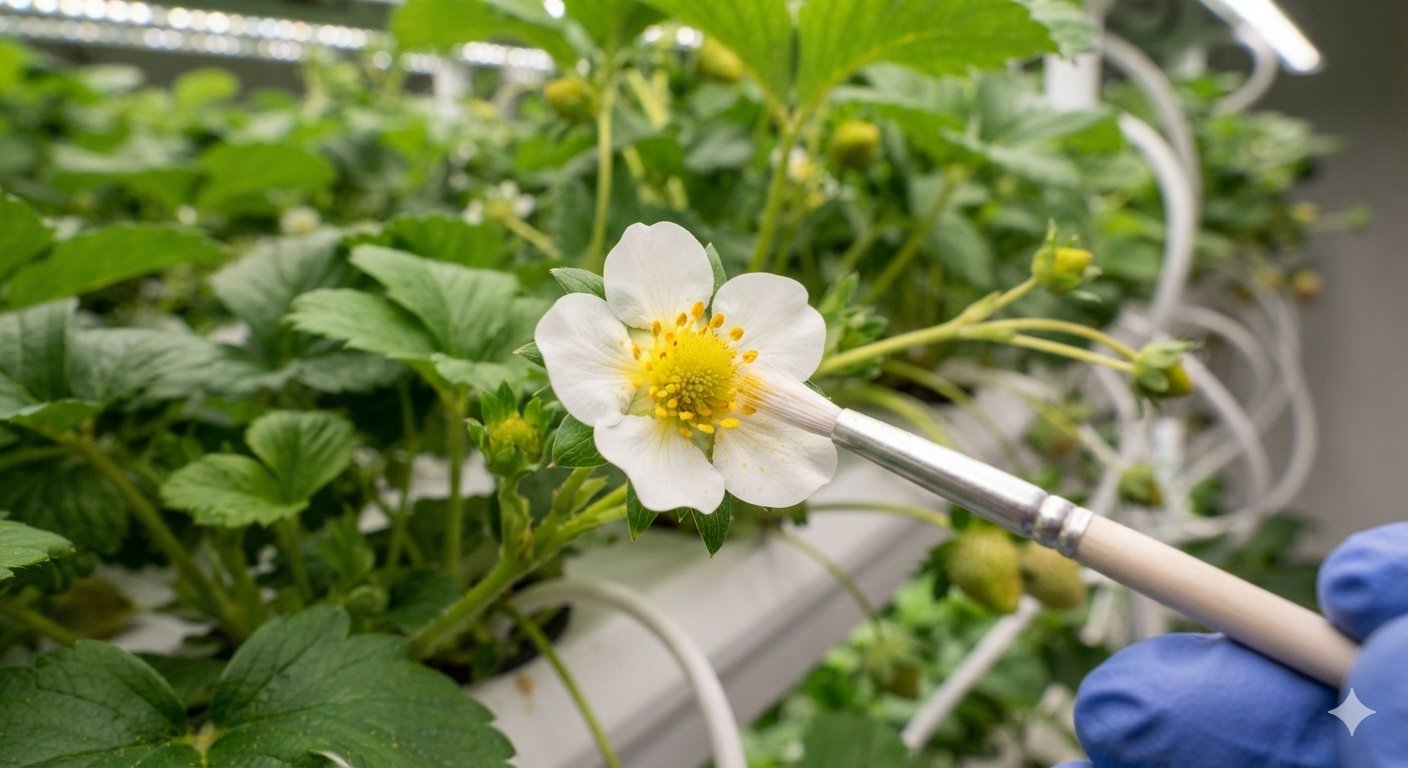
When flowers appear, gently pollinate them using a small soft brush. You can also gently shake flowering plants to help distribute pollen.
Successful pollination is essential when you grow strawberries hydroponically indoors because poor pollination can result in small, uneven, or misshapen berries.
Step 9: Monitor the Nutrient Solution
Regular monitoring is essential.
Check:
Do not simply add concentrated fertilizer every time the water level falls. Plants absorb water and nutrients at different rates, so the remaining solution may not have the same nutrient balance as the original mixture.
When you grow strawberries hydroponically, follow your nutrient manufacturer’s recommendations for reservoir replacement and nutrient management.
Step 10: Support Developing Fruit
As strawberries begin forming, keep developing fruit away from constantly wet surfaces.
If berries rest against a wet growing channel or saturated medium, they may become more vulnerable to rot.
Allow berries to hang freely whenever possible. Remove damaged fruit and dead leaves regularly.
This simple maintenance routine can make it easier to grow strawberries hydroponically while maintaining cleaner plants and better fruit quality.
Hydroponic Strawberry Growing Conditions at a Glance
| Growing Factor | Practical Starting Range |
|---|---|
| pH | About 5.5–6.5 |
| EC | Roughly 1.0–2.0 mS/cm |
| Day temperature | About 60–75°F |
| Light | Strong, consistent lighting indoors |
| Airflow | Gentle continuous circulation |
| Humidity | Moderate; avoid prolonged wet foliage |
| Pollination | Usually needed indoors |
| Nutrients | Complete hydroponic nutrient for fruiting plants |
These are general starting ranges. Cultivar, growth stage, nutrient formulation, climate, and hydroponic system can change the ideal conditions.
How Long Do Hydroponic Strawberries Take to Grow?
The time required depends on the type and age of the plants you start with.
Established plants can produce fruit much sooner than plants grown from seed.
Once flowers appear, strawberries generally require several weeks for the berries to develop and ripen. The exact timeline depends on variety, temperature, light, pollination, and plant health.
When you grow strawberries hydroponically, do not judge success only by how quickly the first berries appear.
Healthy roots, vigorous leaves, strong flowers, and steadily developing fruit are better indicators that your system is working properly.
Common Problems When Growing Strawberries Hydroponically
| Problem | Possible Cause | What to Do |
|---|---|---|
| Yellow leaves | Nutrient imbalance, root problems, or stress | Check pH, EC, roots, and environment |
| Brown leaf edges | High EC, heat, or water stress | Check nutrient concentration and temperature |
| Small berries | Weak light, poor pollination, or stress | Improve lighting and pollination |
| Misshapen berries | Incomplete pollination | Improve flower pollination |
| Brown roots | Poor oxygenation or root disease | Inspect roots and improve aeration |
| Flowers but no fruit | Pollination or environmental problem | Hand-pollinate and check temperature |
| Moldy fruit | Excess moisture or poor airflow | Improve ventilation and remove affected fruit |
| Wilting | Root, water, temperature, or system problem | Check pump, roots, reservoir, and temperature |
Common Mistakes to Avoid
Overwatering the Crown
Hydroponics does not mean every part of the strawberry plant should remain wet.
The roots need water and oxygen, but the crown should remain appropriately exposed.
When beginners grow strawberries hydroponically, keeping the crown too wet is a common mistake.
Using Too Much Nutrient
More fertilizer does not automatically mean more strawberries.
Excessively concentrated nutrient solution can damage roots and cause nutrient stress.
Measure EC and follow the manufacturer’s recommended mixing instructions.
Ignoring Pollination
Indoor strawberry flowers may not receive enough natural pollination.
If flowers appear but fruit development is poor, inspect your pollination process before making major changes to the nutrient solution.
Providing Weak Light
Strawberry plants may survive with inadequate lighting but can struggle to produce quality fruit.
If you grow strawberries hydroponically indoors, use an appropriate grow light rather than relying on a weak household bulb.
Letting the System Become Dirty
Dead roots, old leaves, algae, and decomposing material can create problems in recirculating systems.
Clean equipment regularly and inspect the reservoir, pumps, tubing, and growing channels.
A clean system gives you a better environment in which to grow strawberries hydroponically.
How to Harvest Hydroponic Strawberries
Harvest strawberries when they have developed their characteristic ripe color and appear ready to eat.
Do not judge ripeness only by one small section of the berry. Look at the entire fruit and consider the normal appearance of your specific variety.
Use clean scissors or gently twist the berry from the plant while leaving a small portion of stem attached.
Handle ripe berries carefully because they can bruise easily.
If you grow strawberries hydroponically for continuous production, harvest regularly rather than allowing overripe fruit to remain attached to the plant.
How to Keep Strawberry Plants Producing
After harvesting begins, continue monitoring your plants closely.
Remove:
- Dead leaves
- Damaged berries
- Rotten fruit
- Diseased plant material
- Excessive runners when necessary
Some varieties produce runners that can be used to create new plants. If runners are not needed, removing unnecessary ones can help the plant focus its resources on fruit production.
Continue checking pH and EC and maintain suitable lighting, temperature, humidity, and airflow.
Also watch for common pests such as aphids and spider mites.
Early detection is much easier to manage than a large infestation.
Frequently Asked Questions
Can Strawberries Really Grow Without Soil?
Yes. Strawberries can grow without soil when their roots receive water, oxygen, and essential nutrients.
This is the basic principle behind hydroponic production and allows growers to grow strawberries hydroponically in many controlled environments.
What Is the Best Hydroponic System for Strawberries?
There is no single system that is perfect for every grower.
NFT, drip systems, DWC, and vertical systems can all be used.
For beginners who want to grow strawberries hydroponically, a simple system that is easy to inspect, clean, and maintain is often the best starting point.
What pH Should Strawberries Have in Hydroponics?
A practical starting range is approximately 5.5–6.5.
The exact target can vary depending on nutrient formulation, cultivar, water quality, and growing system.
Do Hydroponic Strawberries Need Pollination?
Yes. Strawberry flowers need successful pollination to produce well-formed fruit.
Outdoor plants may receive assistance from insects and wind, while indoor growers may need to manually pollinate flowers.
How Much Light Do Hydroponic Strawberries Need?
Strawberries need strong, consistent light for healthy growth and fruit production.
If you grow strawberries hydroponically indoors, choose a suitable grow light and adjust its intensity and schedule according to the plant’s response.
Why Are My Hydroponic Strawberries Not Producing Fruit?
Several factors can cause poor fruit production, including inadequate light, poor pollination, unsuitable temperatures, nutrient problems, and general plant stress.
Check each factor individually instead of changing everything at once.
Can I Grow Strawberries Hydroponically Indoors?
Yes. Indoor hydroponic strawberry growing is possible when plants receive adequate light, nutrients, water, oxygen, airflow, suitable temperatures, and successful pollination.
A controlled environment can make it easier to grow strawberries hydroponically throughout different seasons.
Are Hydroponic Strawberries Difficult for Beginners?
They are somewhat more demanding than leafy greens because fruit production requires additional management.
However, beginners can successfully grow strawberries hydroponically by starting with a small system and learning how to monitor pH, EC, light, temperature, roots, and pollination.
Final Thoughts
Learning to grow strawberries hydroponically can be a rewarding way to produce fresh fruit without traditional garden soil.
The basic principle is straightforward: provide the roots with water, oxygen, and balanced nutrients while giving the plant enough light and maintaining a suitable environment.
For beginners, the biggest mistake is trying to change too many variables at the same time.
Start with a small number of healthy plants. Learn how your system behaves and regularly monitor pH, EC, temperature, roots, plant growth, lighting, and pollination.
Indoor growers should pay particular attention to lighting and flower pollination. A healthy flowering plant still needs successful pollination before it can produce well-formed berries.
With consistent monitoring and good environmental management, you can grow strawberries hydroponically successfully in a home garden, greenhouse, or indoor growing space.
Start small, keep your system clean, make changes gradually, and pay attention to how your plants respond. With practice, hydroponic strawberry growing can become a reliable and enjoyable way to produce fresh berries.
Internal Links
Why Are Hydroponic Leaves Turning Yellow? 7 Common Problems and Easy Solutions
How to Grow Microgreens Hydroponically: 16 Proven Complete Beginner’s Guide
How to Grow Peppers Hydroponically: Complete Guide to Fruiting, Pollination & High Yields
3 thoughts on “How to Grow Strawberries Hydroponically: 10 Easy Steps for Beginners”