
Quick Answer
Grow endive escarole hydroponically means producing bitter chicory greens (curly endive and broader-leaf escarole) with cool-season habits, bolting awareness, and optional blanching for milder centers. University of Minnesota Extension groups endive/escarole with lettuce/radicchio culture and gives spacing targets; UF/IFAS discusses escarole and endive as nutritious leafy crops. See lettuce, multi-crop tanks, tip burn, spacing, and humidity/VPD.
Key takeaways for grow endive escarole hydroponically
- Grow endive escarole hydroponically is a practical home-hydro workflow—not filler.
- Cooler rooms improve bitterness control and reduce bolting pressure.
- Spacing differs for baby leaf vs full heads / self-blanch attempts.
- Shared reservoirs need compatible leafy EC and climate.
- Prefer university/extension sources over forum myths.
- Blanching is optional flavor management—not mandatory.
- Original ops card keeps Grow endive escarole hydroponically decisions consistent.
- Grow endive escarole hydroponically fails when growers skip the boring checks.
Related HydroponicEra guides

Why This Matters
Grow endive escarole hydroponically expands the chicory set beyond lettuce. UMN Extension explains curly endive versus broader escarole and notes spacing for baby leaf, full-size plants, and self-blanch plantings. UF/IFAS leafy publications reinforce that these crops need sound pest/disease and postharvest awareness.
Hydro growers succeed with lettuce-like systems plus bitterness/bolting management—not tomato playbooks.
Comparison / Decision Table
| Goal | Practice | Note |
|---|---|---|
| Baby salad leaves | Denser spacing; early cut | UMN baby-leaf spacing cues |
| Full plants | ~10–12 in class spacing | Airflow matters |
| Milder hearts | Crowding/blanch tactics | Optional; watch rot |
| Shared with lettuce | Match EC/climate | compatibility |
Step-by-Step Workflow
- Start seed in plugs; keep cool for sturdy seedlings.
- Choose curly endive vs escarole for your kitchen goal.
- Transplant into NFT/DWC/media leafy systems.
- Set leafy EC and stable pH.
- Provide moderate-strong light without extreme tip-burn setups.
- Space intentionally for baby leaf or heads.
- If blanching, follow a clean method and watch moisture/rot.
- Harvest outer leaves or whole heads before bitter bolt.
- Scout aphids and leaf diseases.
- Stagger plantings for continuous salads.
Key Variables
| Variable | Effect | Link |
|---|---|---|
| Temperature | Bolt / bitterness | heat/cold |
| Spacing | Blanch vs disease | spacing |
| Airflow | Rot in dense hearts | fans |
| EC | Tip burn risk | tip burn |
Common mistakes with grow endive escarole hydroponically

- Running endive in a hot fruiting tent
- Blanching so hard hearts rot
- Fruiting EC on chicories
- Zero airflow in dense plantings
- Waiting until plants bolt solid
- Mixing with aggressive herbs that overshadow
Troubleshooting

| Signal | Action |
|---|---|
| Rapid bolt | Cooler climate; harvest earlier |
| Tip burn | Ease EC / review VPD |
| Heart rot after blanch | Less aggressive blanch; more airflow |
| Extreme bitterness | Younger harvest; review stress |
Practical Framework
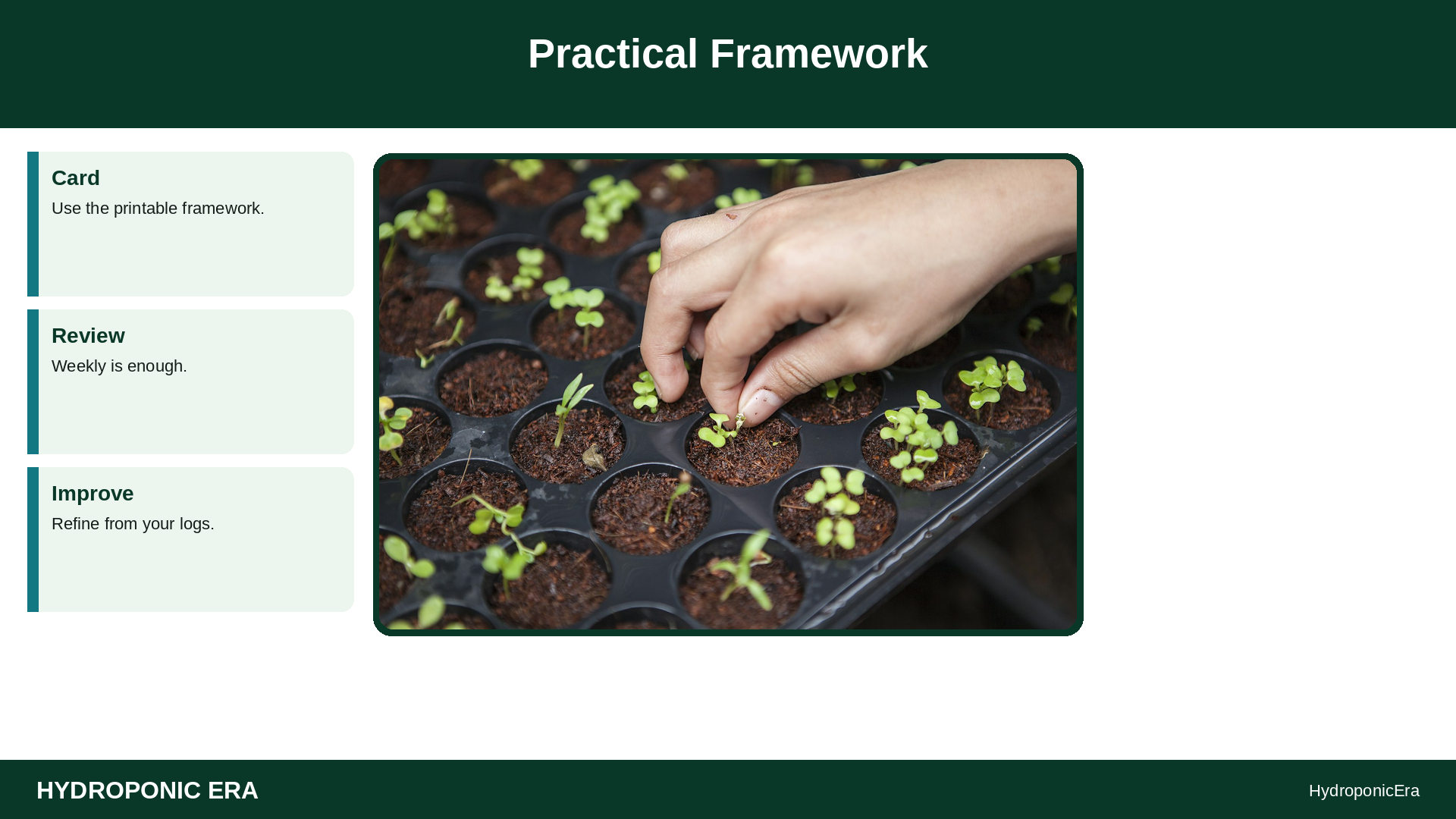
Chicory greens card: endive or escarole? | baby vs head? | cool lane? | blanch Y/N.
Closing practice for grow endive escarole hydroponically: bitterness is partly genetics, partly stress—manage both.
What to Check Before Filling Sites With Endive or Escarole
- Cultivar typed?
- Cool leafy climate?
- Spacing chosen?
- Tip burn watched?
- Blanch plan hygienic?
- Succession set?
FAQs about grow endive escarole hydroponically
Belgian endive forcing?
Different specialty process—UMN notes it is hard at home; this page is salad endive/escarole.
Same as lettuce?
Similar systems; flavor and timing differ.
NFT OK?
Yes for many leafy goals.
Eat raw?
Common for salads; escarole often cooked—kitchen choice.
Shared tank with basil?
Basil likes warmer—compatibility caution.
Radicchio next?
Related chicory—see dedicated radicchio guide.
Bitterness, Blanching, and Shared Rafts

UMN Extension separates curly endive from broader escarole and publishes spacing ideas for baby leaf, full plants, and self-blanch plantings. UF/IFAS materials on escarole/endive remind growers these are real leafy crops with pest and postharvest considerations—not novelty garnishes.
Optional blanching can mild the heart, but dense wet hearts without airflow invite rot. Cooler rooms reduce bolting pressure. If you share a reservoir with lettuce, match EC and climate; basil’s warmer preferences often make a poor roommate. Harvest on bitterness goals: younger cuts for milder salads, mature heads for cooked escarole dishes.
Belgian endive forcing is a different specialty workflow—this page stays on salad endive/escarole culture in home hydro systems.
Decide baby-leaf versus head spacing before transplant day. If blanching, prioritize hygiene and airflow over maximum pale color. Shared tanks with warm herbs often create climate conflict—split reservoirs when in doubt.
Harvest logs that note bitterness help you tune future timing better than memory.
Practice Notes for Home Systems
Keep changes sequential. If you alter reservoir temperature, nutrient strength, and photoperiod on the same day, you will not know which lever worked. Write the date, the single change, and the plant response on new growth—not on already-damaged leaves. Prefer opaque, light-proof reservoirs, calibrated meters, and clean measuring tools over boutique additives.
Internal links on this site exist to prevent orphan pages: open the related guides when a symptom points outside this article’s scope. Extension sources in the Sources list are the external backbone—use them when you need deeper greenhouse or crop-culture context, and do not invent ppm tables the citations do not support.
For edible crops, food-safety hygiene (clean hands, clean harvest tools, no storm-drain dumping of nutrients) is part of hydro ops, not an afterthought. If a step feels unclear for your municipality or building, pause and ask a local authority rather than improvising a risky shortcut.
Curly endive catches debris—rinse carefully. Escarole’s broader leaves cook well; plan kitchen use when choosing cultivars. If self-blanch spacing is used, inspect hearts every few days for moisture trapped in the center. Tip burn under high light means revisit the tip-burn checklist rather than adding random Cal-Mag on top of an already high EC.
Staggered trays every week keep bitterness options available without a single bolting cliff. When sharing reservoirs with lettuce, match crop timelines so one species is not overheld while the other is harvested.
Setup Checklist Recap
Before you scale plant count, confirm the system class matches the crop class: leafy rafts for chicories and purslane, aerated media or Dutch buckets for sprawling tomatillos and bitter melon vines, and well-drained media for woody or drainage-sensitive herbs like French tarragon and lemon verbena. Match EC lane, climate, and support hardware on paper first. Keep a quarantine mindset for new cuttings and a sanitation step between cycles. Use meters on a schedule, not only when leaves complain. When something fails, change one variable, log it, and judge new growth. That ops discipline is the real upgrade path—not another unlabeled bottle.
Return to the related HydroponicEra guides linked above whenever symptoms point to pH, EC, pests, lights, or food safety. Extension sources remain the external authority layer for crop biology and greenhouse principles cited in this article.
Extended Home-Grower Walkthrough
Use this extended walkthrough as a second pass after the Quick Answer. Walk the system with a notebook: write the date, crop, EC, pH, reservoir temperature, and one observation about roots or leaves. Change only one control at a time when a problem appears. If last week’s fix did not show in new growth, revert and try the next smallest lever. Keep university and extension principles in mind—oxygen, sanitation, and measured nutrition beat product stacking.
Photograph the canopy and the reservoir surface weekly. Dated photos settle arguments about algae, tip burn, or stretch faster than memory. When a helper waters for you, leave a one-page card with do-not-touch items and the exact top-off rule. Store calibration sachets next to the meters so “I will calibrate later” stops being the default. Review timers after any power event. Confirm air stones still roar. Confirm drains still drain.
At the end of the week, score the cycle 1–5 for ease and plant quality. Low scores should trigger a sanitation or climate review before you buy new hardware. Link neighboring HydroponicEra guides when the symptom matches a cluster page. Prefer labeled procedures over improvisation under stress. Healthy boring routines are the real upgrade path for home hydroponics.
Keep grow endive escarole hydroponically on your ops card so helpers follow one standard.
Keep grow endive escarole hydroponically on your ops card so helpers follow one standard.
Keep grow endive escarole hydroponically on your ops card so helpers follow one standard.
Keep grow endive escarole hydroponically on your ops card so helpers follow one standard.
Keep grow endive escarole hydroponically on your ops card so helpers follow one standard.
Keep grow endive escarole hydroponically on your ops card so helpers follow one standard.
Keep grow endive escarole hydroponically on your ops card so helpers follow one standard.
Keep grow endive escarole hydroponically on your ops card so helpers follow one standard.
Practical note: grow endive escarole hydroponically belongs in weekly review notes.
Practical note: grow endive escarole hydroponically belongs in weekly review notes.
Sources
- University of Minnesota Extension — Growing lettuce, endive and radicchio in home gardens
- University of Florida IFAS — HS1485: Escarole and Endive
- University of Florida IFAS — HS1279: Leafy Greens in Hydroponics and Protected Culture for Florida
- Oklahoma State University Extension — Hydroponics
- Virginia Cooperative Extension — SPES-720: Calculating and Using Daily Light Integral (DLI)
- Michigan State University Extension — Hydroponics as an agricultural production system