
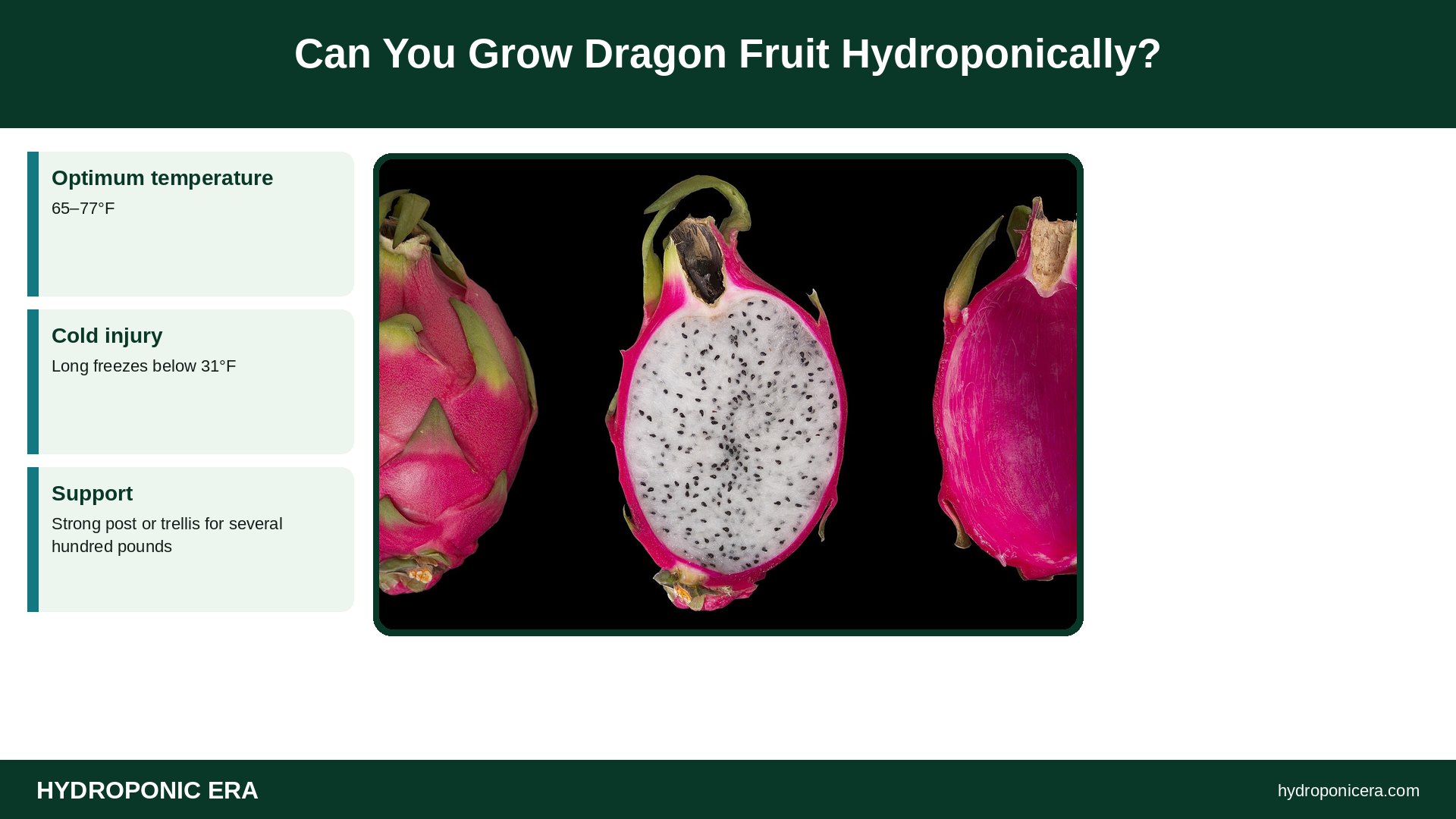
Dragon fruit hydroponics is possible but unusual: dragon fruit (pitaya) is a climbing cactus that needs a strong support, warmth, and well-drained roots. UF/IFAS gives 65–77°F as the estimated optimum growing temperature, notes plants can be injured by long freezes below 31°F, and says a mature plant can weigh several hundred pounds on its trellis. UF also notes cuttings grow fast and many fruit within 6–9 months, and that some varieties are self-incompatible, so planting two or three different types helps fruit set. For hydroponics, use a large drip-fed container of coarse, fast-draining media with a sturdy post.
Key takeaway: Grow dragon fruit from cuttings in coarse, fast-draining media with light drip feeding, a strong post, warmth, and two or more varieties for pollination.
| Need | UF/IFAS guidance |
|---|---|
| Optimum temperature | 65–77°F |
| Cold injury | Long freezes below 31°F |
| Support | Strong post or trellis for several hundred pounds |
| First fruit | Many cuttings fruit in 6–9 months |
| Pollination | Some types self-incompatible; plant 2–3 types |
| Flowers | Large, night-blooming |
Can You Do Dragon Fruit Hydroponics?
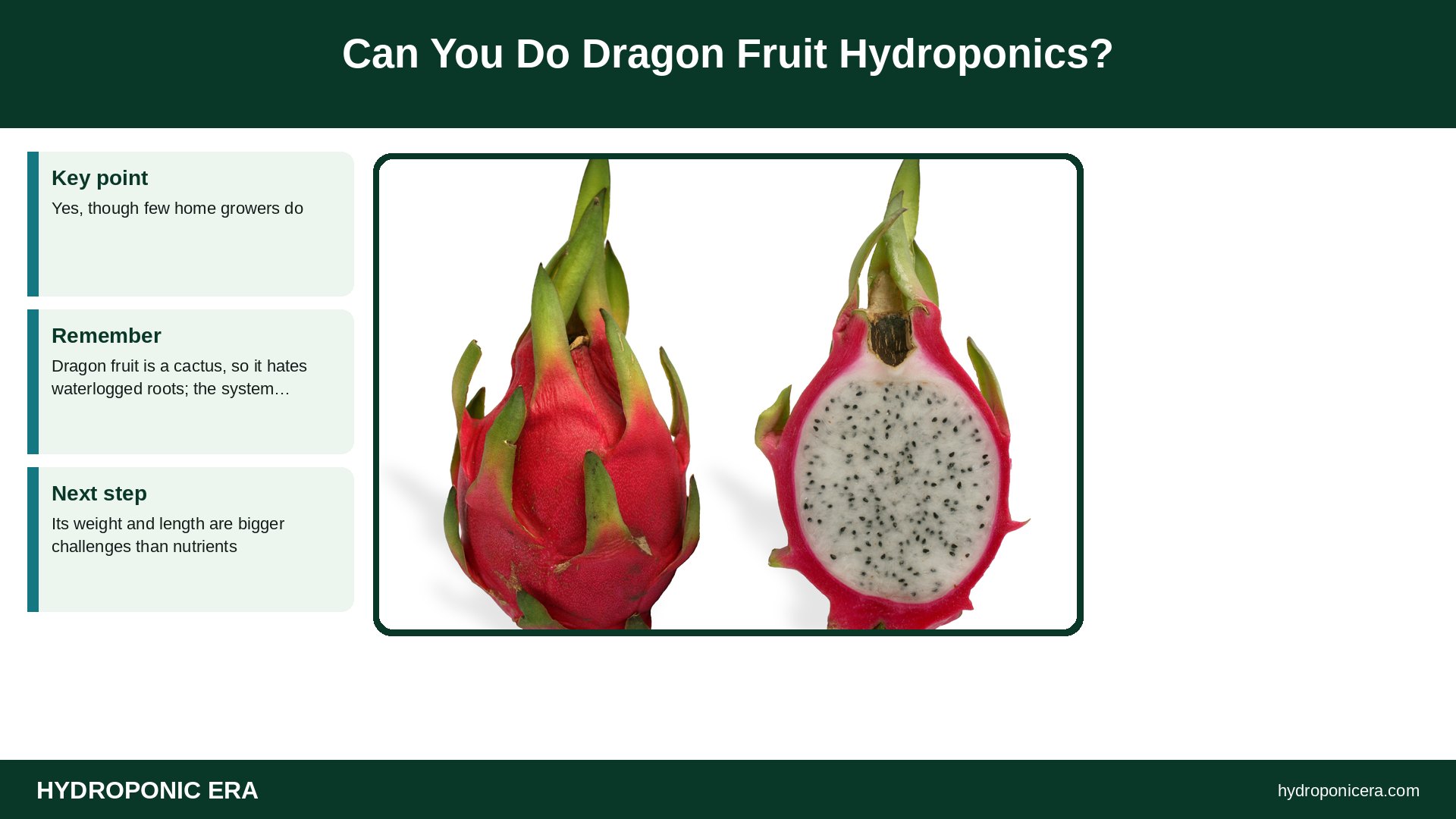
Yes, though few home growers do. Dragon fruit is a cactus, so it hates waterlogged roots; the system must drain fast and dry slightly between cycles. Its weight and length are bigger challenges than nutrients. UF/IFAS notes stems can reach about 20 feet, and form aerial roots that cling to supports.
Best Systems for Dragon Fruit Hydroponics
Use a 15–25 gallon container filled with coarse perlite, clay pebbles, or a perlite-bark mix, fed by drip a few times a day with full drainage. Avoid DWC and NFT. Anchor a 4–6 inch post in or beside the container, with a frame or ring at the top for stems to drape over, as UF describes for pole trellises. See growing media.
Starting From Cuttings
UF/IFAS says plants grown from seed vary in fruit and stem traits, so cuttings are preferred. Let cut ends dry and cure for several days, then set them in barely moist media. UF notes cuttings take about 4–6 months to develop a good root system and can grow very quickly afterward. Tie stems loosely to the post as they climb, and avoid bare wire, which UF warns can cut stems.
Light and Temperature for Dragon Fruit Hydroponics
UF/IFAS describes pitaya as a full-sun crop in native areas but notes stems can sunburn in low humidity or high altitude, recommending about 30% shading for the first 3–4 months after planting. Indoors, give bright light; in summer, outdoors works well. Keep it above freezing in winter.
Nutrients for Dragon Fruit Hydroponics
There’s little published research on hydroponic dragon fruit, so feed lightly with a complete nutrient and keep pH in the 5.5–6.5 range. Cacti grow slower than leafy crops, so start at low EC and raise it only if growth is pale. UF notes pitaya tolerates some salt, but salt buildup in a small container still stresses roots, so flush media regularly. See how to lower EC.
Pollinating Dragon Fruit
UF/IFAS says flowers open at night, and moths and bats pollinate them naturally. Some varieties are self-incompatible, so UF recommends planting 2 or 3 different genetic types for better fruit set. Indoors, hand-pollinate at night or early morning by moving pollen from one flower to another with a soft brush.
Harvest
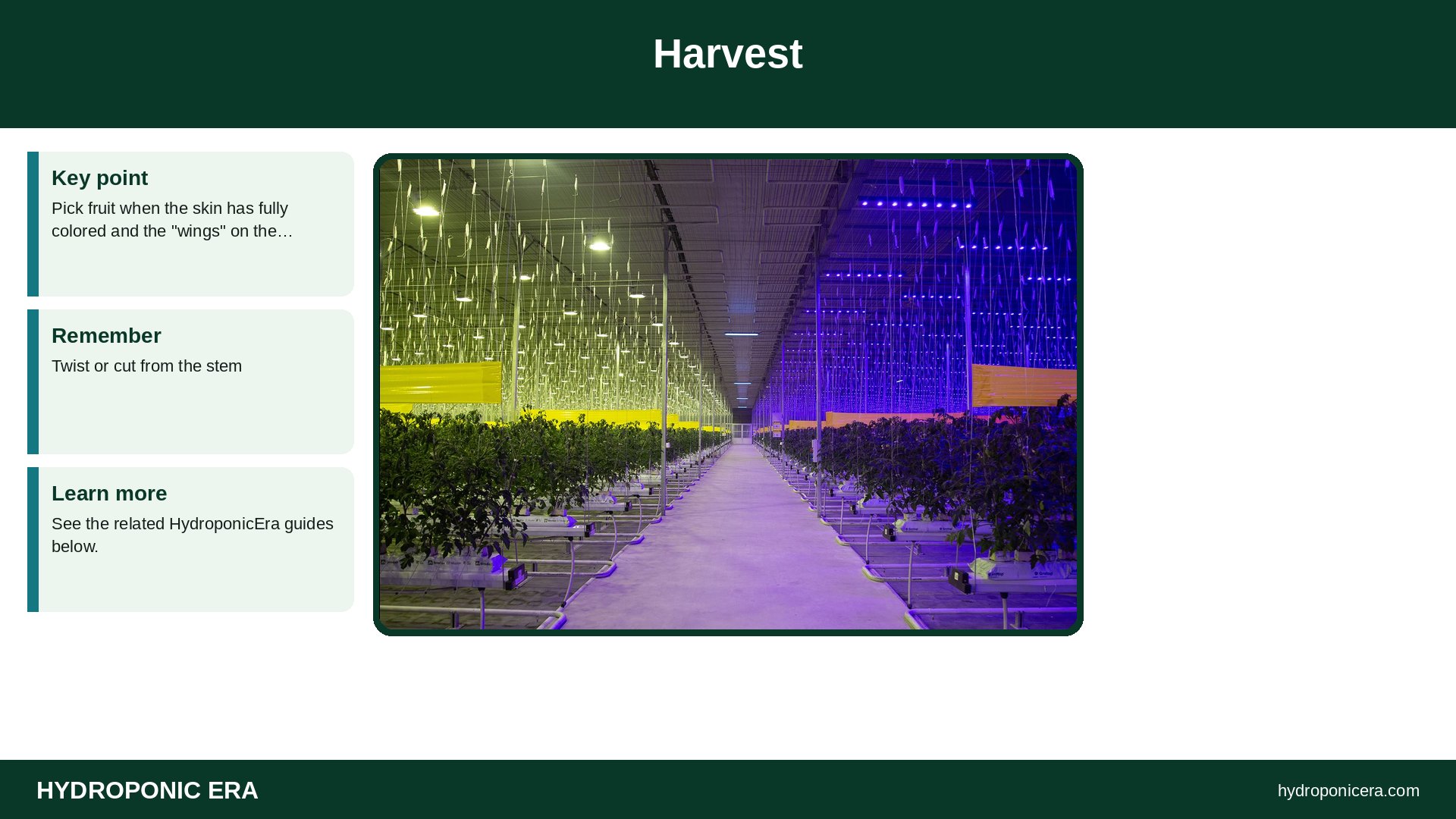
Pick fruit when the skin has fully colored and the “wings” on the fruit start to dry slightly. Twist or cut from the stem.
Common Problems
- Stem rot: media too wet.
- Yellow, sunburned stems: sudden strong sun.
- No fruit: plant too young, low light, or no cross-pollination.
- Collapsed support: post too weak for stem weight.
Dragon Fruit Hydroponics Varieties
UF/IFAS describes white- and red-pulped dragon fruit and notes that self-compatibility isn’t well documented for many cultivars, which makes recommendations difficult. Buy cuttings from two or three different types to improve fruit set, and label them so you know which is which.
Pruning Dragon Fruit
UF describes pruning to train stems up the post and to remove tangled, damaged, or diseased stems. Once stems drape over the top frame, pruning keeps the plant manageable and directs energy into fruiting branches.
Is Dragon Fruit Hydroponics Worth It?
For growers with a sunny greenhouse or patio and room for a tall post, it can be rewarding, since UF/IFAS notes cuttings can fruit in under a year. In small apartments, the plant’s size, weight, and light needs make it hard. Start with one strong post and two different varieties.
Equipment Checklist for Dragon Fruit Hydroponics
- A 15–25 gallon container.
- Coarse, fast-draining media.
- A 4–6 inch post with a top frame.
- A drip pump and timer.
- A soft brush for hand pollination.
Most of this gear is reusable from crop to crop, so the first setup costs the most. Buy reliable meters first; they prevent the majority of problems.
Beginner Mistakes With Dragon Fruit Hydroponics
Common mistakes are treating dragon fruit like a leafy crop with constant wet roots, using a weak support, and growing a single self-incompatible variety.
Getting Started With Dragon Fruit Hydroponics
Start small, change one thing at a time, and keep a simple log of pH, EC, temperature, and what you changed. Most hydroponic problems show up as patterns in those numbers before they show on the plant. Compare your notes with the sources below, and adjust slowly rather than chasing every small swing. A steady routine matters more than any single product or setting.
FAQs: Dragon Fruit Hydroponics
Can dragon fruit grow hydroponically?
Yes, in coarse, fast-draining media with light drip feeding.
How long until dragon fruit fruits?
UF/IFAS says many cuttings fruit in 6–9 months.
Do I need two plants?
Some types are self-incompatible; UF suggests 2–3 types.
What temperature suits dragon fruit?
UF/IFAS gives 65–77°F as optimum.
Can dragon fruit grow indoors?
Yes, with strong light and a sturdy support.
Is dragon fruit a cactus?
Yes, a climbing cactus.
Sources
- UF/IFAS — Pitaya (Dragonfruit) Growing in the Florida Home Landscape
- Photo credits (Wikimedia Commons, edited with titles): Hylocereus undatus-fruit20180201 118(07,24,36) by Bff (CC BY-SA 4.0); Pitaya cross section ed2 by SMasters (CC BY-SA 3.0); Echeveria A7CR 02866-90 zsp by This Photo was taken by Timothy A. Gonsalves. Feel free to use my photos, but pl (CC BY-SA 4.0); Drip irrigation (2552390830) by Dwight Sipler from Stow, MA, USA (CC BY 2.0); Greenhouse in Kazakhstan by Gakon Netafim (CC BY-SA 4.0)