
Hydroponic bonsai usually means a tropical bonsai, most often a ficus, grown in an inert, free-draining medium such as LECA (clay pebbles), lava rock, or pumice with a weak nutrient solution, a method often called semi-hydroponics. It’s uncommon in traditional bonsai, which relies on fast-draining soil mixes, but ficus adapts well. NC State Extension describes ‘Golden Gate’ ficus as one of the best bonsai for indoor use, preferring bright, indirect light, warm temperatures of 65–80°F, moist but never soggy roots, and extra humidity from a pebble tray. Temperate bonsai like junipers need outdoor winter dormancy and aren’t suited to indoor hydroponics.
Key takeaway: Choose a tropical ficus, grow it in clay pebbles or lava rock with a small reservoir and weak nutrient, keep it bright and warm, and never let roots sit soggy.
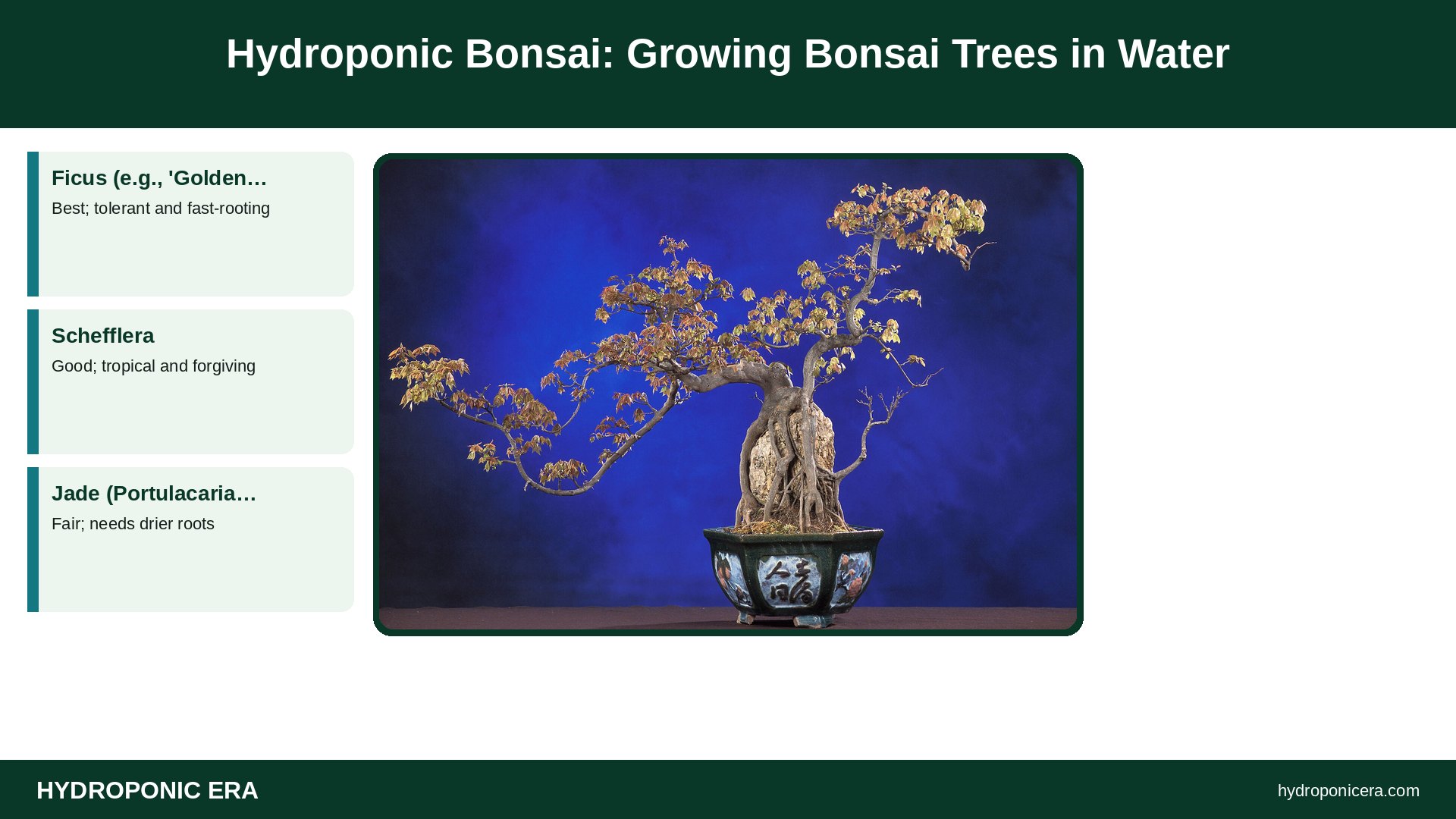
| Tree | Fit for hydroponic bonsai |
|---|---|
| Ficus (e.g., ‘Golden Gate’) | Best; tolerant and fast-rooting |
| Schefflera | Good; tropical and forgiving |
| Jade (Portulacaria, Crassula) | Fair; needs drier roots |
| Juniper, maple, pine | Poor indoors; need winter dormancy |
How Hydroponic Bonsai Works
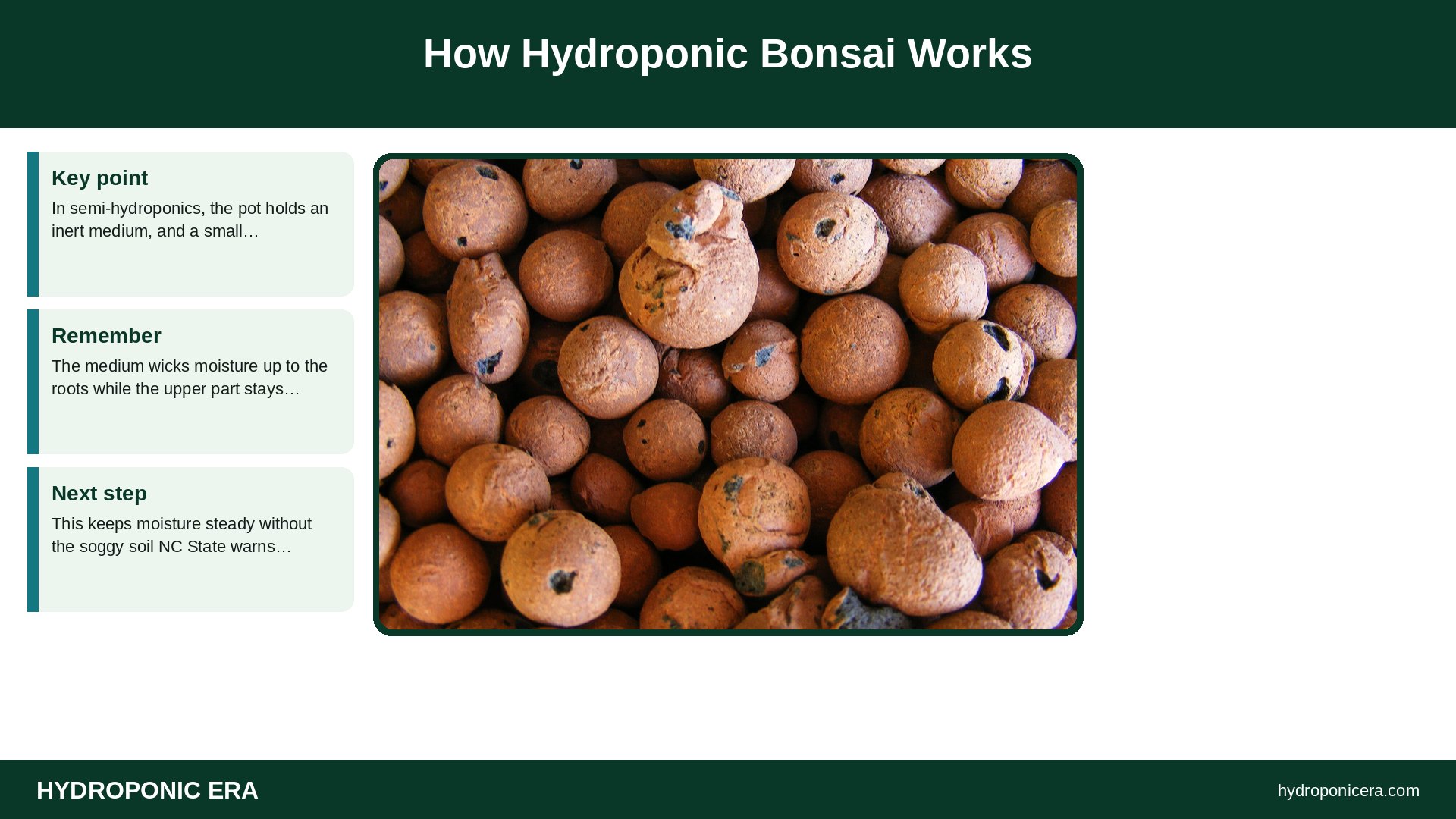
In semi-hydroponics, the pot holds an inert medium, and a small reservoir of nutrient solution sits at the bottom. The medium wicks moisture up to the roots while the upper part stays airy. This keeps moisture steady without the soggy soil NC State warns against. See semi-hydroponics with LECA.
Best Trees for Hydroponic Bonsai
NC State says ‘Golden Gate’ ficus needs very little attention, is good for beginners, and keeps its compact size with regular pruning, with an average height of 8–14 inches. Its thick trunk and aerial roots suit bonsai styling. Temperate species need cold winters outdoors, so they rarely do well as indoor hydroponic trees.
Media for Hydroponic Bonsai
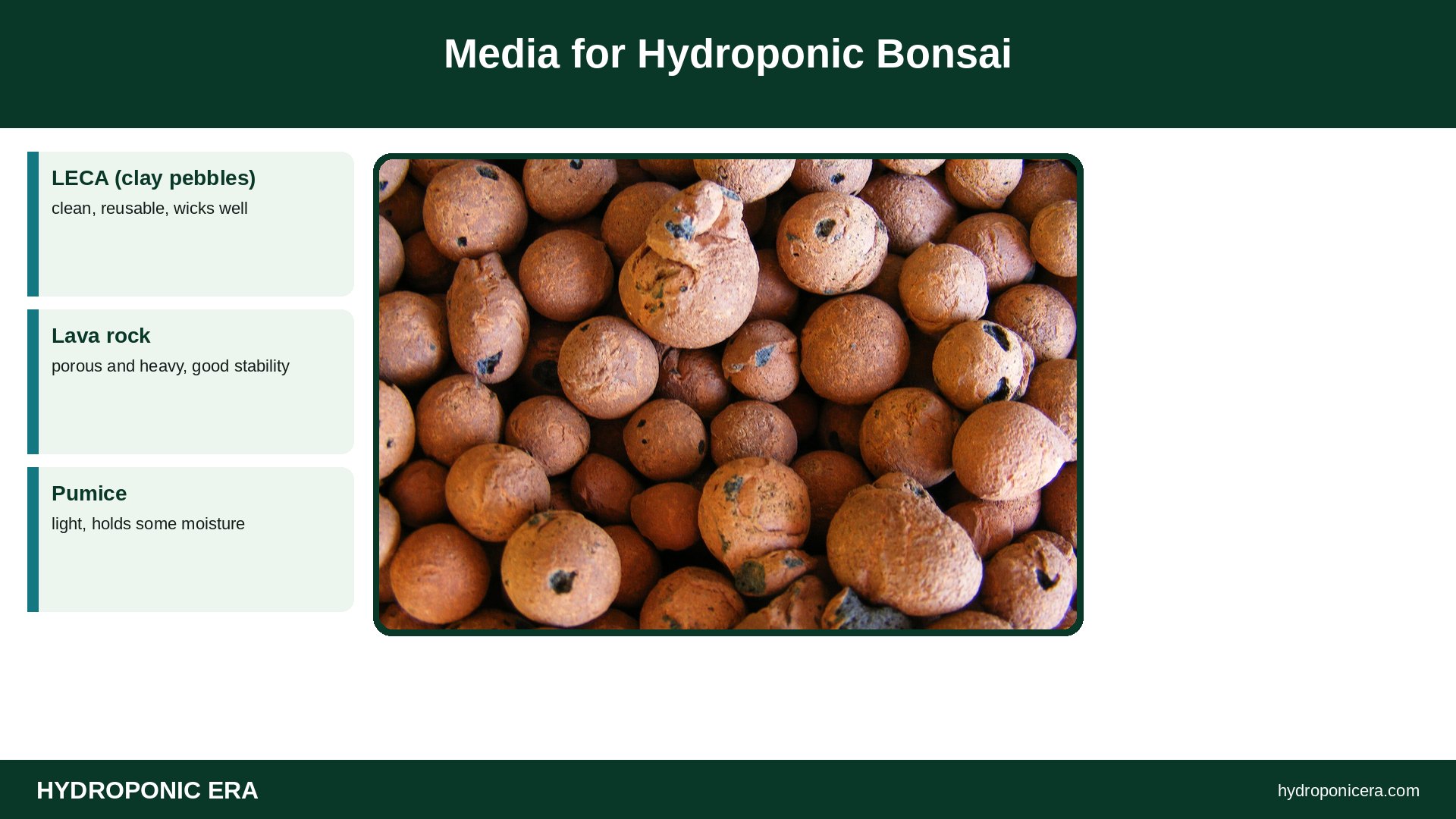
- LECA (clay pebbles): clean, reusable, wicks well.
- Lava rock: porous and heavy, good stability.
- Pumice: light, holds some moisture.
Rinse media well before use to remove dust. Shallow bonsai pots hold little water, so many growers use a slightly deeper training pot with a reservoir while roots adapt. See growing media.
Moving a Bonsai Into Hydroponics
- Do it during active growth in spring or summer.
- Remove the tree and gently wash all soil from the roots.
- Trim dead or damaged roots.
- Set the tree in rinsed media with the root collar above the water level.
- Keep humidity high and light bright but indirect for a few weeks.
- Use plain water at first, then weak nutrient once new growth appears.
Nutrients for Hydroponic Bonsai
Use a complete hydroponic nutrient at a quarter to half strength. NC State lists a pH of 6–6.5 for ‘Golden Gate’ ficus soil, so aim for about 5.8–6.5 in solution. Flush the media with plain water every few weeks to remove salt buildup, which shows as white crust on pebbles. See salt crust on media.
Light and Temperature
NC State recommends bright, indirect light and warm temperatures of 65–80°F for ‘Golden Gate’ ficus. Keep trees away from cold drafts and heat vents. A small LED light helps in dim rooms. Humidity from a pebble tray, as NC State suggests, helps leaves and aerial roots.
Pruning and Styling
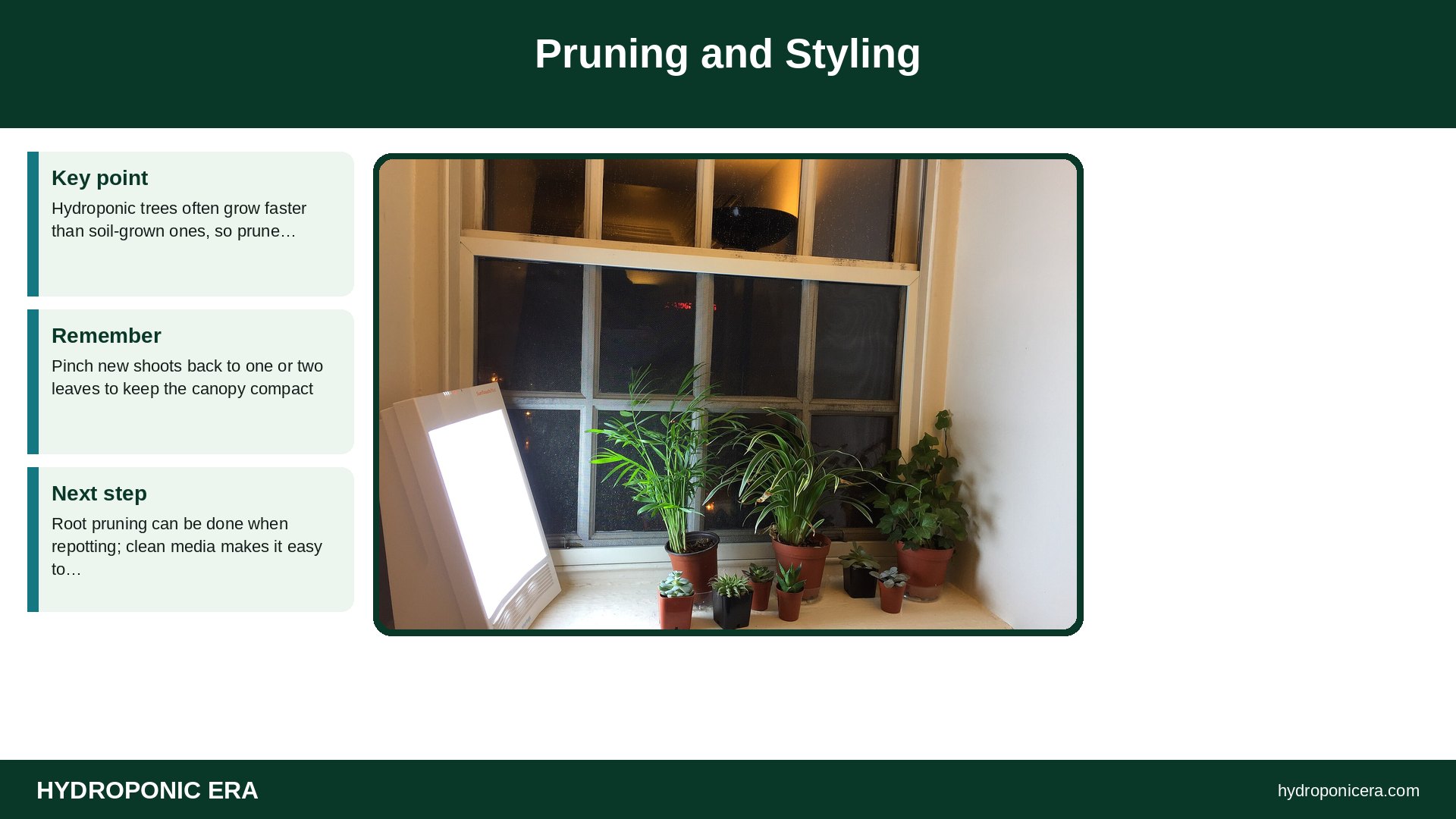
Hydroponic trees often grow faster than soil-grown ones, so prune more often. Pinch new shoots back to one or two leaves to keep the canopy compact. Root pruning can be done when repotting; clean media makes it easy to see roots.
Common Problems
- Leaf drop: a move or sudden light change; ficus often recovers.
- Root rot: reservoir too high, covering the root collar.
- White crust: salt buildup; flush.
- Thrips and scale: NC State lists these as common ficus pests.
Watering Hydroponic Bonsai
In semi-hydro, you don’t water on a schedule like soil bonsai. Instead, keep the reservoir at the bottom of the pot topped up to a fixed level, then let it drop and dry for a day or two before refilling. That cycle gives roots air. Every few weeks, pour plain water through the media to flush salts. If leaves droop and media feels dry high up, raise the reservoir level slightly.
Hydroponic Bonsai vs Soil Bonsai
Soil-based bonsai mixes give growers precise control over drainage and are traditional. Semi-hydro gives steadier moisture and is forgiving for beginners who tend to over- or underwater. Most experienced bonsai growers stick to soil, but semi-hydro is a practical option for indoor tropical trees.
Is Hydroponic Bonsai Right for You?
If you want a low-maintenance indoor tree and tend to forget watering, semi-hydro ficus is a good fit. If you’re aiming for traditional bonsai styling with precise growth control, a classic soil mix may serve you better. Many growers keep one of each and compare.
Equipment Checklist for Hydroponic Bonsai
- A training pot with a reservoir.
- LECA, lava rock, or pumice.
- A weak complete nutrient.
- A pH meter.
- A pebble tray for humidity.
Most of this gear is reusable from crop to crop, so the first setup costs the most. Buy reliable meters first; they prevent the majority of problems.
Beginner Mistakes With Hydroponic Bonsai
Common mistakes are covering the root collar with water, using full-strength nutrient, trying temperate species indoors, and skipping flushes.
Getting Started With Hydroponic Bonsai
Start small, change one thing at a time, and keep a simple log of pH, EC, temperature, and what you changed. Most hydroponic problems show up as patterns in those numbers before they show on the plant. Compare your notes with the sources below, and adjust slowly rather than chasing every small swing. A steady routine matters more than any single product or setting.
Hydroponic Bonsai Pests to Watch
NC State lists banded greenhouse thrips, Cuban laurel thrips, and fern scale as common insect problems on ‘Golden Gate’ ficus. Thrips cause curled, distorted, or silvery new leaves, and Cuban laurel thrips often roll leaves into pockets. Scale looks like small brown bumps on stems and leaf undersides. Check new growth weekly with a magnifier, prune off badly affected leaves, and treat early. NC State also notes the plant has low-severity poison characteristics, so keep it away from pets that chew leaves.
FAQs: Hydroponic Bonsai
Can bonsai grow hydroponically?
Tropical species like ficus can, especially in semi-hydro.
What’s the best tree?
Ficus, such as ‘Golden Gate’.
Can juniper bonsai grow hydroponically indoors?
Not well; junipers need outdoor winter dormancy.
What media should I use?
LECA, lava rock, or pumice.
How strong should nutrient be?
About a quarter to half of label strength.
How often should I flush?
Every few weeks.
Sources
- NC State Extension — Ficus microcarpa ‘Golden Gate’, Plant Toolbox
- Photo credits (Wikimedia Commons, edited with titles): BonsaiTridentMaple by Peggy Greb, USDA (Public domain); Hydroton by Lucis (CC BY-SA 3.0); Hydroton by Lucis (CC BY-SA 3.0); South Sister lava flows, USGS by C. Dan Miller, USGS/Cascades Volcano Observatory (Public domain); Potted plants succulents under grow light Nov 2016 by Asdfjrjjj (CC BY-SA 4.0)