
Quick Answer
Salt crust media surface hydroponics means diagnosing white crust on coco, pebbles, or rockwool collars as evaporated mineral residue—then rinsing and correcting EC/irrigation habits without confusing it for powdery mildew. See nutrient burn, runoff/leach EC, coco, flush.
Key takeaways for salt crust media surface hydroponics
- Salt crust media surface hydroponics is a practical home-hydro workflow—not filler.
- Crust is a media-surface story; leaf burn is related but not identical.
- Leach checks beat guessing.
- Reduce chronic high EC and poor wet-dry management.
- Prefer university/extension sources over forum myths.
- Do not scrape roots aggressively.
- Original ops card keeps Salt crust media surface hydroponics decisions consistent.
- Salt crust media surface hydroponics fails when growers skip the boring checks.
Related HydroponicEra guides
Why This Matters
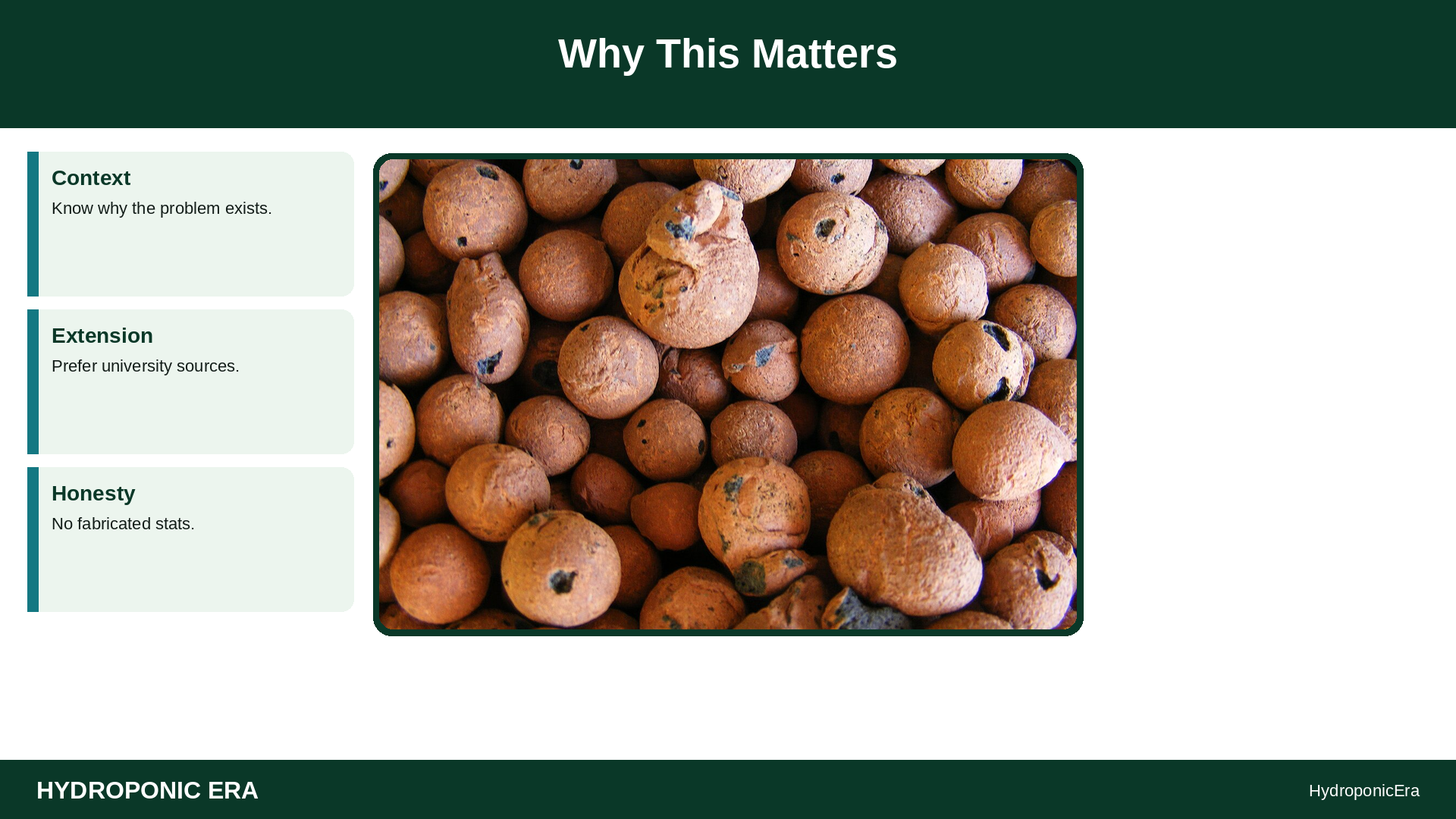
Salt crust media surface hydroponics appears when water evaporates and minerals remain. It is common in media systems under strong light/airflow. This is not a rewrite of leaf-tip nutrient burn—it is the media collar diagnostic and rinse protocol.
Comparison / Decision Table
| White stuff | Likely | Not |
|---|---|---|
| Crusty ring on media | Salt residue | Powdery mildew (usually leaf) |
| Soft fungal patches on leaves | Disease | Media salt |
| Dust from unrinsed clay | Fines | Fertilizer crust |
Step-by-Step Workflow
- Confirm it is on media, not leaf mildew.
- Measure reservoir EC and runoff/leach if applicable.
- Gently rinse media surface with appropriately mild solution/water per system.
- Avoid blasting roots bare.
- Correct chronic overfeeding.
- Improve irrigation evenness.
- Increase humidity slightly if media dries too aggressively—without inviting disease.
- Flush when leach stays extreme.
- Clean lids/collars during resets.
- Log EC before/after correction.
Key Variables
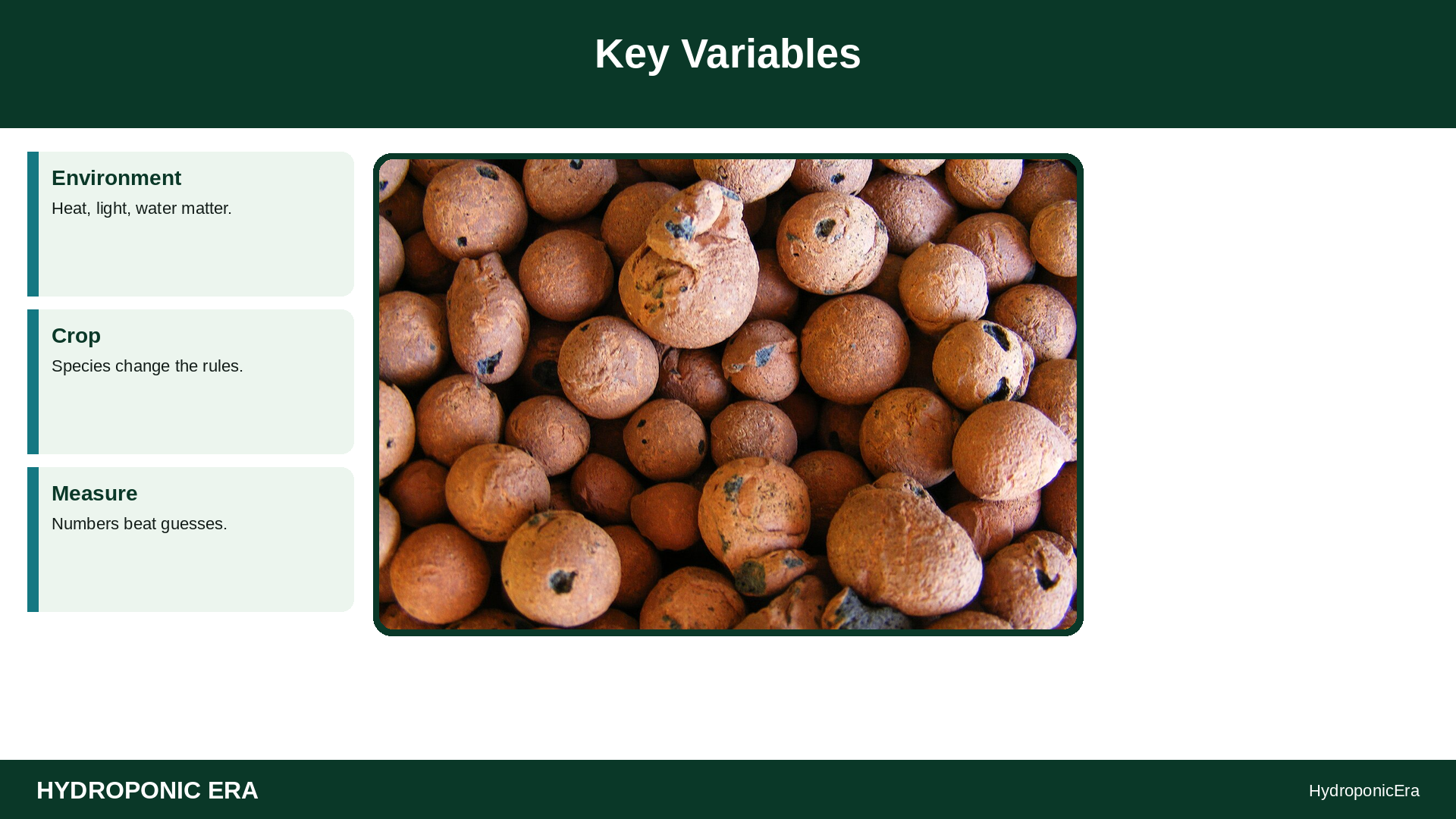
| Variable | Effect | Link |
|---|---|---|
| EC setpoints | Crust speed | EC |
| Airflow at collar | Evaporation | airflow |
| Media type | Visible crust odds | coco, clay |
| Top-off habits | Drift | top-off |
Common mistakes with salt crust media surface hydroponics
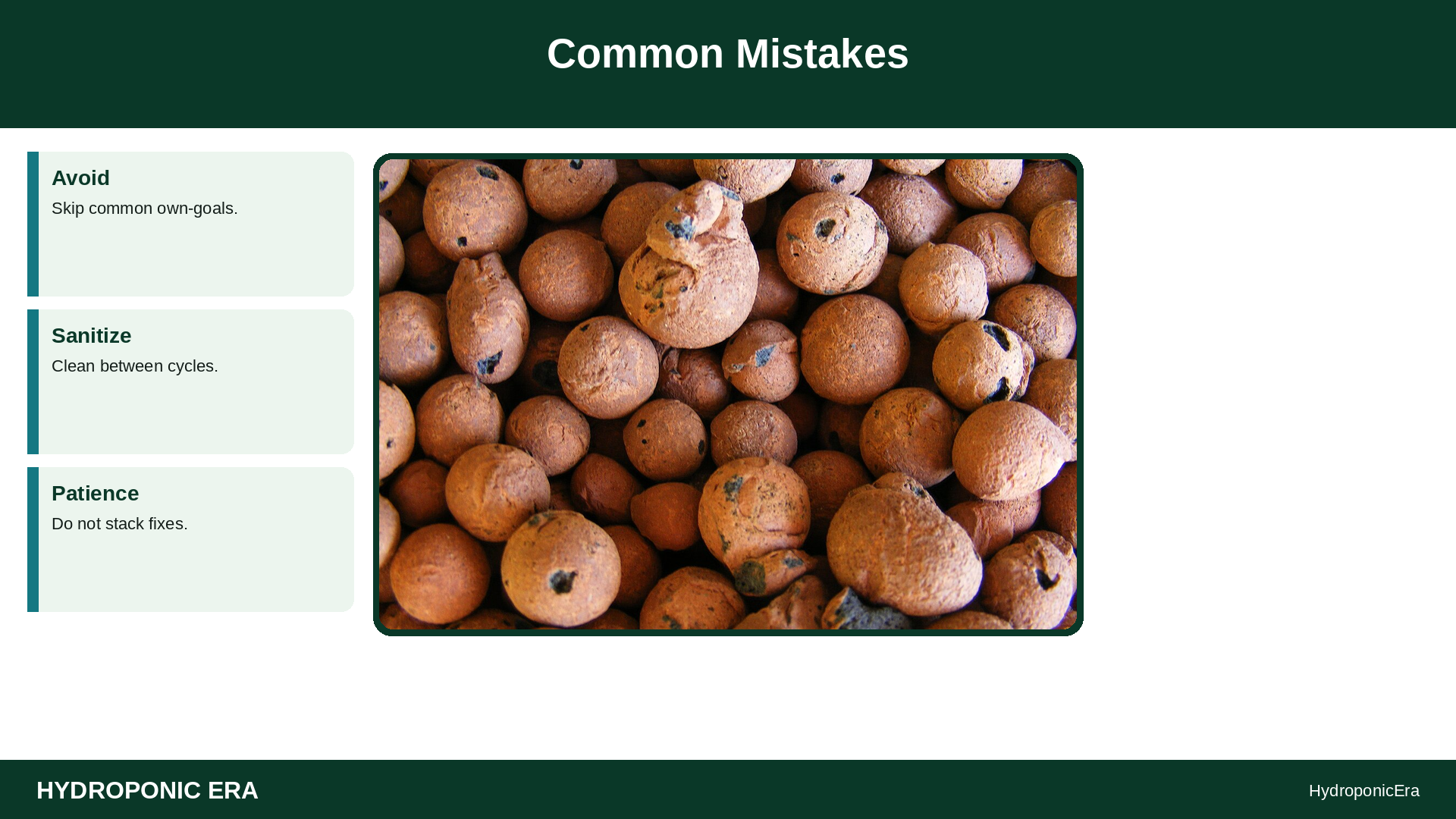
- Scraping crust into the reservoir
- Ignoring runoff numbers
- Confusing mildew with salt
- Only wiping crust without lowering EC
- Using RO rinse without remounting nutrition plan
Troubleshooting
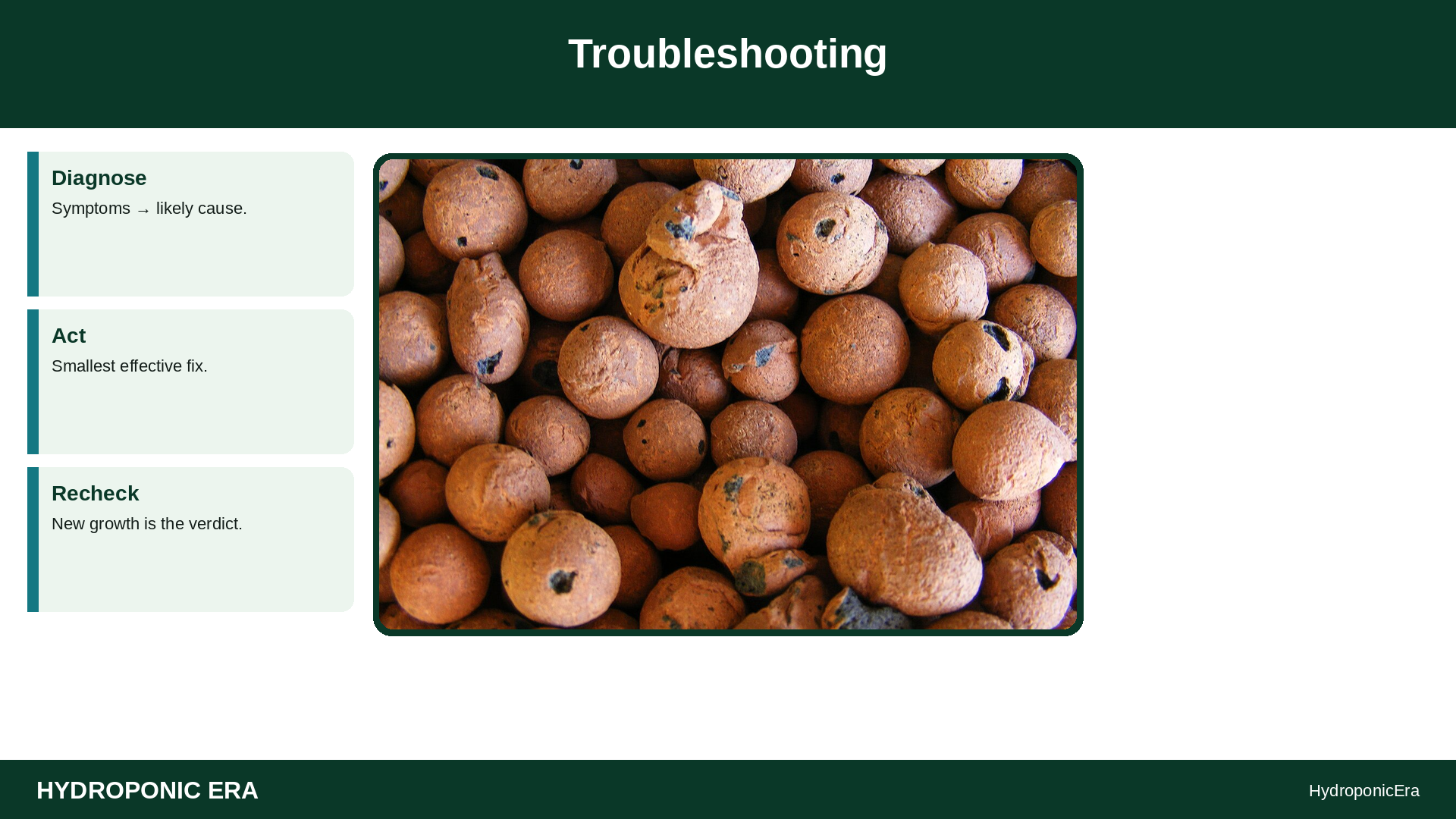
| Signal | Action |
|---|---|
| Crust + tip burn | Lower EC; see burn guide |
| Crust + healthy plants | Still correct habits; mild rinse |
| High leach EC | runoff guide, flush |
Practical Framework
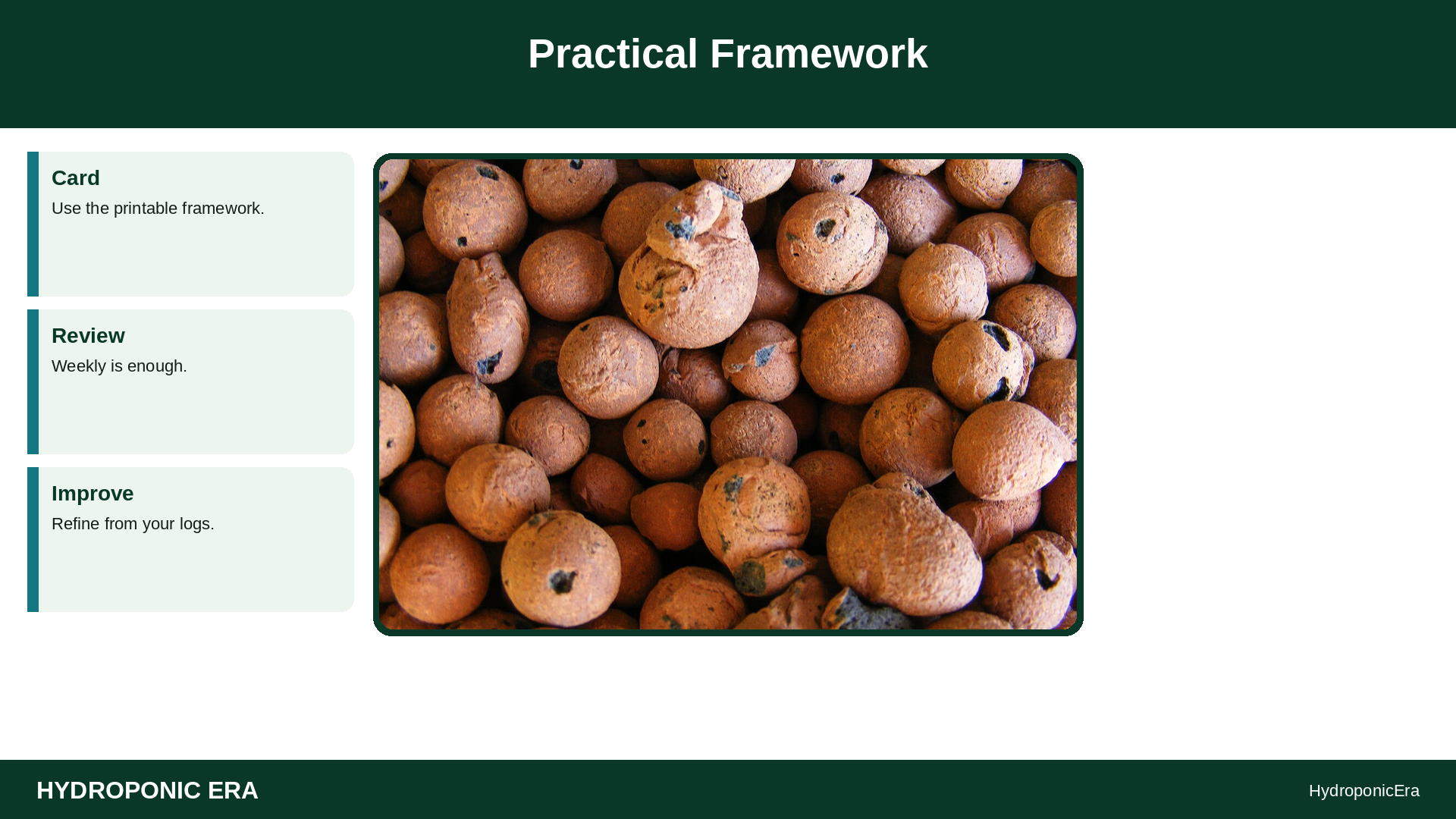
Collar card: EC | leach | rinse done | airflow note. Closing practice for salt crust media surface hydroponics: treat causes, not only cosmetics.
What to Check Before You Attack Media Crust
- Leaf vs media confirmed?
- EC measured?
- Rinse gentle?
- Chronic EC reduced?
- Mildew ruled out?
Rinse Technique Without Root Abuse
Gently flush the media collar with appropriately mild solution or water consistent with your system.
Do not excavate roots to “scrub salt off.” Measure reservoir EC and, in drain-to-waste or media systems, check runoff/leach readings. If leach stays extreme, a controlled flush cycle may be warranted.
Reduce chronic causes: excessive EC, aggressive drying at the collar from hot airflow, and endless top-offs that concentrate residues. Cosmetic wiping alone returns crust within days.
Differential Diagnosis
Powdery mildew lives on leaves as fungal growth—not as a hard mineral ring on pebbles. Coco dust and clay fines can look pale but behave differently; rinse new media properly at first use to avoid confusing dust with fertilizer crust.
FAQs about salt crust media surface hydroponics

Is crust toxic?
It signals accumulation—fix management.
Wipe with vinegar?
Prefer systematic rinse/EC correction; do not improvise harsh chemistry on roots.
Only coco?
Any evaporating media collar can show it.
Related to burn?
Often cousins—different surfaces.
Powdery mildew?
Usually foliar—see PM guide.
Clay dust?
Rinse new pebbles first.
Correcting Causes, Not Only Cosmetics
Salt crust on media collars signals evaporation leaving minerals behind. Measure EC and leach when applicable. Rinse gently without excavating roots. Lower chronic EC, improve irrigation evenness, and reduce blasting dry airflow at collars. Differentiate powdery mildew on leaves from mineral rings on pebbles.
New clay dust is a prep failure—rinse offline. If crust returns in days, you only cleaned symptoms. Flush protocols exist for extreme leach readings—use them deliberately. Keep runoff logs for media systems so trends appear. Pair with nutrient burn guidance when leaf tips also crisp, but do not assume identical fixes.
Keep changes incremental and measured.
HydroponicEra internal guides linked above cover adjacent deep topics; this article stays on its unique angle so topical authority stays clean without near-duplicate pages. When in doubt, sanitize, oxygenate, and verify meters before inventing exotic fixes.
Write a short after-action note each time this issue appears in your room. Patterns across seasons are more valuable than any single tip, and they turn home hydro from reaction into operations.
Implementation Notes for Home Growers
To put salt crust media surface hydroponics into practice this week, pick one system or shelf and run the workflow end-to-end once without improvising mid-stream.
Write the steps on a card, execute them, then note what broke in your space—ceiling height, noise limits, water alkalinity, or schedule constraints. That single controlled pass teaches more than reading three more threads.
Unique angle reminder: White crust on coco/clay diagnosis and rinse protocol—beyond nutrient burn leaf tips. Keep adjacent HydroponicEra guides one click away for depth, but do not merge this topic into a generic beginner rewrite.
If a meter disagrees with plant behavior, calibrate before you rewrite the plan. If sanitation is part of the story, finish the scrub—half-clean reservoirs reinvent the problem.
Weekly: re-read your card, check the one failure mode most likely in your room, and log a short after-action line. Over a month you will have comparable notes instead of vibes.
That is how home hydroponics becomes operations rather than emergency response. Share the card with anyone who helps water or harvest so standards survive busy days.
When results are good, resist the urge to change three variables at once. When results are poor, photograph first, then change the smallest lever that matches the diagnosis. This page’s checklists and tables exist to make that discipline easier under stress.
Extended Home-Grower Walkthrough
Use this extended walkthrough as a second pass after the Quick Answer. Walk the system with a notebook: write the date, crop, EC, pH, reservoir temperature, and one observation about roots or leaves.
Change only one control at a time when a problem appears. If last week’s fix did not show in new growth, revert and try the next smallest lever. Keep university and extension principles in mind—oxygen, sanitation, and measured nutrition beat product stacking.
Photograph the canopy and the reservoir surface weekly. Dated photos settle arguments about algae, tip burn, or stretch faster than memory. When a helper waters for you, leave a one-page card with do-not-touch items and the exact top-off rule.
Store calibration sachets next to the meters so “I will calibrate later” stops being the default. Review timers after any power event. Confirm air stones still roar. Confirm drains still drain.
At the end of the week, score the cycle 1–5 for ease and plant quality. Low scores should trigger a sanitation or climate review before you buy new hardware.
Link neighboring HydroponicEra guides when the symptom matches a cluster page. Prefer labeled procedures over improvisation under stress. Healthy boring routines are the real upgrade path for home hydroponics.
Keep salt crust media surface hydroponics visible on your weekly ops card so helpers follow one standard.
Revisit salt crust media surface hydroponics after any system change, relocation, or new crop introduction.
If notes disagree, rerun the salt crust media surface hydroponics checklist before buying more gear.
Apply salt crust media surface hydroponics as a repeatable habit—measure, log, and revisit after changes.
Apply salt crust media surface hydroponics as a repeatable habit—measure, log, and revisit after changes.
Apply salt crust media surface hydroponics as a repeatable habit—measure, log, and revisit after changes.
Sources
- Oklahoma State University Extension — Electrical Conductivity and pH Guide for Hydroponics
- Oklahoma State University Extension — Hydroponics
- University of Georgia Extension — B1314: Soilless Growing Media
- Penn State Extension — Hydroponics Systems and Principles of Plant Nutrition
- Michigan State University Extension — Hydroponics as an agricultural production system