
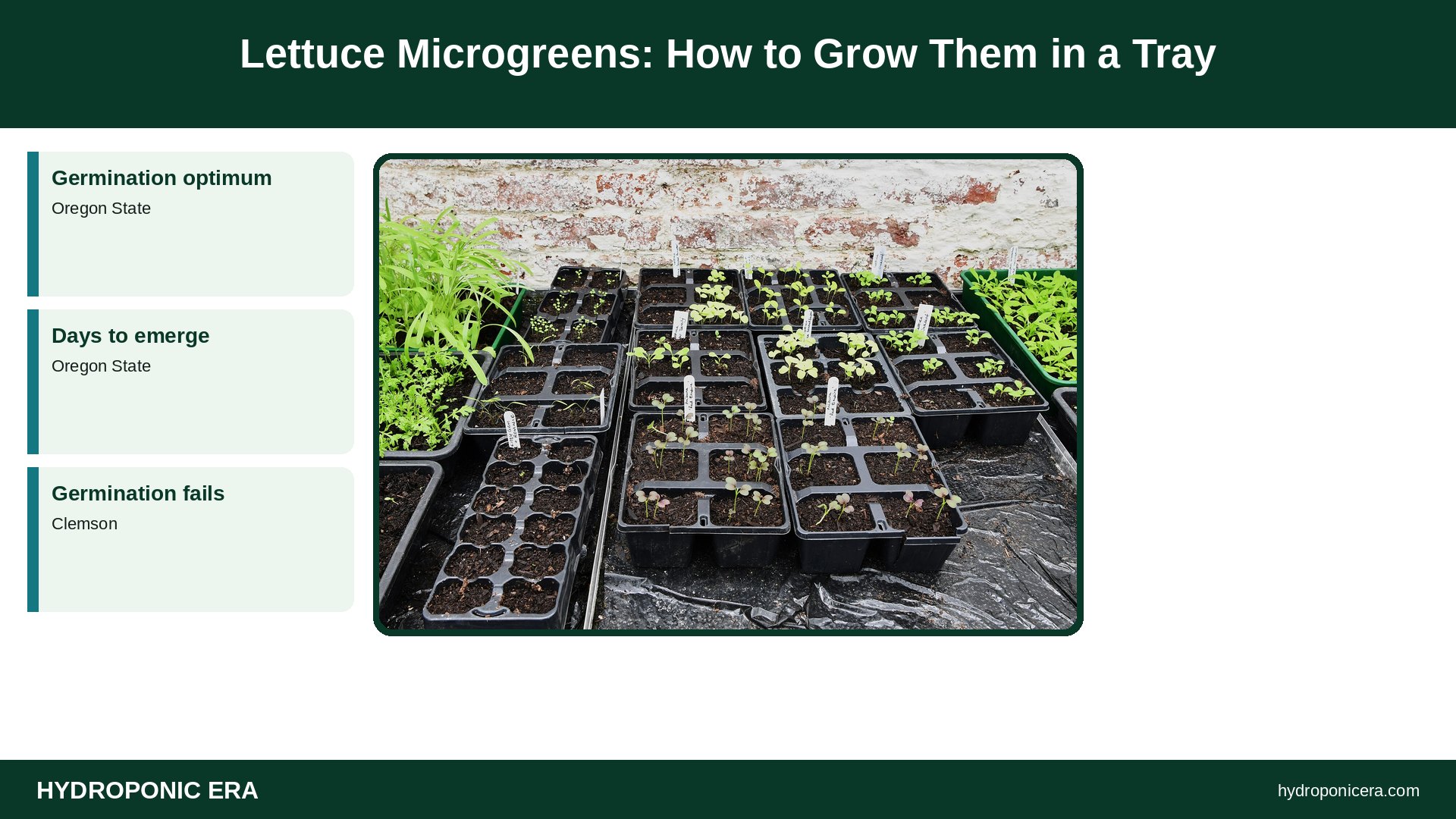
How do you grow lettuce microgreens? Scatter lettuce seed thickly over moist potting mix or a grow mat in a shallow tray, press it in without burying it deeply, and keep it covered and moist at about 65–75°F (18–24°C). Lettuce germinates in 2–4 days at those temperatures. Give 16 hours of light and harvest in about 2–3 weeks, when seedlings reach 2–3 inches (5–8 cm).
Key takeaway: Lettuce microgreens are mild, tender and slower than radish or mustard. Keep seed cool, under 80°F (27°C), and harvest at the first true leaf for the best texture.
| Factor | Lettuce microgreens | Source |
|---|---|---|
| Germination optimum | 75°F (24°C); range 40–80°F (4–27°C) | Oregon State |
| Days to emerge | 3 days at 68°F (20°C); 2 at 77°F (25°C) | Oregon State |
| Germination fails | Raw seed above 95°F (35°C) | Clemson |
| Light | 16 h; tolerates lower light | University of Maryland |
| Harvest | 7–21 days for microgreens overall; lettuce is on the slower side | University of Maryland |
Are Lettuce Microgreens Worth Growing?
Yes, if you want a mild, buttery green for salads and sandwiches. University of Maryland Extension lists lettuce among vegetables that can be grown as microgreens and notes that lettuce, arugula, mustards and Asian greens grow acceptably well in less-than-ideal light. That makes lettuce microgreens a good fit for a kitchen windowsill or a modest shelf light. They’re less spicy than brassicas and pair well with stronger greens in a mix.
What Supplies Do You Need for Lettuce Microgreens?
- Tray: A 10×20 inch (25×51 cm) flat, or any shallow container with drainage. Our hydroponic microgreens guide covers mats.
- Medium: Fine seed-starting mix 1–1.5 inches (2.5–4 cm) deep, as Maryland suggests, or a hemp or coco mat.
- Seed: Untreated lettuce seed; leaf types and red varieties add color.
- Light: A sunny window or LED shop light.
- Spray bottle and a cover tray or lid.
How Do You Grow Lettuce Microgreens Step by Step?
- Moisten the medium and level it in the tray.
- Sow evenly and densely. Illinois Extension suggests about ½–1 tablespoon of small seed per flat.
- Press seed into contact with the surface; cover only lightly, if at all.
- Mist and cover with a lid or second tray to hold moisture.
- Keep at 65–75°F (18–24°C). Oregon State lists 75°F (24°C) as the optimum.
- Uncover after germination, usually 2–4 days, and move under light.
- Bottom-water so leaves stay dry.
- Harvest at 2–3 inches (5–8 cm), cutting just above the medium.
Why Won’t My Lettuce Microgreens Germinate?
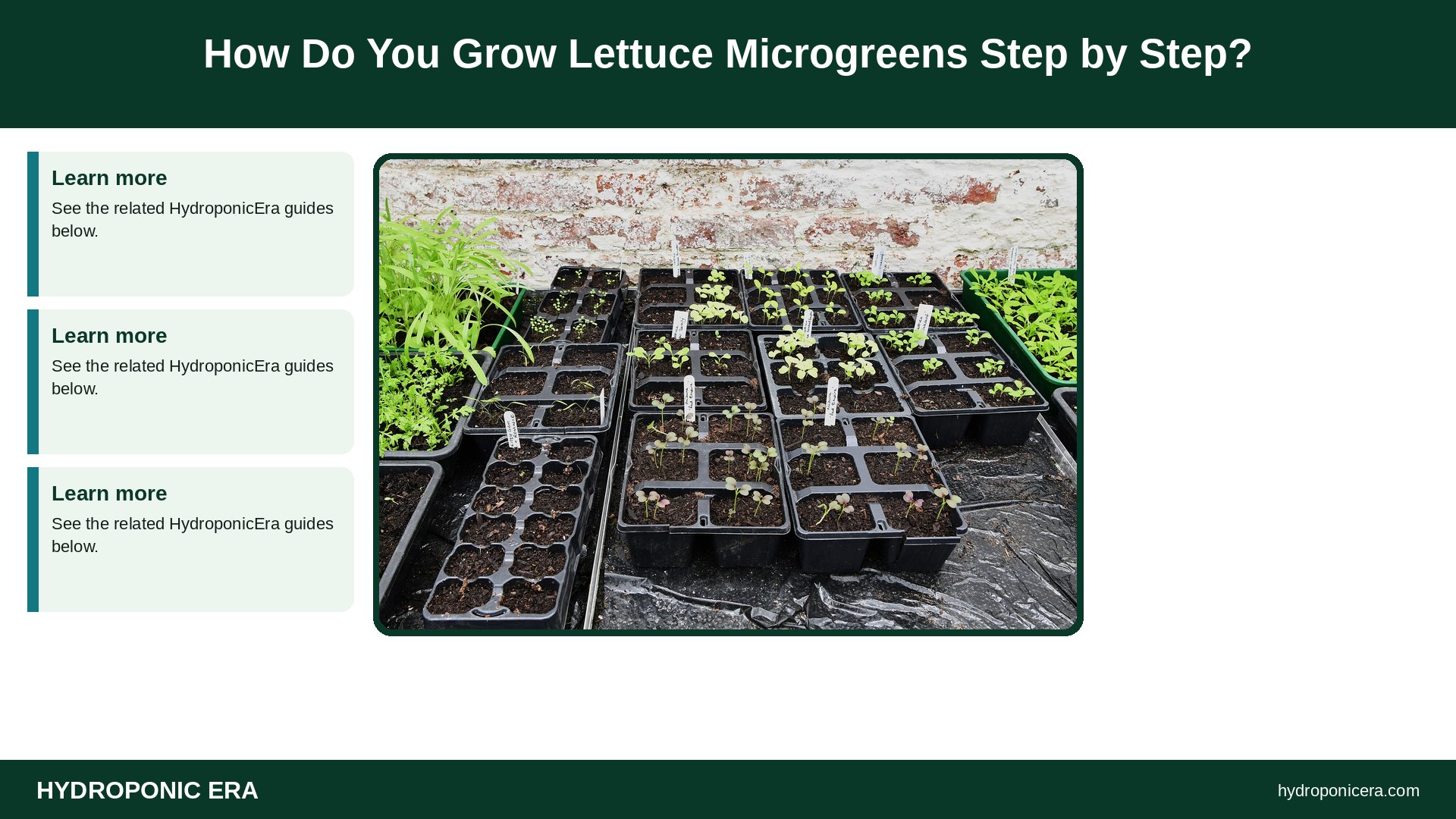
Heat is the usual cause. Oregon State’s germination table shows lettuce emerging in 2 days at 77–86°F (25–30°C) but little or no germination at 95°F (35°C). Clemson Extension says raw lettuce seed will not germinate above 95°F (35°C) and recommends primed seed for better results across temperatures. Many growers see slowdowns well before that, so keep trays away from heat mats and hot spots.
- Too warm: move trays somewhere cooler.
- Seed buried too deep: lettuce seed is tiny; sow on the surface and press in.
- Dry surface: keep the top layer moist until roots anchor.
- Old seed: lettuce seed loses vigor with age.
How Much Light Do Lettuce Microgreens Need?
Maryland Extension suggests 16 hours of light per day, with fixtures typically 6–12 inches (15–30 cm) above the foliage depending on intensity. Lettuce tolerates lower light than many crops, but very dim light makes stems long and floppy. Red lettuce varieties color up best under brighter light. Our light schedule guide covers timers.
How Long Do Lettuce Microgreens Take to Harvest?
Maryland Extension says most microgreens are ready in 7–21 days at 2–3 inches (5–8 cm) tall. Lettuce sits toward the slower end because the seedlings are small and delicate. Harvest when the seed leaves are fully open or the first true leaf appears. Wait longer and you’ll have baby lettuce, which is also delicious but needs more space and nutrients.
Which Lettuce Varieties Make the Best Microgreens?
| Type | Look | Notes |
|---|---|---|
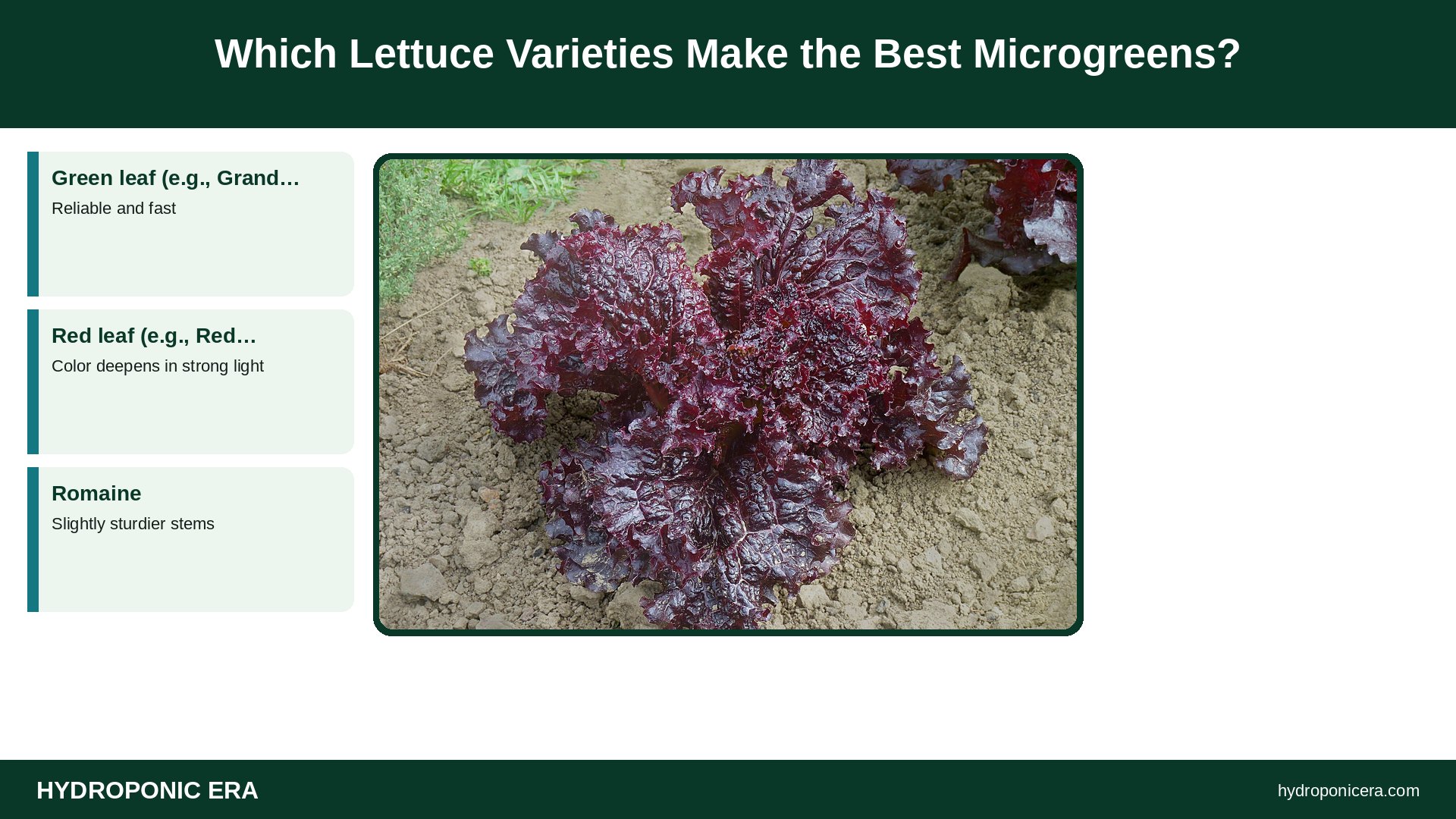
| Green leaf (e.g., Grand Rapids, Black Seeded Simpson) | Bright green | Reliable and fast |
| Red leaf (e.g., Red Sails, Lollo Rosso) | Bronze to red | Color deepens in strong light |
| Romaine | Upright, crisp | Slightly sturdier stems |
| Butterhead/Bibb | Soft, tender | Mildest flavor |
Clemson lists Grand Rapids, Simpson Elite, Red Sails and Lolla Rosa among recommended garden lettuce cultivars. Don’t mix lettuce with fast brassicas in one tray, as Maryland advises against mixing species with different growth rates.
Do Lettuce Microgreens Need Fertilizer?
Usually not for a short crop. Maryland notes microgreens generally don’t need fertilizer because the seed supplies early nutrients. If you grow on a mat with plain water and plan to let plants reach baby-leaf size, a weak hydroponic nutrient solution helps. See our hydroponic nutrients guide.
Can You Grow Them Without Soil?
Yes. Hemp, jute and coconut-fiber mats hold enough water for a short crop, and they leave no grit on the harvest. Wet the mat thoroughly, drain it so it’s damp rather than dripping, sow the seed directly on top and mist it daily until roots anchor. Because lettuce seed is tiny, mats with a fine surface keep it from slipping into gaps. After the cover comes off, water from below by adding a thin layer of water to a solid tray underneath. Mats dry faster than soil, so check them twice a day.
How Do You Prevent Mold on Lettuce Microgreens?
- Sow evenly; thick clumps trap moisture.
- Remove the cover once most seeds sprout.
- Run a small fan for airflow.
- Bottom-water and avoid soggy media.
- Clean trays between crops.
Our guide to damping-off explains seedling collapse.
How Do You Harvest and Store Lettuce Microgreens?
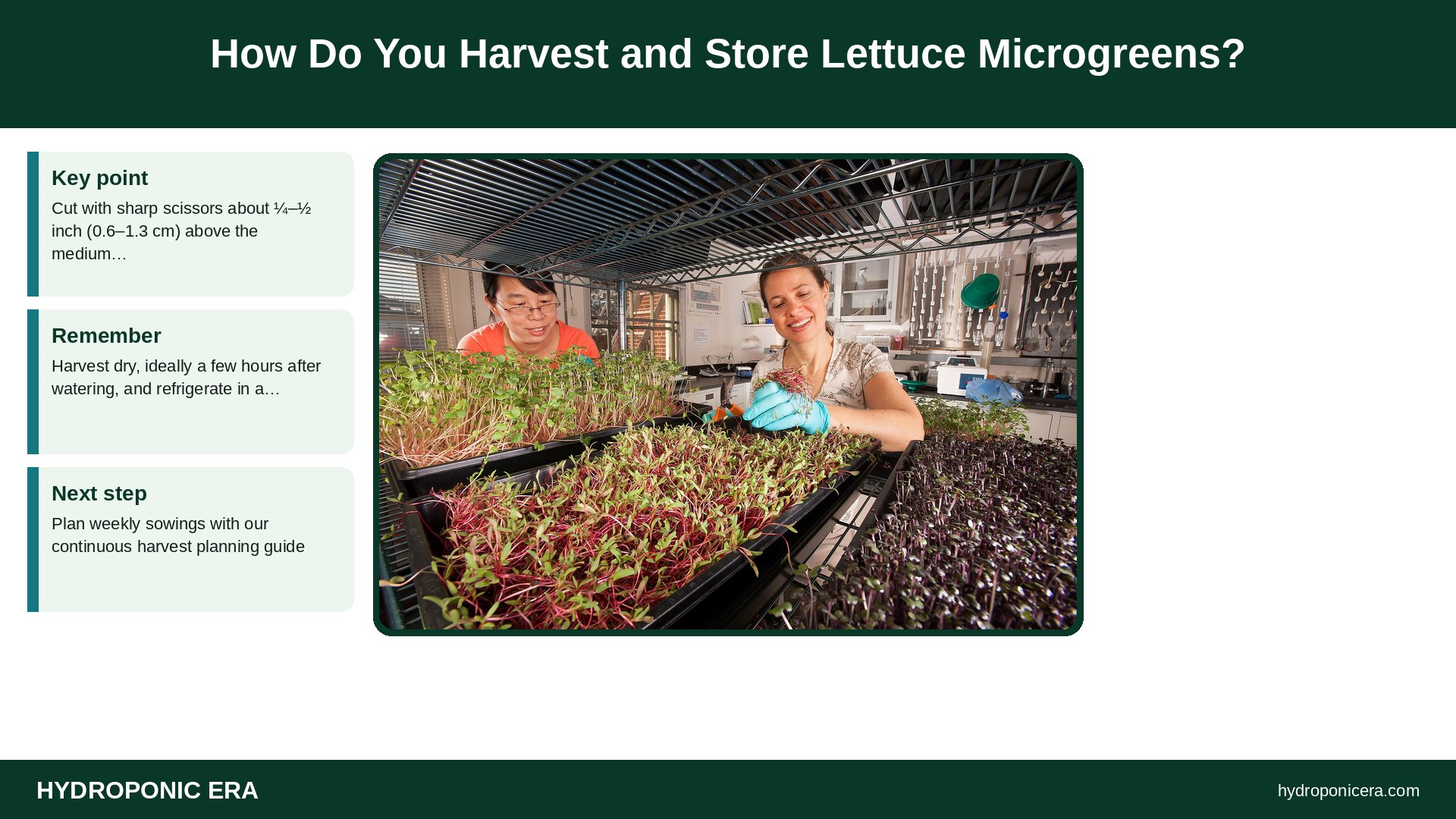
Cut with sharp scissors about ¼–½ inch (0.6–1.3 cm) above the medium, as Illinois Extension suggests for microgreens. Harvest dry, ideally a few hours after watering, and refrigerate in a lined container. Plan weekly sowings with our continuous harvest planning guide.
How Do Lettuce Microgreens Compare With Other Microgreens?
| Crop | Flavor | Speed |
|---|---|---|
| Lettuce | Mild, buttery | Moderate |
| Radish | Spicy | Fast |
| Mustard | Hot, peppery | Fast |
| Beet, chard | Earthy | Slower |
Maryland Extension notes cabbage-family plants germinate and grow faster than beet-family plants. Lettuce sits between them, and its soft leaves balance spicy brassicas in a salad mix grown in separate trays.
Can You Regrow Them After Cutting?
Generally no. Cutting below the growing point removes it, so most microgreens don’t regrow. Start a new tray every week for a steady supply.
FAQs
Do lettuce microgreens taste like lettuce?
Yes, a milder, more tender version.
Should the seed be soaked?
No. Maryland’s soak list covers large seeds like pea and sunflower, not lettuce.
Can I use garden seed packets?
Yes, if it’s untreated.
Why are my seedlings leggy?
Too little light; lower the fixture or extend hours.
Is this a good beginner crop?
Yes, if you keep them cool.
Sources
- University of Maryland Extension — Growing Microgreens and Baby Greens Indoors
- Oregon State University Extension — Soil Temperature Conditions for Vegetable Seed Germination
- Clemson Cooperative Extension HGIC — Lettuce
- University of Illinois Extension — Growing Microgreens
- Photo credits (Wikimedia Commons, edited with titles): Temple Sowerby, Acorn Bank, Mizuna and lettuce seedlings – geograph.org.uk – 7625183 by Michael Garlick (CC BY-SA 2.0); Temple Sowerby, Acorn Bank, Mizuna and lettuce seedlings – geograph.org.uk – 7625183 by Michael Garlick (CC BY-SA 2.0); Red leaf lettuce J1 by Jamain (CC BY-SA 3.0); Liping Kou observes microgreens by Peggy Greb (Public domain); 20160617-AMS-LSC-9000 (61-sec.) (27334710733) by U.S. Department of Agriculture (Public domain)