
Can you root hydrangea cuttings in water? Yes, softwood hydrangea cuttings in water often root in a few weeks. Take a 4–6 inch (10–15 cm) cutting from a non-flowering shoot in early summer, strip the lower two nodes, halve the big leaves and keep the bare nodes underwater in bright shade. Change the water weekly and pot once roots reach 1 inch (2.5 cm).
Key takeaway: Hydrangea cuttings in water work best with soft, non-flowering early-summer shoots. Extension services favor moist vermiculite for the strongest roots, so use water mainly to watch roots form, then pot quickly.
| Factor | Target | Source |
|---|---|---|
| Timing | Early summer (softwood) | Missouri Extension |
| Cutting length | 3–6 in (8–15 cm), 3+ leaves | Missouri, Illinois |
| Shoot type | Non-flowering tip | Missouri, Illinois |
| Leaf trim | Cut largest leaves in half | Missouri, Illinois |
| Light | Bright shade, never direct sun | Illinois |
| Rooting time | About 2–3 weeks in medium | Illinois |
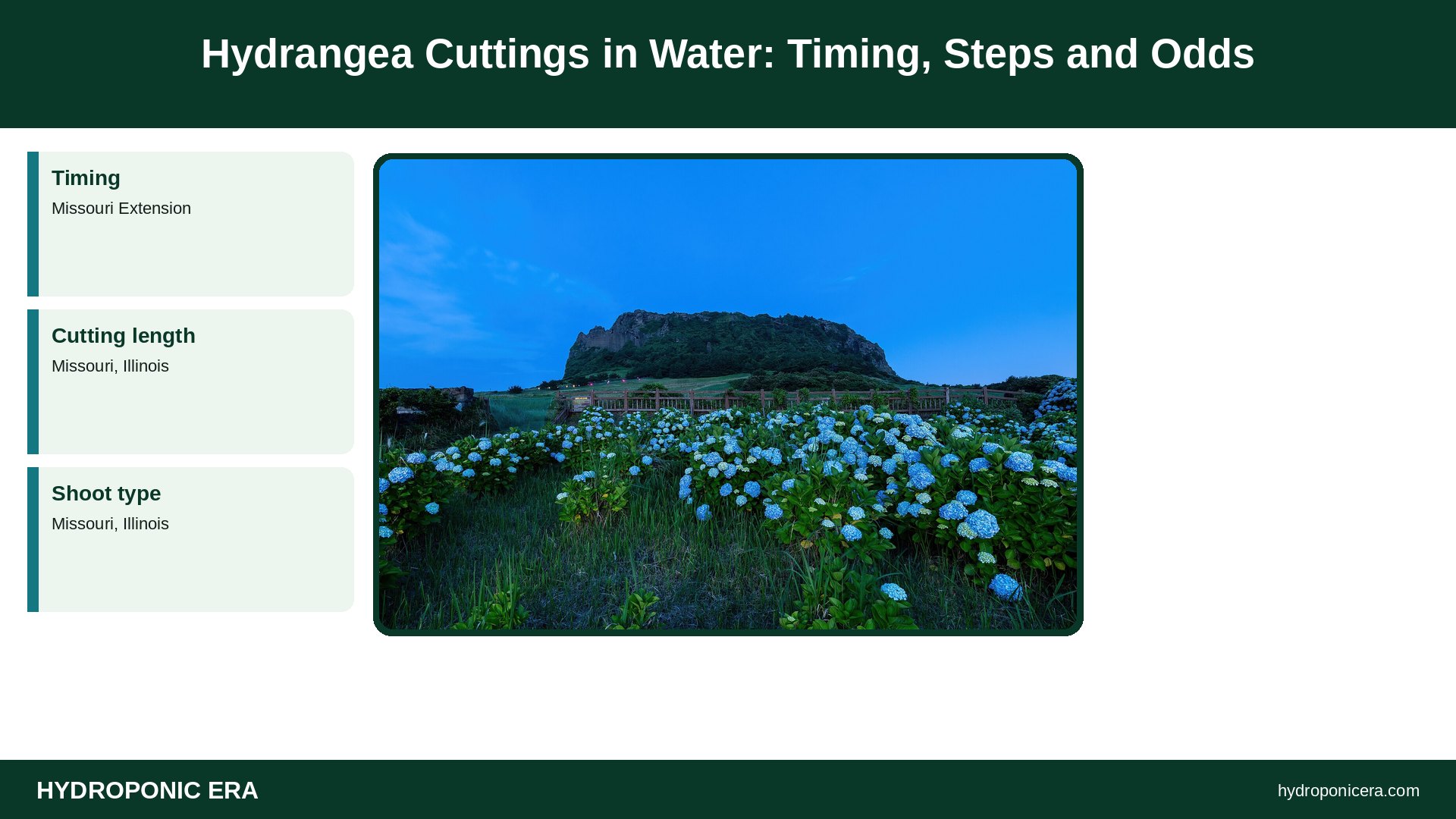
Do Hydrangea Cuttings in Water Really Root?
Yes. Bigleaf hydrangea (Hydrangea macrophylla) is a fast-growing shrub, and NC State Extension lists stem cuttings, leaf cuttings and layering as propagation methods. Soft, green stems root readily, which is why many gardeners succeed with jars on a windowsill. However, Illinois Extension notes that roots formed in water are weaker than those grown in a solid medium, so treat water as a starting step and transplant early.
When Should You Take Hydrangea Cuttings in Water?
Missouri Extension recommends softwood cuttings in early summer from terminal shoots that are not flowering. At that stage stems are green and flexible but firm enough to handle. Late-summer stems are woodier and root more slowly. Take cuttings in the morning, when stems are fully hydrated, and put them in water immediately.
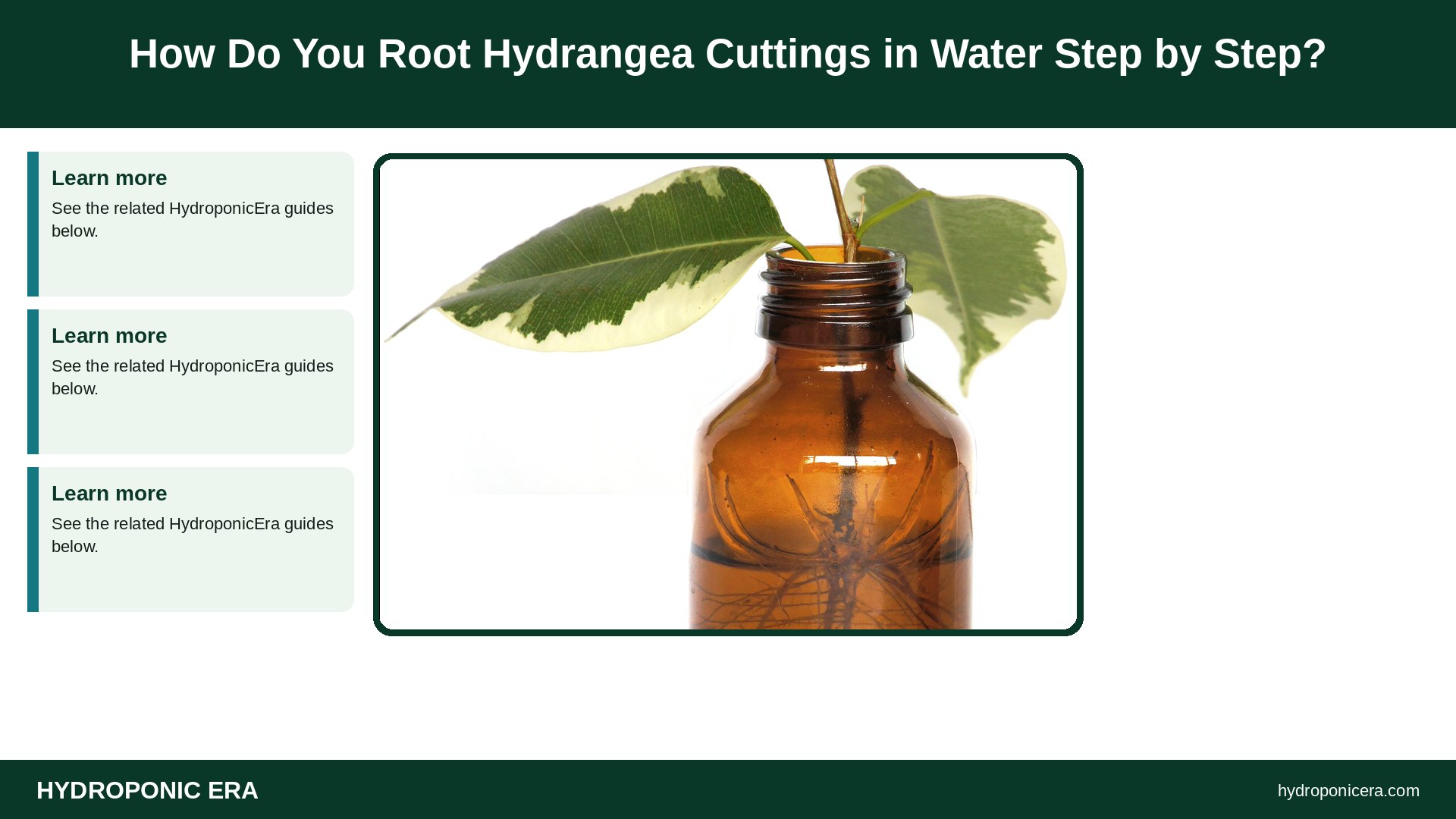
How Do You Root Hydrangea Cuttings in Water Step by Step?
- Pick a non-flowering shoot. Illinois Extension says cuttings work best from branches that did not flower that year.
- Cut 4–6 inches (10–15 cm) just below a node with clean pruners.
- Remove leaves from the bottom two nodes, where most roots form.
- Cut the largest leaves in half to reduce water loss and wilting, as both Missouri and Illinois advise.
- Stand the cutting in water with the bare nodes submerged.
- Place it in bright shade. Illinois warns never to put new cuttings in sun.
- Change the water weekly, or whenever it turns cloudy.
- Pot it when roots are about 1 inch (2.5 cm) long.
How Long Do Hydrangea Cuttings in Water Take to Root?
Illinois Extension says cuttings in a moist medium begin rooting in 2–3 weeks, faster in warm, humid weather, and some root in as little as one week. Water rooting is usually similar or a little slower. Warmth helps: Illinois and Penn State recommend rooting temperatures of 75–80°F (24–27°C). Look for white bumps at the nodes first.
Are Hydrangea Cuttings in Water Better Than Vermiculite?
| Method | Pros | Cons |
|---|---|---|
| Water jar | See roots form; no supplies | Weaker roots; transplant shock |
| Damp vermiculite under plastic | Extension-recommended; sturdier roots | Can’t see progress |
| Ground layering | Parent feeds the branch | Only a few plants at a time |
Illinois Extension’s method uses damp vermiculite or a sterile medium, with the pot covered in plastic propped off the leaves. A humidity dome does the same job, and perlite and vermiculite make a clean rooting mix.
What Is the Best Jar Setup for Hydrangea Cuttings in Water?
Use a narrow glass or bottle that holds the stem upright with only the bare nodes underwater, usually 1–2 inches (2.5–5 cm) deep. Leaves should never touch the water, or they’ll rot and foul it. Tinted glass slows algae. Vermont Extension advises swapping cloudy water for fresh, room-temperature water. Set the jar where it gets bright, indirect light all day, such as a north window or a covered porch in summer. A loose clear plastic bag over the jar raises humidity, but open it daily for fresh air. Check the water level every couple of days, because hydrangea leaves draw water quickly in warm weather and the nodes must stay submerged.
Do Hydrangea Cuttings in Water Need Rooting Hormone?
No. Illinois Extension calls rooting hormone entirely optional for hydrangea, while Missouri suggests dipping the cut end. Hormone is mainly used in solid media. If you use it, Penn State cautions that too much can slow rooting, so tap off the excess.
Why Are My Hydrangea Cuttings in Water Wilting?
- Too much leaf area: Halve more leaves.
- Sun: Move to bright shade.
- Flowering shoot: Start again with a non-flowering stem.
- Rot: Cut above soft tissue; use fresh water.
- Low humidity: Cover loosely with a clear bag.
How Do You Pot Rooted Hydrangea Cuttings in Water?
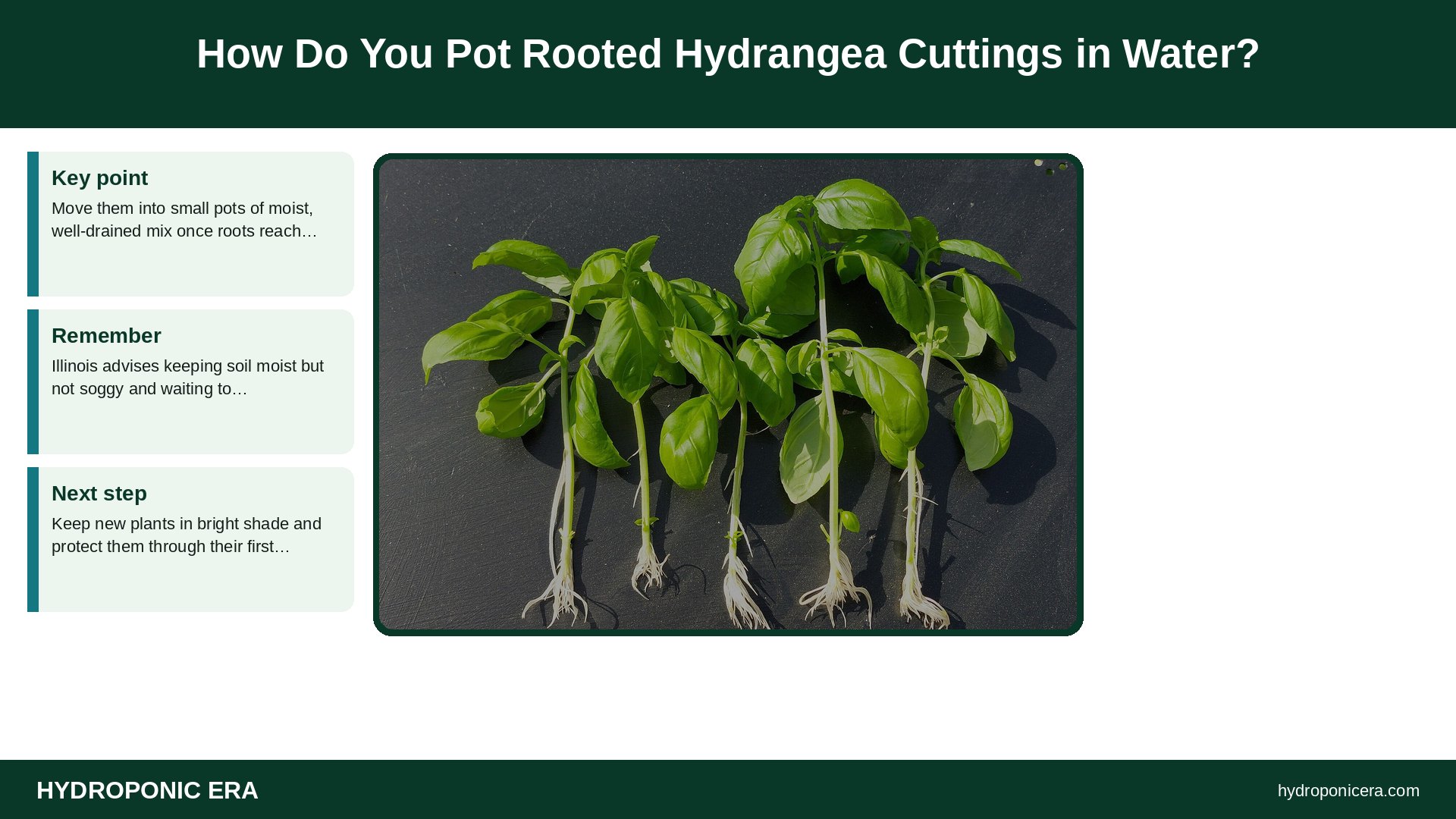
Move them into small pots of moist, well-drained mix once roots reach about 1 inch (2.5 cm). Illinois advises keeping soil moist but not soggy and waiting to water again until the top feels dry, since overwatering rots cuttings. Keep new plants in bright shade and protect them through their first winter before planting out. NC State says bigleaf hydrangea is hardy in USDA Zones 6–11 and performs best in partial shade.
Will Hydrangea Cuttings in Water Keep the Parent’s Flower Color?
They keep the parent’s genetics, but color depends on soil. NC State explains that bigleaf hydrangea flowers turn blue in acidic soil and pink in alkaline soil. A pink-flowering parent may bloom blue in a different garden.
How Do You Ground Layer a Hydrangea Instead?
If water rooting keeps failing, try layering, which Illinois Extension calls a very easy method. Bend a low branch to the ground, remove the leaves along a 5–6 inch (13–15 cm) section and bury it in soil while the tip stays above ground. Missouri Extension describes a similar trench method with a 1 inch (2.5 cm) ring of bark removed and 6–12 inches (15–30 cm) of tip left exposed. Once roots form, cut the new plant free and move it. The parent supplies water and food the whole time, so success rates are high.
Can You Propagate Patented Hydrangeas?
Illinois Extension reminds readers that reproducing trademarked or patented plants may be prohibited. Check the plant tag before propagating named reblooming cultivars.
Is Hydrangea Toxic to Pets?

Yes, at a low severity. NC State lists bigleaf hydrangea as a problem for cats, dogs and horses, and says eating large quantities can cause nausea, stomach pain and vomiting. Keep jars out of reach.
FAQs
Can I start hydrangea cuttings in water in fall?
It’s harder; stems are woody. Early summer is best.
How many cuttings per jar?
Two or three, leaves not touching.
Should flowers be removed?
Choose non-flowering shoots instead.
Do oakleaf and panicle hydrangeas root this way?
Softwood cuttings work for many types; timing is similar.
Can I use tap water?
Usually; let chlorinated water stand overnight.
Sources
- University of Missouri Extension — Get More Hydrangea With These Simple Steps
- University of Illinois Extension — Rooting Hydrangea Cuttings in Five Easy Steps
- North Carolina State Extension — Hydrangea macrophylla (Bigleaf Hydrangea)
- University of Illinois Extension — Houseplant Propagation
- Penn State Extension — Propagating Houseplants
- Photo credits (Wikimedia Commons, edited with titles): Hydrangea macrophylla in front of Seongsan Ilchulbong volcano at blue hour in Jeju Island South Korea by Basile Morin (CC BY-SA 4.0); Ficus cuttings with roots in a bottle, White background by Biusch (CC BY-SA 3.0); Basilikum (Ocimum basilicum) Stecklinge — Josef Schlaghecken by Schlaghecken Josef (CC BY-SA 4.0); Ficus cuttings with roots in a bottle, White background by Biusch (CC BY-SA 3.0); Perlite1 by KENPEI (CC BY-SA 3.0)