
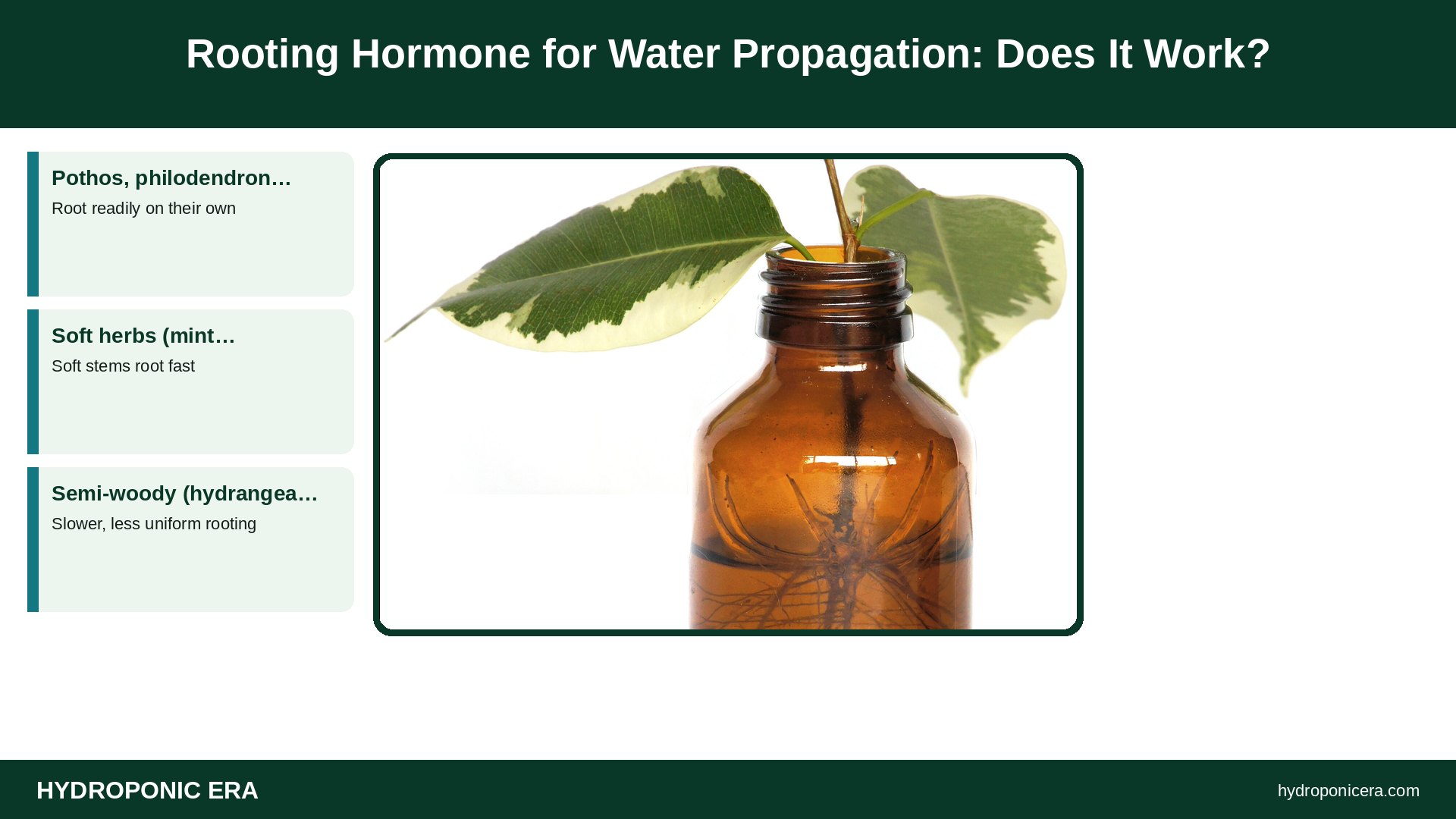
Do you need rooting hormone for water propagation? Usually not. Illinois Extension says many houseplants root so easily that rooting hormone isn’t important, though it helps difficult species. Penn State says dipping a cutting in hormone before placing it in water or media speeds root development, but too much slows it. For pothos, mint or coleus, skip it; for slow, woody cuttings, a light dip helps.
Key takeaway: Rooting hormone for water propagation is optional for easy rooters and useful for stubborn ones. Use a tiny amount, tap off the excess and never dip straight into the original container.
| Cutting type | Hormone needed? | Why |
|---|---|---|
| Pothos, philodendron, tradescantia | No | Root readily on their own |
| Soft herbs (mint, basil, coleus) | No | Soft stems root fast |
| Semi-woody (hydrangea, fig, rose) | Optional, helpful | Slower, less uniform rooting |
| Difficult or woody species | Yes, helpful | Illinois: hormones help difficult species |
What Does Rooting Hormone for Water Propagation Actually Do?
Rooting hormones contain synthetic auxins, most often indole-3-butyric acid (IBA). Illinois Extension explains that these products increase the rooting percentage of many plants, tend to shorten rooting time and often improve the quality and quantity of roots. They don’t create roots from nothing; they help cuttings that can root do it faster and more uniformly.
Does Rooting Hormone Work in Water?
Yes, with a caveat. Penn State Extension specifically says dipping a tip or leaf cutting in rooting hormone before placing it in water or media speeds new roots. In water, though, powder starts to wash off once the stem is submerged, so the effect is mostly an initial dose at the cut. That’s still useful for slower species. Some liquid concentrates are labeled for dilution; follow the label rate exactly.
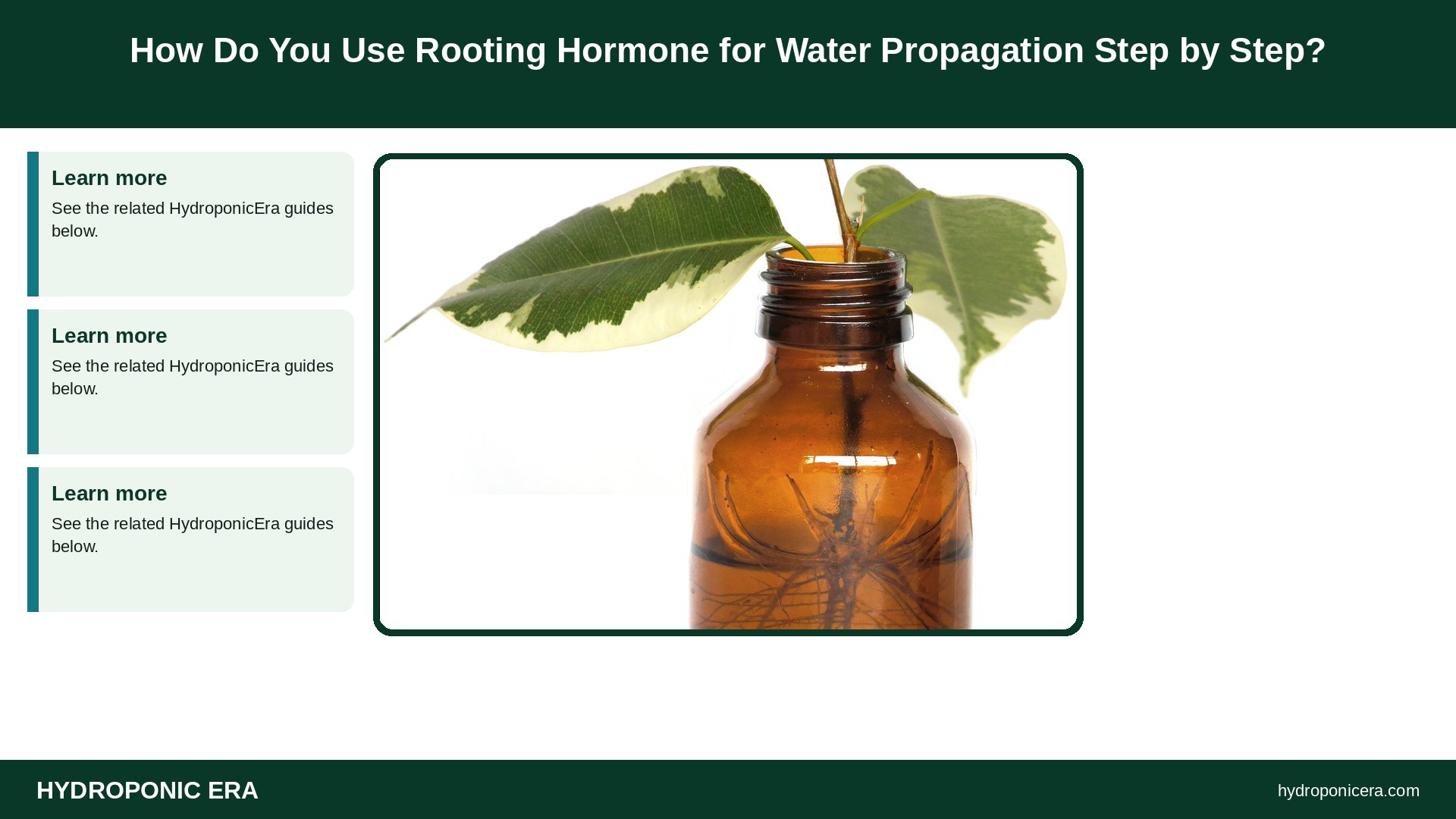
How Do You Use Rooting Hormone for Water Propagation Step by Step?
- Take a fresh cutting just below a node with clean tools.
- Remove leaves that would sit underwater.
- Pour a little powder into a separate dish. UF/IFAS advises separating a small portion so you don’t contaminate the stock container.
- Dip only the cut end and the lowest node.
- Tap off the excess. Penn State warns that too much hormone slows root development.
- Lower the cutting gently into the water so the powder isn’t immediately rinsed off.
- Change the water weekly as usual.
- Discard leftover powder in the dish.
Which Rooting Hormone Strength Should You Use?
UF/IFAS notes that commercial talc products come premixed in several concentrations and calls talc an effective treatment, especially for herbaceous cuttings. Percent strength converts easily: 0.1% IBA equals 1,000 ppm and 0.3% equals 3,000 ppm.
| Label strength | Equivalent | Typical home use |
|---|---|---|
| 0.1% IBA | 1,000 ppm | Soft, green cuttings |
| 0.3% IBA | 3,000 ppm | Semi-woody cuttings |
| 0.8% IBA | 8,000 ppm | Hard, woody cuttings |
Most houseplant growers only need the lowest strength. Higher isn’t better; Penn State’s warning about excess applies.
Which Plants Need Rooting Hormone for Water Propagation?
Illinois Extension says many houseplants root so easily that hormone isn’t important, while difficult-to-root species benefit. In practice, consider hormone for:
- Semi-woody shrubs, like hydrangea and rose cuttings
- Fig and other woody fruit cuttings
- Older, firmer stems taken late in the season
- Variegated cultivars that root slowly
- Any cutting that failed to root on a previous try
Skip it for pothos, philodendron, tradescantia, coleus and mint. Our pothos in water guide shows how easy those are.
Is Water Better Than Media When Using Rooting Hormone?
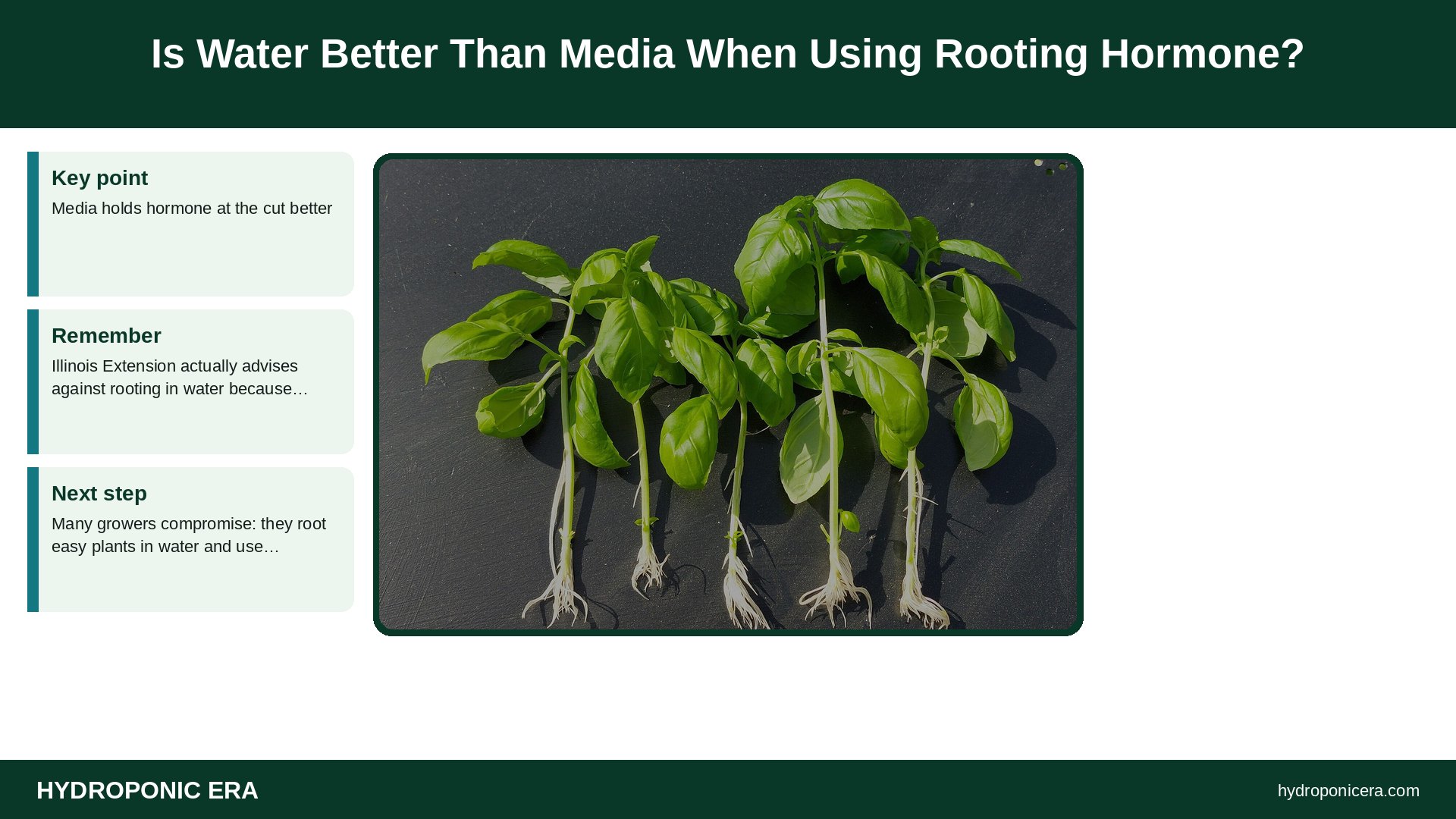
Media holds hormone at the cut better. Illinois Extension actually advises against rooting in water because roots formed in water are often weak and adapt less easily to potting mix. Many growers compromise: they root easy plants in water and use hormone with a moist medium like perlite, vermiculite or foam propagation cubes for harder ones. A humidity dome keeps those cuttings from wilting.
What About Natural Rooting Hormones Like Willow Water or Honey?
These are popular home remedies, but the extension sources used here don’t evaluate them, so results are uncertain. Honey is often used for its antimicrobial reputation, and willow water is a traditional gardening tip. If you try them, treat them as experiments and compare against an untreated cutting. For reliable results on difficult plants, a labeled IBA product is the tested option.
Why Isn’t My Cutting Rooting Even With Hormone?
- Too much hormone: Penn State says excess slows rooting.
- Cold water: Illinois and Penn State recommend 75–80°F (24–27°C) for rooting.
- Wrong stem: Flowering or very woody shoots root poorly.
- Stale water: Rot destroys new root initials.
- Patience: Vermont Extension says roots can take days, weeks or months.
Rotting stems point to water quality; see our guide to pythium root rot.
What Speeds Rooting Besides Rooting Hormone?
Hormone is only one lever, and often not the most important. These extension-backed basics usually matter more:
- Warmth: Illinois and Penn State recommend rooting temperatures of 75–80°F (24–27°C).
- Nodes: Illinois says stem cuttings are usually 3–6 inches (8–15 cm) long; roots form at nodes, so keep one or two underwater.
- Stem type: Maryland Grows notes thinner stems root faster than thick, woody ones.
- Light: Bright, indirect light; Illinois warns against direct sun for new cuttings.
- Clean water: Vermont Extension advises replacing cloudy water.
How Can You Test Rooting Hormone at Home?
Run a simple side-by-side trial. Take four or more cuttings from the same plant on the same day, treat half with hormone and leave half untreated, then root them in identical jars in the same spot. Label each jar and note the date the first root appears and root length after three weeks. If treated cuttings aren’t clearly faster for that plant, skip hormone next time. This takes the guesswork out and tells you exactly which plants in your collection benefit.
Is Rooting Hormone Safe to Use?
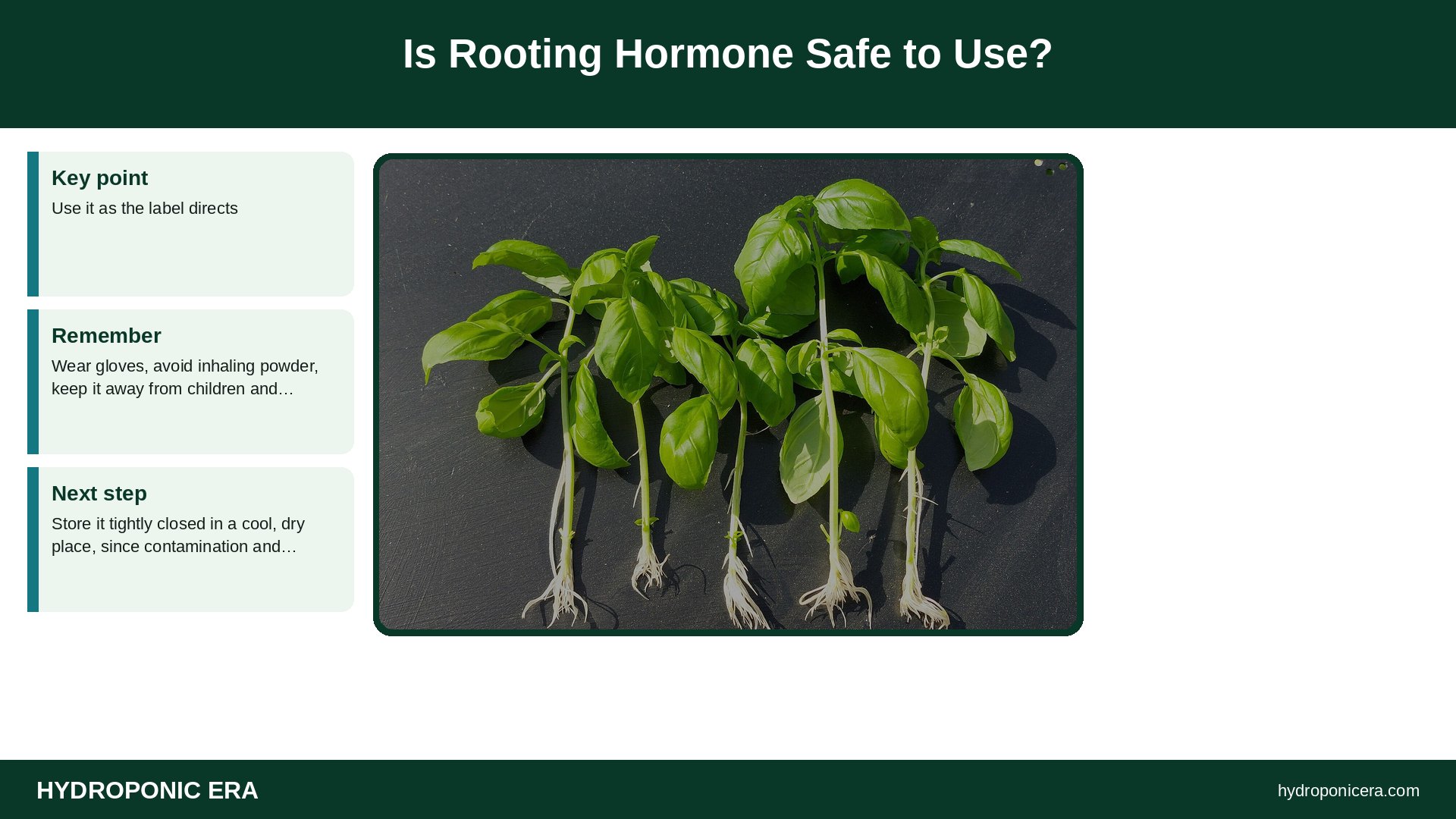
Use it as the label directs. Wear gloves, avoid inhaling powder, keep it away from children and pets, and don’t use it on edible plants unless the label permits. Store it tightly closed in a cool, dry place, since contamination and moisture shorten shelf life.
How Long Does Rooting Hormone Last?
Check the expiration date on the package. Keep the container sealed and only pour out what you need each time, as UF/IFAS advises. Old or clumped powder is cheap to replace and may work less well.
FAQs
Can I add rooting hormone to the water itself?
Only products labeled for dilution, at label rates.
Does cinnamon work as rooting hormone?
Cinnamon isn’t a rooting auxin, and the extension sources here don’t recommend it.
Should I re-dip after a water change?
No; one initial treatment is standard.
Does hormone help leaf cuttings?
Penn State recommends a light dip for leaf cuttings too.
Sources
- University of Illinois Extension — Houseplant Propagation
- Penn State Extension — Propagating Houseplants
- University of Florida IFAS — Cutting Terminology: Talc Auxin Application
- University of Maryland Extension (Maryland Grows) — Make More Plants From Cuttings: 5 Plants That Root Easily in Water
- University of Vermont Extension — More, Please: Propagating Houseplants
- Photo credits (Wikimedia Commons, edited with titles): Ficus cuttings with roots in a bottle, White background by Biusch (CC BY-SA 3.0); Ficus cuttings with roots in a bottle, White background by Biusch (CC BY-SA 3.0); Basilikum (Ocimum basilicum) Stecklinge — Josef Schlaghecken by Schlaghecken Josef (CC BY-SA 4.0); Basilikum (Ocimum basilicum) Stecklinge — Josef Schlaghecken by Schlaghecken Josef (CC BY-SA 4.0); Spathiphyllum wallisii hydroponically grown by Kephalian (CC BY-SA 4.0)