
Can you grow a parlor palm in water? You can’t root a parlor palm from a cutting, because each stem has a single growing point. Instead, divide a multi-stem pot so each piece keeps its own roots, rinse off the soil, and set the roots in clean water or clay pebbles with the stem base above the waterline. Keep it in bright, indirect light at 68–80°F (20–27°C).
Key takeaway: A parlor palm in water starts from a rooted division, not a cutting. Change the water weekly, keep the crown dry, and expect slow growth while soil roots adapt.
| Factor | Parlor palm (Chamaedorea elegans) | Source |
|---|---|---|
| Propagation | Division (not stem or leaf cuttings) | Iowa State, RHS |
| Light | Bright indirect; tolerates low light | NC State |
| Ideal growing temperature | 68–80°F (20–27°C) | RHS |
| Tolerated range | 50–80°F (10–27°C) | RHS |
| Pets | Listed as non-toxic to cats and dogs | NC State |
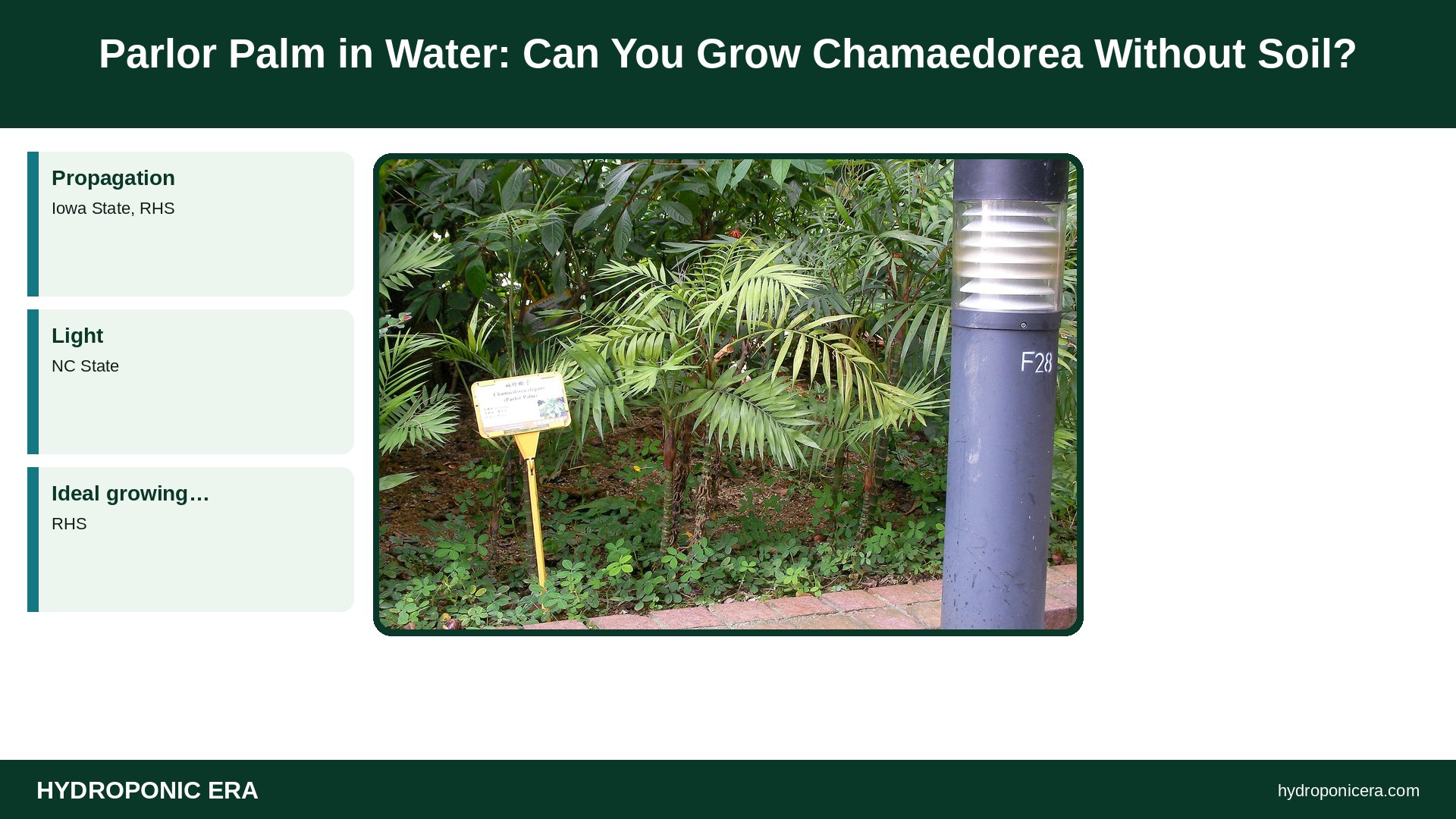
Why Can’t You Root a Parlor Palm Cutting in Water?
Palms don’t branch the way pothos or philodendron do. NC State Extension describes the parlor palm as a solitary palm, meaning each stem is a single plant. Cut a frond or stem top and there’s no node to make new roots and shoots. Iowa State Extension notes nearly all palms, including parlor palm, are best propagated by division, and the RHS recommends dividing clumps or sowing seed.
Where Do Divisions for a Parlor Palm in Water Come From?
Most store-bought pots aren’t one plant. NC State notes growers often put three or more plants in a single pot for a fuller look. That makes division easy: each stem in the clump already has its own roots. The RHS says a thriving clump can be pulled apart into two or more smaller plants, each with one or more stems and plenty of roots.
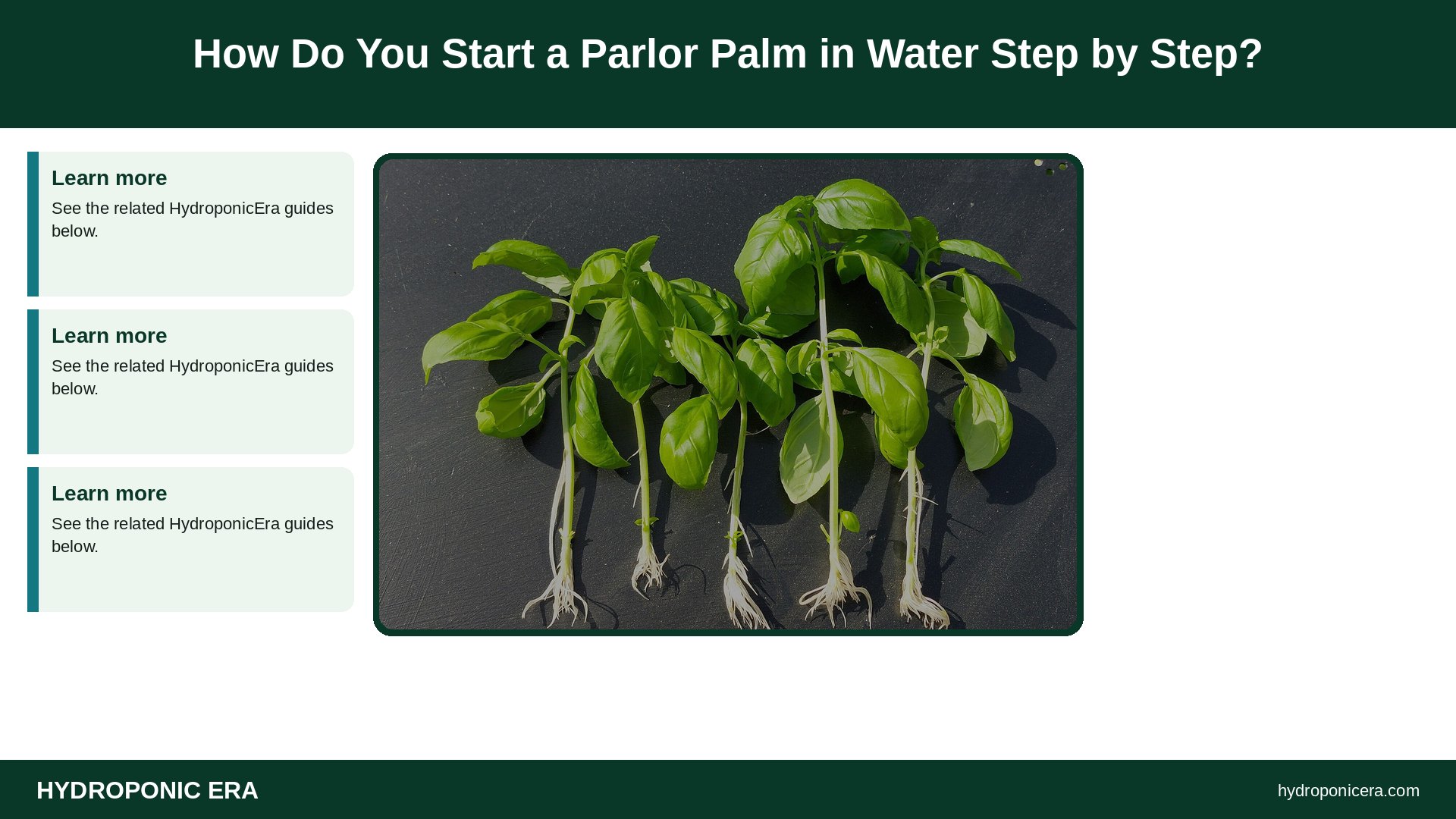
How Do You Start a Parlor Palm in Water Step by Step?
- Water the pot a day ahead so the root ball loosens.
- Slide out the plant and lay it on its side.
- Tease stems apart by hand, keeping as many roots as possible on each piece. Iowa State says larger pieces recover faster.
- Rinse all soil away in lukewarm water; leftover soil fouls water quickly.
- Trim only dead roots that are mushy or hollow with clean scissors.
- Set roots in a jar so they’re submerged but the stem base sits above water.
- Support the stem with pebbles or a narrow-necked vase.
- Place in bright, indirect light, out of direct sun.
- Change the water weekly and rinse the jar.
When Is the Best Time to Start a Parlor Palm in Water?
Iowa State Extension says early spring is the ideal time to divide houseplants, though most can be divided any time of year. Spring timing matters more for a palm heading into water, because warm weather and longer days help new roots form. The RHS notes parlor palms grow most actively from March to October and slow down in winter, so a fall or winter move means a longer wait before you see progress.
Will a Parlor Palm Grow Well in Water Long Term?
Honest answer: it’s an experiment. No extension trial we found tests parlor palms in plain water, and the RHS warns against letting potted plants sit in water because it can cause root rot. Soil roots often struggle when submerged. Watch for firm, pale roots and new fronds as signs it’s adapting. If roots turn brown and mushy, move it back to soil or into a semi-hydro setup.
Is Semi-Hydro Better Than a Parlor Palm in Water Alone?
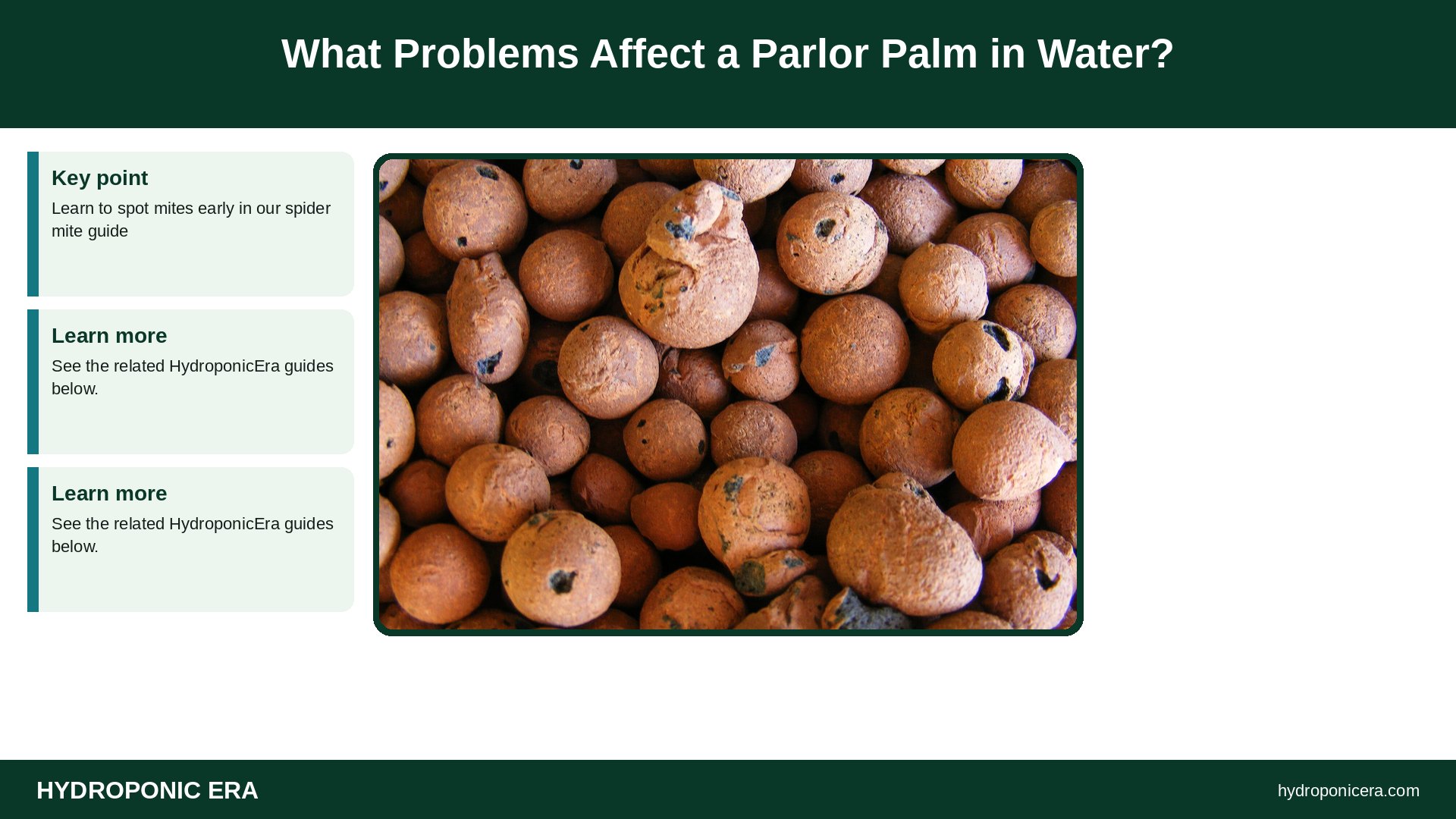
Often, yes. Clay pebbles hold the stem upright, keep the crown above moisture and let air reach the roots. Fill a pot with rinsed pebbles, set the division in, and keep a reservoir about one-quarter to one-third up the pot. Our guide to clay pebbles covers prep and rinsing.
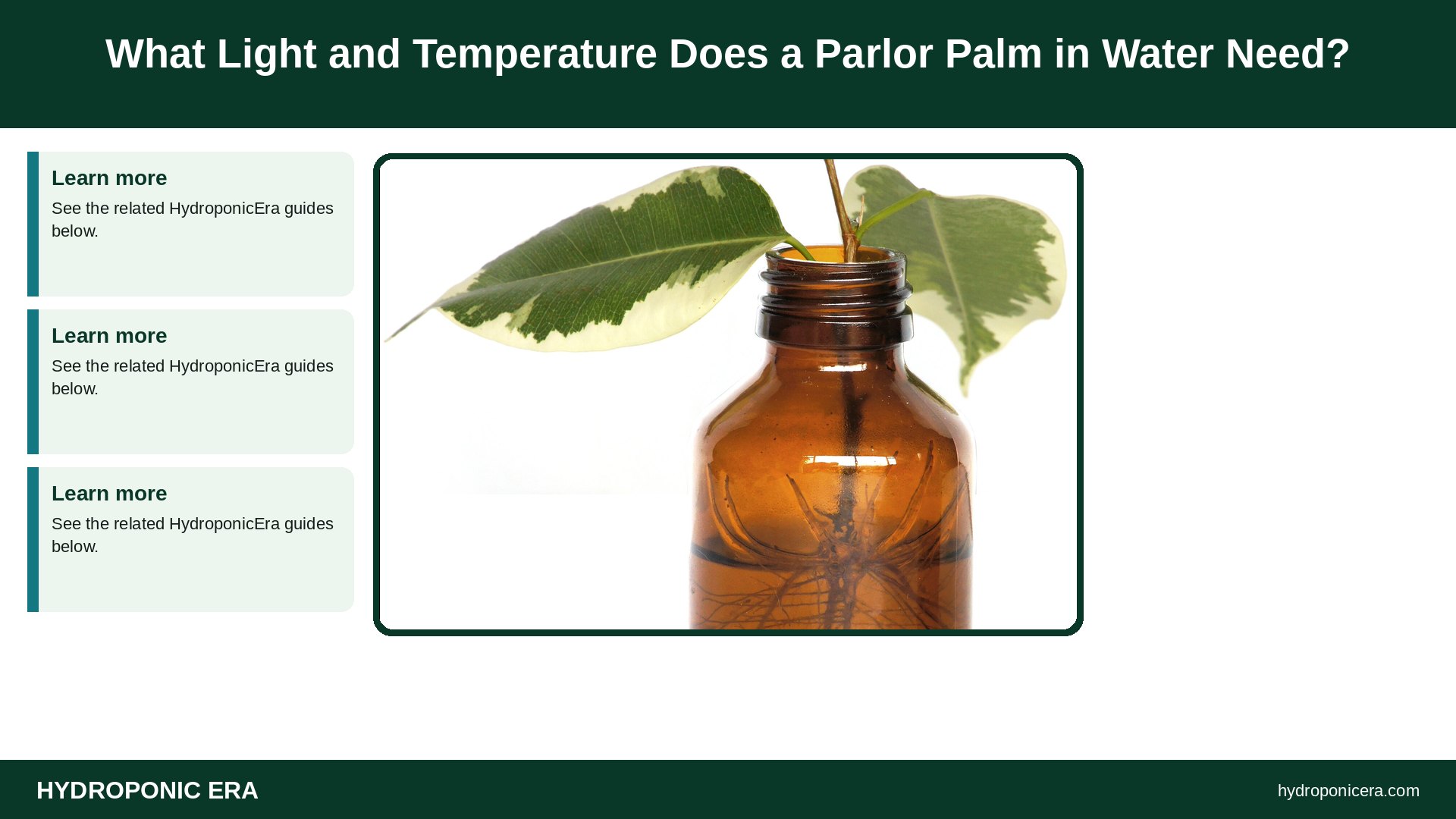
What Light and Temperature Does a Parlor Palm in Water Need?
NC State recommends bright indirect light, ideally near a north- or east-facing window, though the palm tolerates low light. The RHS says direct sun scorches leaves while too little light causes yellowing. It suggests 68–80°F (20–27°C) during the growing season and tolerates 50–80°F (10–27°C). Keep it away from cold drafts, as NC State advises.
What Water Should You Use for a Parlor Palm in Water?
The RHS says parlor palms prefer acidic conditions and warns that regular hard, alkaline tap water can brown the leaves; it suggests rainwater. Filtered or rainwater is a good choice for a palm living in water full time. If you use tap water, see our guide to chlorine and chloramine.
Should You Fertilize a Parlor Palm in Water?
Wait. Iowa State suggests waiting a few weeks after division before fertilizing so roots can recover. After that, add a very dilute liquid fertilizer during the growing season. NC State recommends periodic feeding in the growing season and none in winter. Strong fertilizer in a small jar can burn roots and feed algae.
What Problems Affect a Parlor Palm in Water?
- Brown leaf tips: dry air, hard water or underwatering; the RHS suggests misting.
- Yellow fronds: too little light or a declining root system.
- Mushy roots: rot; see our Pythium root rot guide.
- Webbing or speckling: spider mites, which NC State lists as a parlor palm pest.
Learn to spot mites early in our spider mite guide.
How Do You Keep Algae Away From a Parlor Palm in Water?
Light plus nutrients equals algae. Use an opaque or tinted container, or slip a paper sleeve around a clear jar. Scrub the jar at each water change, and skip fertilizer until the palm shows new growth. A green film on roots isn’t harmful in small amounts, but heavy algae competes for oxygen.
What Grows More Easily Than a Parlor Palm in Water?
If your palm struggles, vining plants with nodes are far easier. Pothos, philodendron and tradescantia root readily from cuttings. See our list of plants that grow in water.
Can You Grow a Parlor Palm From Seed in Water?
Not practically. NC State notes the palm is dioecious, with male and female flowers on separate plants, so indoor fruit is rare. The RHS recommends sowing seed warm, ideally in a heated propagator, which is a job for moist mix, not a jar.
FAQs
How long can a parlor palm in water live?
It varies; healthy water roots and new fronds are good signs.
Is a parlor palm safe for pets?
NC State lists it as non-toxic to cats and dogs.
Can I put a whole parlor palm in water?
Yes, after washing off all soil, but dividing is easier to manage.
Why are my parlor palm’s leaves turning brown?
Hard water, dry air or direct sun are common causes.
How fast does a parlor palm grow?
Slowly; the RHS notes it’s compact and slow growing.
Sources
- NC State Extension Gardener Plant Toolbox — Chamaedorea elegans
- Iowa State University Extension — How to Propagate Houseplants by Division and Offsets
- Royal Horticultural Society — How to Grow Chamaedorea
- Photo credits (Wikimedia Commons, edited with titles): Chamaedorea elegans by Tequila 13:54, 24 June 2007 (UTC) (CC BY-SA 3.0); Basilikum (Ocimum basilicum) Stecklinge — Josef Schlaghecken by Schlaghecken Josef (CC BY-SA 4.0); Ficus cuttings with roots in a bottle, White background by Biusch (CC BY-SA 3.0); Hydroton by Lucis (CC BY-SA 3.0); Spathiphyllum wallisii hydroponically grown by Kephalian (CC BY-SA 4.0)