
Does cinnamon for plants work? Partly. Cinnamon has mild antifungal properties, and lab studies show cinnamon extracts and oils can suppress some fungi. But no study shows grocery cinnamon powder reliably prevents damping-off at home, and cinnamon is not a rooting hormone. Use it as a small extra, never instead of sanitation.
Key takeaway: A light dusting of cinnamon is unlikely to hurt seedlings or cuttings, and it may slow some surface fungi. Clean trays, fresh mix, good airflow, careful watering and a real rooting hormone for hard-to-root plants do far more.
| Claim about cinnamon | What the evidence says | Source |
|---|---|---|
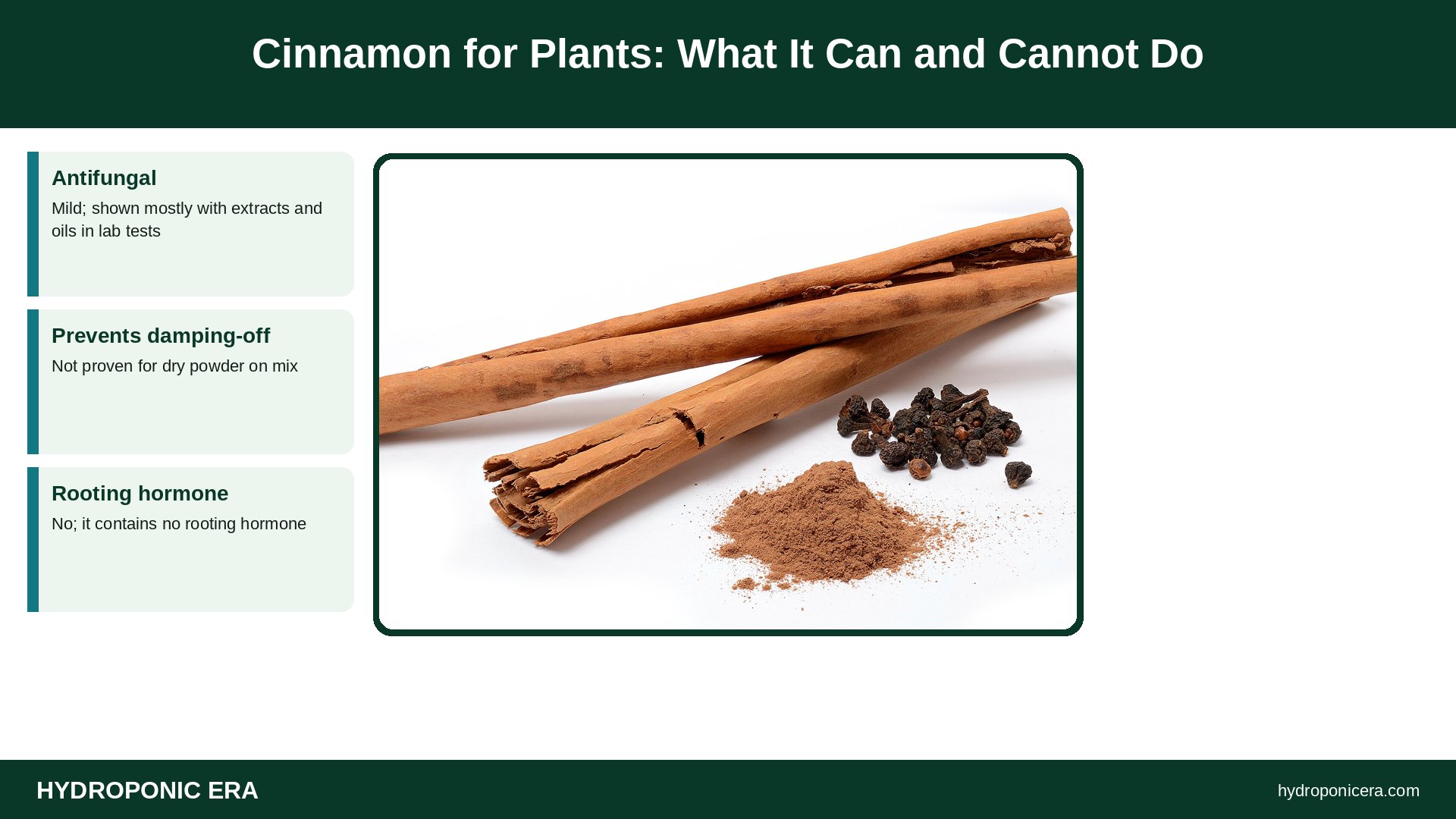
| Antifungal | Mild; shown mostly with extracts and oils in lab tests | NC State Extension, Garden Myths |
| Prevents damping-off | Not proven for dry powder on mix | Garden Myths |
| Rooting hormone | No; it contains no rooting hormone | Garden Myths |
| Pesticide status | Listed as a minimum-risk active ingredient | U.S. EPA |
| Replaces sanitation | No | NC State Extension |
Why Do Gardeners Use Cinnamon for Plants?
Gardeners use cinnamon for plants mainly for three jobs: dusting seed-starting mix against damping-off, dipping cuttings before rooting, and dabbing cut stems or wounds. The idea comes from cinnamon’s known antimicrobial compounds. North Carolina Cooperative Extension calls this hack one with “some truth,” noting cinnamon has mild antifungal properties and may inhibit some pathogens on seed-starting mix.
What Does Research Say About Cinnamon for Plants as a Fungicide?
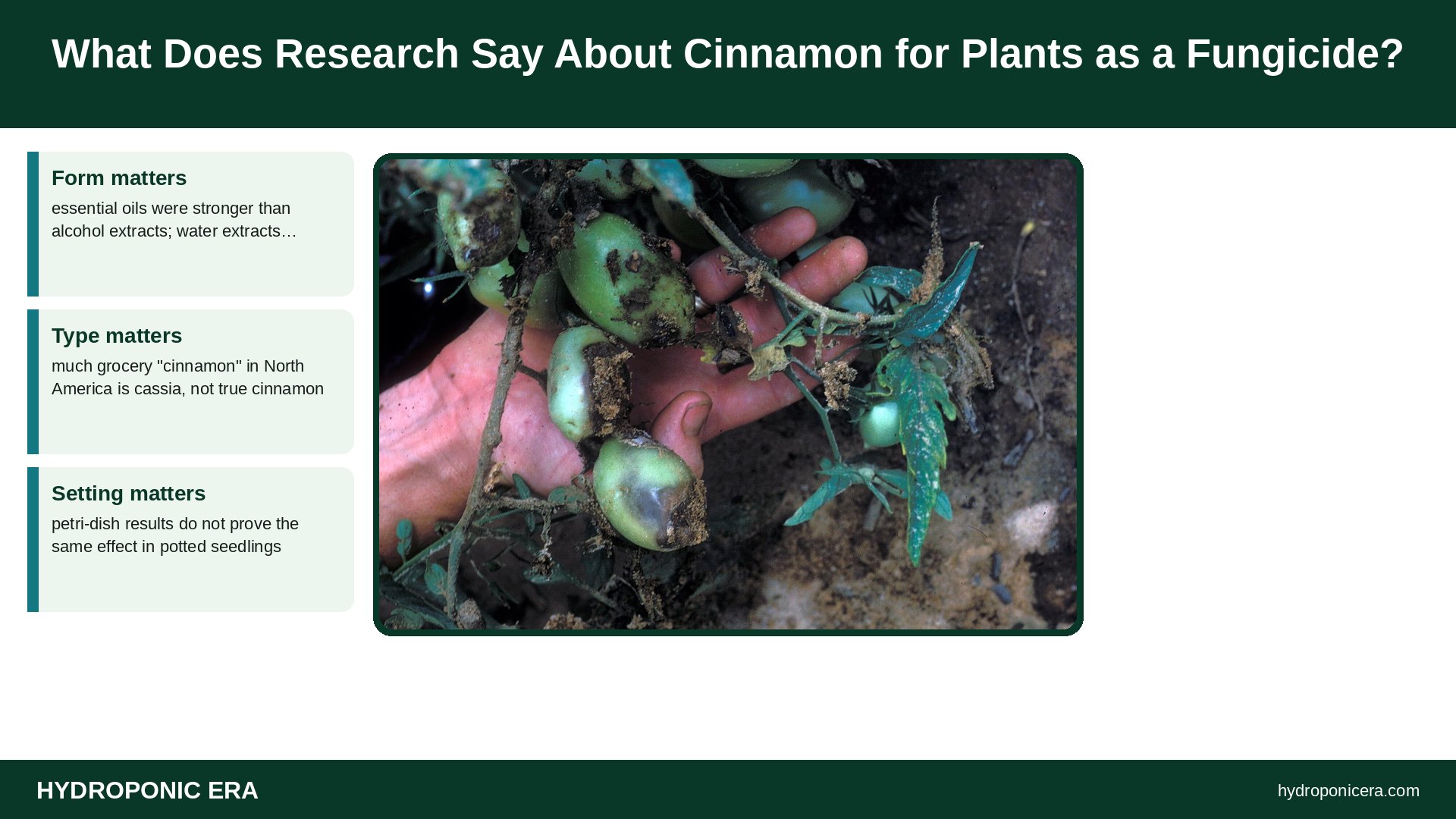
Lab research on cinnamon for plants supports antifungal activity, but not the way most people use it. Horticulturist Robert Pavlis of Garden Myths reviewed the studies and found that most used cinnamon essential oil or alcohol extracts in petri dishes, not dry powder sprinkled on soil. One compound, cinnamaldehyde, is the best-studied antifungal agent. True cinnamon (Cinnamomum verum) was the most effective in a study comparing species.
- Form matters: essential oils were stronger than alcohol extracts; water extracts are likely weakest.
- Type matters: much grocery “cinnamon” in North America is cassia, not true cinnamon.
- Setting matters: petri-dish results do not prove the same effect in potted seedlings.
Can Cinnamon Prevent Damping-Off in Seedlings?
Cinnamon for plants might help a little against damping-off, but it is not proven. Garden Myths found no study testing dry cinnamon powder dusted on the surface of mix, which is the usual home method. Damping-off is driven by pathogens that thrive in wet, cool, crowded, poorly drained conditions, so prevention starts there. Our damping-off guide covers the full fix list.
- Clean reused trays with a 10% bleach solution, then rinse, as UW–Madison Extension advises.
- Use fresh, sterile seed-starting mix or new rockwool.
- Water from below and let the surface dry slightly.
- Remove the dome once most seeds sprout.
- Add airflow with a small fan on low.
- Optional: dust a very thin layer of cinnamon on the surface.
Is Cinnamon a Rooting Hormone for Cuttings?

No. Cinnamon contains no auxin, the hormone that triggers roots. Garden Myths explains that antifungal agents may help a cutting survive long enough to root, but they do not cause roots to form. Many soft houseplant and herb cuttings root on their own in water or moist media. For harder woody cuttings, NC State Extension points to commercial rooting powders as the more reliable choice. See hydroponic cuttings and cloning for a full method.
How Do You Use Cinnamon for Plants Safely?
| Use | How | Tip |
|---|---|---|
| Seed tray surface | Very light dusting after sowing | Thick layers can crust the surface |
| Cutting ends | Dip moist end, tap off excess | Pair with rooting hormone if needed |
| Pruning wounds | Dab a little on clean cuts | Cut with sterile tools first |
| Hydroponic reservoir | Do not add | Powder can cloud water and clog parts |
When using cinnamon for plants, choose plain ground cinnamon with no sugar. Keep it off leaves, since a heavy coating can block light. In hydroponics, cinnamon belongs only on media surfaces or cuttings, never in the nutrient solution.
Should You Use Cinnamon for Plants in Hydroponics?
Only in limited ways. Hydroponic systems depend on clean, clear nutrient solution, and powder in the reservoir can cloud water, coat roots and clog pumps or drippers. If you want to try cinnamon for plants in a hydroponic setup, use it only on the top of rockwool cubes or plugs during germination, or on cutting ends before they go into a cloner. Many hydroponic growers rely instead on clean starts, steady temperature and good root-zone oxygen. Our rockwool guide explains how to prepare cubes so seedlings start strong without extra additives.
Is Cinnamon Approved as a Pesticide?
The U.S. EPA lists both cinnamon and cinnamon oil as active ingredients allowed in minimum-risk pesticide products under 40 CFR 152.25(f). That means products made only from listed ingredients can be exempt from federal registration if they meet all the rules. It does not mean EPA has confirmed that kitchen cinnamon controls any plant disease.
What Works Better Than Cinnamon for Plants?
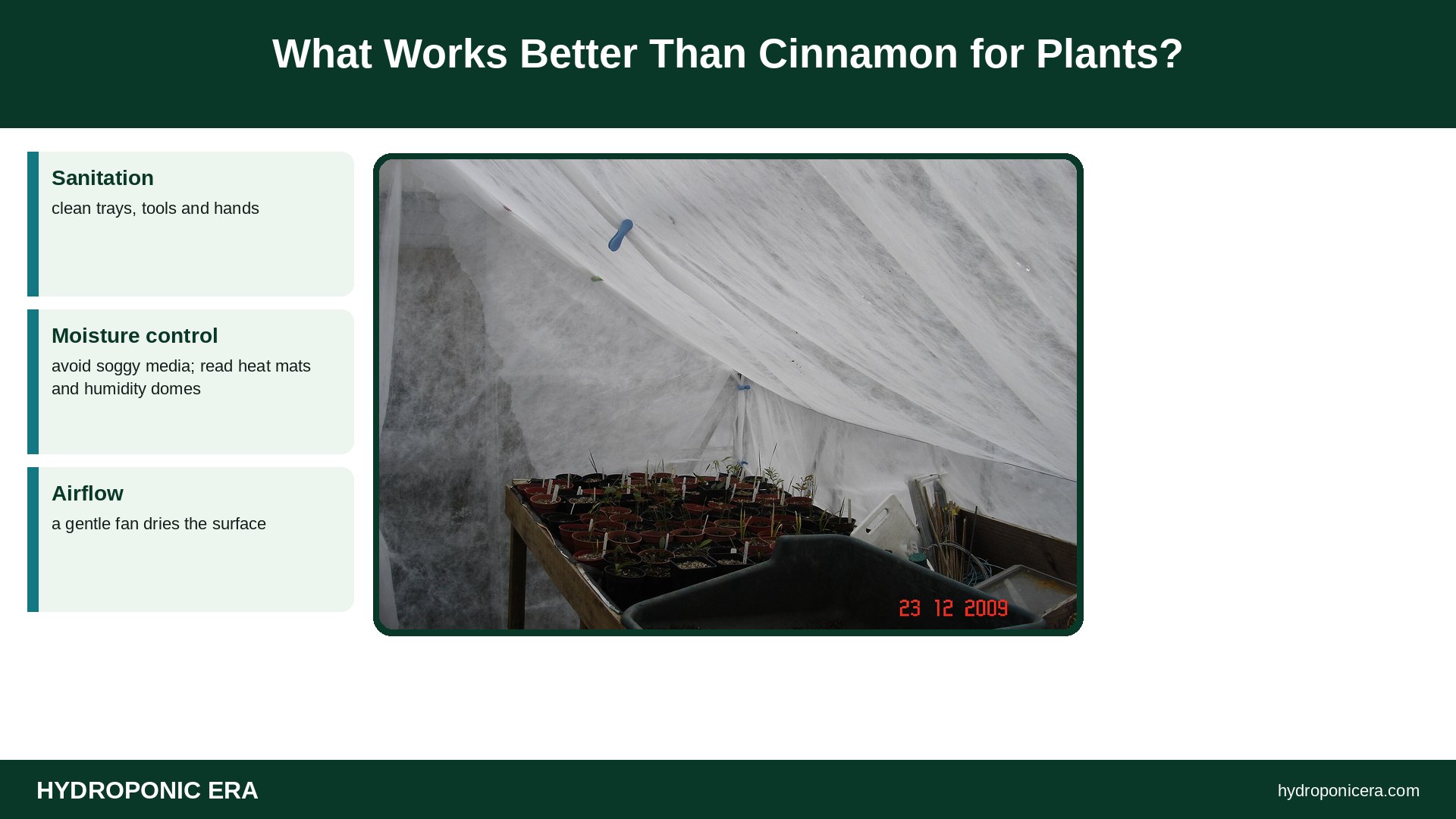
- Sanitation: clean trays, tools and hands.
- Moisture control: avoid soggy media; read heat mats and humidity domes.
- Airflow: a gentle fan dries the surface.
- Correct warmth: warm mix speeds germination, so seedlings outgrow the risky stage faster.
- Rooting hormone: for woody or slow cuttings.
What Are Common Mistakes With Cinnamon for Plants?
- Using it instead of cleaning: NC State Extension warns it is not a substitute for sanitation.
- Applying a thick layer: more is not better.
- Expecting faster rooting: it will not stimulate roots.
- Using cinnamon sugar blends: sugar can feed microbes.
- Trusting anecdotes: without a side-by-side tray, you cannot tell if it helped.
How Can You Test Cinnamon Yourself?
Run a simple side-by-side test of cinnamon for plants at home. Sow two identical trays with the same seed, mix, water and light, and dust only one with cinnamon. Garden Myths notes that most home claims lack such a control, which makes them hard to trust. Count healthy seedlings in each tray after two weeks. Repeat a few times before deciding.
FAQs
Will cinnamon kill fungus gnats?
There is no good evidence. See our fungus gnat guide for proven controls.
Can cinnamon harm plants?
A light dusting is unlikely to; heavy layers can crust media or coat leaves.
Which cinnamon is best?
True cinnamon was most effective in one comparison, but home use is unproven.
Is cinnamon safe around pets and kids?
It is a common food spice, but keep powder away from faces and eyes, and store it out of reach.
How often should I reapply it?
There is no tested schedule; most people dust once after sowing.
Can I add cinnamon to rockwool?
A light dusting on top is fine; keep it out of the reservoir.
Does cinnamon cure root rot?
No. Fix oxygen, temperature and sanitation instead.
Sources
- N.C. Cooperative Extension, Beaufort County — Gardening Hacks or Hype?
- Garden Myths (Robert Pavlis) — Cinnamon – Does it Stop Damping Off in Seedlings?
- Garden Myths — Best DIY Rooting Hormone
- U.S. EPA — Active Ingredients Allowed in Minimum Risk Pesticide Products
- UW–Madison Extension — Damping-off tips on seed starting
- University of Minnesota Extension — Starting seeds indoors
- Photo credits (Wikimedia Commons, edited with titles): Cinnamomum verum spices by Simon A. Eugster (CC BY-SA 3.0); Tomaten Rhizoctonia damping-off, blight and rot (Rhizoctonia solani), J.G.Kühn by University of Georgia Plant Pathology , University of Georgia, Bugwood.org J.G. (CC BY 3.0); Ficus cuttings with roots in a bottle, White background by Biusch (CC BY-SA 3.0); Fleece lined greenhouse potting tray and seed pots – Flickr – peganum by peganum from Small Dole, England (CC BY-SA 2.0); Ficus cuttings with roots in a bottle, White background by Biusch (CC BY-SA 3.0)