
Is neem oil for plants safe and effective? Yes, when used by the label. Neem oil for plants comes from neem tree seeds and controls soft-bodied pests such as aphids, mealybugs, thrips and whiteflies, mainly young stages, by smothering them and disrupting feeding and growth. It also helps limit powdery mildew. Test a small area first, because neem can burn leaves.
Key takeaway: Neem oil for plants is a slow, contact-based tool, not an instant cure. Spray only pests listed on the label, coat leaf undersides thoroughly, avoid stressed plants and heat, and keep it out of hydroponic reservoirs and aquaponic water.
| Neem oil fact | What it means for you | Source |
|---|---|---|
| Two active ingredients: azadirachtin and clarified hydrophobic neem oil | Garden-center sprays are usually the clarified oil | UNH, EPA |
| Works best on immature insects | Adults may keep feeding; repeat sprays | UNH |
| Helps prevent powdery mildew spread | Will not cure infected leaves | UNH |
| Azadirachtin half-life on leaves 1–2.5 days | Residue fades quickly | NPIC |
| Can burn foliage | Spot-test first | UNH |
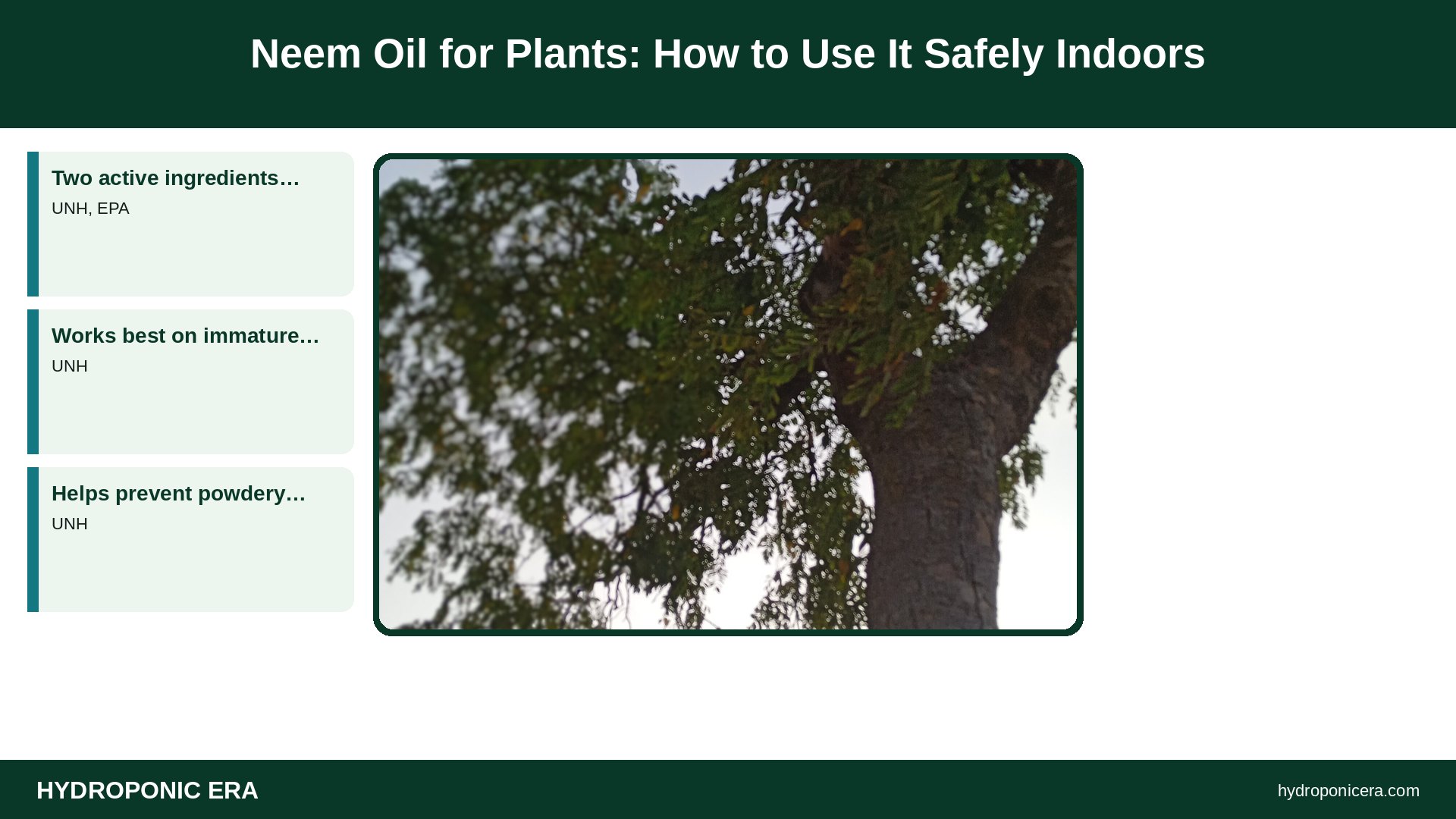
What Is Neem Oil for Plants?
Neem oil for plants is a botanical pesticide pressed from the seeds of the neem tree (Azadirachta indica). The National Pesticide Information Center (NPIC) says it is yellow to brown with a bitter taste and a garlic or sulfur smell, and that neem oil and its components appear in over 100 pesticide products. The neem tree is native to India and nearby regions.
According to the EPA, when neem oil is treated with alcohol, nearly all the azadirachtin separates out. The oil left behind is “clarified hydrophobic extract of neem oil,” which UNH Extension says is the active ingredient in most ready-to-use neem sprays sold at garden centers.
How Does Neem Oil Kill Pests on Plants?
Neem oil kills pests on plants in two ways. UNH Extension explains that the oil smothers insects by covering their bodies and blocking their breathing openings. NPIC adds that azadirachtin reduces feeding, repels insects and interferes with insect hormones, making it harder for them to grow and lay eggs. Neem works on contact, so complete coverage matters.
UNH notes that neem is most effective against immature insects. Adults are often not killed, so time sprays to the pest life cycle and expect to reapply. Results are not immediate.
Which Pests Does Neem Oil for Plants Control?
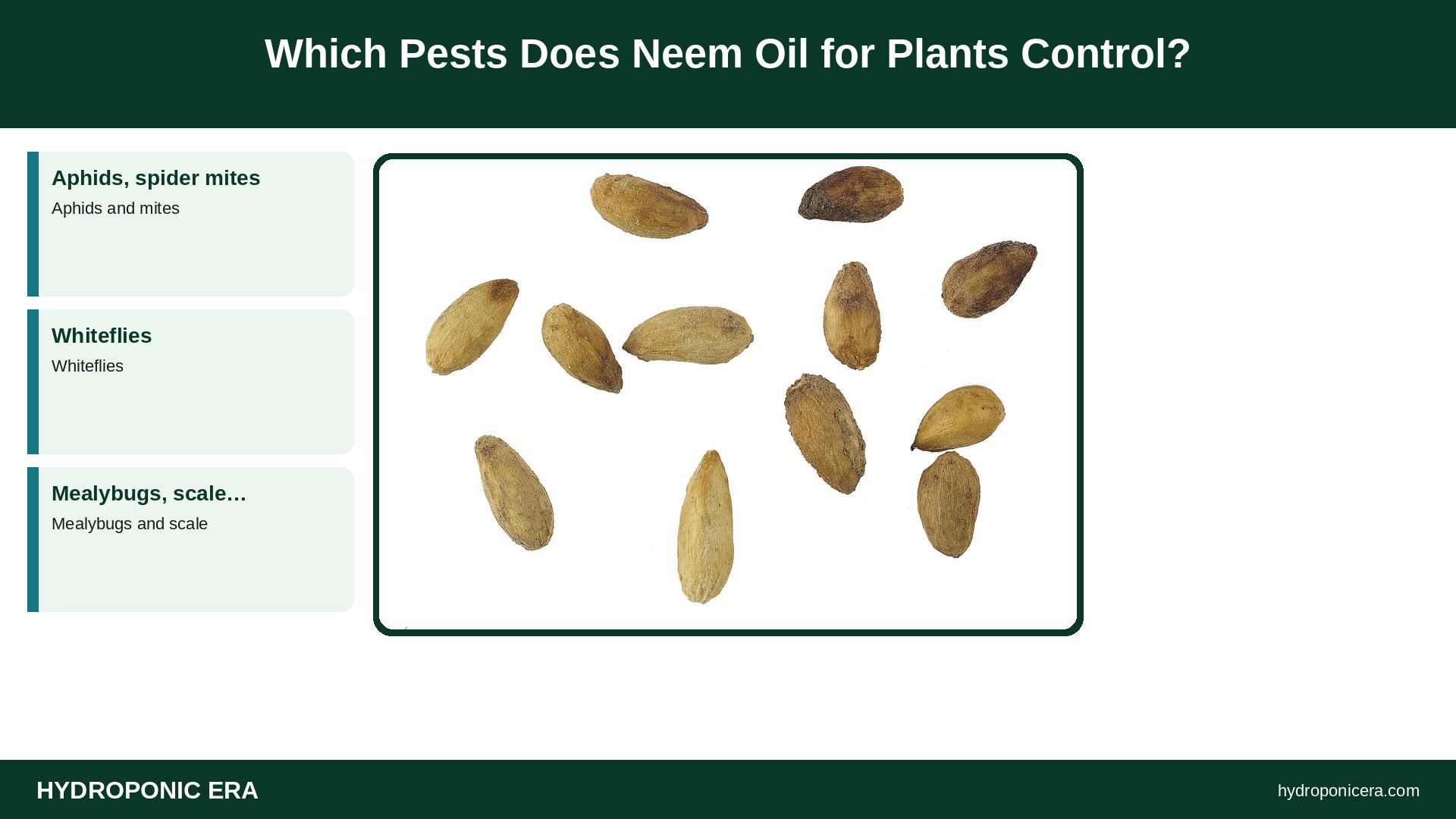
Neem oil for plants is commonly labeled for soft-bodied pests and some caterpillars. UNH Extension lists aphids, beetle larvae, caterpillars, lace bugs, leafhoppers, leafminers, mealybugs, thrips and whiteflies, and the EPA adds mites. Always identify the pest first and confirm it is on your product’s label.
| Pest | Neem fit | Related guide |
|---|---|---|
| Aphids, spider mites | Good on young colonies | Aphids and mites |
| Whiteflies | Nymphs; repeat sprays | Whiteflies |
| Mealybugs, scale crawlers | Crawlers and young stages | Mealybugs and scale |
| Thrips | Partial; combine with traps | Thrips |
| Powdery mildew | Prevents spread, no cure | Powdery mildew |
How Do You Use Neem Oil for Plants Step by Step?
- Confirm the pest and check that it is listed on the product label.
- Read the label rate. Mix concentrates exactly as directed; more is not better.
- Spot-test on a few leaves and wait a day or two; UNH recommends this before treating the whole plant.
- Skip stressed plants, recent transplants and wilted plants, per UNH.
- Spray in cool, low-light conditions, such as evening, to reduce leaf burn and avoid pollinators.
- Coat everything, especially leaf undersides and stem joints, where pests hide.
- Repeat as the label allows, since adults survive and eggs hatch later.
- Wear protection the label requires and wash hands afterward.
Is Neem Oil Safe for People, Pets and Bees?
Neem oil is low in toxicity for people when used as directed, but it is not risk-free. NPIC says it can be slightly irritating to eyes and skin. NPIC also reports adverse reactions, including some deaths, in cats treated with neem oil for fleas in other countries, so keep pets away from wet spray and never use plant products on animals.
NPIC describes neem oil as practically non-toxic to bees because insects must eat treated plants to be harmed, yet UNH warns neem can still harm beneficial insects. The EPA notes labels direct users not to apply while honeybees are actively visiting flowers. Indoors, move plants away from aquariums.
Can You Use Neem Oil for Plants in Hydroponics or Aquaponics?
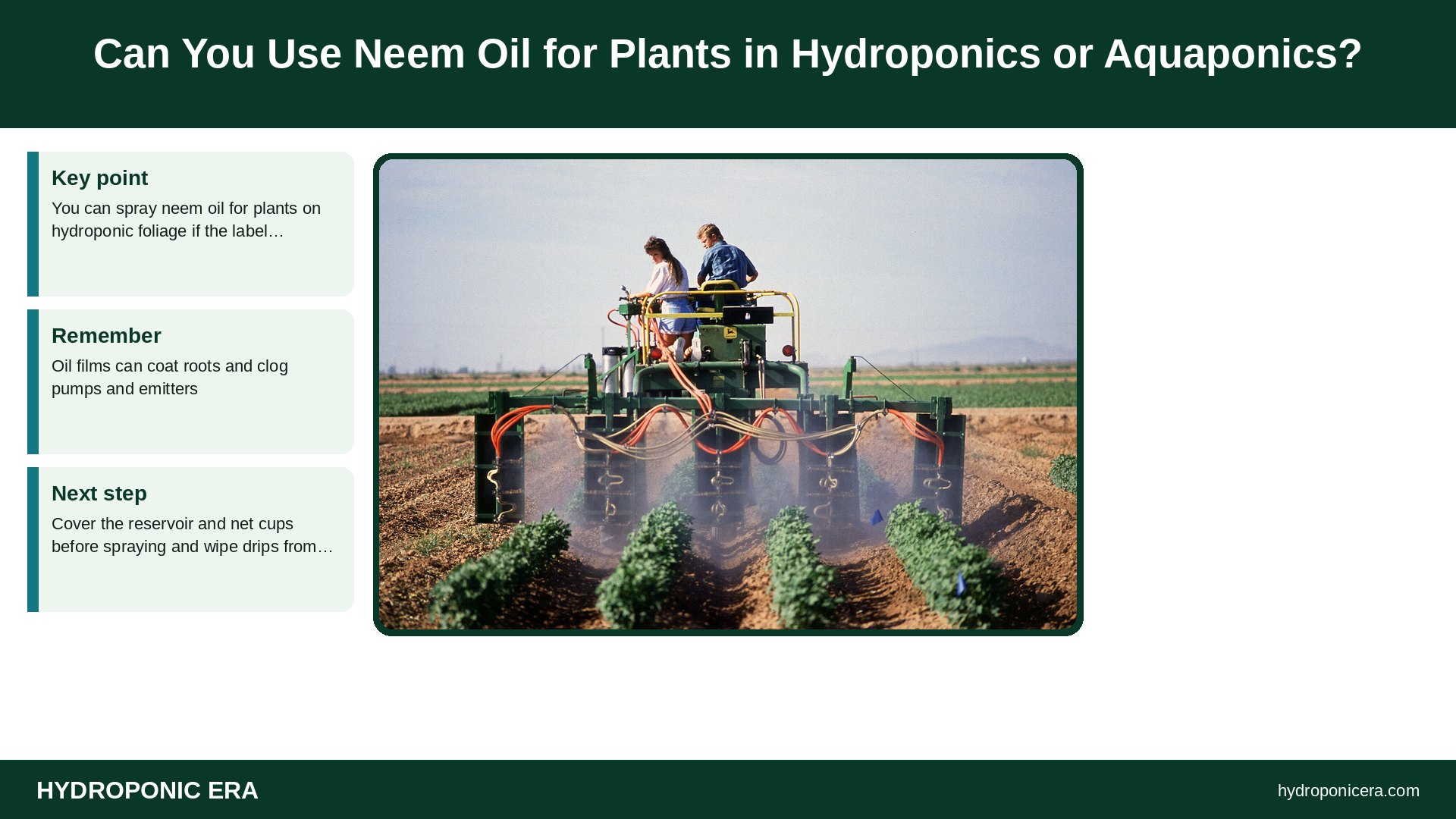
You can spray neem oil for plants on hydroponic foliage if the label allows the crop and site, but keep it out of the nutrient reservoir. Oil films can coat roots and clog pumps and emitters. Cover the reservoir and net cups before spraying and wipe drips from the channels.
Use extra caution in aquaponics. NPIC says neem oil is slightly toxic to fish, and azadirachtin is moderately toxic to fish and other aquatic animals. Remove plants from the system to spray, let them dry fully, and rinse before returning them, or choose a fish-safe method.
What Are Alternatives to Neem Oil for Plants?
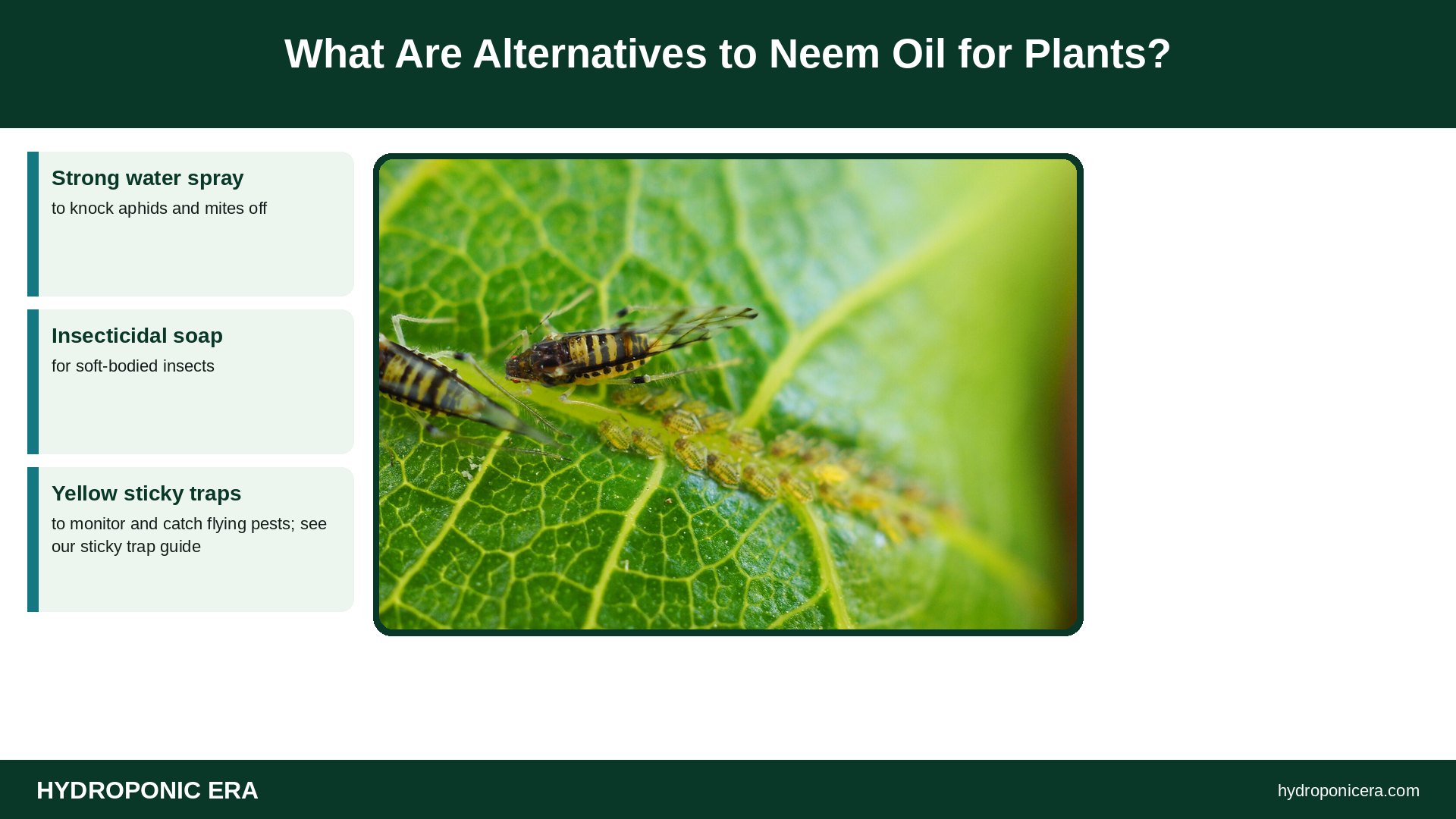
Start with the least toxic fix. UNH Extension says pesticides, even botanical ones, should be a last resort, and many problems are solved by fixing growing conditions or hand-picking pests and diseased leaves.
- Strong water spray to knock aphids and mites off.
- Insecticidal soap for soft-bodied insects.
- Yellow sticky traps to monitor and catch flying pests; see our sticky trap guide.
- Beneficial insects such as ladybugs and lacewings in greenhouses.
- Better airflow and lower humidity against powdery mildew.
What Is the Difference Between Cold-Pressed and Clarified Neem Oil?
Cold-pressed or raw neem oil contains the full mix of seed compounds, including azadirachtin, while clarified hydrophobic neem oil has had nearly all of the azadirachtin removed, according to the EPA. The EPA notes the clarified oil is also active against fungal diseases such as mildews and rusts, which azadirachtin alone is not.
| Product type | Main action | Typical use |
|---|---|---|
| Clarified hydrophobic neem oil | Smothers insects; fungal suppression | Ready-to-use garden sprays |
| Azadirachtin products | Feeding deterrent; growth regulator | Commercial insecticides |
| Raw or cold-pressed oil | Mixture of both | Sold for many uses; check for a pesticide label before using on plants |
For plant pest control, choose a product registered as a pesticide with clear label directions rather than cosmetic-grade oil.
FAQs
Does neem oil for plants kill fungus gnats?
Foliar neem does little against larvae in the root zone. Fix overwatering first; see our fungus gnat guide.
How often can I spray neem oil?
Follow the label interval. Residue breaks down fast, so repeat sprays are common.
Can I spray neem on herbs I will eat?
Only if the label lists the crop; follow any pre-harvest interval and rinse produce.
Does neem oil smell?
Yes. NPIC describes a garlic or sulfur odor that fades.
Why did my leaves burn after spraying?
Heat, strong light, high rates or stressed plants increase leaf burn. Spot-test first.
Sources
- National Pesticide Information Center — Neem Oil General Fact Sheet
- University of New Hampshire Extension — What Should Neem Be Used for on Plants?
- U.S. EPA — Biopesticides Fact Sheet: Azadirachtin and Clarified Hydrophobic Extract of Neem Oil
- Photo credits (Wikimedia Commons, edited with titles): Neem oil plant by Ayyuha Sideeq (CC0); Azadirachta indica MHNT.BOT.2007.40.124 by Roger Culos (CC BY-SA 3.0); K4817-4 (8497812386) by USDAgov (Public domain); Aphids on a leaf, 2025 early summertime Alconbury Weald by ISAAC THE BOY (CC BY 4.0); Leaves Azadirachta indica Heritage tree Philippines by P1898 (CC BY 4.0)