
Can you grow a nerve plant in water? Yes. Nerve plant (Fittonia) roots easily from stem cuttings in water because its creeping stems naturally root at the nodes. Take a 2–3 inch (5–8 cm) tip with at least two nodes, strip the lower leaves, set it in room-temperature water in bright, indirect light, and change cloudy water. Pot it once roots pass 2–3 inches (5–8 cm).
Key takeaway: A nerve plant in water is a quick, cheap way to multiply Fittonia. It wants humidity, no direct sun and no drafts. Long-term, most cuttings grow better moved into a small pot of moist, well-drained mix or a terrarium.
| Nerve plant in water factor | Target | Source |
|---|---|---|
| Cutting length | 2–3 inches (5–8 cm), 2+ nodes | Penn State |
| Leaves under water | None | UVM |
| Light | Bright to medium, indirect | NC State |
| Room | Average to cool room temperature, medium humidity | NC State |
| Water change | When it turns cloudy | UVM |
| Pot up when roots reach | 2–3 inches (5–8 cm) | UVM |
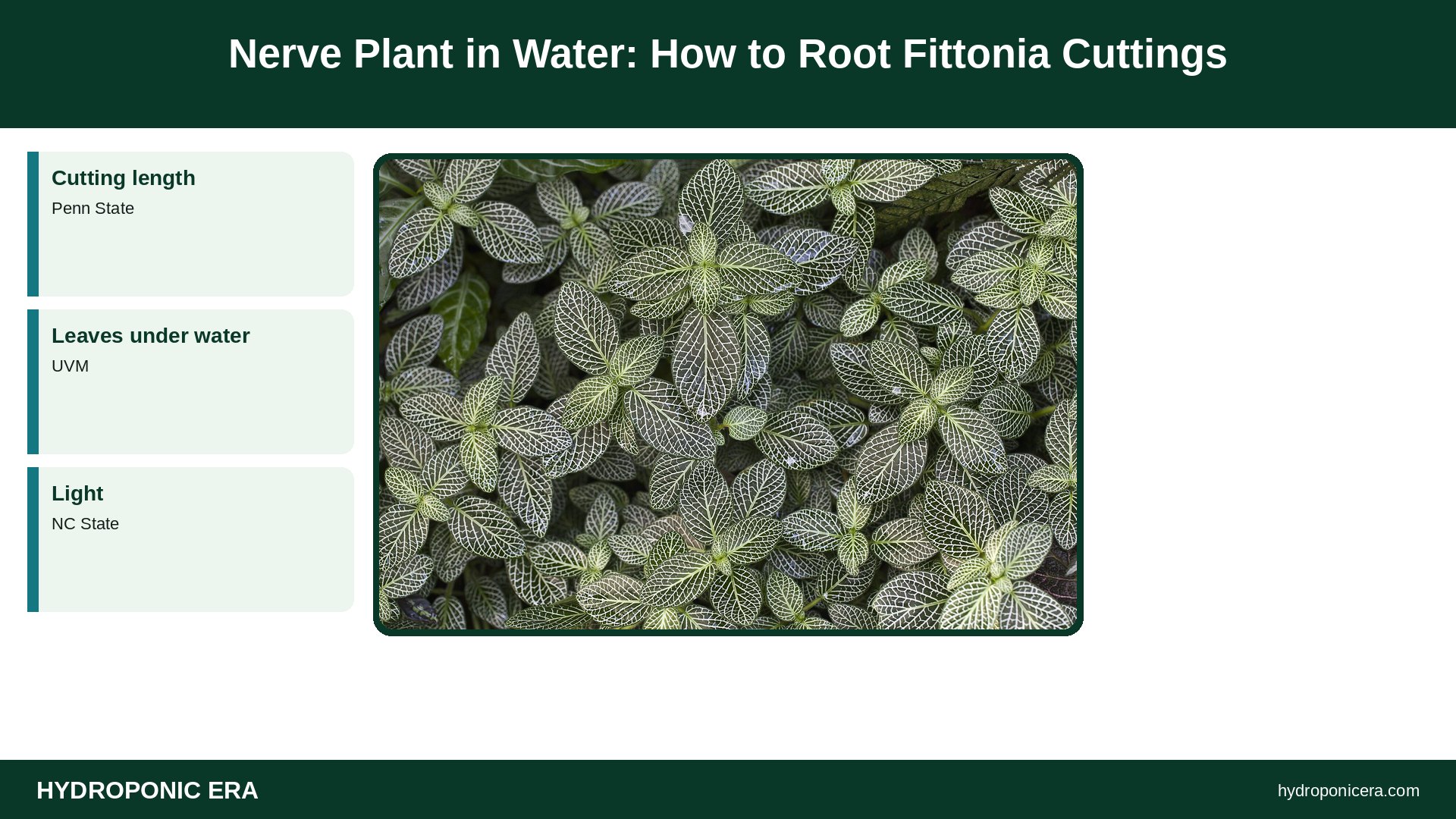
What Is a Nerve Plant?
A nerve plant (Fittonia albivenis), also called mosaic plant or jewel plant, is a low, creeping tropical houseplant from the rainforests of South America. NC State Extension says it grows up to 8 inches (20 cm) tall and about 18 inches (46 cm) wide, with olive-green leaves veined in white, pink or red. It is hardy only in USDA Zones 11–12, so in most of the U.S. it lives indoors.
NC State lists nerve plant as non-toxic to cats, dogs and horses, which makes it a popular pet-friendly desk plant.
Why Does a Nerve Plant in Water Root So Easily?
A nerve plant roots easily in water because it is a creeping plant whose stems already form roots where they touch moist ground. NC State Extension notes simply that “the creeping stems will root.” Each node, the spot where a leaf joins the stem, holds cells that can turn into new roots once the node sits in water.
Learn how nodes work in our guide to hydroponic cuttings and cloning.
How Do You Propagate a Nerve Plant in Water Step by Step?
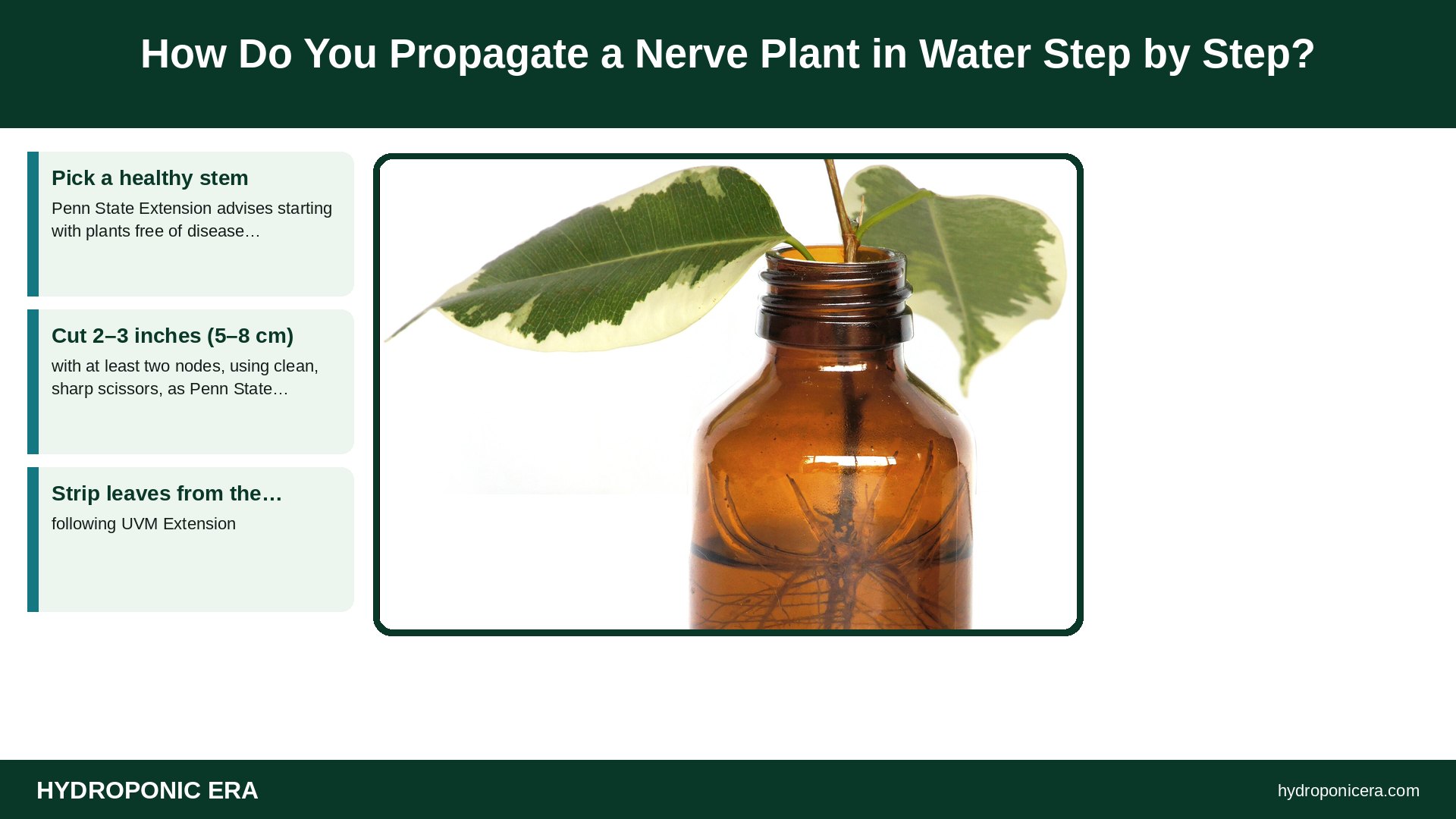
- Pick a healthy stem. Penn State Extension advises starting with plants free of disease, insects and stress.
- Cut 2–3 inches (5–8 cm) with at least two nodes, using clean, sharp scissors, as Penn State recommends for stem cuttings.
- Strip leaves from the bottom 1–2 nodes, following UVM Extension.
- Set the nerve plant in water in a small glass or jar at room temperature; keep all leaves above the surface.
- Place in bright, indirect light, away from direct sun, which NC State says scorches leaves.
- Raise humidity by setting the jar inside a clear box or loosely covering it, since dry air shrivels the leaves.
- Change the water whenever it turns cloudy.
- Wait. UVM says roots can take days, weeks or sometimes months; Fittonia is usually on the quicker side.
How Long Does a Nerve Plant in Water Take to Root?
A nerve plant usually starts rooting in water within a couple of weeks, though timing depends on warmth, light and the health of the cutting. UVM Extension notes that rooting can take days to months, and advises potting cuttings once roots are longer than 2–3 inches (5–8 cm). New leaf growth is a good sign the roots are working.
| Stage | What to look for | What to do |
|---|---|---|
| First days | Leaves may droop slightly | Raise humidity; avoid sun |
| Early weeks | White root bumps at nodes | Keep water fresh |
| Roots 1 inch (2.5 cm) | Branching starts | Keep in indirect light |
| Roots 2–3 inches (5–8 cm) | Ready to pot | Move to moist mix or terrarium |
Can a Nerve Plant in Water Live There Permanently?
A nerve plant in water can survive for a while, but it usually grows best in soil long-term. University of Illinois Extension cautions that roots formed in water are often weaker and adapt less easily to potting mix than roots formed in a rooting medium. Moving the cutting to mix while roots are short eases the switch.
If you want a soil-free display, add a small dose of diluted hydroponic nutrient and change the water regularly. See our guide to plants that grow in water for options.
How Do You Move a Rooted Nerve Plant Into Soil?
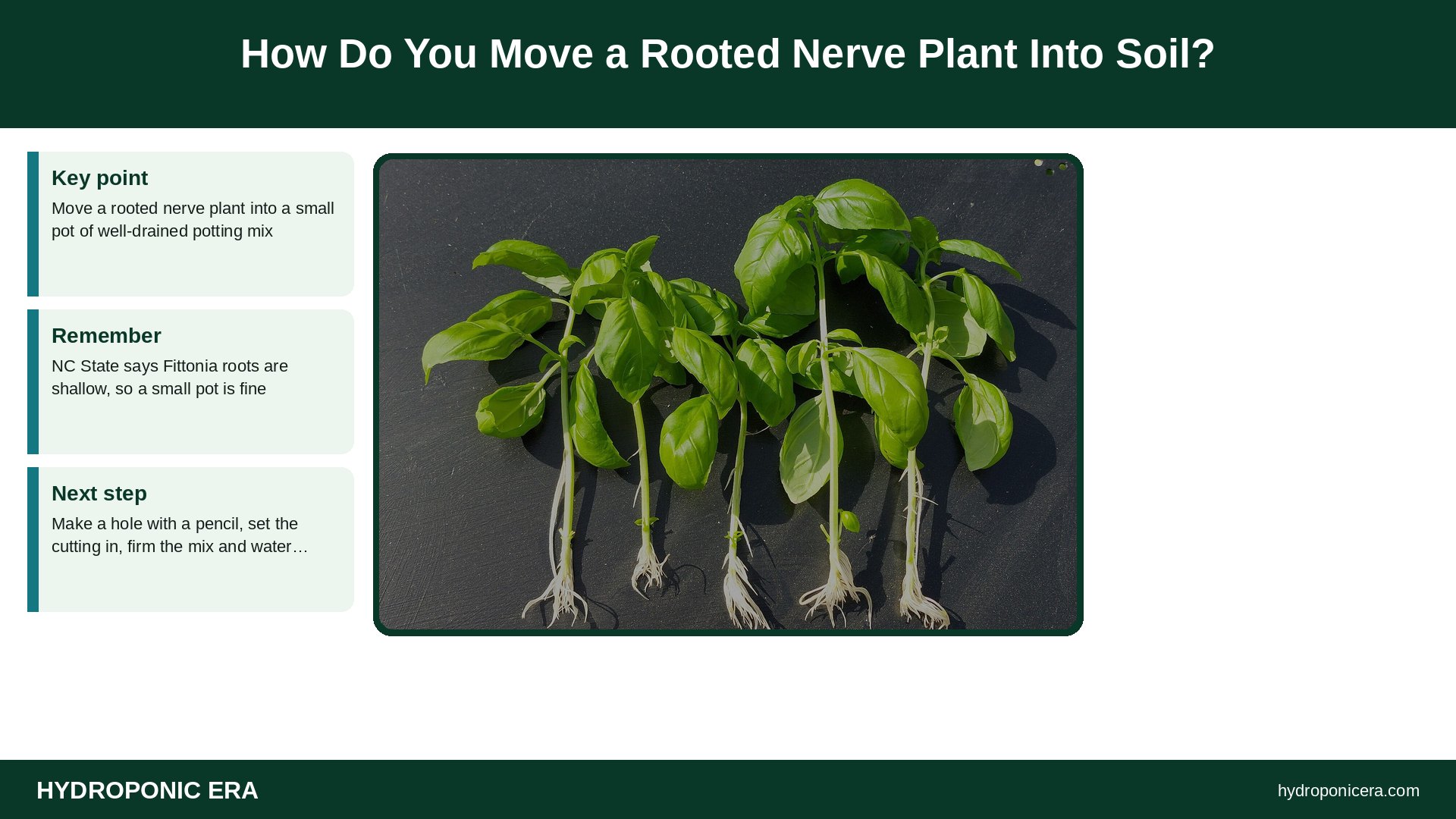
Move a rooted nerve plant into a small pot of well-drained potting mix. NC State says Fittonia roots are shallow, so a small pot is fine. Make a hole with a pencil, set the cutting in, firm the mix and water lightly. UVM suggests covering new cuttings with a jar, plastic bag or humidity dome; open it if water drips from the cover.
Keep the mix moist, not wet. NC State recommends watering about two times a week, while warning that overwatering can cause root rot and yellow leaves.
Why Is My Nerve Plant in Water Wilting or Rotting?
- Dramatic wilting: NC State says Fittonia collapses when dry but recovers after a drink. In water, droop usually means low humidity or too much light.
- Shriveled or dropping leaves: dry air, drafts or direct sun.
- Mushy, brown stem: rot. Cut above the damage and restart in fresh water.
- Withered leaves in a sealed box: NC State notes humidity that is too high can also wither leaves, so vent daily.
- Pests: check for mealybugs, scale and spider mites before taking cuttings.
For pest control on houseplants, see our guide to spider mites in hydroponics.
Is a Nerve Plant Good for Terrariums?

Yes. NC State Extension lists dwarf nerve plants as a good choice for terrariums, where the steady humidity keeps leaves plump. Water-rooted cuttings are an easy way to fill one. Give terrariums bright, indirect light; NC State notes Fittonia performs well under fluorescent lights, so a small LED or fluorescent fixture also works.
What Container Works Best for a Nerve Plant in Water?
A small, narrow glass works best for a nerve plant in water because it holds the short cutting upright and keeps leaves above the surface. Bud vases, spice jars and test-tube propagation stands all work. Clear glass shows roots forming; tinted or opaque glass slows algae. Wash the container each time you change the water.
Several cuttings can share one jar, but give them space so leaves do not sit in the water. Group jars together or place them in a clear plastic box to raise humidity around the leaves. A nerve plant in water placed in a humid spot wilts far less than one on an open, dry windowsill.
FAQs
Can I root a single nerve plant leaf?
A leaf alone rarely makes a new plant. Include at least one node on the stem.
Should I use rooting hormone?
It is optional. Penn State says a light dip speeds rooting, but too much slows it.
Is nerve plant safe for pets?
NC State lists it as non-toxic to cats, dogs and horses.
Why are leaves losing color?
Low light fades veins; move it to brighter, indirect light.
How do I keep it bushy?
Pinch stem tips, as NC State suggests, and root the pinched tips in water.
Sources
- NC State Extension — Fittonia albivenis (Nerve Plant)
- Penn State Extension — Propagating Houseplants
- University of Vermont Extension — More, Please! Propagating Houseplants
- University of Illinois Extension — Houseplant Propagation
- Photo credits (Wikimedia Commons, edited with titles): Fittonia verschaffeltii, Jardín Botánico de Múnich, Alemania, 2013-01-27, DD 01 by Diego Delso (CC BY-SA 3.0); Ficus cuttings with roots in a bottle, White background by Biusch (CC BY-SA 3.0); Basilikum (Ocimum basilicum) Stecklinge — Josef Schlaghecken by Schlaghecken Josef (CC BY-SA 4.0); Ficus cuttings with roots in a bottle, White background by Biusch (CC BY-SA 3.0); Justicia adhatodoides 2892 by SAplants (CC BY-SA 4.0)