
Can you grow a water lily in an aquarium? Yes, if you choose the right one. An aquarium water lily is usually a tropical bulb species such as Nymphaea lotus, the tiger lotus, which Tropica rates medium light and low CO2. Most hardy pond lilies are too big. Plant the bulb with its tip exposed and trim floating leaves.
Key takeaway: The best aquarium water lily is Nymphaea lotus (tiger lotus), a tropical West African bulb plant with green to red-brown, purple-spotted leaves. Tropica says it grows 8 to 31 inches (20 to 80 cm) tall, makes many underwater leaves before floating ones, and needs only medium light and low CO2. Trim roots and leaves if you do not want surface pads.
| Topic | What sources report | Source |
|---|---|---|
| Best aquarium species | Nymphaea lotus (tiger lotus), red and green forms | Tropica |
| Height | 8–31 in (20–80 cm); 8–12+ in (20–30+ cm) after 2 months | Tropica |
| Light and CO2 | Medium light, low CO2 | Tropica |
| Growth rate | Medium | Tropica |
| Substrate | “A nutritious bottom encourages growth” | Tropica |
| Pond lily depth, for comparison | 8–12 in (20–30 cm) of water over the crown | Colorado State Extension |
| Tropical lily water temperature | Pot up when water stays 68°F (20°C) or warmer | Colorado State Extension |

Which Water Lilies Can Live in an Aquarium?
Tropical bulb lilies work best. Tropica’s go-to aquarium water lily is Nymphaea lotus, a variable West African species often sold in red and green forms and called tiger lotus. It forms many underwater leaves before sending up floating pads, so it can stay a submerged plant in a tank. Tropica recommends it as a solitary plant for large aquariums.
Hardy pond lilies are a different story. Colorado State University Extension says water lilies should sit under 8 to 12 inches (20 to 30 cm) of water over the crown, in a pot about 12 inches (30 cm) across. That size, plus the full sun most pond plants want, makes most pond lilies a poor fit for an indoor tank. Grow them in a container water garden instead.
- Good fit: Nymphaea lotus (red or green tiger lotus).
- Poor fit: hardy pond lilies (Nymphaea odorata and hybrids).
- Not a lily: lotus (Nelumbo) is a separate plant for ponds; see lotus in containers.
How Do You Grow a Water Lily in an Aquarium?
Start with a healthy bulb or a potted plant. Plant the bulb so its top and growing point sit at or just above the substrate surface; burying the whole bulb is a common reason it rots. Tropica says a nutritious bottom encourages growth, so use a rich substrate or add root tabs near the bulb.
- Inspect the bulb; it should be firm, not soft or smelly.
- Set it on the substrate or press it in halfway, growing tip up.
- Push a root tab into the substrate nearby.
- Give it room; mature plants can spread wide.
- Wait; new leaves usually appear within a few weeks in our experience.
The tip on bulb depth and the timing are common hobby advice, not from a published trial, so treat them as a starting point.

What Light, CO2 and Fertilizer Does an Aquarium Water Lily Need?
Moderate light, little CO2 and rich roots. Tropica rates Nymphaea lotus at medium light (0.5 W/L on its scale) and low CO2, so this aquarium water lily suits many low-tech tanks. Because it feeds mainly from the substrate, root tabs matter more than water-column dosing. Colorado State notes tropical lilies need warm water, at least 68°F (20°C).
- Light: medium; more light gives redder leaves.
- CO2: low; not required.
- Fertilizer: root tabs every few months plus a light liquid dose.
- Temperature: keep the tank warm, at least 68°F (20°C).
Our aquarium plant fertilizer guide covers dosing.
Why Is an Aquarium Water Lily Melting or Not Growing?
Usually because of floating leaves, weak roots or a bulb problem. Once an aquarium water lily sends pads to the surface, they shade the tank and the plant puts energy into them. Tropica says that if you do not want floating leaves, prune the roots and leaves. A soft, smelly bulb has rotted and should be removed.
- Floating pads: cut long stems at the base.
- Small, pale leaves: add root tabs.
- Bulb rot: check for a buried or damaged bulb; remove it if mushy.
- Dormancy: some bulbs rest and drop leaves, then regrow; leave a firm bulb in place.
For a deeper look at the red form, read our red tiger lotus guide.

Will an Aquarium Water Lily Flower?
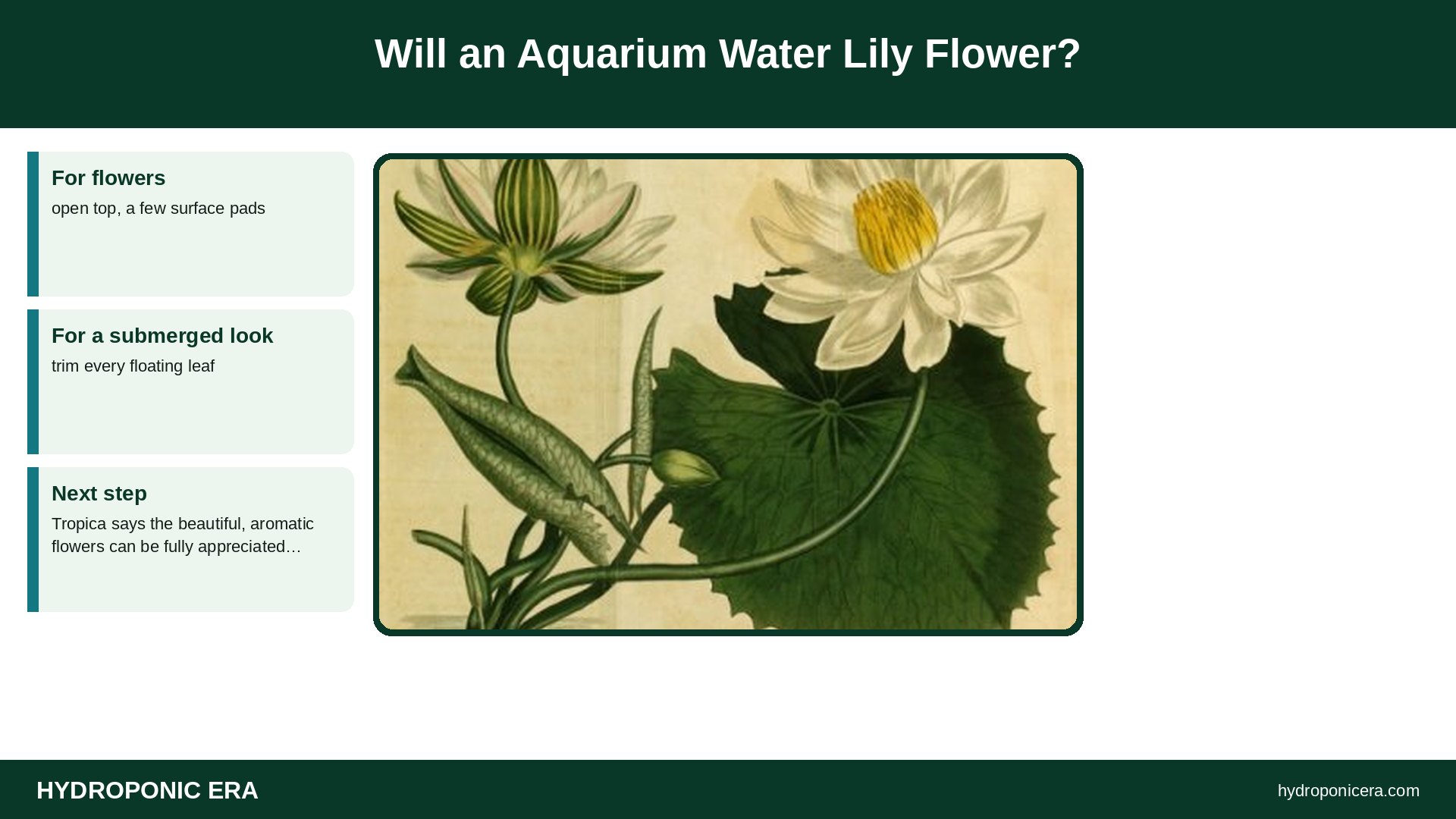
It can. Tropica says the beautiful, aromatic flowers can be fully appreciated in open aquariums, meaning tanks without a lid where floating leaves reach the light. If you want flowers, let a few pads reach the surface and keep the tank uncovered. If you want a fully underwater plant, keep trimming the floating leaves instead.
- For flowers: open top, a few surface pads.
- For a submerged look: trim every floating leaf.
FAQ About Aquarium Water Lily Care
What is the best aquarium water lily?
Nymphaea lotus, the tiger lotus.
Does it need CO2?
No; Tropica rates its CO2 need as low.
How tall does it grow?
About 8–31 in (20–80 cm), depending on trimming.
Can I put a pond lily in my tank?
Most hardy pond lilies are too large and need sun.
How do I stop floating leaves?
Prune the long stems and some roots.
Should I bury the bulb?
Keep the top and growing point exposed.
Sources
- Tropica Aquarium Plants — Nymphaea lotus
- Colorado State University Extension — Water Gardens: Planting Aquatic Plants
- Photo credits (Wikimedia Commons, edited with titles): 5 Nymphaea Tropical Night-Blooming Water Lily, Waterlily, Tiger Lotus (Nymphaea lotus) by Jawad kundi (CC BY-SA 3.0); Nymphaea lotus 1 by Unknown (Public domain)