
The best lettuce varieties for hydroponics depend on your system and your room temperature, but leaf and romaine types usually give the highest yields, butterheads give the softest texture, and heat-tolerant, slow-bolting cultivars matter most in warm US summers. A Purdue University trial of 24 lettuce varieties in NFT and floating systems found leaf and romaine groups produced higher yields overall, with ‘Red Sails’ (leaf), ‘Salvius’ (romaine), ‘Salanova’ (oakleaf), and ‘Alkindus’ (butterhead) topping their groups. Choosing lettuce varieties by type, heat tolerance, and tipburn resistance is the fastest way to better harvests.
Key takeaway: Pick the lettuce type you like to eat, then choose cultivars within that type that are bred for greenhouse or hydroponic production and resist bolting and tipburn.
| Lettuce type | Strengths in hydroponics | Watch-outs | Examples seen in US trials |
|---|---|---|---|
| Loose leaf | Fast, high yield, cut-and-come-again | Can bolt in heat | Red Sails, Black Seeded Simpson, New Red Fire |
| Romaine | High yield, crunchy, good market appeal | Tipburn in hot, humid rooms | Salvius, Dragoon |
| Butterhead (Bibb) | Tender, popular “living lettuce” | Softer heads, tipburn risk | Alkindus, Buttercrunch, Rex, Skyphos |
| Oakleaf / multi-leaf | Uniform, attractive salad leaves | Lower weight per head | Salanova types |
| Crisphead (iceberg) | Classic texture | Slow and finicky indoors | Less common in home hydro |
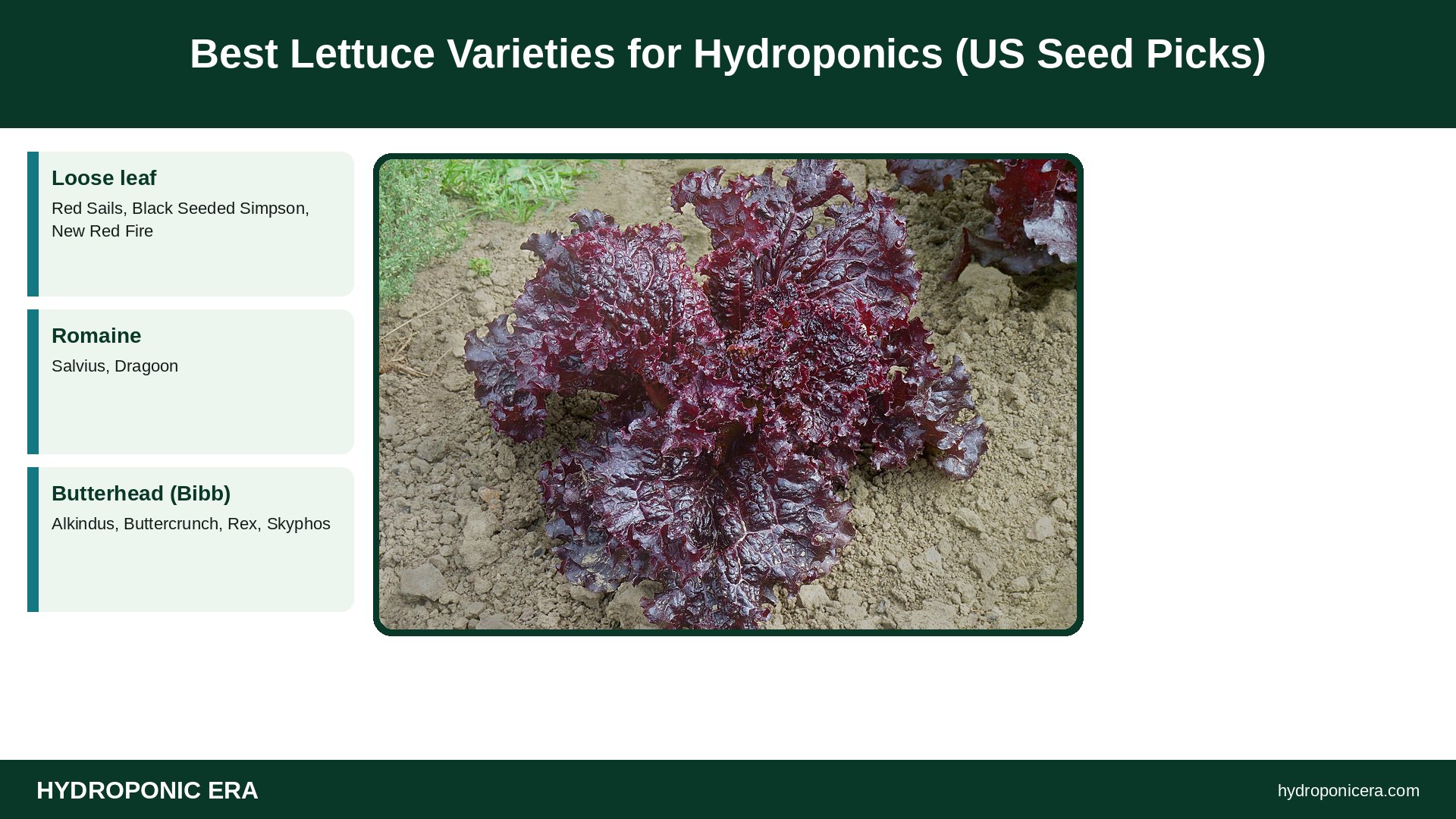
What the Research Says About Lettuce Varieties

The Purdue Extension publication “Performance of Lettuce Varieties in Greenhouse Hydroponic Production” (HO-310-W) compared 24 cultivars across leaf, oakleaf, romaine, and butterhead groups. Two findings are especially useful for home growers:
- System mattered less than variety. There were no differences in a variety’s performance between NFT and constant flood tables.
- Group and cultivar mattered a lot. Leaf and romaine types yielded more, and large differences existed between cultivars in the same group.
University of Florida trials of lettuce in NFT also evaluated cultivars for warm-season performance and tipburn. The lesson across trials is consistent: cultivar choice is one of the cheapest yield upgrades you can make.
How to Choose Lettuce Varieties for Your Setup
- Match to temperature. If your grow room runs warm in summer, choose cultivars described as heat tolerant and slow bolting. Our lettuce bolting guide explains the timeline.
- Match to harvest style. Loose leaf and multi-leaf types suit cut-and-come-again harvesting; butterheads and romaines suit whole-head harvests.
- Check tipburn notes. Fast growth under strong light can cause tipburn. See our tip burn guide.
- Look for “greenhouse” or “hydroponic” in seed descriptions. Those lines are often bred for uniform heads indoors.
- Use pelleted seed for easier sowing in plugs.
Best Lettuce Varieties by System

| System | Good lettuce types | Why |
|---|---|---|
| NFT channels | Butterhead, multi-leaf, compact romaine | Uniform heads fit channel spacing |
| DWC / raft | Butterhead, leaf, romaine | Steady water suits fast growth |
| Kratky jars and totes | Loose leaf, butterhead | Short crop fits one fill. See our Kratky guide |
| Vertical towers | Compact leaf and butterhead | Smaller plants fit tower ports |
| Countertop pod gardens | Mini butterhead, leaf mixes | Limited height and light |
Growing Tips That Apply to Every Variety
- Keep air in the 60s to low 70s °F when possible; heat drives bolting and bitterness.
- Keep reservoir water cool; see our reservoir temperature guide.
- Moderate EC and pH around 5.8–6.2 suit most lettuce.
- Space plants properly. Crowding causes stretch and disease. See our plant spacing guide.
- Harvest on time. Overmature heads turn bitter.
Red vs Green Lettuce Varieties
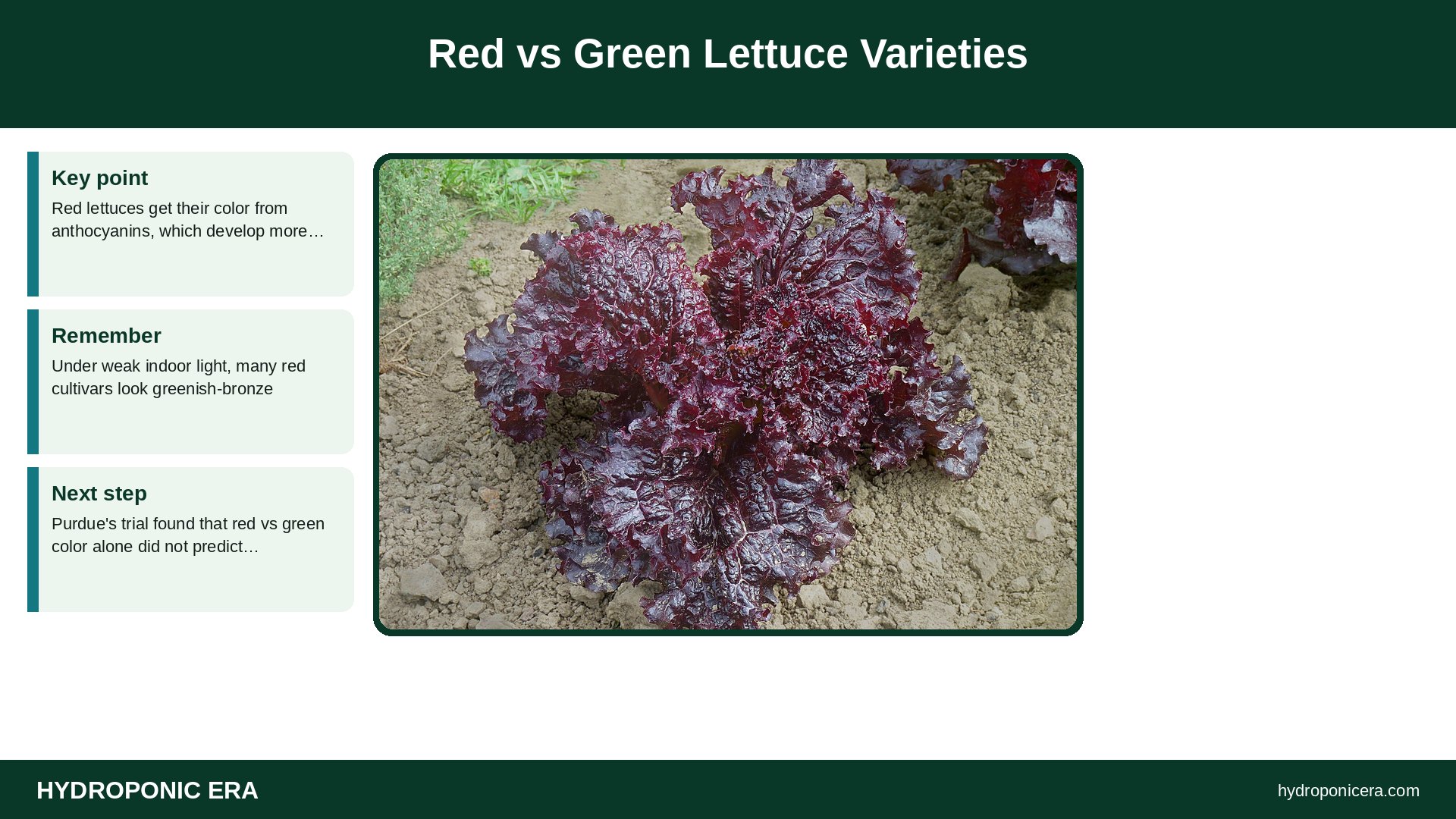
Red lettuces get their color from anthocyanins, which develop more strongly under high light and cooler temperatures. Under weak indoor light, many red cultivars look greenish-bronze. Purdue’s trial found that red vs green color alone did not predict yield consistently, so pick colors for appearance and taste, then compare cultivars within each type.
Common Mistakes Choosing Lettuce Varieties

- Growing field-type crispheads indoors and expecting fast heads.
- Ignoring bolt resistance for summer crops.
- Buying mixes only; single cultivars make troubleshooting easier.
- Judging a cultivar on one crop. Try it twice in different seasons.
Variables That Change Results
| Variable | Effect | Adjustment |
|---|---|---|
| Air temperature | Heat triggers bolting and bitterness | Cooler room, slow-bolting cultivars |
| Light intensity | Strong light speeds growth and can raise tipburn risk | Airflow over leaves, steady calcium supply |
| Days to harvest | Overmature heads turn bitter | Harvest on schedule |
| Seed age | Old seed germinates poorly | Store seed cool and dry |
Keep a simple log of cultivar, sow date, harvest date, and head weight. After a few crops, you’ll know which ones suit your space.
Seed Starting Tips
Lettuce seed germinates best when it’s cool. Very warm conditions can reduce germination in some cultivars, so start seeds in the 60s to low 70s °F where possible. Lightly cover or leave seeds on the surface of plugs, since many need light to germinate. Our germination methods guide walks through plugs and media.
Quick Picks by Goal
- Maximum weight: leaf and romaine types.
- Tender texture: butterheads.
- Salad mix look: oakleaf and multi-leaf types.
- Summer growing: slow-bolting, heat-tolerant cultivars.
Trying New Lettuce Varieties Each Season
Seed catalogs add new lettuce varieties every year, and performance can differ between your system and a trial field. A simple approach is to keep two or three reliable favorites and test one new variety per crop cycle. Grow it alongside a favorite under the same light and nutrients, then compare head weight, flavor, and how quickly it bolts or tip-burns. Over a year, this builds a short list of lettuce varieties that work best in your own conditions. See seed variety traits for indoor growing.
FAQs: Lettuce Varieties for Hydroponics
What is the best lettuce for hydroponics?
There’s no single best. Leaf and romaine types tend to yield the most; butterheads are favorites for tender texture. Choose slow-bolting, tipburn-resistant cultivars for warm rooms.
Which lettuce grows fastest hydroponically?
Loose leaf lettuces are usually the fastest to a first harvest, especially for baby leaves.
Does the hydroponic system change which lettuce is best?
Purdue found no difference in variety performance between NFT and floating systems. Variety and environment mattered more.
Why does my red lettuce look green?
Low light and warm temperatures reduce red pigment. More light and cooler conditions deepen color.
Related HydroponicEra Guides
- How to grow lettuce hydroponically
- Seed varieties for indoor hydroponics
- How to store hydroponic lettuce
- Preventing tip burn in leafy greens
Sources
- Purdue Extension — Performance of Lettuce Varieties in Greenhouse Hydroponic Production (HO-310-W)
- University of Florida IFAS — Evaluation of Lettuce Cultivars Grown in a Greenhouse Using NFT
- NC State Extension Plant Toolbox — Lactuca sativa
- Photo credits (Wikimedia Commons, edited with titles): Red leaf lettuce J1 by Jamain (CC BY-SA 3.0); Romaine lettuce by Rainer Zenz (CC BY-SA 3.0); Deep water culture by ArcadiYay (CC BY-SA 4.0); Hydroponic lettuce @ Plaine des Cafres 03 by Rémih (CC BY-SA 4.0)
1 thought on “Best Lettuce Varieties for Hydroponics (US Seed Picks)”