
Bay laurel (Laurus nobilis), the source of culinary bay leaves, can be grown indoors and even in a soilless, hydroponic-style setup, but it is a slow woody shrub, not a fast herb. Cuttings root slowly, plants grow only a few inches a year indoors, and they prefer a well-drained root zone with air around the roots. For most US growers outside the mild-winter zones, the practical approach is a container bay laurel in a soilless mix or semi-hydro medium, brought indoors for winter and harvested a few leaves at a time.
Key takeaway: Bay laurel rewards patience. Use drip, wick, or clay pebble setups, not deep water culture, and expect years, not weeks, to build a bushy plant.
| Factor | Bay laurel target |
|---|---|
| Plant type | Slow-growing evergreen shrub or small tree |
| Outdoor hardiness | Generally mild-winter regions, about USDA zones 8–10; elsewhere grow in containers |
| Indoor light | Bright light; a sunny window or grow light |
| Indoor temperature | Cool to moderate; about 50–75°F suits winter rest |
| Best soilless method | Semi-hydro clay pebbles, coco/perlite with drip, or wick pots |
| Propagation | Semi-hardwood cuttings; slow to root |
| Main pest indoors | Scale insects |

Can You Grow Bay Laurel Hydroponically?

Yes, with the right expectations. NC State Extension describes Laurus nobilis as an evergreen shrub or small tree, valued for its aromatic leaves and often grown in containers. It is not a plant that loves wet feet. Hydroponic methods that keep roots constantly submerged, like deep water culture, risk root problems. Systems with air around roots work better.
Think of bay laurel more like a hydroponic lemon tree or rosemary than like basil.
Starting Bay Laurel
- Buy a young plant if you can. It saves many months.
- Or take semi-hardwood cuttings in late summer, 4–6 inches long.
- Strip lower leaves and dip in rooting hormone if you use it.
- Root in a moist, airy medium such as perlite or rockwool under a humidity dome. See our humidity dome guide.
- Use bottom heat and be patient; bay cuttings are notoriously slow and many fail.
Best Soilless Setups for Bay Laurel
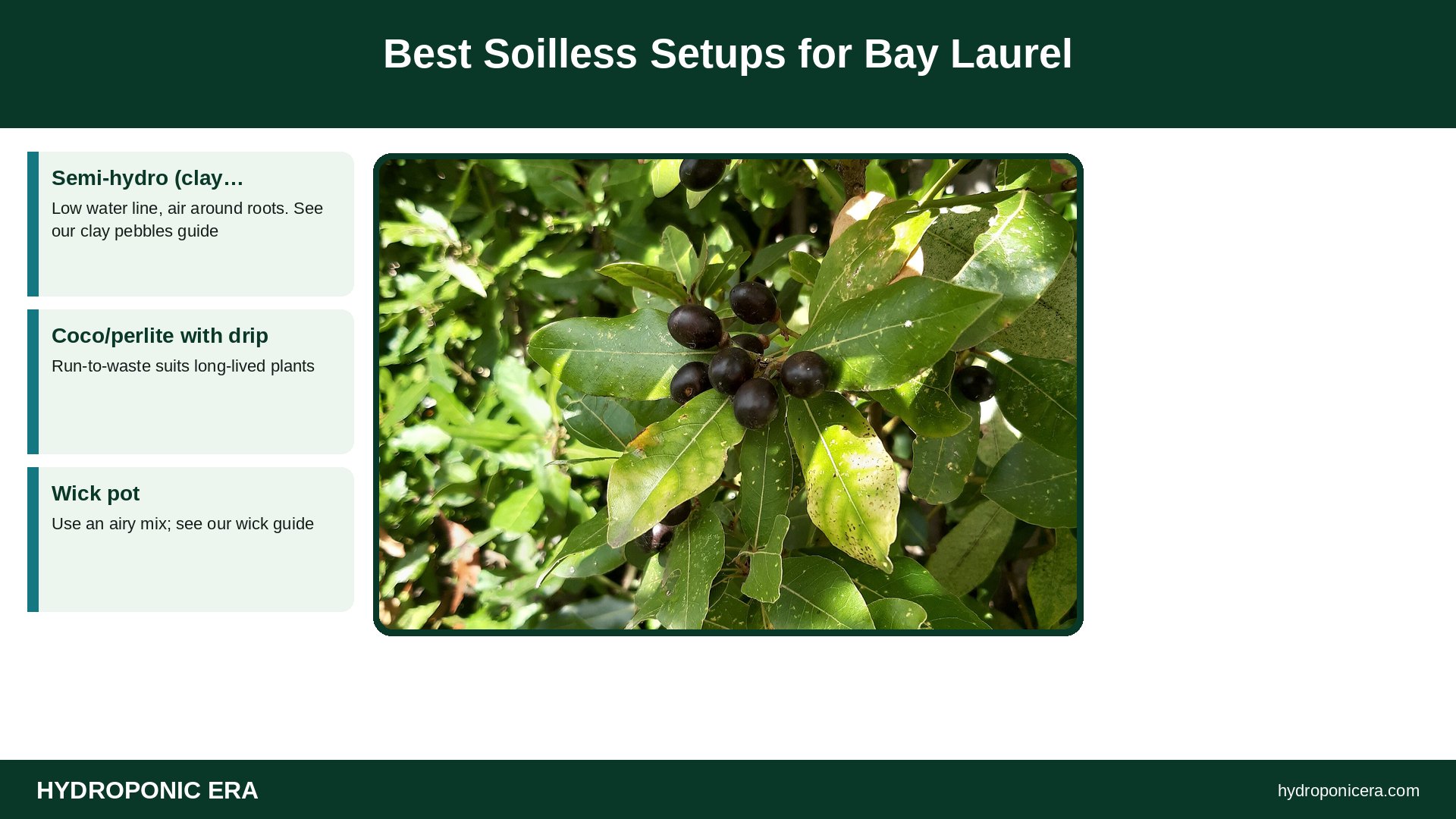
| Setup | Fit | Notes |
|---|---|---|
| Semi-hydro (clay pebbles) | Good | Low water line, air around roots. See our clay pebbles guide |
| Coco/perlite with drip | Good | Run-to-waste suits long-lived plants |
| Wick pot | Fair to good | Use an airy mix; see our wick guide |
| Deep water culture | Poor | Constant saturation stresses woody roots |
| Countertop pod gardens | Poor | Too small for a shrub |
Light, Temperature, and Feeding
Give bay laurel bright light. Indoors in winter, a south window or LED grow light keeps it healthy. Many growers move container bay outdoors for the warm season and bring it in before frost, adjusting gradually to avoid leaf scorch.
- Feed lightly in spring and summer with a balanced nutrient at modest strength.
- Reduce feeding in winter when growth slows.
- Keep pH around 6.0–6.5 in solution.
- Flush salts periodically in media systems. See our runoff and leach EC guide.
Harvesting and Using Bay Leaves

Pick mature, dark green leaves a few at a time. Avoid stripping a young plant. Leaves can be used fresh or dried flat in a cool, dark spot. Only Laurus nobilis is the true culinary bay; some plants called “bay,” such as mountain laurel, are toxic. Buy correctly labeled plants.
Bay Laurel Problems and Fixes
| Symptom | Likely cause | Fix |
|---|---|---|
| Sticky leaves, bumps on stems | Scale insects | Wipe off, isolate, treat; see our scale guide |
| Yellow leaves, wet roots | Root stress from saturation | Lower water line, coarser media |
| Brown leaf edges in winter | Dry indoor air or salt buildup | Raise humidity, flush media |
| Leaf drop after moving inside | Light change | Acclimate gradually; brighter spot |
| Cuttings not rooting | Slow species | Heat, humidity, patience; try more cuttings |
Scale is common on indoor bay laurel. Our mealybugs and scale guide covers ID and control.
Common Mistakes
- Putting bay laurel in deep water culture.
- Expecting basil-speed growth.
- Overfeeding a slow plant.
- Ignoring scale until leaves turn sticky.
- Confusing bay laurel with toxic “laurels.”
Variables That Change Results
| Variable | Effect | Adjustment |
|---|---|---|
| Winter light | Leaf drop indoors | Sunniest window or LED |
| Container size | Oversized pots stay wet | Pot up gradually |
| Indoor humidity | Dry air browns edges | Group plants, humidifier |
| Pruning | Shapes a bushy plant | Light trims in spring |
Quick Decision Guide
- Mild-winter region (about zones 8–10)? Grow outdoors in the ground or a large pot.
- Cold-winter region? Use a container in semi-hydro or soilless mix, indoors for winter.
- Want fast herbs? Grow basil, parsley, or chives hydroponically alongside your shrub.
Patience pays off: a container plant can supply leaves for many years once established, and a few leaves go a long way in soups and stews.
Pruning and Shaping Indoors
Bay laurel responds well to pruning, which keeps it compact under lights and encourages bushier growth. Trim just above a leaf node in late winter or spring, removing no more than about a third of the plant at once. Pinch soft new tips during the growing season to shape it. The leaves you prune can be dried for the kitchen, so nothing goes to waste. Indoors, a pruned bay can stay at a manageable two to four feet for years.
Winter Care for Container Bay
Many US growers keep bay outside in summer and bring it in before frost. Indoors in winter, growth slows, so reduce feeding and let the medium dry slightly more between waterings. Place it in the brightest spot available or under a grow light, and keep it away from heating vents, which dry the air and encourage scale and spider mites. See mealybugs and scale and seasonal indoor adjustments.
FAQs: Bay Laurel Indoors
Can bay laurel grow in water?
Cuttings may root in water, but bay laurel grows better long-term in airy media like clay pebbles or a coco-perlite mix.
How fast does bay laurel grow indoors?
Slowly, often just a few inches a year in containers.
Can I grow bay laurel outside in the US?
Year-round outdoors only in mild-winter areas, roughly USDA zones 8–10. Elsewhere, move it indoors for winter.
Is bay laurel safe for pets?
The ASPCA lists bay laurel as toxic to cats, dogs, and horses. Keep plants out of reach.
Related HydroponicEra Guides
- Best herbs for hydroponics
- How to grow rosemary hydroponically
- Hydroponic lemon tree
- How to grow sage hydroponically
Sources
- NC State Extension Plant Toolbox — Laurus nobilis
- ASPCA — Bay Laurel toxicity
- Photo credits (Wikimedia Commons, edited with titles): Fruits of Laurus nobilis-2024-09-28 by Harlock81 (CC BY 4.0); Laurus nobilis MHNT Fleurs by Didier Descouens (CC BY-SA 4.0)