
Quick Answer
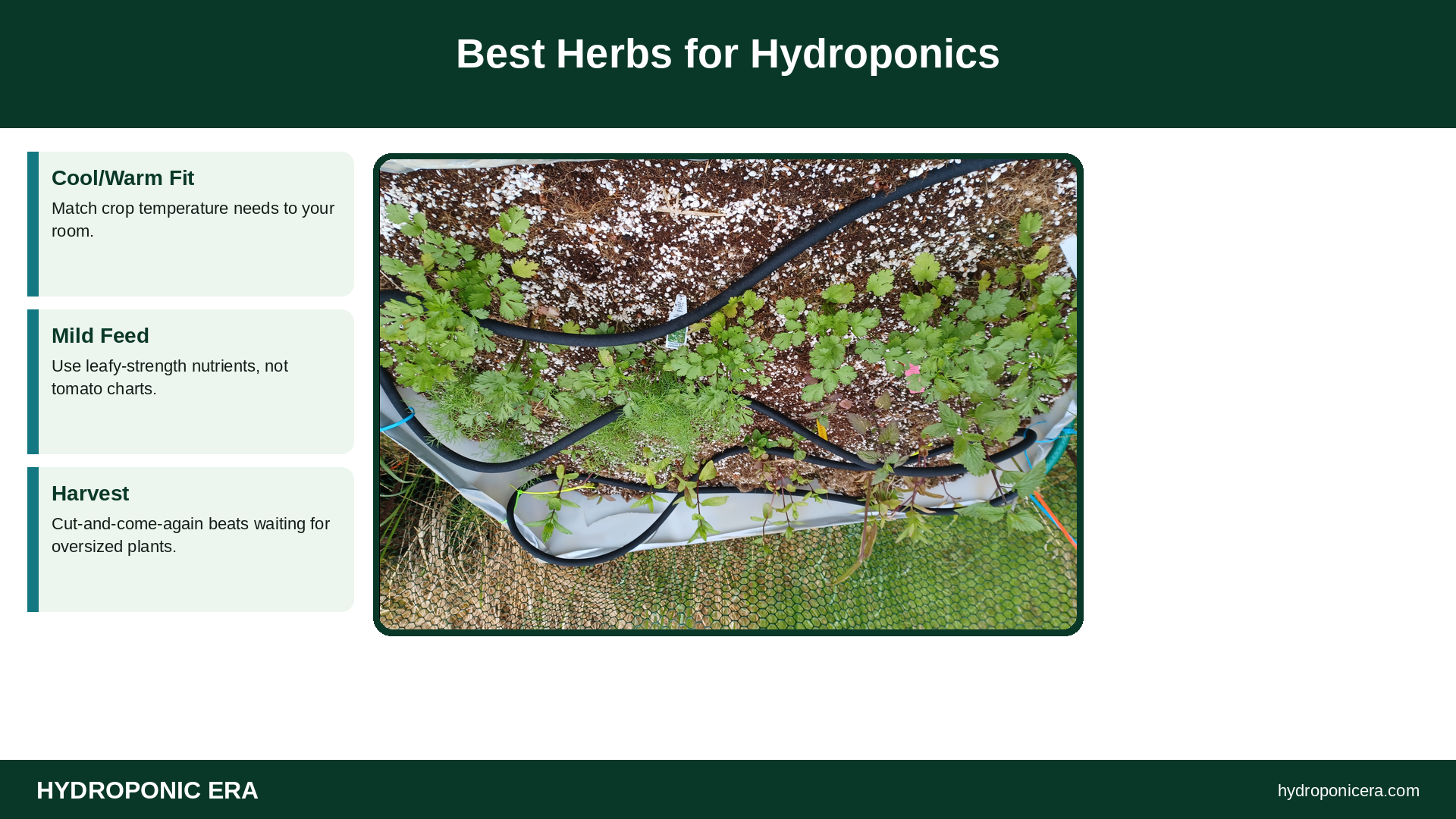
The best herbs for hydroponics are usually fast, leafy, and tolerant of steady moisture: basil, mint, parsley, cilantro (in cool rooms), chives, oregano, and thyme. Woody Mediterranean herbs can work in media-based systems with careful watering, but they are less forgiving than soft herbs in deep water culture. Match the herb to temperature and system before chasing “highest yield” claims—university herb and leafy hydroponic guides emphasize environment and harvest style over marketing lists.
Use crop-specific HydroponicEra guides for basil, mint, cilantro, and parsley, plus best plants for hydroponics for broader crop fit.
Key Takeaways
- UF/IFAS HS1421 discusses growing herbs in small hydroponic systems—useful framing for home setups.
- UF/IFAS HS1279 covers leafy greens in hydroponics/protected culture; many culinary herbs behave like leafy crops under lights.
- Wisconsin Horticulture pages for parsley, arugula, and rosemary describe outdoor habits that still matter indoors (cool vs heat-loving).
- Soft herbs (basil, mint, parsley) are generally easier first crops than woody rosemary in jars.
- Cilantro and some cool herbs bolt faster in heat—succession plant rather than forcing one plant forever.
- Keep pH in a soilless band (~5.5–6.5 per Oklahoma State hydroponic guidance) and use mild complete nutrients.
- Hygiene and oxygen still matter—see water changes, dissolved oxygen, and cleaning.
Related HydroponicEra guides
- How to grow basil hydroponically
- How to grow mint hydroponically
- How to grow cilantro hydroponically
- How to grow parsley hydroponically
- DWC vs NFT vs Dutch bucket
- Growing media for hydroponics
- How to start hydroponics at home
Best Herbs for Hydroponics: Herb Comparison Table
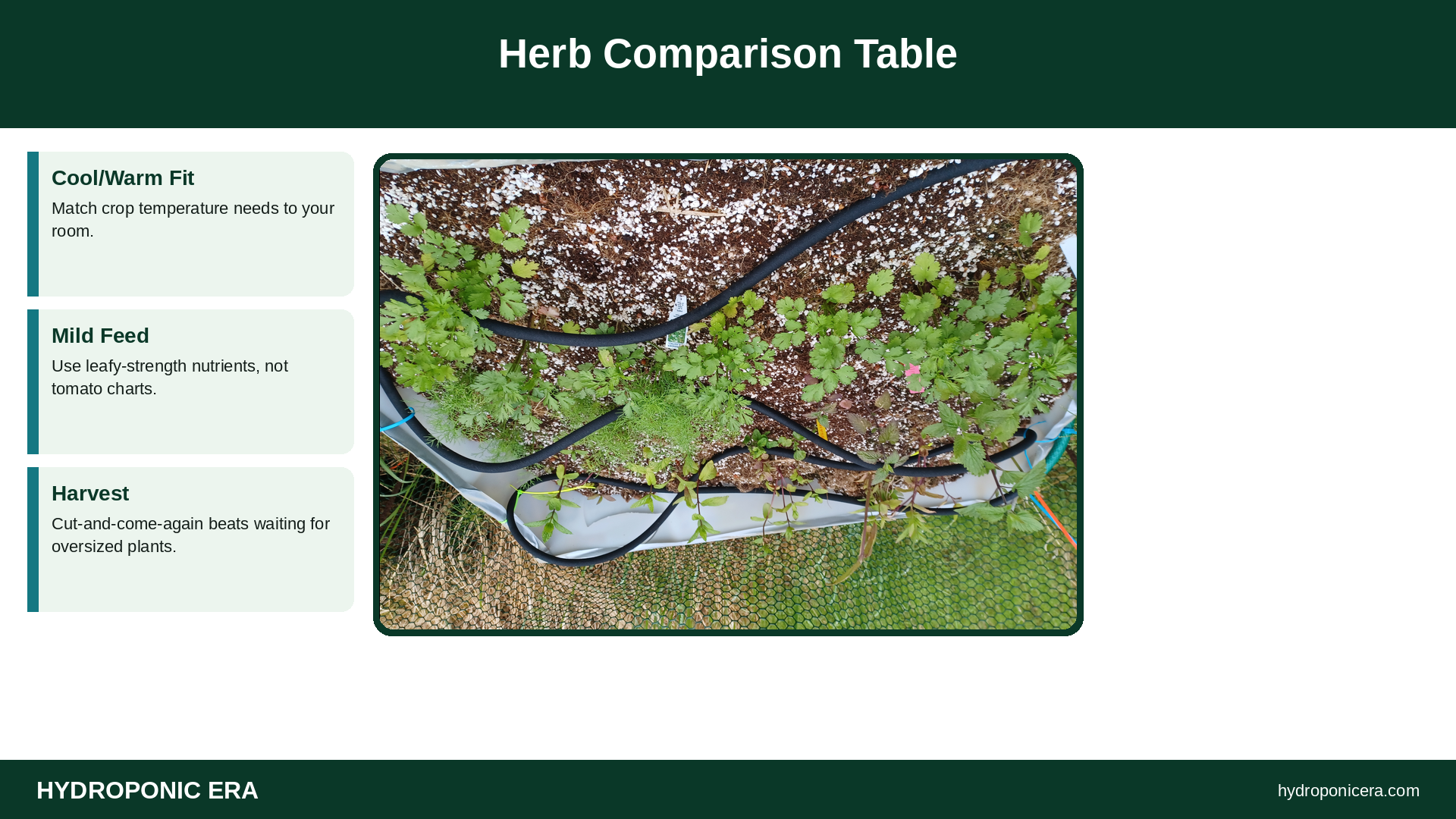
| Herb | Beginner fit | System notes | Watch-outs |
|---|---|---|---|
| Basil | Excellent | DWC, NFT, media | Loves warmth; pinches for bushiness |
| Mint | Excellent | Isolate—spreads vigorously | Can dominate shared systems |
| Parsley | Very good | DWC/NFT; slow germination | Patience at seedling stage |
| Cilantro | Good if cool | Succession sow | Bolts in heat |
| Chives | Good | Media or DWC | Clumping habit; cut regularly |
| Oregano / thyme | Moderate | Prefer media with airy roots | Dislike chronically soggy crowns |
| Rosemary | Harder | Media beds; careful wet/dry | Woody; slower; root-rot risk if overwet |
| Arugula (peppery green) | Good | Leafy systems | Bolts quickly; treat as salad crop |
Wisconsin Horticulture’s rosemary and parsley articles remind growers that species differ: parsley is a biennial culinary green often grown as an annual, while rosemary is a woody perennial that prefers well-drained conditions outdoors—translate that to “do not drown the crown” in hydroponics.
Best Herbs for Hydroponics: How to Choose Herbs for Your System
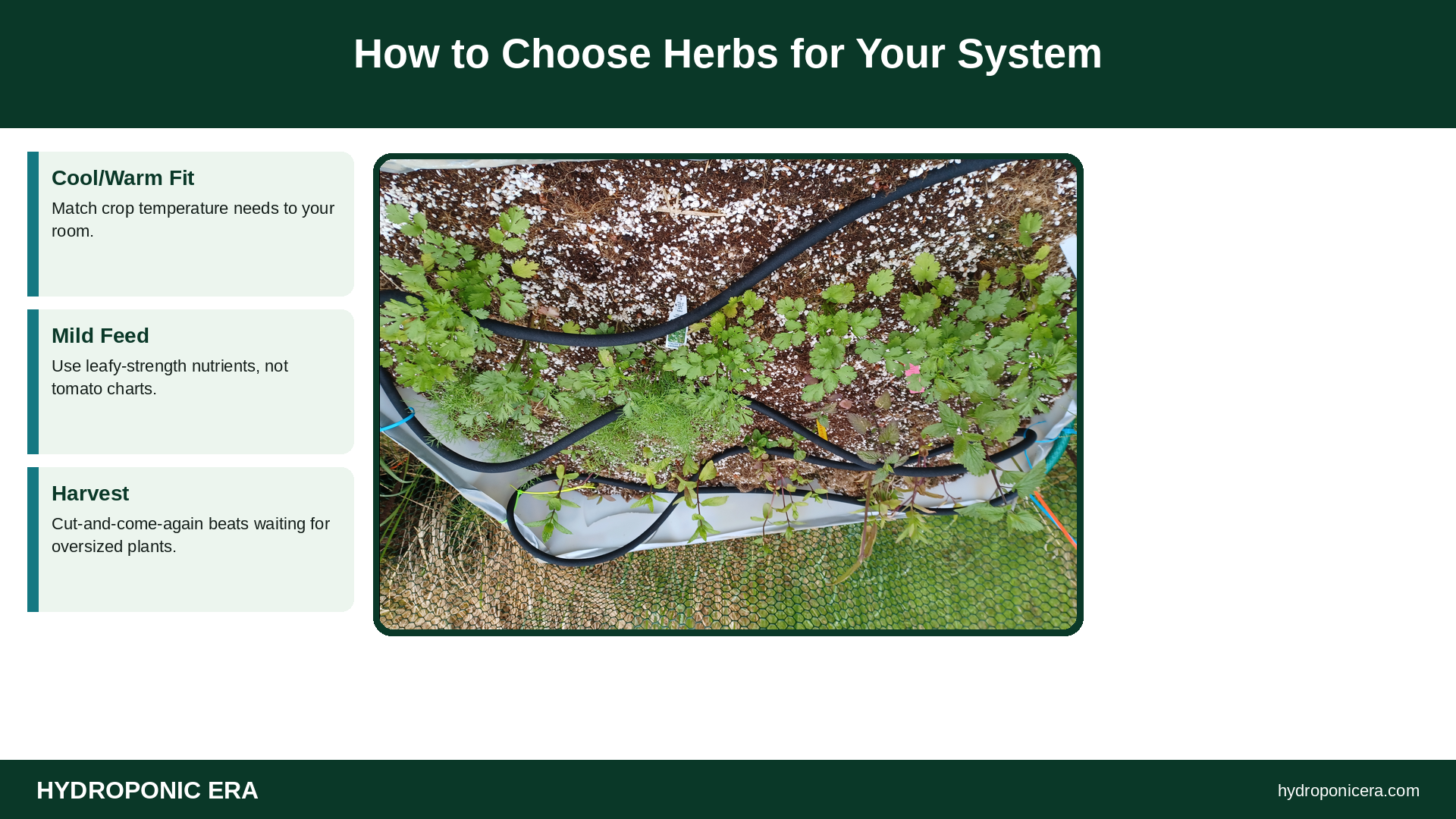
- Start with basil or mint if you want fast kitchen harvests and forgiving growth.
- Add parsley when you can wait on germination and want cut-and-come-again bunches.
- Grow cilantro in cool rooms or accept short cycles and succession trays.
- Use media-based or Dutch-style culture for woody herbs rather than forcing them into warm stagnant jars.
- Separate aggressive mint so it does not clog channels or shade neighbors.
- Match light to leafy needs using PPFD/DLI guidance and grow lights—herbs need steady light, not tomato extremes on day one.
- Keep a mild nutrient strength and stable pH—see nutrients for beginners and EC/TDS.
Best Herbs for Hydroponics: Step-by-Step: Multi-Herb Hydroponic Setup

- Pick 2–3 herbs that share similar temperatures (example: basil + oregano in a warm room; parsley + cilantro in a cooler corner).
- Start seeds in clean plugs (seedlings guide). Label cultivars.
- Transplant into net pots when roots hold the plug.
- Use opaque reservoirs and lids to limit algae.
- Aerate DWC wells (air pumps) or ensure NFT film coverage.
- Harvest lightly and often—removing too much canopy at once stalls soft herbs.
- Reset between crops with sanitation if roots smelled off or pests appeared (pest guide).
Best Herbs for Hydroponics: Important Variables
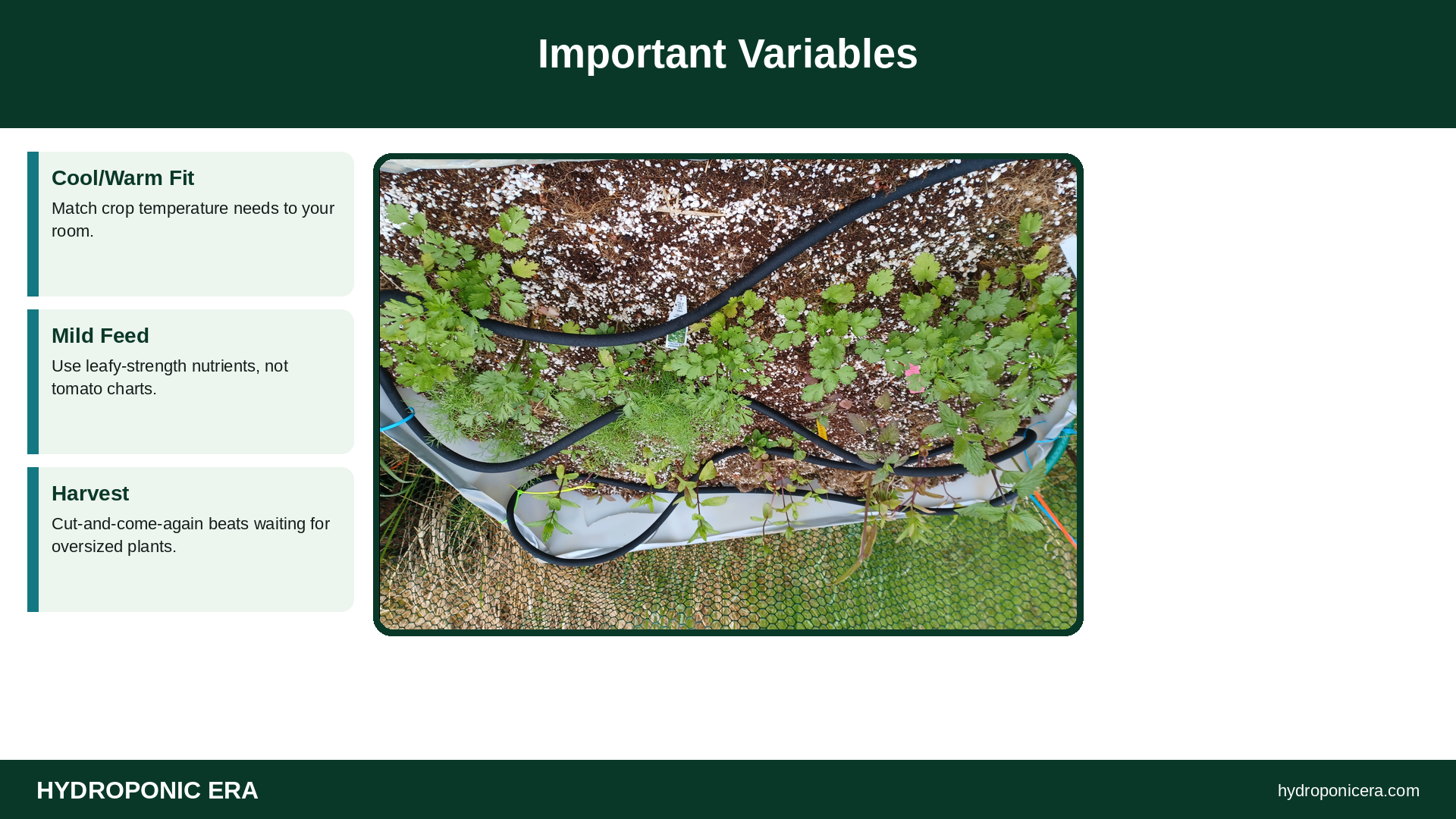
| Variable | Practical guidance | Notes |
|---|---|---|
| Temperature | Warm for basil; cooler for cilantro | Do not force one climate for all herbs |
| pH | ~5.5–6.5 soilless band (OSU) | Confirm with calibrated meter |
| Nutrient strength | Mild leafy EC | High salts tip-burn soft tips |
| Light | Steady leafy DLI | VT DLI method helps you measure |
| Oxygen / flow | Keep roots oxygenated | Wilting in wet systems → check DO |
| Harvest | Cut-and-come-again | Never strip all leaves at once |
Best Herbs for Hydroponics: Common Mistakes
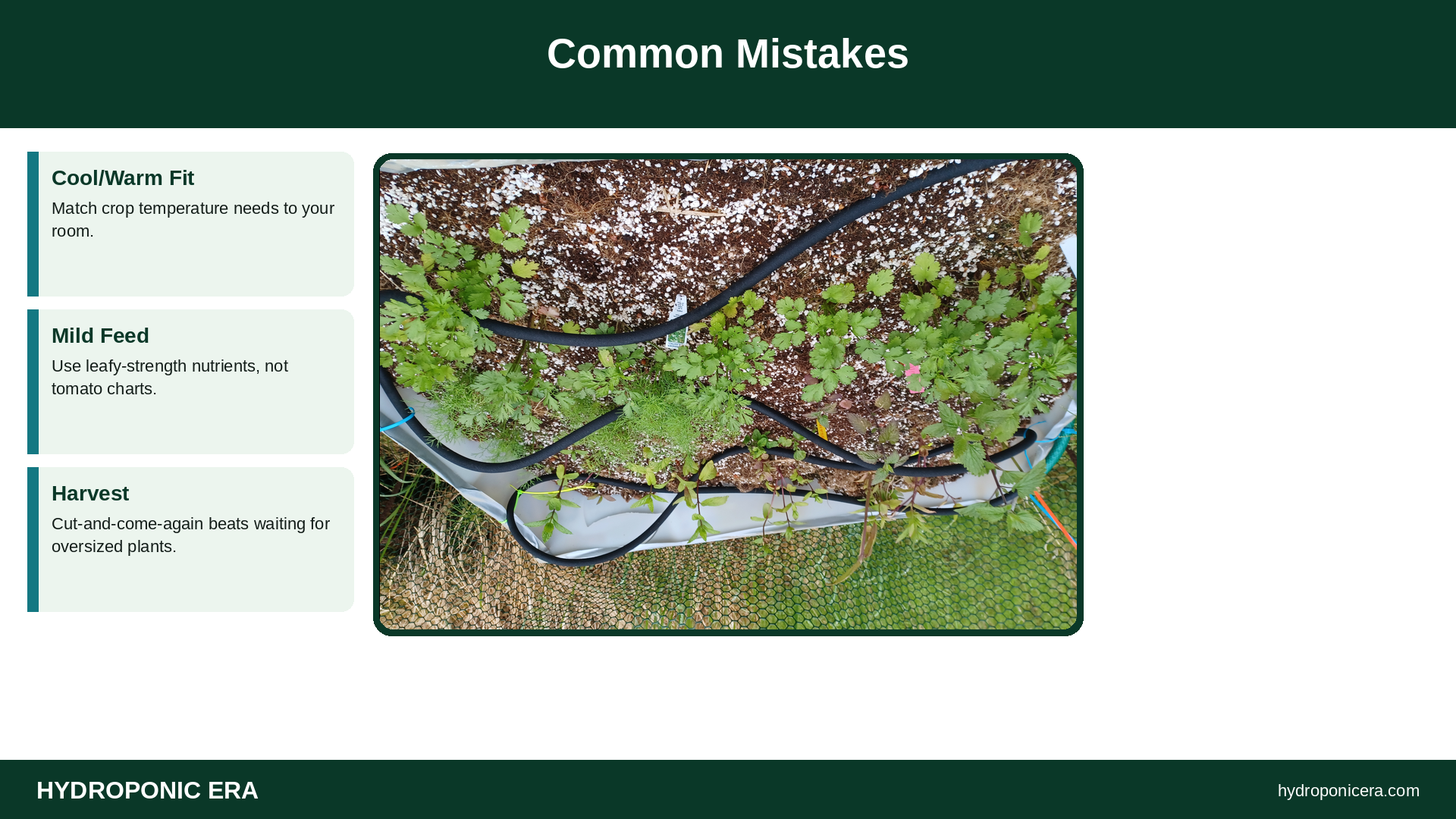
- Planting mint in a shared NFT channel without a plan to contain roots
- Expecting rosemary to thrive in a hot, poorly aerated jar
- Using fruiting-crop nutrient strength on baby herb seedlings
- Ignoring heat when cilantro “fails”
- Skipping pH checks when new leaves yellow (lockout, yellow leaves)
- Overharvesting a single plant instead of succession planting
Troubleshooting Herb Problems
| Symptom | Likely causes | What to do |
|---|---|---|
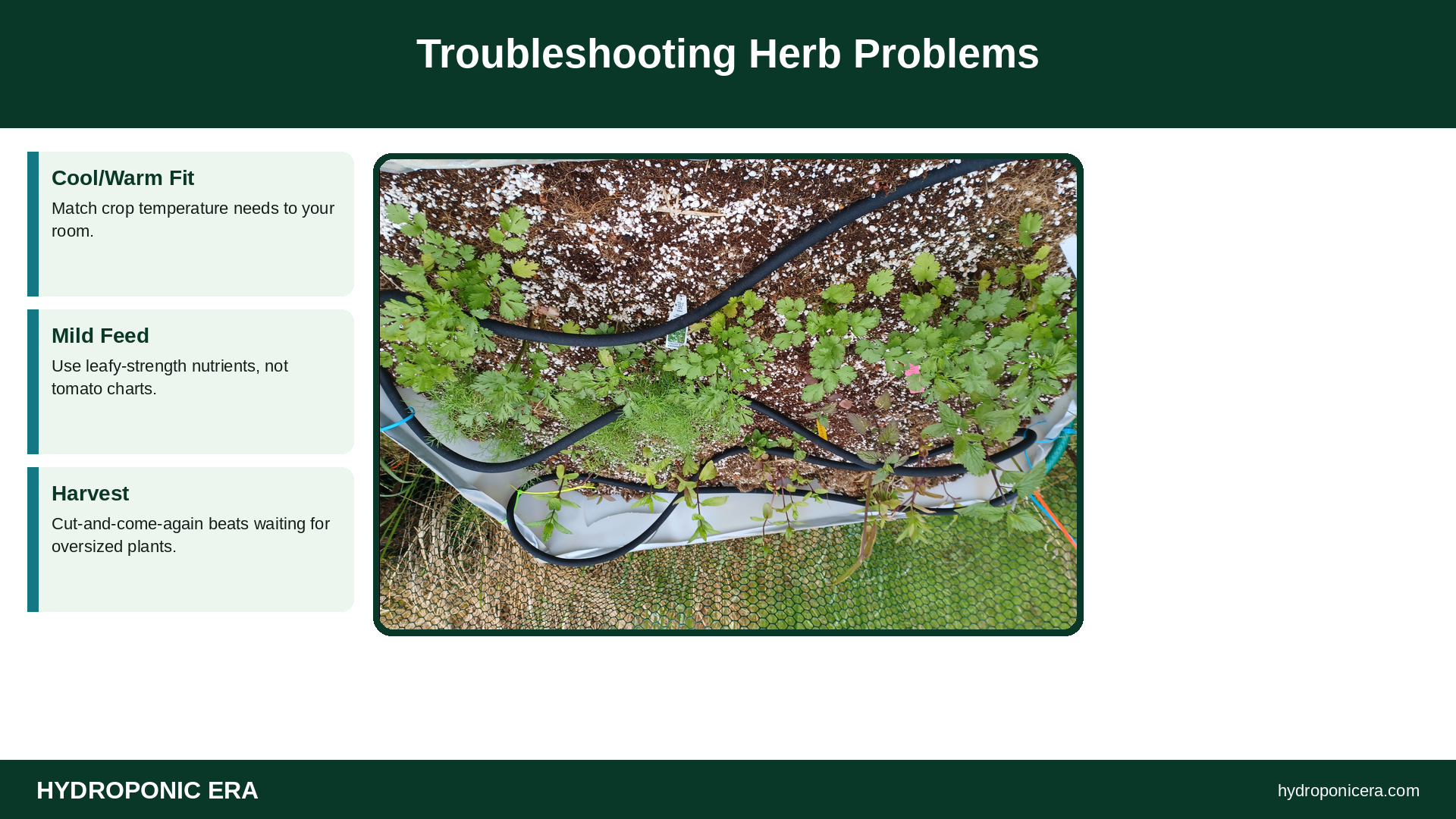
| Leggy basil | Low light / stretch | Increase PPFD or shorten distance; pinch tips |
| Cilantro flower stalk | Heat / age | Harvest; restart cool cycle |
| Yellow new leaves | High pH / Fe issues / lockout | Check pH; see yellow-leaves and lockout guides |
| Wilting with wet roots | Low oxygen / root disease | Brown roots guide; increase aeration |
| Bitter mint / herbs | Heat stress / late harvest / high EC | Moderate climate; reset solution |
What to Check in Your Herb System
- Do your herbs share compatible temperatures?
- Is mint isolated?
- Are meters calibrated (EC/TDS article)?
- Root color and smell?
- Harvest frequency vs plant recovery?
Deeper Practical Notes
A practical herb plan for most beginners: basil + parsley in year one, mint in an isolated pot or bucket, cilantro as succession trays in cool months. Add oregano/thyme only after you can manage media moisture without drowning crowns. Rosemary can wait until you have a stable media system.
UF/IFAS HS1421 (herbs in small hydroponic systems) is a strong companion read for home-scale herb units. Pair it with crop-specific HydroponicEra guides already live for basil, mint, and cilantro.
Market herbs reward cleanliness and frequent harvest. If you plan to sell, consistency and food-safe handling matter more than growing every herb simultaneously. See the selling locally framework article.
FAQs
What is the easiest herb for hydroponic beginners?
Basil and mint are usually the most forgiving soft herbs in home DWC or NFT when light and warmth are adequate.
Can I grow rosemary in DWC?
It is possible but less reliable than media culture. Rosemary’s woody habit and preference for drainage outdoors translate to higher root-rot risk if the crown stays soaked.
Should herbs share a reservoir with lettuce?
Often yes if temperatures and feed strength align. Avoid mixing heat-loving basil with cool cilantro in one climate zone.
How often do I harvest?
Light, frequent cuts beat rare heavy stripping. Exact timing depends on growth rate and leaf demand—not a fixed calendar claim.
Do I need special “herb nutrients”?
Use a complete hydroponic formula at a mild leafy strength. Specialty bottles are optional; measurement discipline matters more.
Practice log and next steps
Keep a simple logbook for this topic: date, meter readings when relevant, what you changed, and what the plants did over the next three to seven days. Hydroponics rewards slow feedback loops more than frantic daily recipe rewrites.
When in doubt, return to calibrated pH and EC, root inspection, and light adequacy before buying another bottle. Extension hydroponic and plant nutrition resources emphasize fundamentals for a reason.
Link outward to the matching HydroponicEra cluster pages so readers can continue into systems, water, crops, or troubleshooting without dead ends. Internal links are part of topical authority, not decoration.
Sanitation and opaque reservoirs prevent many secondary problems that look like nutrient mysteries. Clean systems make diagnosis clearer.
If you sell produce or teach workshops, document procedures. Consistency protects customers and your future self.
Best Herbs for Hydroponics: Practical Checklist
Best Herbs for Hydroponics matters every week in a home system. Recheck best herbs for hydroponics after transplants, heat spikes, and canopy fill-in. Strong best herbs for hydroponics habits beat one-time guesses. When best herbs for hydroponics drifts, leaves crowd, roots stress, or harvest quality drops. Write best herbs for hydroponics targets into your log so you do not rely on memory. Teach helpers your best herbs for hydroponics checklist before you leave town. Improve best herbs for hydroponics in small steps—measure, adjust, then wait a day. Compare best herbs for hydroponics notes against light, airflow, and reservoir temperature. Keep best herbs for hydroponics realistic for your shelf depth and cultivar size.
Sources
- University of Florida IFAS — HS1421: Growing Herbs in Small Hydroponic Systems
- University of Florida IFAS — HS1279: Leafy Greens in Hydroponics and Protected Culture for Florida
- Wisconsin Horticulture / Extension — Parsley
- Wisconsin Horticulture / Extension — Arugula
- Wisconsin Horticulture / Extension — Rosemary
- Oklahoma State University Extension — Hydroponics
- Oklahoma State University Extension — Electrical Conductivity and pH Guide for Hydroponics
- Virginia Cooperative Extension — SPES-720: Calculating and Using Daily Light Integral (DLI)
- Michigan State University Extension — Hydroponics as an agricultural production system
4 thoughts on “Best Herbs for Hydroponics: Which Ones Thrive and Why”