
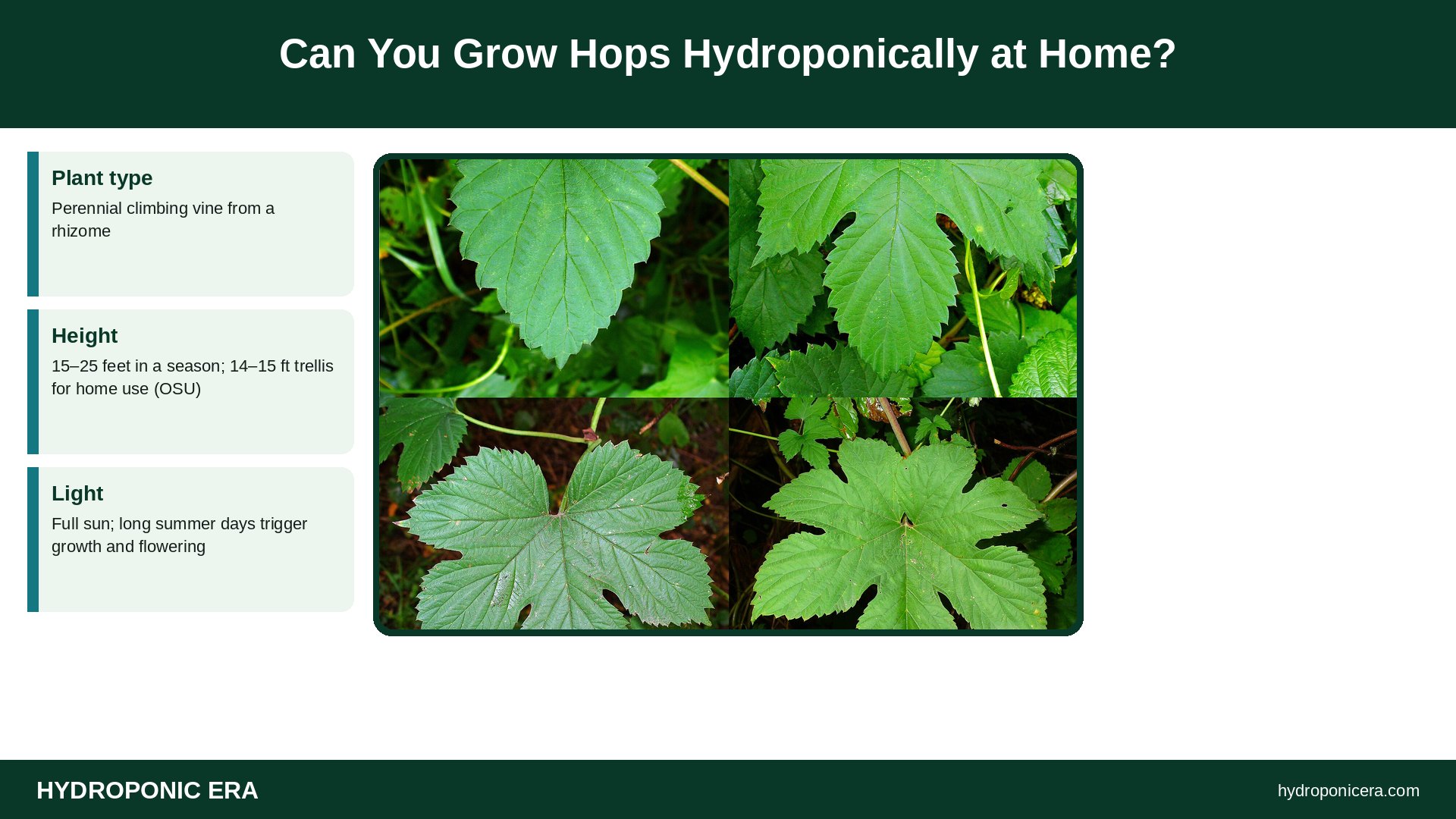
You can grow hops hydroponically at home, but they are a big, demanding plant. Hops (Humulus lupulus) are perennial vines that climb 15–25 feet in a season, want long days and full sun, and only produce their brewing cones on female plants after the root system is established. Oregon State University Extension notes that a 14–15 foot trellis is enough for home use and that plants usually reach full production in their second or third season. A hydroponic system can feed hops well, but you still need height, light, and a winter rest.
Key takeaway: Hops do well with drip or Dutch bucket hydroponics outdoors or in a tall greenhouse. Indoor grow tents are usually too short.
| Factor | Target |
|---|---|
| Plant type | Perennial climbing vine from a rhizome |
| Height | 15–25 feet in a season; 14–15 ft trellis for home use (OSU) |
| Light | Full sun; long summer days trigger growth and flowering |
| Sex | Only female plants make cones; grow named female rhizomes |
| Best systems | Dutch buckets, large drip containers |
| Full production | Usually year 2 or 3 |
| Pets | Hops are toxic to dogs (ASPCA) |
What Makes Hops Different
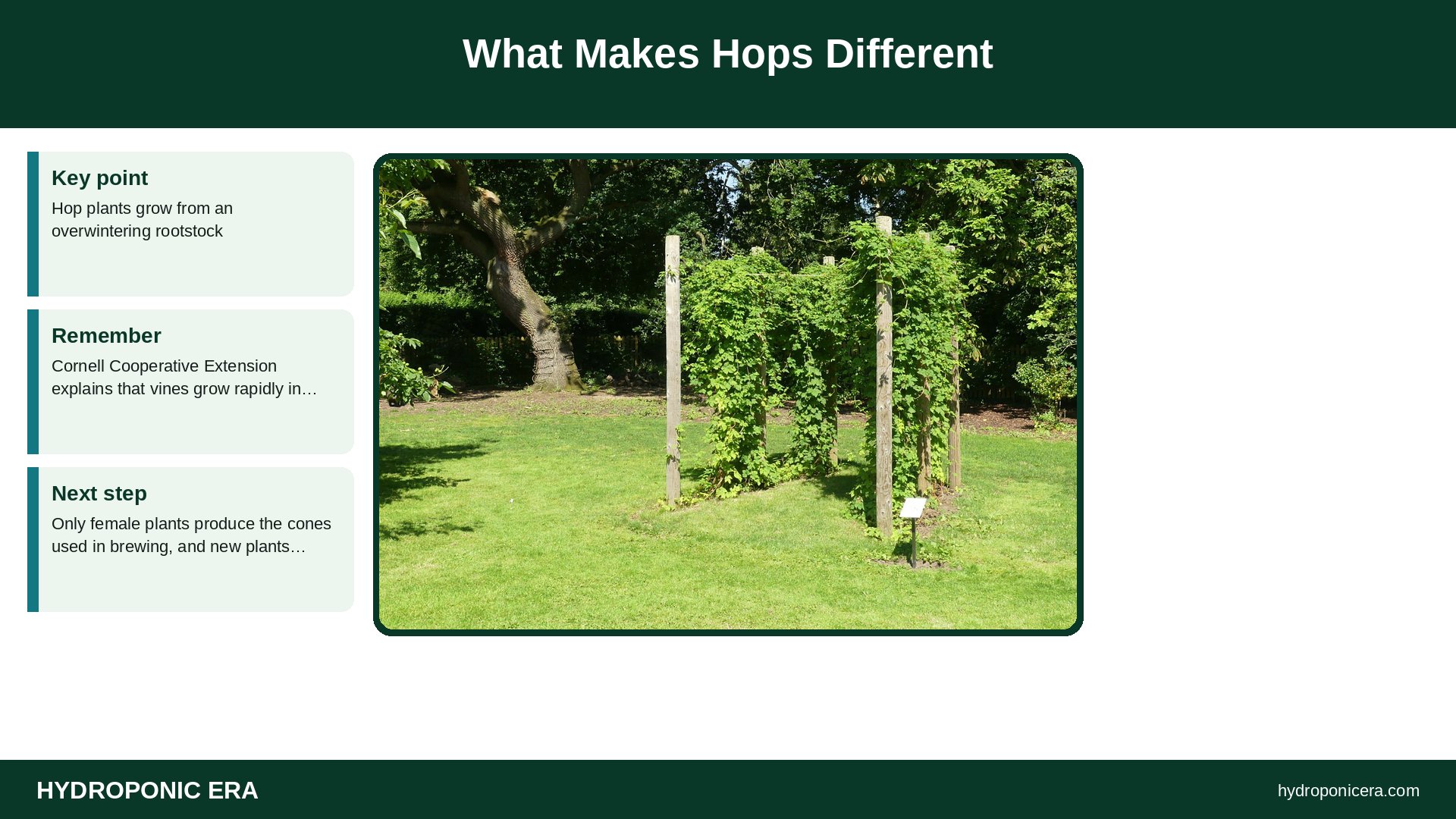
Hop plants grow from an overwintering rootstock. Cornell Cooperative Extension explains that vines grow rapidly in spring and early summer, winding clockwise around their support, and stop growing upward around late June in response to shortening day length, when they produce side arms that bear flowers. Only female plants produce the cones used in brewing, and new plants from seed can be male or female, so home growers plant named female rhizomes.
Those traits mean hops need height, a summer-length day, and a dormant winter. That’s why the classic home setup is outdoors on a tall trellis.
Can You Grow Hops Hydroponically Indoors?
Technically yes, but it’s a stretch:
- Height: most grow tents top out around 7 feet; hops want much more.
- Light: a large vine needs a lot of light. See our PPFD and DLI guide.
- Photoperiod: flowering responds to day length, so you’d need to manage a light schedule. Our photoperiod guide explains the idea.
- Dormancy: rhizomes typically need a cold rest each winter.
Outdoor or greenhouse hydroponics is much more practical.
Setting Up Hydroponic Hops Outdoors

- Choose female rhizomes of a named cultivar suited to your region.
- Use large Dutch buckets or 10+ gallon containers filled with perlite or a perlite-coco mix. See our Dutch bucket guide.
- Run drip irrigation on a timer with a balanced nutrient. Our drip system guide covers emitters and timing.
- Build a tall trellis, such as twine strung to a 14–15 foot support.
- Train 2–3 strong bines per string clockwise; remove extra shoots.
- Keep pH around 6.0–6.5 and check EC weekly.
- Let first-year plants focus on roots. OSU suggests a short stake early on and not stripping foliage in year one.
Feeding, Water, and Heat
Large hop vines drink a lot on hot days. Containers dry quickly, so drip timing matters. Use a mid-strength vegetative nutrient during rapid growth. Watch for spider mites and aphids, which are common hop pests. Our spider mites guide and aphids and mites guide help.
Harvesting Hops
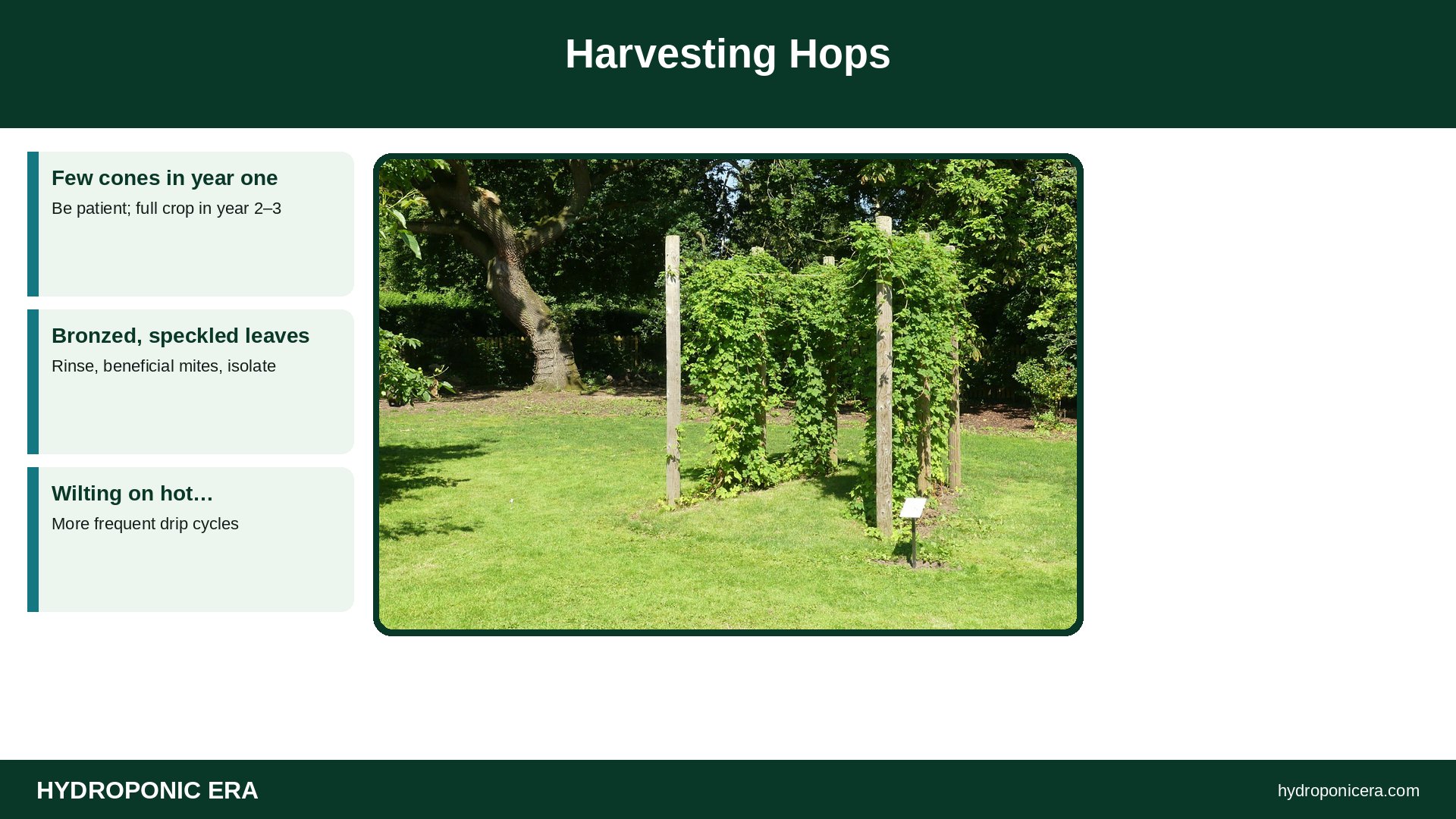
Utah State University Extension notes that cones are typically harvested late August to early September and are ready once dried and papery. Ready cones feel light and slightly springy, with yellow lupulin glands visible inside.
| Symptom | Likely cause | Fix |
|---|---|---|
| Few cones in year one | Normal establishment year | Be patient; full crop in year 2–3 |
| Bronzed, speckled leaves | Spider mites | Rinse, beneficial mites, isolate |
| Wilting on hot afternoons | Container drying out | More frequent drip cycles |
| Yellow lower leaves | Nitrogen shortage or aging | Check EC; remove lower leaves for airflow |
| No cones on any plant | Male plant or short trellis | Use named female rhizomes; taller support |
Common Mistakes

- Growing from seed and getting male plants.
- Short trellises that stunt production.
- Undersized containers that dry out in summer.
- Leaving spent cones where dogs can eat them. Hops are toxic to dogs.
Variables That Change Results
| Variable | Effect | Adjustment |
|---|---|---|
| Latitude | Day length influences flowering | Choose cultivars proven in your region |
| Container size | Small pots dry out on hot days | 10+ gallons, more drip cycles |
| Trellis height | Short supports cut production | 14–15 ft for home use |
| Plant age | Year one is for roots | Expect full crops in year 2–3 |
Overwintering Container Rhizomes
After harvest, cut bines back once they brown. Move containers to a sheltered spot such as an unheated garage, keep the medium barely moist, and restart feeding in spring when shoots appear. In the coldest US regions, insulate pots to protect rhizomes from hard freezes.
Quick Decision Guide
- Have a tall sunny wall or fence? Outdoor Dutch buckets are ideal.
- Have a greenhouse? Train bines up to the roof line, with good airflow.
- Only a grow tent? Consider other vining crops like cucumbers instead.
Drying matters as much as growing. Spread cones in a single layer in a warm, dark, ventilated spot, and store dried cones sealed and cold to protect aroma.
Choosing Hop Varieties for Containers
Some growers choose varieties described as compact or dwarf for container growing because they produce shorter bines that are easier to manage on a patio trellis. Check nursery descriptions for vigor and disease resistance, and buy female rhizomes or plants from a reputable US supplier so you know what you’re getting. In regions with heavy downy mildew pressure, varieties described as more resistant can save a lot of frustration.
FAQs: Can You Grow Hops Hydroponically?
Can hops grow in a grow tent?
Not well. Hops are tall vines that need long days and lots of light. Outdoor or greenhouse hydroponics is more practical.
How long until hydroponic hops produce?
Some cones may appear in year one, but full production usually comes in the second or third season.
Are hops toxic to dogs?
Yes. The ASPCA lists hops as toxic to dogs. Keep fresh and spent hops away from pets.
What system is best for hops?
Dutch buckets or large drip-fed containers with perlite or coco work best.
Related HydroponicEra Guides
- Hydroponic trellising and pruning
- Dutch bucket hydroponics
- Hydroponic greenhouse for beginners
- Hydroponic grapes
Sources
- Oregon State University Extension — Growing hops in the home garden (EM 9115)
- Utah State University Extension — How to Grow Hops in Your Garden
- Cornell Cooperative Extension Madison County — Growing Hops at Home
- ASPCA — Hops toxicity
- Photo credits (Wikimedia Commons, edited with titles): Humulus lupulus 012 by H. Zell (CC BY-SA 3.0); Hop trellis in the Palace Garden – geograph.org.uk – 7827474 by Alan Murray-Rust (CC BY-SA 2.0)