
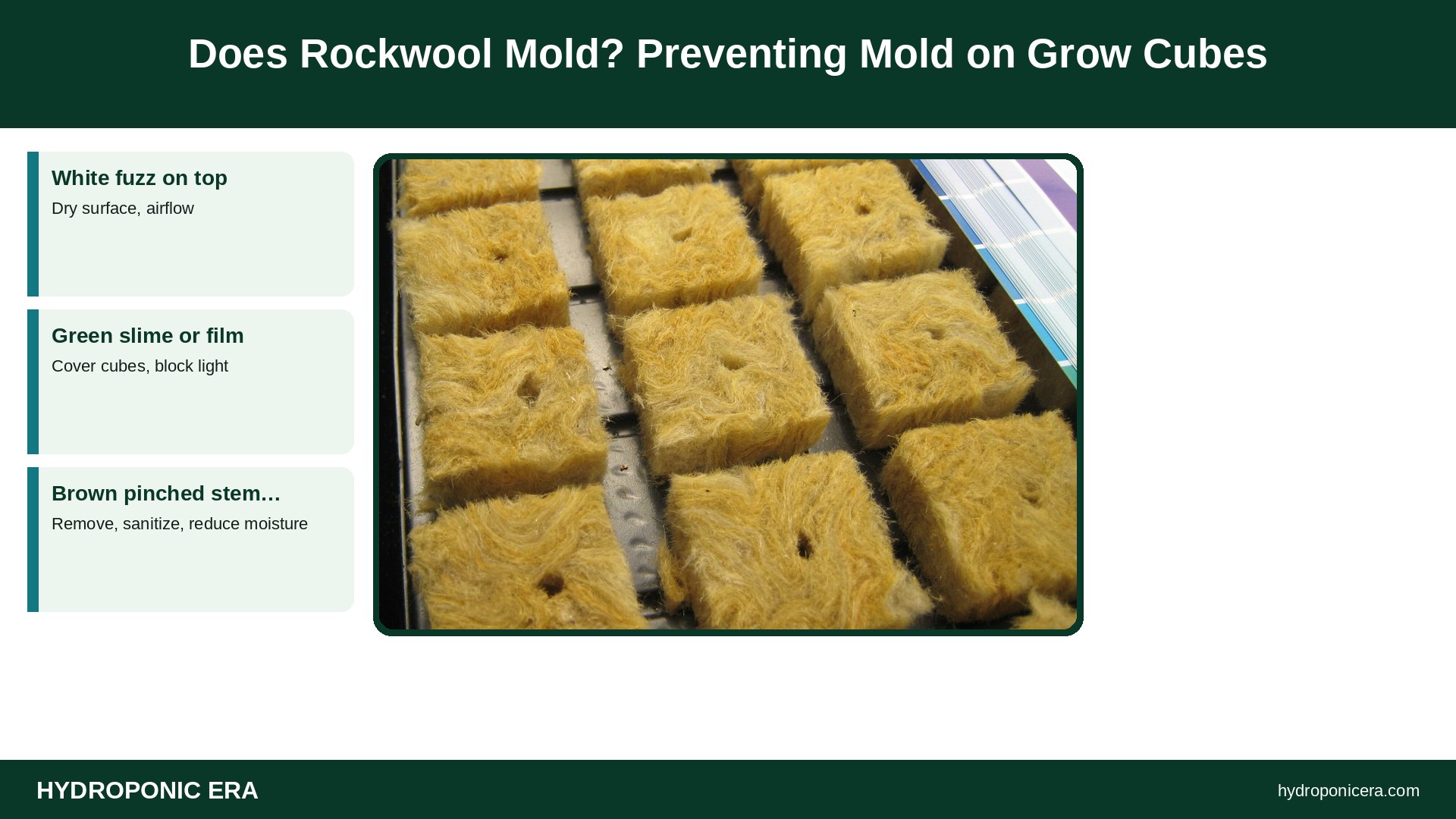
Rockwool mold is usually a harmless-looking layer of white fuzz or green algae on the surface of rockwool cubes, caused by constant moisture, light hitting the cube, warm stagnant air, and organic residue such as nutrients or decaying roots. White fuzz is often saprophytic mold feeding on residue; green film is algae. Neither is necessarily killing your plant, but both signal conditions that also favor damping-off, fungus gnats, and root rot. Fix it by letting the surface dry slightly between waterings, covering cubes from light, improving airflow, and starting with clean, properly pre-soaked rockwool.
Key takeaway: Dry the surface, block light, move air. If seedlings are wilting or stems are pinched at the base, treat it as damping-off, not cosmetic mold.
| What you see | Likely cause | Fix |
|---|---|---|
| White fuzz on top | Saprophytic mold on residue | Dry surface, airflow |
| Green slime or film | Algae from light + moisture | Cover cubes, block light |
| Brown pinched stem, seedling falls over | Damping-off | Remove, sanitize, reduce moisture |
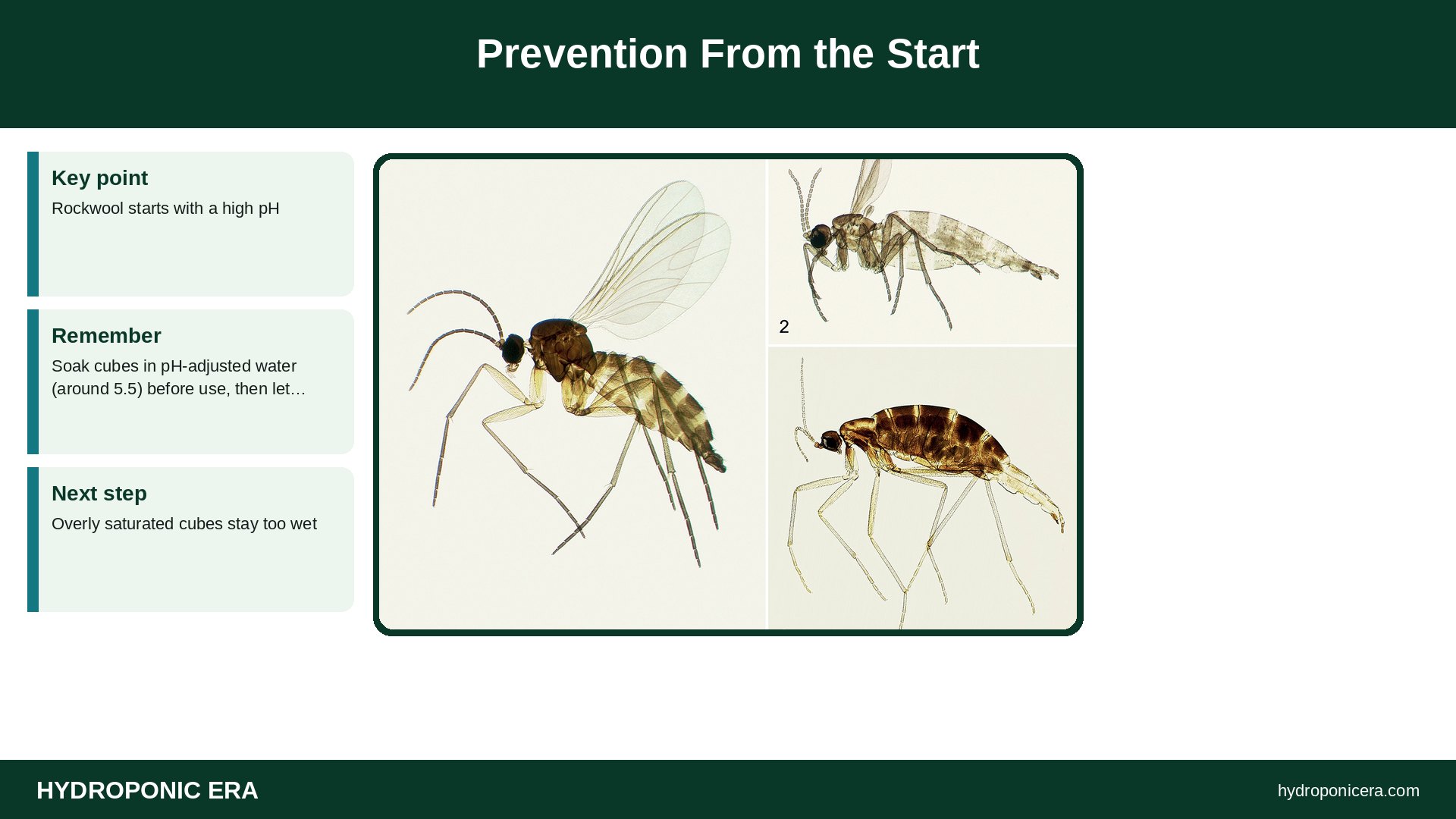
| Small black flies | Fungus gnats | Dry surface, sticky traps |
| White crust | Salt/mineral buildup | Flush with plain water |
Why Rockwool Grows Mold
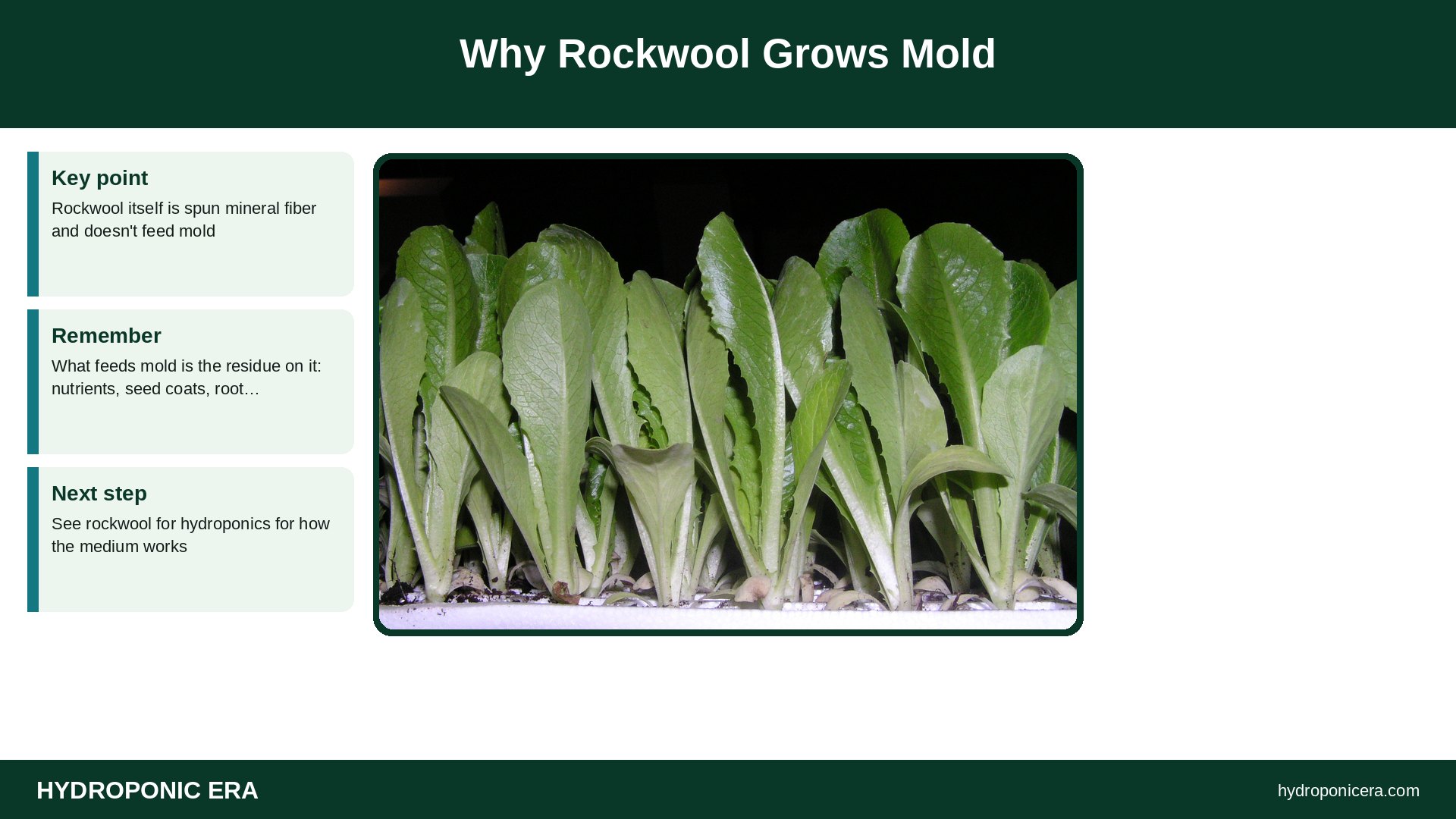
Rockwool itself is spun mineral fiber and doesn’t feed mold. What feeds mold is the residue on it: nutrients, seed coats, root exudates, and dead plant matter, combined with a wet surface and still air. Light adds algae. See rockwool for hydroponics for how the medium works.
Mold vs Algae vs Salt Crust
Mold is fuzzy and often white or gray. Algae is a green to dark green film that feels slimy. Salt buildup is a dry, white, crystalline crust that doesn’t wipe away like fuzz. Each has a different fix, so look closely. See white residue vs powdery mildew for a similar diagnostic approach.
When It’s Serious: Damping-Off
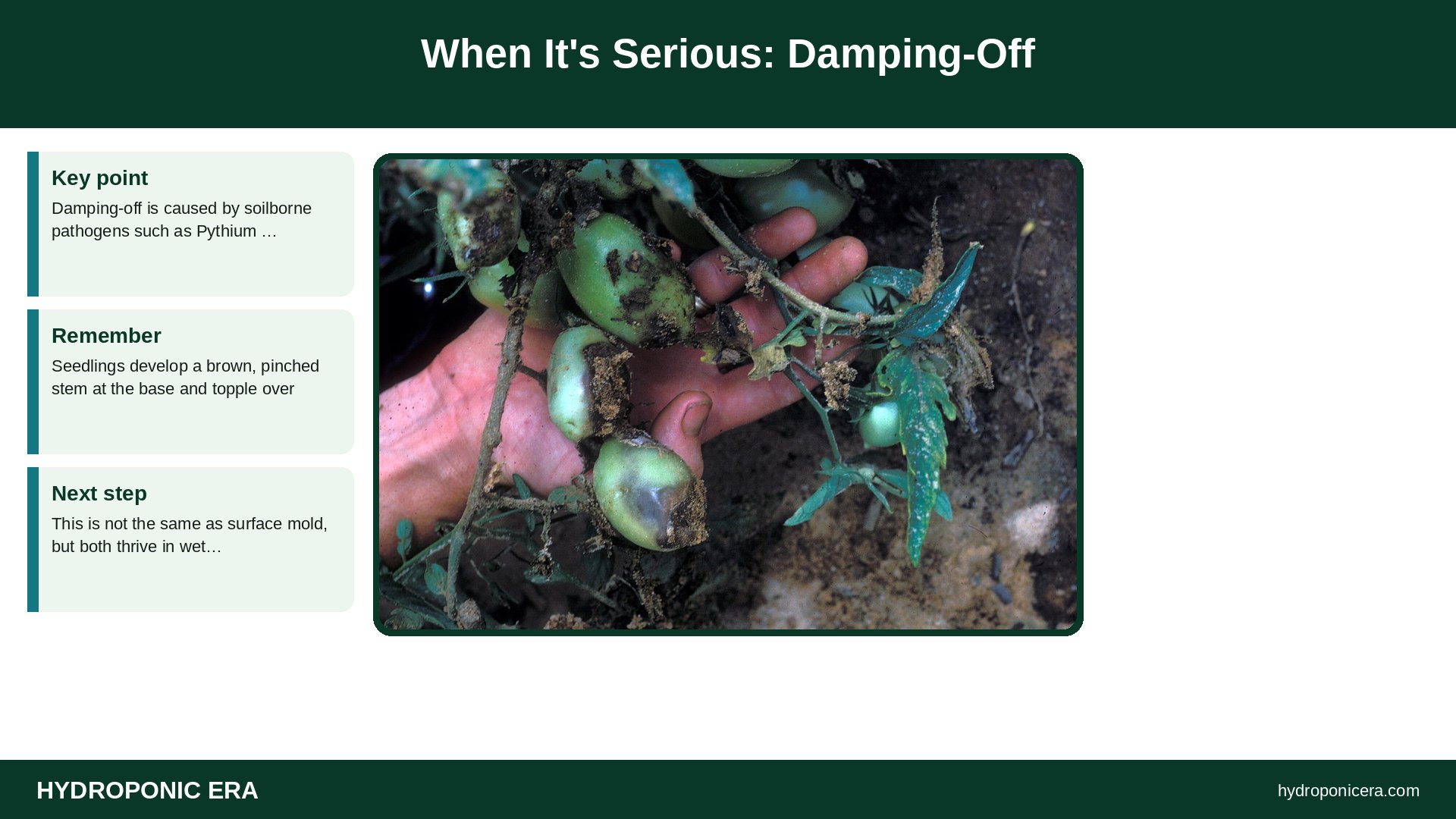
Damping-off is caused by soilborne pathogens such as Pythium, Rhizoctonia, and Fusarium. Seedlings develop a brown, pinched stem at the base and topple over. This is not the same as surface mold, but both thrive in wet, stagnant conditions. Remove affected seedlings immediately. See damping-off in seedlings.
How to Fix Mold on Rockwool
- Let the surface dry slightly. Water from below or less often, so the top isn’t constantly soaked.
- Improve airflow. A small fan near seedlings helps surfaces dry and strengthens stems.
- Vent humidity domes. Open vents or remove the dome once seeds germinate.
- Block light. Cover cube tops with caps, foil, or plastic collars to stop algae.
- Remove fuzz. Gently scrape off surface mold if it’s heavy.
- Clean trays. Wash propagation trays between batches.
Prevention From the Start
Pre-Soak Properly
Rockwool starts with a high pH. Soak cubes in pH-adjusted water (around 5.5) before use, then let excess drain. Overly saturated cubes stay too wet. See pH Up and pH Down.
Don’t Overwater
Squeeze cubes lightly. They should feel moist, not dripping. Water when they become noticeably lighter.
Use Mild Nutrients for Seedlings
Strong nutrient solution leaves more residue and can burn tender roots. Start seedlings with plain or weak nutrient solution.
Keep Temperatures Moderate
Warm, humid conditions favor mold and pathogens. Keep propagation areas comfortable and ventilated.
Fungus Gnats Love Wet Rockwool
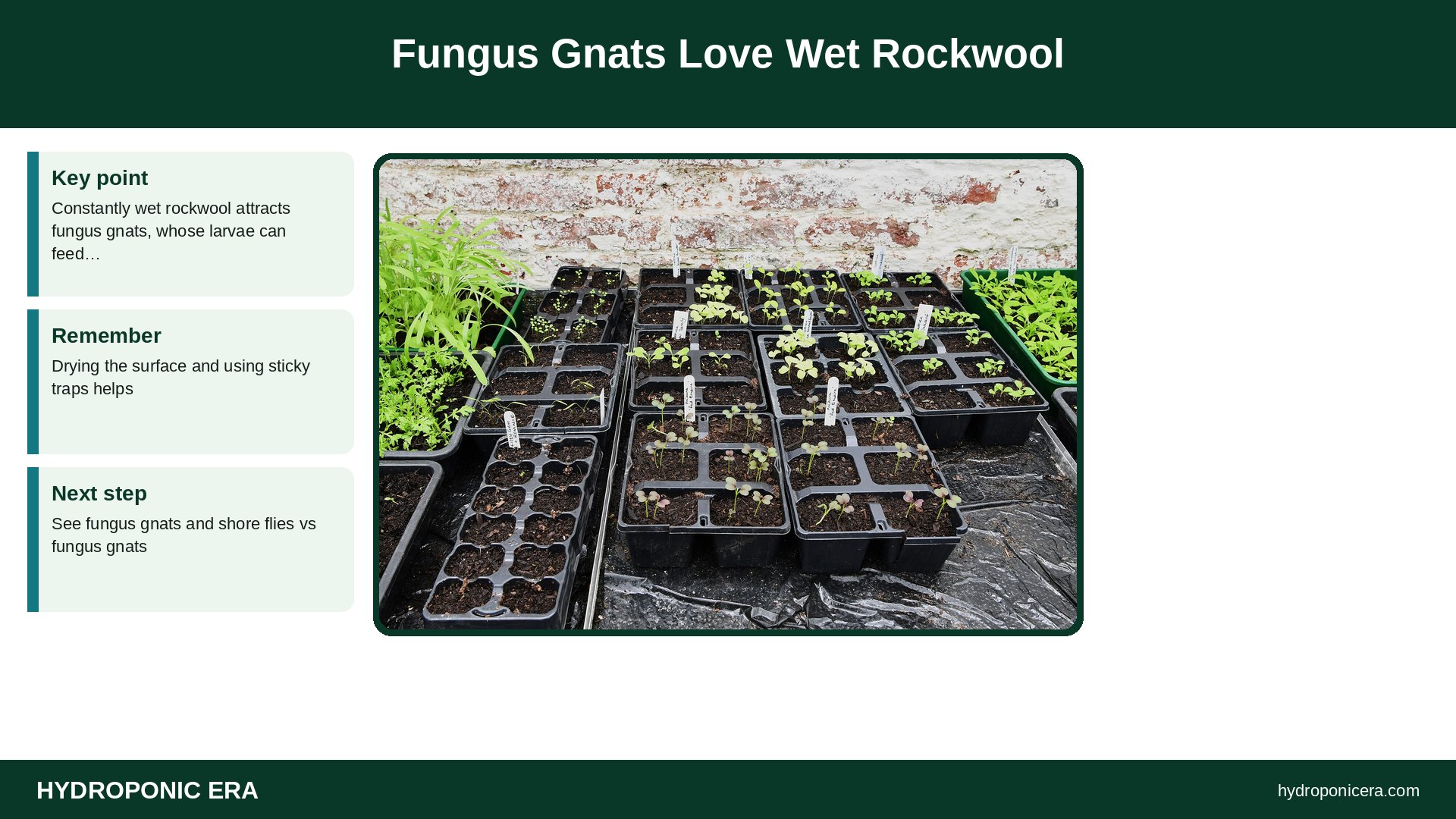
Constantly wet rockwool attracts fungus gnats, whose larvae can feed on roots. Drying the surface and using sticky traps helps. See fungus gnats and shore flies vs fungus gnats.
Should You Reuse Rockwool?
Reusing old rockwool increases the risk of mold and disease, because residue and roots remain inside. Most growers use fresh cubes for seedlings. See rockwool reuse and disposal.
Rockwool Mold in Propagation vs Mature Plants
Rockwool mold matters most during propagation, when seedlings are small and conditions are humid. Once plants are established and the cube is sitting in a net pot with roots growing through, surface mold is mostly cosmetic. On seedlings, though, constant wetness that grows rockwool mold also invites damping-off, so treat it as a sign to adjust moisture and airflow quickly. On mature plants in slabs or cubes, scrape off heavy rockwool mold, cover exposed surfaces, and check that drip emitters aren’t keeping the top permanently soaked.
A Better Watering Routine for Cubes
Most rockwool mold starts with overwatering. A simple routine helps:
- Soak cubes in pH-adjusted water, then shake out excess.
- Lift the tray and note how heavy fully wet cubes feel.
- Water again only when the tray feels noticeably lighter.
- Water from the bottom of the tray when possible so the top stays drier.
- Drain standing water from trays after 15 to 30 minutes.
This keeps the inside of the cube moist for roots while the surface dries between waterings, which is what stops rockwool mold from forming.
Alternatives If Rockwool Mold Keeps Coming Back
If you’ve fixed airflow and watering and still see rockwool mold every batch, other starter media may suit your space better. Peat or coco plugs, foam starter sponges, and oasis cubes each have their own pros and cons. See rockwool reuse and safer swaps for options.
Safety When Handling Rockwool
Dry rockwool fibers can irritate skin, eyes, and lungs. Wet cubes before handling, and consider gloves and a dust mask when cutting slabs. This also keeps fibers out of the grow area.
Checking Your Propagation Area
Walk through your seedling setup once a week. Feel cube moisture, check that domes are vented, confirm the fan is running, and look under trays for standing water. Catching these small issues early stops rockwool mold before it spreads across a whole tray.
FAQs: Mold on Rockwool
Is white mold on rockwool harmful?
Surface mold is often harmless to established plants but signals overly wet conditions that favor disease.
Why is my rockwool turning green?
Algae, caused by light reaching a wet surface. Cover the cubes.
How do I stop rockwool mold?
Let surfaces dry slightly, improve airflow, vent domes, and block light.
Can I use hydrogen peroxide on rockwool mold?
Some growers use diluted hydrogen peroxide, but it can harm delicate seedlings if too strong. Fixing moisture and airflow matters more. See hydrogen peroxide in hydroponics.
Should I throw out moldy rockwool?
Not necessarily. If seedlings are healthy, fix the conditions. Discard cubes with damped-off seedlings.
Sources
- University of Florida IFAS Extension — Leafy Greens in Hydroponics and Protected Culture for Florida
- USDA National Agricultural Library — Hydroponics
- Photo credits (Wikimedia Commons, edited with titles): Rockwool cubes-inlay PNr°0091 by D-Kuru (CC BY-SA 3.0 at); Lettuce Plugs by Apapac at English Wikipedia (Public domain); Tomaten Rhizoctonia damping-off, blight and rot (Rhizoctonia solani), J.G.Kühn by University of Georgia Plant Pathology , University of Georgia, Bugwood.org J.G. (CC BY 3.0); Sciaridae (10.3897-zookeys.957.46528) Figures 1–3 by Menzel F, Gammelmo Ø, Olsen KM, Köhler A (2020) The Black Fungus Gnats (Diptera, (CC BY 4.0); Temple Sowerby, Acorn Bank, Mizuna and lettuce seedlings – geograph.org.uk – 7625183 by Michael Garlick (CC BY-SA 2.0)